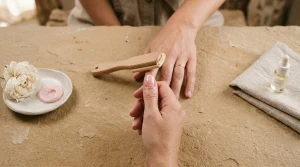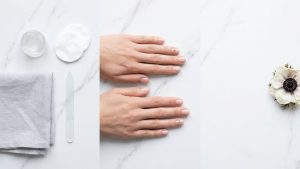
As all nail professionals are taught, it is important removing the gloss or shine, as some call it, from the surface of the natural nail plate. The gloss is from surface oil and the nail plate with no surface oil appears dull. If the goal is to remove the “shine”, that’s just the surface oils. However, this is not what generally happens in salons. The surface nail cells are NOT glossy and they don’t shine. This glossy appearance is caused by the natural oils that coat the surface of the nail plate.
Only the natural oils need to be removed, not the surface of the nail plate. That only needs to be lightly buffed on the surface. Washing the hands and scrubbing the nails with a disinfected nail brush is the best way to remove surface oils. This two-step process will ensure that all surface oils are cleansed from the nail plate and the surface is finely scratched without thinning the nail plate.
The nail file is needed to slightly increase the surface area, which improves adhesion. Here’s how that helps: lightly buffing the nail plate’s surface dramatically increases the surface area. This happens because microscopic scratches will expose additional nail plate surfaces for the nail coating to hold on to. Almost none of the thickness of the nail plate needs to be removed to increase the surface area and improve adhesion. Yet some nail technicians remove 5% or more of the nail plate’s thickness each time they file.


More filing just thins and weakens the nail plate, which doesn’t improve adhesion. In fact, over-thinning the nail plate will lower adhesion! The nail plate becomes highly flexible, each time the nail bends, this puts strain on the interface where the nail coating and natural nail meet and bond. This extra strain weakens the adhesive bond and leads to increased lifting and peeling. Newer formulations of nail coatings have very good adhesion and require much less filing, yet many nail professionals continue to regularly over file the nail plate.
It’s easy to see the effects of over-filing when you remove the nail coating. The new growth area should not be much thicker than the nail plate that’s been filed and covered with a nail coating. All of the lost nail plate thickness is due to filing. NONE is due to the nail product itself. Yet, many clients see this thinning and incorrectly believe the nail coating “ate the nail”, which of course is silly. No nail product can eat or thin the nail plate, except a nail abrasive, e.g. electric file. So in short, while removing the shine, I recommend you remove as little of the nail plate as possible. To keep the nail plate strong, you must keep its natural thickness. In other words, please, keep the nail plate thick.