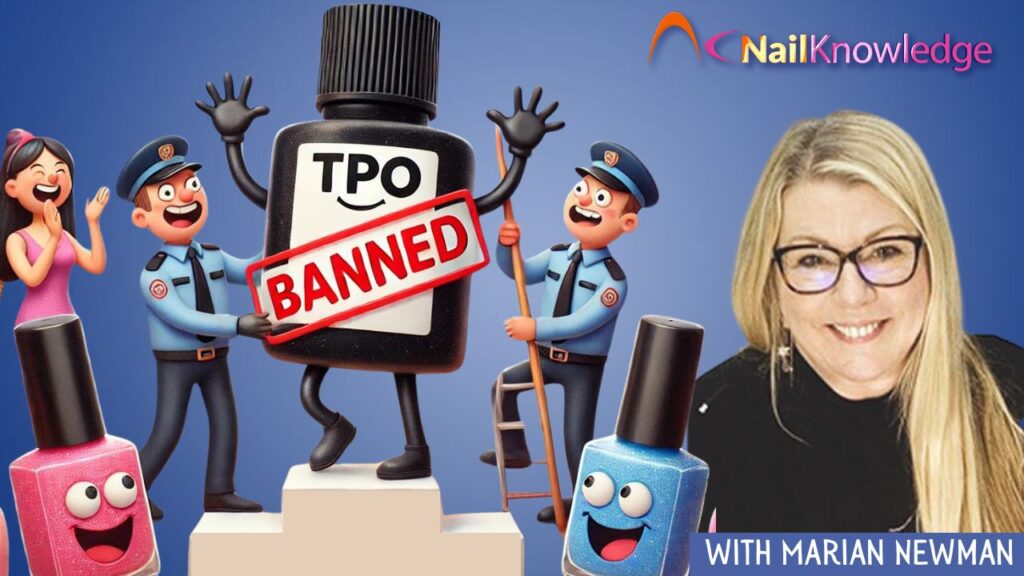
Você deve ter ouvido falar sobre a proibição iminente do TPO em produtos para revestimento de unhas. Mas o que isso significa para os profissionais de unhas?
Regulatory Update (UK 2026)
This article has been updated to reflect the confirmed UK regulatory timeline for Trimethylbenzoyl Diphenylphosphine Oxide (TPO). Under amendments to the UK Cosmetics Regulation, products containing TPO will no longer be permitted to be newly placed on the Great Britain market from 15 August 2026, with a further deadline of 15 February 2027, after which non-compliant products can no longer be made available for sale. These changes apply to cosmetic nail products supplied in both professional and retail settings.
Riscos à saúde do TPO e a futura proibição de revestimentos de unhas curados com UV
TPO, abreviação de óxido de trimetilbenzoil difenilfosfina, é um foto iniciador comumente usado em revestimentos de unhas curados por UV. No entanto, a Comissão Europeia classificou o TPO como um risco potencial à saúde se presente no corpo em quantidades suficientes.
A partir de setembro de 2025, será ilegal incluir esse ingrediente em produtos cosméticos para unhas across Europe, with the UK implementing similar restrictions from 15 August 2026, followed by a sell-through period allowing existing stock already supplied to the market to remain available until 15 February 2027. This ban applies to the manufacture and sale of new products, not to the use of existing ones.
In cosmetic regulatory terms, this means products containing TPO cannot be newly supplied or imported after the deadline dates. Nail professionals and retailers are not expected to immediately dispose of existing stock purchased before the restriction takes effect.
Esforços de reformulação e alternativas ao TPO em produtos para unhas
Many reputable brands have already addressed this issue by reformulating their products to exclude TPO. There are several alternative photo initiators that provide similar results, ensuring that the performance of nail products is not compromised.
Uso seguro de TPO em serviços de unhas até que a proibição entre em vigor
It is important to note that this regulatory change does not represent a ban on gel nail products themselves. TPO is one of several photoinitiators used within UV and LED curing systems, and alternative ingredients are already widely available. The restriction reflects an updated regulatory classification rather than evidence that professionally used nail gel products suddenly pose a new safety risk.
For nail professionals, it’s important to know that you can still safely use products containing TPO until the ban takes effect. The levels of TPO used in nail services are far below those considered harmful.

Garantia da conformidade da marca e da segurança do cliente na transição para produtos sem TPO
It’s a good idea to check with your brand about their plans regarding this new legislation. If your brand has not yet moved to TPO-free products, it might be time to reconsider your options.
There’s no need to worry your clients if you need to switch brands. Cosmetic ingredients are regularly reviewed to ensure safety, and your existing gel polishes will continue to be safe to use during the transition period.
Doug Schoon sobre remoção de TPO: Impacto no setor e considerações sobre segurança
Doug Schoon, a respected scientist in the industry and expert at NailKnowledge, explains that removing TPO from nail products won’t necessarily affect their performance, though reformulation will be required. He notes that TPO can cause skin sensitisation or allergic reactions if not used properly, especially if skin contact isn’t avoided. However, when applied correctly by trained professionals, adverse effects are rare.
Schoon points out that most concerns about TPO stem from its use in non-nail-related industries, such as manufacturing printing inks and industrial adhesives. The decision to remove TPO from nail coatings isn’t due to issues with the nail products themselves, but rather as a precautionary measure for consumer safety.
Ele aconselha que as marcas podem facilitar essa transição reformulando os produtos com fotoiniciadores mais seguros, oferecendo treinamento sobre as técnicas de aplicação adequadas para as novas fórmulas e rotulando claramente as opções sem TPO. Muitas marcas de unhas provavelmente já estão trabalhando ou lançaram alternativas ao TPO com desempenho semelhante. Os profissionais de unhas devem se envolver proativamente com seus fornecedores de produtos para entender essas mudanças, especialmente porque os clientes podem perguntar sobre a segurança e os métodos de aplicação das novas fórmulas.
Understanding the TPO Ban and Cosmetic Safety Classification
The restriction follows the classification of TPO as a CMR Category 1B substance under European chemical legislation. Under cosmetic regulations, ingredients receiving this classification are automatically prohibited for precautionary reasons, even where normal cosmetic exposure levels are considered low. This regulatory mechanism is applied across many cosmetic ingredient reviews and does not indicate that compliant nail services performed using approved products are unsafe.
Preparing for the TPO Ban: Guidance for Nail Professionals and Brands
As the transition progresses, nail professionals are encouraged to contact their product manufacturers or distributors to confirm reformulation timelines and future compliance. Many brands have already introduced TPO-free systems, and further updates are expected across the industry ahead of the 2026 and 2027 deadlines. Staying informed and planning ahead will help ensure continued compliance without disruption to salon services.