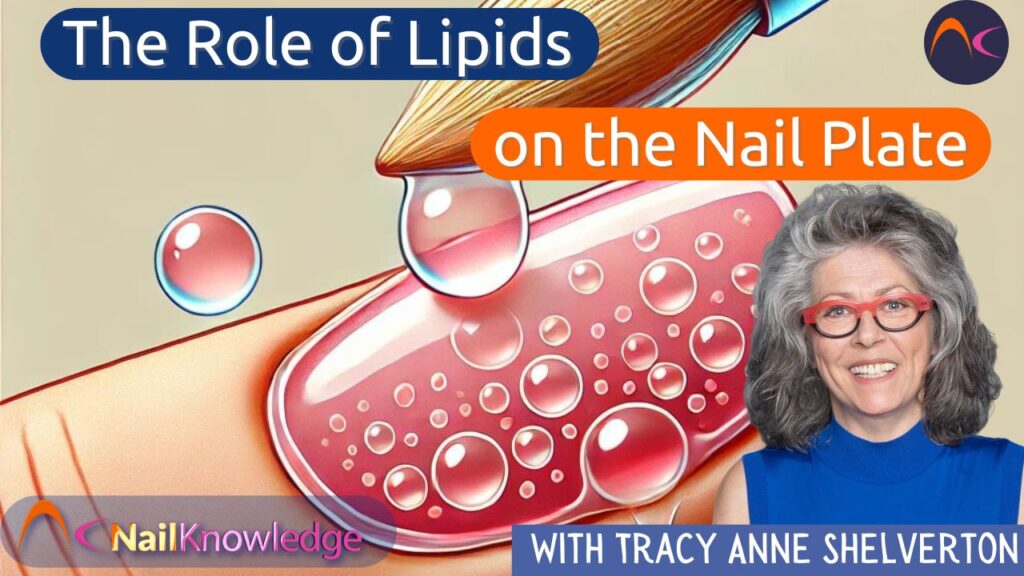
When preparing the nail plate for enhancement services, it’s crucial to understand how to effectively remove lipids, or oily substances, from the nail’s surface. Lipids, which are a type of fatty acid, naturally occur in many vegetable oils and are resistant to water.
A common question among nail professionals is whether alcohol can dissolve these lipids and if cleaning the nail plate with alcohol is sufficient to reduce their presence.
Failing to adequately remove lipids can result in several issues during nail enhancement services. Leftover lipids on the nail plate can cause lifting, poor adhesion, and a shorter lifespan for nail products. This makes it essential to use the most effective methods and solvents to ensure a clean, lipid-free surface before any nail application.
Lipid trên móng tay và tác động của chúng lên độ bám dính
Lipid tự nhiên xuất hiện trên tấm móng tay as a result of the body’s natural processes. The skin and móng tay sản xuất dầu, including lipids, as a form of protection and hydration. These lipids help to maintain the flexibility and strength of the nails, preventing them from becoming too dry or brittle.
Lipids can also accumulate on the nail plate from external sources, such as natural oils from the skin, lotions, or exposure to other substances that contain fatty acids. While these oils are beneficial for the health of the nail, they can interfere with the adhesion of nail products, such as polish or enhancements, making it necessary to remove them before nail services.
Acetone so với Cồn: Dung môi tốt nhất để loại bỏ Lipid trên móng tay
Lipids are oily and water-insoluble, but they can be dissolved by certain types of alcohols, such as ethyl or isopropyl alcohol, which are commonly used in cosmetic products. However, while these alcohols can remove lipids, they are not as effective as other solvents like acetone or ethyl acetate, which are preferred for nail preparation.
Using these solvents with a fiber-free pad and employing a scrubbing technique, similar to removing red nail polish, is recommended for thoroughly cleaning the nail plate. This method ensures that the lipids are removed from the tiny crevices of the nail, improving the adhesion of nail products.
Nước rửa móng tay do nhà sản xuất pha chế
In my view, nail cleansers specifically formulated by manufacturers may offer even better results, as they often contain a blend of solvents and additives designed for optimal cleaning.