Have you ever been completely puzzled by nail terms thrown around in salons, classrooms, educational materials, or on social media channels?
You’re not alone! Today, we’re cracking the case on two often misunderstood heroes of nail anatomy: the eponychium and the cuticle. Ever mixed these two up? Let’s sort them out once and for all!
What is the Eponychium?
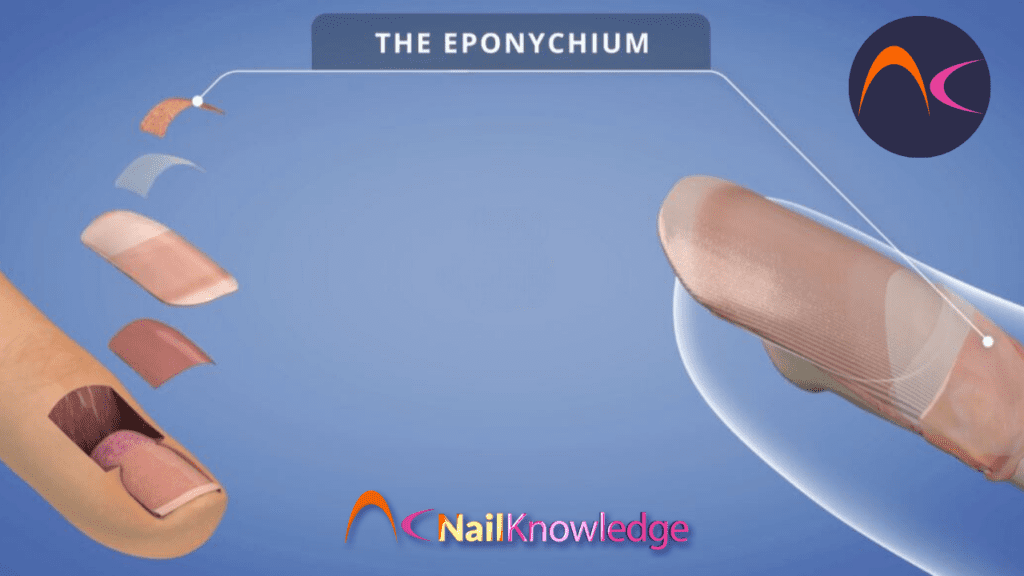
So, what exactly is the eponychium? Imagine it as a thin layer of specialized skin cells hidden underneath the proximal nail fold. It plays a crucial role in nail health, primarily responsible for producing the cuticle. Its main job? To form a protective barrier of non-living skin cells that shields your nail matrix from bacteria and germs—often referred to as opportunistic pathogens. Think of the eponychium as the mastermind behind the club’s security, keeping those unwanted guests out. Without its protection, your nails would be vulnerable to all sorts of intruders!
What is the Cuticle?
Moving on to the cuticle—this is the part many people think they know.
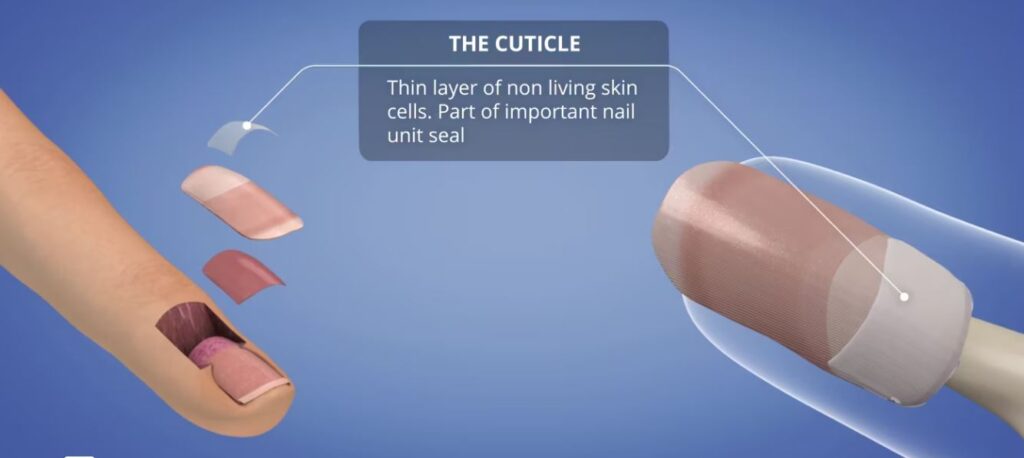
The cuticle is actually non-living skin that adheres tightly to your nail plate. If you think of the eponychium as the mastermind behind the club’s security, then the cuticle is the bouncer at the door. Why is this important? The cuticle forms a protective seal that prevents harmful agents from sneaking under your nail or reaching the crucial area of nail plate cell production. When this seal remains intact, your nail matrix is protected, continuously producing nail plate cells. Just as closing the door of a plane before take-off is crucial, maintaining the integrity of this cuticle seal is vital for the health of your nails—without it, there would be no nail plate!
Why the Confusion?
Now, you might wonder, why all the mix-up between the two? It’s easy to see why they’re often mistaken for one another—they’re neighbours, after all! Both reside in the same nail neighbourhood and work together to keep your nails looking fabulous and healthy. Plus, let’s be honest, even seasoned nail techs can find nail biology terms confusing, particularly when the focus is more on delivering a flawless mani-pedi than on discussing the finer points of giải phẫu móng tay.
The Importance of Distinguishing Between the Eponychium and Cuticle
Understanding the difference between the eponychium and the cuticle isn’t just nail tech jargon, it’s essential for proper nail care. Ever heard someone suggest cutting the cuticle? They might actually mean trimming excess living tissue that has dried out at the proximal nail fold as its almost impossible to trim the cuticle The good news is we can remove the cuticle safely from the nail plate with a quality oil and a curette, no scissors and no pain, just gorgeous nail plates ready for your favourite nail product. Knowing what’s what helps you avoid damaging your nails and ensures you’re actually taking care of them correctly. Would you rather treat your nails like delicate silk or just any old fabric? I thought so!
Further your Expertise on the Eponychium
Interested in enhancing your professional knowledge? Why not explore our detailed master article on the nấm móng. This resource is tailored for nail technicians seeking to deepen their understanding of nail anatomy, ensuring precision and care in every procedure. Equip yourself with expert insights that elevate your practice above the rest. Our Knowledge Base serves as a comprehensive resource for all things related to nails!
Phần kết luận
As a nail professional, whether you’re at your station in a salon or setting up for a client visit, keep these insights in mind. Understanding the difference between the eponychium and the cuticle is essential for avoiding common nail care errors that could affect your work and client satisfaction.