• Bỏ qua primary navigation
  • Bỏ qua nội dung chính
  • Bỏ qua footer
Kiến thức về móng tay

Kiến thức về móng tay

  • Các khóa học
  • Sách điện tử
  • Giỏ sách điện tử
  • Cơ sở tri thức
    • Cơ sở tri thức
    • Hỏi các chuyên gia
    • Thuật ngữ
  • Tin tức
  • Blog
  • Phòng trưng bày
    • Thư viện nghệ thuật làm móng
    • Nghệ sĩ làm móng
    • Tham gia Elite
  • Đăng nhập

Lưu trữ choTháng 6 7, 2024

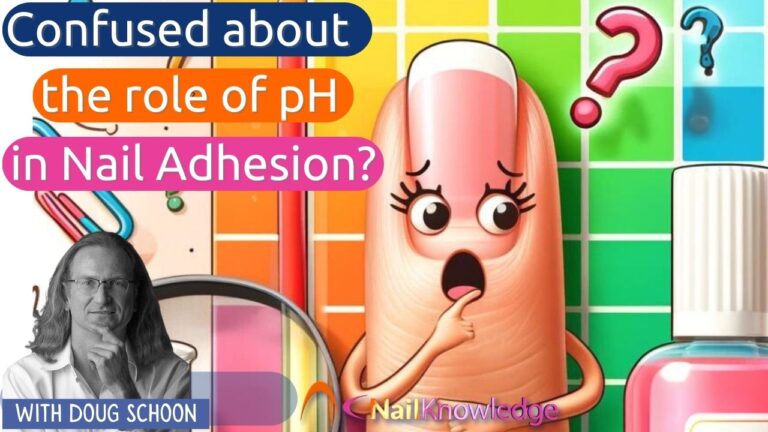
Bạn có bối rối về vai trò của độ pH trong độ bám dính của móng tay không?

Let’s clear things up!

As I stated previously, only water has pH.

Khám phá vai trò của pH và tia UV trong chất thúc đẩy độ bám dính của móng

When nail plate adhesion promoters are mixed with water, it is their effect on the water’s pH that is measured. When this is done the water can become alkaline, acidic or neutral. HEMA is well known for its adhesion promoting ability produces a neutral pH in water. Other adhesion promoters can make the water alkaline, some acidic. So, clearly pH does not determine if something is an adhesion promoter.

Yes, in some cases pH can play a small role, but so does UV. UV causes polymerization of the gel which certainly promotes adhesion, but UV has no pH. So, obviously, there is much more to adhesion, than pH.

Hiểu về tính chất hóa học của gel UV bám dính vào móng tay


Adhesion is caused by the ingredients in the UV gel. Many ingredients are repelled by the surface of the nail plate. However, some are strongly attracted to the nail plate surface. Why? These ingredients create chemical bonds with the nail plate surface, which is the reason for their attraction. The chemical bonds with the nail plate surface is what causes attraction and adhesion, not pH.

There are three main types of bonds, which I’ve listed in order of their adhesive strength.

1. Liên kết hydro là những liên kết yếu nhất, nhưng nhiều liên kết trong số chúng có thể kết hợp với nhau để tạo ra một lượng lớn lực bám dính. Tuy nhiên, chúng có thể dễ dàng bị phá vỡ bởi những thứ như nhiệt, độ ẩm và ứng suất cơ học. Những liên kết này liên tục thay đổi vị trí, vì vậy chúng có xu hướng không quá mạnh, nhưng vẫn có ảnh hưởng lớn và luôn đóng vai trò hữu ích.

2. Liên kết ion are stronger than hydrogen bonds and form by an attraction between opposite positive and negative charges on the ingredient and the nail plate’s surface. The strength of these can be influenced pH, in this way pH plays a small indirect role. These bonds, like hydrogen bonds can still be reversible.

3. Covalent bonds là loại liên kết mạnh nhất trong ba loại liên kết. Liên kết cộng hóa trị có độ ổn định cao và chống lại các yếu tố bên ngoài, cung cấp độ bám dính bền và lâu dài nhất. Chúng thường được coi là không thể đảo ngược vì chúng cần năng lượng đáng kể để phá vỡ chúng.

Các yếu tố ảnh hưởng đến độ bám dính của sản phẩm làm móng

Other factors also affect adhesion, such as how well the product can flow into small nooks and crannies, which is a property called “wetting”. This important property is improved by properly cleaning the nail plate. So, you can see many things, including the cleanliness and condition of the nail plate, affect adhesion. A well-designed nail product will often use a combination of these bonds to achieve the best possible adhesion.

Rủi ro của các loại gel có tính axit trong các sản phẩm làm móng

What about the so-called “acidic gel bases?

Some of these contain acrylic acid. This ingredient uses all three of these types of bonds to improve adhesion, even so I do NOT recommend using products that contain this ingredient. Is a strong skin irritant and likely is responsible for many allergic reactions in the nail industry. In fact, I estimate it is more likely to cause skin problems than HEMA.

Hãy cẩn thận! Tránh tiếp xúc với da và không bao giờ sử dụng trên móng tay bị gãy hoặc nứt.

Thuộc chủ đề:Thông tin chung, Sữa dưỡng, Thuốc và Chất đánh bóng, Phá vỡ huyền thoại, Hóa học sản phẩm

Nâng cao kiến thức về làm móng

Tham gia bản tin của chúng tôi!
ĐĂNG KÝ...

Bản quyền © NailKnowledge

Kiến thức về móng tay

  • Sách điện tử
  • Về chúng tôi
  • Các khóa học
  • Tin tức
  • Blog
  • Bản tin
  • Thuật ngữ

Chính sách

  • Trang riêng tư
  • Điều khoản và điều kiện
  • Chính sách Cookie

Ủng hộ

  • Liên hệ với chúng tôi
  • Gặp gỡ các chuyên gia
  • Hỏi các chuyên gia
  • Hỗ trợ hệ thống
  • Câu hỏi thường gặp
Vietnamese
Vietnamese
English Portuguese Spanish