• Bỏ qua primary navigation
  • Bỏ qua nội dung chính
  • Bỏ qua footer
Kiến thức về móng tay

Kiến thức về móng tay

  • Các khóa học
  • Sách điện tử
  • Giỏ sách điện tử
  • Cơ sở tri thức
    • Cơ sở tri thức
    • Hỏi các chuyên gia
    • Thuật ngữ
  • Tin tức
  • Blog
  • Phòng trưng bày
    • Thư viện nghệ thuật làm móng
    • Nghệ sĩ làm móng
    • Tham gia Elite
  • Đăng nhập

Lưu trữ choTháng 7 25, 2024

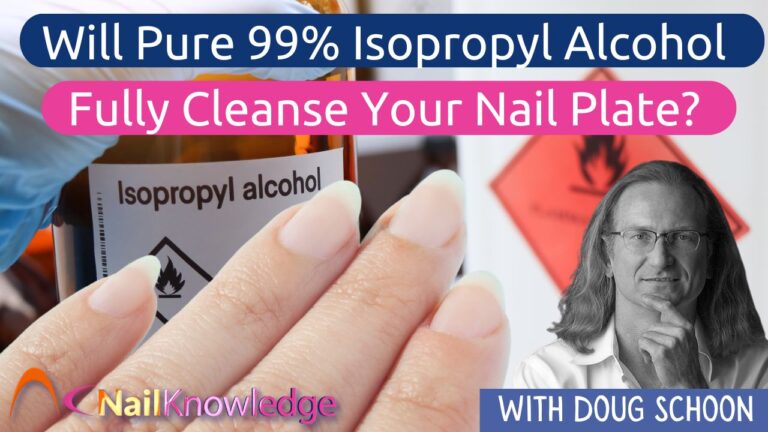
Cồn Isopropyl 99% có thể loại bỏ hiệu quả toàn bộ dầu trên bề mặt móng và độ ẩm trên móng tay không?

We are asked this question a lot, and you are right to call them surface oils. The nail plate contains a lot of oil, but our focus is on removing the surface oils because they can block adhesion. Understanding the complexity of nail oils and the effectiveness of different solvents in removing these oils is crucial for achieving optimal results in nail care.

 Let’s explore why using a professionally designed nail cleaner is more effective than relying on pure isopropyl alcohol alone.

The Complexity of Nail Plate Oils

Các tấm móng tay contains a lot of oil, but we only want to remove surface oils because they can block adhesion. We are making a simplification when we say the nail plate contains “oil”. Nail oil contains many different oily substances, and some are much more difficult to remove from the nail plate than others.  The natural oils in the nail plate are a complex blend of more than a dozen different waxes and oily substances. Most of these substances are secreted by the tissue surrounding the nail plate, but some are transferred from the hair to the nails when they come into contact with each other. Not all oily substances found on the nail plate may be removed when the nail plate is cleaned with either acetone or alcohol or ethyl acetate, the most common solvents used.

Solvent Efficacy in Nail Cleansing

That’s because not all types of nail plate oily substances are soluble in every solvent.  Some are more soluble in acetone, while others are more soluble in isopropyl alcohol.  In other words, different solvents selectively remove various contaminants from the surface of the nail plate. Some solvents can leave behind contaminants that may fill up and/or block the various tiny spaces where the nail coating would normally seep into, harden and anchor itself more firmly to the surface of the nail plate.  This helps explain why cleansing the nail plate is so important to good adhesion. A scientifically designed nail surface cleanser will contain a synergistic blend of solvents and other beneficial additive ingredients that are more likely to do a superior job when compared to using isopropyl alcohol alone. That’s why I recommend using professionally designed nail cleaners and avoiding less effective substitutes.

Thuộc chủ đề:Sữa dưỡng, Thuốc và Chất đánh bóng, Hóa học sản phẩm

Nâng cao kiến thức về làm móng

Tham gia bản tin của chúng tôi!
ĐĂNG KÝ...

Bản quyền © NailKnowledge

Kiến thức về móng tay

  • Sách điện tử
  • Về chúng tôi
  • Các khóa học
  • Tin tức
  • Blog
  • Bản tin
  • Thuật ngữ

Chính sách

  • Trang riêng tư
  • Điều khoản và điều kiện
  • Chính sách Cookie

Ủng hộ

  • Liên hệ với chúng tôi
  • Hỏi các chuyên gia
  • Hỗ trợ hệ thống
  • Câu hỏi thường gặp
Vietnamese
Vietnamese
English Portuguese Spanish