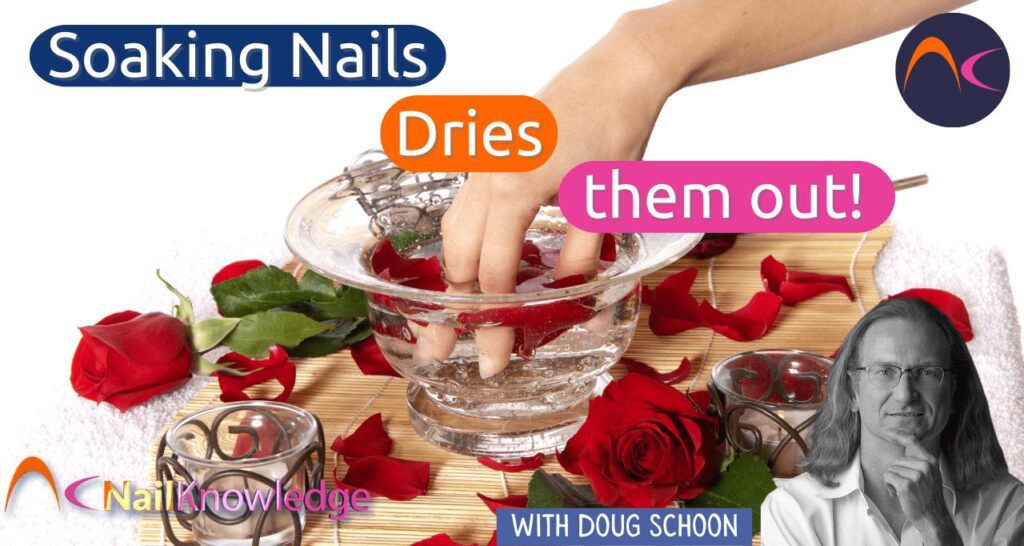
Một quan niệm sai lầm rất phổ biến là ngâm móng tay sẽ làm móng bị khô. Làm sao việc ngâm móng tay trong nước lại có thể khiến móng bị khô được?
Điều đó không hợp lý. Nước không thể khiến bất cứ thứ gì trở nên khô. Lượng nước dư thừa bên trong lớp móng sẽ khiến nó trở nên ẩm ướt hơn. Nếu lượng nước dư thừa đó bay hơi, lớp móng sẽ trở lại mức độ ẩm bình thường. Lớp móng luôn chứa một lượng độ ẩm nhất định, điều này cũng tương tự như việc nói rằng nó chứa nước. Tôi nghĩ điều mà thầy cô của bạn muốn nói là việc tiếp xúc quá nhiều với nước có thể làm hỏng một số lớp móng khi chúng liên tục bị ngâm trong nước rồi lại bị làm khô.
Phân biệt tổn thương và tình trạng khô ở móng tay
Khi lớp móng hấp thụ nước, nó sẽ phồng lên để chứa thêm các phân tử nước đã chen chúc giữa các lớp của lớp móng. Ngâm trong nước hơn sáu mươi giây sẽ cho phép các phân tử nước thấm vào giữa các lớp tế bào móng và bao bọc chúng trong chất lỏng bôi trơn này. Lúc này, các lớp có thể trượt qua nhau dễ dàng hơn, khiến lớp móng dễ uốn cong hơn. Một hiệu ứng tương tự cũng xảy ra khi tóc hấp thụ nước: tóc sẽ dễ dàng bị kéo giãn hơn mà không bị gãy.
Hiệu ứng phồng: Móng tay và sự hấp thụ nước
Khi lớp móng hấp thụ nước, nó sẽ phồng lên để chứa thêm các phân tử nước đã chen chúc giữa các lớp của lớp móng. Ngâm trong nước hơn sáu mươi giây sẽ cho phép các phân tử nước thấm vào giữa các lớp tế bào móng và bao bọc chúng trong chất lỏng bôi trơn này. Lúc này, các lớp có thể trượt qua nhau dễ dàng hơn, khiến lớp móng dễ uốn cong hơn. Một hiệu ứng tương tự cũng xảy ra khi tóc hấp thụ nước: tóc sẽ dễ dàng bị kéo giãn hơn mà không bị gãy.
Tính dễ bị tổn thương của móng tay đã mềm: Tổn thương bề mặt và nguyên nhân
Nước thấm vào khiến móng phồng lên, điều này có thể làm vết nứt lan rộng. Nước thấm vào cũng khiến bề mặt móng trở nên mềm hơn và dễ bị hư hại hơn. Bề mặt móng càng mềm, móng càng dễ bị trầy xước, rỗ, bong tróc và bong vảy. Móng tay mềm dễ bị hư hại hơn do các tác động vật lý như cạy, gỡ, cạo, dũa, v.v. Khi móng tay bị mềm do ngâm trong nước, móng tay càng dễ bị hư hại bề mặt. Mọi người thường đổ lỗi cho nước, nhưng thực tế thì các kỹ thuật viên làm móng tay quá tay thường là nguyên nhân chính gây ra hư hại bề mặt móng tay.
Một nguyên tắc chung cần ghi nhớ là: “Khi móng tay ngâm trong nước hoặc các dung môi khác quá 60 giây, bề mặt móng sẽ dễ bị hư hại hơn trong vòng một giờ tiếp theo”. Hãy cẩn thận!
Các biện pháp phòng ngừa đối với móng tay bị tổn thương: Hấp thụ nước và sưng tấy
Việc rửa tay trong vòng 15 đến 20 giây được cho là không làm tăng lượng nước quá mức trên bề mặt móng. Để duy trì mức độ vệ sinh phù hợp tại các tiệm làm móng và trong các dịch vụ làm móng, khách hàng nên luôn rửa tay trước khi sử dụng bất kỳ dịch vụ làm móng nào. Mặc dù móng khỏe mạnh thường có khả năng chống lại tác động của nước; nhưng khi móng đã bị hư tổn ngâm trong nước quá vài phút, chúng có thể hấp thụ lượng nước quá mức nhanh hơn và khiến bề mặt móng bị phồng lên. Khi móng tay bị phồng lên, các vết nứt hoặc vết rạn hiện có sẽ trở nên trầm trọng hơn, từ đó làm suy yếu móng tay. Tất nhiên, đây cũng có thể là điều mà giáo viên của bạn muốn nói khi cô ấy nói rằng nước làm khô móng tay. Sử dụng thuật ngữ chính xác là điều quan trọng đối với bất kỳ ngành nghề nào và ngành làm móng cũng không ngoại lệ.
Xin vui lòng hỗ trợ giải quyết vấn đề này và luôn cố gắng sử dụng các thuật ngữ chuyên ngành về làm móng một cách chính xác và chuyên nghiệp – điều này sẽ giúp việc trao đổi trở nên rõ ràng và dễ hiểu hơn.

Câu hỏi thường gặp
1. Ngâm móng tay trong nước có thực sự làm móng tay bị khô không?
Không, ngâm móng tay trong nước không làm móng bị khô. Nước không có khả năng gây khô móng. Ngược lại, tiếp xúc quá nhiều với nước có thể dẫn đến các dạng tổn thương khác đối với lớp móng.
2. Việc tiếp xúc quá nhiều với nước ảnh hưởng đến móng tay như thế nào?
Tiếp xúc quá nhiều với nước có thể khiến móng tay bị phồng lên do hấp thụ các phân tử nước. Hiện tượng phồng này có thể dẫn đến việc xuất hiện các vết nứt và làm suy yếu móng tay. Ngoài ra, nước được hấp thụ còn làm mềm bề mặt móng, khiến móng dễ bị trầy xước, bong tróc và bong vảy hơn.
3. Tình trạng hư tổn do nước gây ra trên bề mặt móng có giống với tình trạng khô không?
Tình trạng móng bị hư hại do nước thường bị nhầm lẫn với tình trạng khô, mặc dù hai hiện tượng này không giống nhau. Lớp móng có thể vẫn giữ nguyên độ ẩm như trước, nhưng những tổn thương trên bề mặt trở nên rõ ràng hơn, khiến móng trông có vẻ khô.
4. Tại sao nước lại làm cho móng tay dễ uốn cong hơn?
Khi lớp móng hấp thụ nước, nó sẽ phồng lên và các phân tử nước lấp đầy các khe hở giữa các lớp tế bào móng. Điều này khiến các lớp tế bào móng trượt qua nhau dễ dàng hơn, từ đó làm tăng độ dẻo dai của lớp móng.
5. Cần thực hiện những biện pháp phòng ngừa nào để tránh làm hỏng bề mặt của móng đã mềm?
Để tránh làm hỏng bề mặt của lớp móng đã mềm, điều quan trọng là phải xử lý chúng một cách cẩn thận. Hãy tránh các hành động như cạy, bóc, cạo hoặc dũa móng quá mạnh. Sau khi ngâm lớp móng trong nước hoặc dung môi quá 60 giây, bề mặt của nó sẽ dễ bị hư hại hơn trong vòng một giờ tiếp theo. Việc thận trọng và sử dụng các thuật ngữ chuyên ngành về móng đúng cách sẽ giúp nâng cao sự hiểu biết và giao tiếp hiệu quả hơn trong ngành làm móng.