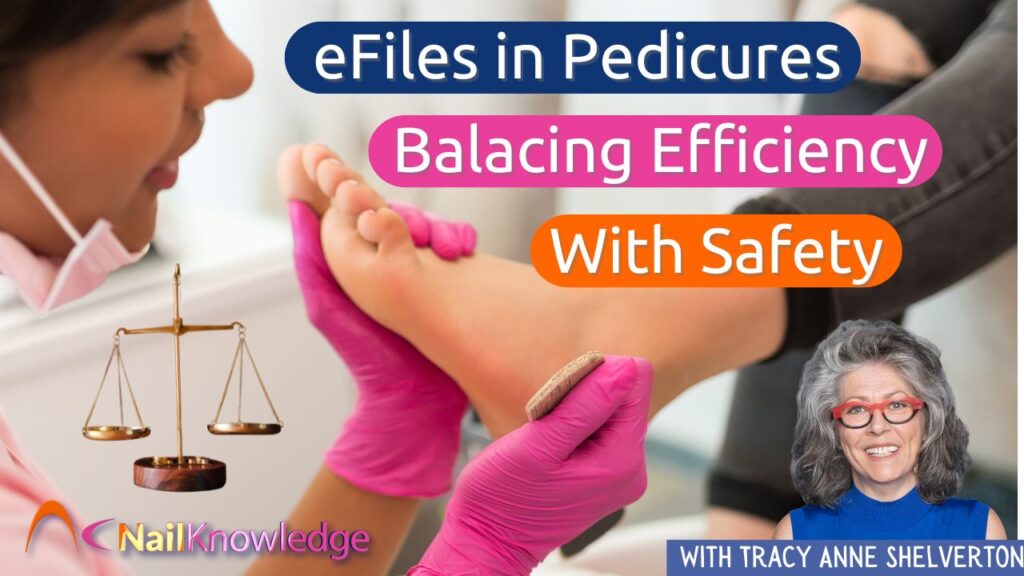
En el panorama en evolución de las técnicas de pedicura, el uso de limas electrónicas (efiles) para la eliminación de piel dura ha provocado un cambio significativo en la forma en que los profesionales abordan el cuidado de los pies. Con la promesa de eficiencia y precisión, las efiles ofrecen una alternativa moderna a los métodos tradicionales.
Sin embargo, este avance tecnológico también plantea interrogantes sobre la seguridad y las mejores prácticas. A medida que más técnicos de uñas y spas adoptan esta herramienta, es crucial comprender las técnicas adecuadas para garantizar un tratamiento seguro y eficaz. En este artículo, profundizaremos en el uso seguro de los efiles para la eliminación de piel dura durante las pedicuras, brindando información y consejos profesionales para ayudar tanto a los profesionales como a los clientes a lograr resultados óptimos sin comprometer la seguridad.

Identificación de las causas de las durezas en los pies y pautas para una pedicura segura
Es importante darse cuenta de que puede haber más de una razón para la piel dura en la planta del pie. Varios factores pueden contribuir a esta afección común, que van desde la mecánica corporal natural hasta influencias ambientales externas. Por ejemplo, la presión y la fricción repetitivas, a menudo causadas por caminar con regularidad o por zapatos que no ajustan bien, pueden llevar al desarrollo de piel engrosada como respuesta protectora.
Además, problemas de salud subyacentes como la diabetes o afecciones de la piel como el eccema y la psoriasis también podrían manifestarse como piel dura en los pies.
Los elementos relacionados con el estilo de vida, como una hidratación insuficiente o estar de pie en exceso, complican aún más el panorama. Comprender las múltiples causas de la piel dura es crucial para abordar el problema con eficacia y elegir el tratamiento o las medidas preventivas adecuadas.
Creo que es más fácil decir QUE SI el cliente tiene una contraindicación, es decir, diabetes, quimioterapia, inmunoterapia, reuma o artritis reumatoide, NO se debe realizar ningún servicio cosmético, simplemente porque las complicaciones de ir demasiado lejos con un efile son realistas y no deben ignorarse.
Los inconvenientes de utilizar un archivo electrónico para pedicuras: Una perspectiva prudente
La ventaja de un efile no me queda clara, una lima de pies de calidad debería ser más que suficiente para un servicio cosmético siempre y cuando se haya utilizado un ablandador de callos como indica el fabricante e incluso entonces es necesario dejar una capa de piel endurecida en su lugar para evitar la sobreproducción de más células queratinizadas que produce el cuerpo para protegerse creando aún más problemas para el siguiente servicio.
Con un efile si se aplica demasiada presión se daña el pie aunque no sea intencionado puede causar una incomodidad extrema a su cliente y lo que es peor una infección con todas las complicaciones que eso puede traer consigo.
Solo porque todos lo estén haciendo no significa que sea algo bueno.
Tratamiento eficaz de las callosidades: Comprender y tratar las causas profundas
Al abordar problemas de endurecimiento excesivo o piel dura en los pies de un cliente, es esencial investigar y tratar las causas subyacentes, en lugar de simplemente abordar los síntomas. Este enfoque asegura que no se quede atrapado en un ciclo de problemas recurrentes.
Las muchas preguntas que recibimos sobre este tema resaltan la necesidad de una comprensión más profunda de la anatomía del pie y la complejidad de sus capas de piel antes de realizar cualquier procedimiento.
Mi consejo para mis colegas profesionales es sencillo: opta por una lima de mano de alta calidad junto con un suavizante de callos eficaz. Este método no solo mantiene la integridad de la piel del pie, sino que también mantiene a tus clientes satisfechos y saludables.