La terminología a menudo puede ser un punto de confusión tanto entre profesionales como entre clientes. Una consulta común que encontramos se refiere al uso del término “gel” en relación con productos que contienen cianoacrilato. Un compuesto tradicionalmente reconocido como un tipo de pegamento. Este problema subraya un desafío más amplio en la industria: comprender las distinciones y las superposiciones entre las diferentes categorías de productos.
Este artículo pretende aclarar estos matices, explorando cómo un ingrediente puede encajar en múltiples definiciones de producto, y por qué un lenguaje preciso es crucial en la industria de la belleza para mejorar la profesionalidad y reducir los malentendidos.


Usos versátiles de los cianoacrilatos en la industria de la belleza
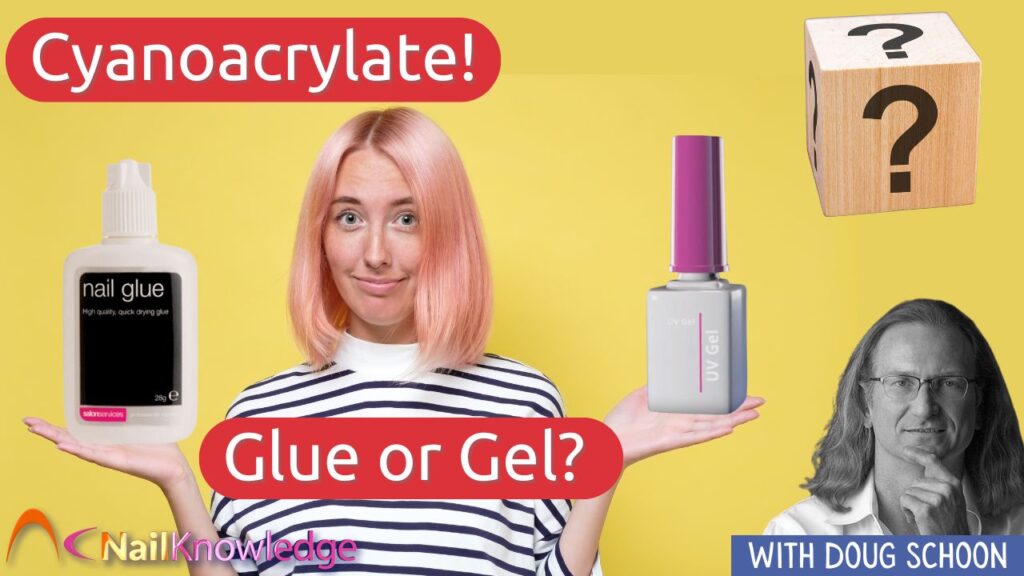
Los cianoacrilatos son monómeros de la familia del acrílico que se utilizan para muchos propósitos en la industria de la belleza. Por ejemplo, se usan como adhesivos para puntas de uñas, se utilizan para adherir pedrería y otros accesorios a las uñas, también se usan para crear envolturas de fibra de vidrio y seda, y se usan regularmente como adhesivos para pestañas. También se venden como “geles de uñas sin luz” y para los llamados sistemas de “dip”.
En todos los casos, se consideran adhesivos, ya que se adhieren a la placa de la uña y más comúnmente se les llama “pegamento”. Los cianoacrilatos pueden ser finos y acuosos o espesos hasta una consistencia similar a la de un gel. Algunas personas confunden el término “gel” con que solo significa geles que curan con luz UV. Los geles que curan con luz UV se llaman “geles” debido a su consistencia similar a la de un gel. En otras palabras, no todos los geles curan con luz UV. La palabra “gel” describe la consistencia del producto, no su química ni su composición.
Los geles para el cabello, por ejemplo, se espesan hasta obtener una alta viscosidad, por lo que se les llama geles. Por lo tanto, es totalmente correcto referirse a un cianoacrilato espesado como un gel. Los profesionales de las uñas deben entender que no todos los geles son geles de curado UV. Por eso, al referirse a los geles UV, no se les debe llamar simplemente “geles”, que es un nombre demasiado simplista.
La importancia de una terminología precisa en el cuidado profesional de las uñas
Este es un buen ejemplo de por qué es importante utilizar términos más descriptivos cuando se habla de productos para las uñas, aunque sólo sea para reducir la confusión.
Otro ejemplo de esto son las mezclas de monómeros sofisticadas y de alta tecnología utilizadas para crear productos de uñas artificiales. Estos productos se encuentran entre los productos científicamente más avanzados de la industria de la belleza, sin embargo, los profesionales de las uñas se refieren a ellos como “líquido”. Los polvos de polímero son igualmente sofisticados y complejos, sin embargo, simplemente se les llama “polvos”.
Si las técnicas de uñas quieren que los clientes las reconozcan como profesionales, harían bien en usar términos más profesionales, como gel UV, monómeros y polímeros.