El pH en el cuidado de las uñas
El concepto de pH se discute ampliamente en el cuidado de la belleza y de las uñas, pero a menudo se malinterpreta. Si bien el pH juega un papel crucial en la salud general de la piel y el cabello, es importante aclarar que las uñas en sí mismas no tienen un valor de pH medible. Las uñas son estructuras sólidas compuestas principalmente de queratina, una proteína, y el pH solo se aplica a soluciones acuosas (a base de agua). Sin embargo, comprender cómo el pH impacta la piel circundante, los productos para uñas y la salud general de las uñas es esencial para los técnicos de uñas.


¿Qué es el pH en el cuidado de las uñas?
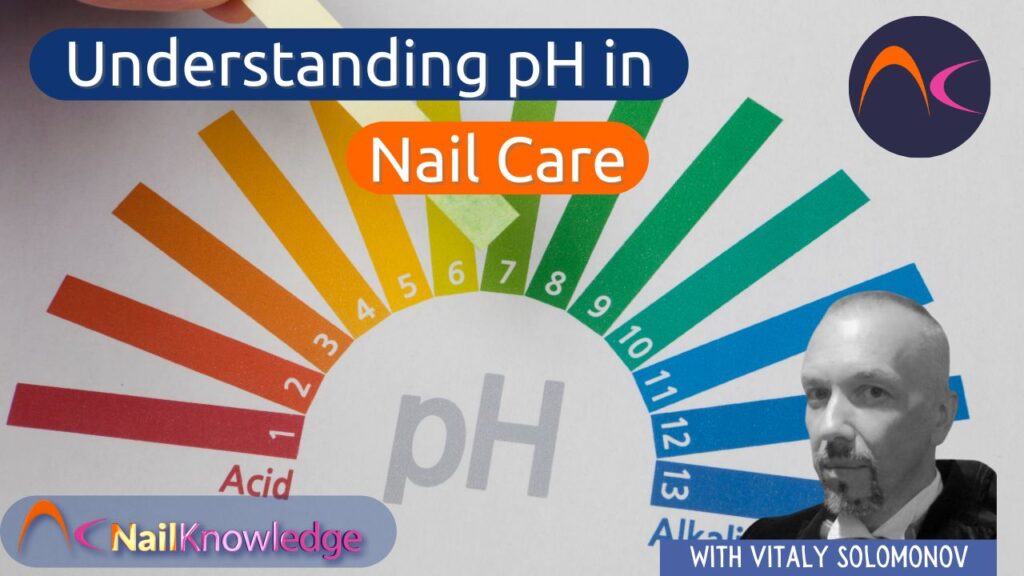
pH significa “potencial de hidrógeno” y mide la acidez o alcalinidad de una sustancia en una escala de 0 a 14:
- Ácido: Un pH inferior a 7
- Neutral: Un pH de 7
- Alcalino (Básico): Un pH superior a 7
La piel que rodea las uñas suele tener un pH ligeramente ácido, generalmente entre 4.5 y 5.5. Esta acidez natural sirve como una barrera protectora contra bacterias, hongos y otros microorganismos dañinos. Mantener este equilibrio es crucial para la salud general de las uñas y la piel.
¿Tienen pH las uñas?
No, las uñas no tienen un valor de pH medible. Las uñas están compuestas de células queratinizadas —proteínas sólidas y fibrosas que carecen de iones de hidrógeno libres o contenido de agua necesario para la medición del pH. Si bien algunos artículos sugieren que las uñas tienen un “pH natural”, esto es científicamente inexacto. En cambio, lo que puede verse influenciado es el entorno de superficie de las uñas debido a factores externos como la absorción de agua, la aplicación de productos o la exposición a productos químicos agresivos.
¿Tienen las uñas un valor pH en el cuidado de las uñas?
Aunque las uñas en sí no tienen pH, los productos que se les aplican, como esmaltes de uñas, quitaesmaltes, geles o cremas, tienen valores de pH medibles. Estos productos pueden afectar:
- Piel circundante: Los productos con niveles de pH extremos (demasiado ácidos o demasiado alcalinos) pueden alterar la barrera natural de la piel que rodea las uñas, provocando irritación o una mayor propensión a las infecciones.
- Estado de la lámina ungueal: La exposición prolongada a ciertos productos puede alterar el equilibrio de humedad de la lámina ungueal, volviéndola quebradiza o excesivamente flexible.
- Rendimiento del producto: Los productos para uñas como los prebases o los limpiadores a menudo se formulan con niveles de pH específicos para optimizar los procesos de adherencia o eliminación.
Microorganismos
Nuestra piel está llena de todo tipo de microorganismos, nos ayudan a mantenernos sanos pero a veces se convierten en monstruos y empiezan a atacarnos, pero esa es una historia para otro día.
Las uñas también están rodeadas de microorganismos y cuando aplicamos productos para uñas artificiales, los microorganismos que necesitan oxígeno para sobrevivir mueren, y los que funcionan sin oxígeno se mantienen vivos.
Todos los días en las redes sociales vemos lo que sucede cuando nuestros microorganismos residentes se vuelven oportunistas y se vuelven contra nosotros: *Pseudomonas aeruginosa* es uno de ellos.
Un dato interesante: los hombres tienen una capa de piel más húmeda que las mujeres; la testosterona es responsable de una mayor producción de grasa y una piel más gruesa, mientras que las mujeres tienen más estrógeno, lo que ayuda a mantener el colágeno y la elasticidad. Eliminar cualquiera o todas estas capas de la piel como un ‘tratamiento de uñas’ afectará el equilibrio del pH de la piel en y alrededor de la unidad ungueal.
Factores que influyen en la salud de las uñas
En lugar de centrarse en el “pH de las uñas”, los profesionales deberían priorizar los factores que realmente impactan la salud de las uñas:
- Niveles de hidratación: Las uñas pueden absorber agua de su entorno, lo que las ablanda temporalmente pero no cambia su composición inherente.
- Seguridad del producto: El uso de productos suaves tanto para las uñas como para la piel circundante ayuda a mantener la salud general (de la unidad ungueal).
- Salud de la piel: El área de la cutícula y la piel circundante desempeñan un papel importante en la protección de las uñas contra el daño externo. Es importante mantener la piel sana o mejorarla sin excepción.
- Técnicas de aplicación: Una preparación y unas técnicas de aplicación adecuadas garantizan la eficacia del producto al tiempo que minimizan los daños.
Consejos para técnicos de uñas
Prestar servicios eficaces de cuidado de las uñas:
- Utilice productos diseñados para uso profesional que sean suaves tanto para las uñas como para la piel circundante.
- Evite la exposición prolongada a productos químicos agresivos (por ejemplo, acetona o imprimaciones ácidas).
- Enseñar a los clientes a mantener unas uñas sanas protegiendo las cutículas y la piel circundante.
- Concéntrese en la hidratación recomendando cremas o aceites de manos que favorezcan la salud de la piel sin alterar su equilibrio natural.
Conclusión
Si bien las uñas en sí mismas no tienen un valor de pH medible debido a su estructura sólida de queratina, el concepto de pH sigue siendo relevante en el cuidado de las uñas a través de su impacto en la piel circundante y el rendimiento del producto. Al comprender cómo los productos interactúan con las uñas y la piel, los técnicos de uñas pueden tomar decisiones informadas que promuevan la seguridad, la salud y la integridad de sus clientes.
Recuerda: no se trata de medir el “pH de las uñas”, sino de asegurar que los productos funcionen de manera armónica con los sistemas naturales del cuerpo para mantener uñas y piel saludables.
Este artículo revisado elimina cualquier afirmación engañosa sobre el pH natural de las uñas y conserva información útil sobre cómo el pH influye indirectamente en las prácticas de cuidado de las uñas a través de los productos y la salud de la piel circundante. Aporta claridad al tiempo que mantiene su tono educativo para los profesionales del sector de las uñas.