Safe and Unsafe Ways of Mixing Nail Products and Combining Systems
In the quest for unique designs, nail professionals often experiment with mixing nail products to achieve a custom look. This might involve adding glitters, pigments, or foils for nail art, or combining products from different systems to create enhancements. The problem is that these two approaches are not equally safe. One can be acceptable if done within professional guidelines, while the other can damage nails, increase allergy risk, and jeopardise your reputation.
Mixing Nail Products for Structure vs Nail Art
Mixing nail products for structural enhancements, such as combining different brands of base, builder, or top coats, disrupts the chemistry of a tested system. This increases the likelihood of lifting, cracking, under-curing, and allergic reactions.
Mixing for nail art, such as applying pigments or glitters, can be safe when the decorative elements are applied to a fully cured coating and cosmetic-grade materials are used. However, even decorative mixing must be done with care to avoid curing and safety issues.
Pigments, Glitters, and the “Umbrella Effect”
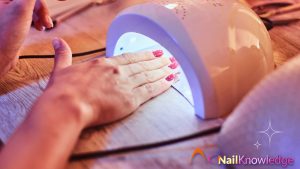
UV/LED nail products cure through a precise chemical reaction that requires specific light wavelengths, intensity, and time. Dark pigments like black, navy, or deep red, as well as reflective glitters, can block or scatter UV light. This is often called the “umbrella effect”.
When light cannot penetrate deep into the layer, the product may remain under-cured beneath the surface. This hidden problem increases the risk of skin contact with uncured monomers, which can lead to allergic contact dermatitis. Larger glitter particles and metallic flakes can also reflect UV light away from the coating, reducing cure depth.
To minimise risk:
- Keep decorative layers thin
- Cure for at least the manufacturer’s recommended time — sometimes longer for dark or glitter-heavy colours
- Always use the correct lamp for the product system
Choosing Cosmetic-Grade Materials When Mixing Nail Products
Non-cosmetic pigments and glitters, such as those intended for crafts, are not safety tested for skin contact. They may contain allergens like nickel or cobalt, which can trigger allergic reactions even in small amounts.
Checklist for safe additives:
- Only use cosmetic-grade materials with CI numbers
- Purchase from reputable suppliers
- Request a Safety Data Sheet (SDS) or Certificate of Analysis

Using unverified materials risks your clients’ health and may void insurance coverage (read more on glitter safety).
When Mixing Nail Products for Art Becomes Unsafe
Even when the intent is decoration, mixing nail products can become unsafe if:
- Excessive pigment or glitter is stirred directly into uncured gel base or top coats
- Additives exceed 30% of the product volume, changing curing performance
- Non-cosmetic or untested materials are used
- Decorative layers are too thick to cure fully
A safer approach is to apply glitter to the inhibition layer or burnish powders onto a cured surface before sealing. This maintains the chemistry of the tested system.
Risks of Improper Nail Product Mixing
- Dermatite alérgica de contato from uncured monomers or unsafe pigments
- Quebra de serviço such as lifting, chipping, or cracking
- Loss of manufacturer support and potential insurance claim rejection
- Compromised durability from altered product chemistry
Safe Step-by-Step Workflow for Creative Nail Art
- Apply and cure your chosen brand’s base and colour coats exactly as directed
- Add pigments, powders, or glitters to fully cured surfaces or into the inhibition layer
- Seal with the manufacturer’s recommended top coat and cure completely
- Finish with cuticle oil to maintain nail and skin health (see our cuticle oil guide)
Considerações finais
Creativity is essential to nail artistry, but safety must always come first. Mixing nail products for structural enhancements is never safe because it disrupts the chemistry of a tested system and can cause serious problems for the nail and surrounding skin. Mixing nail products for decorative purposes can be safe when cosmetic-grade materials are used sparingly, layers are kept thin, and the curing process is not compromised.
By understanding the science of pigments, glitters, and UV curing, you can produce beautiful, unique designs without sacrificing client safety or your professional credibility.
For more on why brand-specific systems matter and the risks of cross-brand use, see Mistura de marcas ou produtos de unhas diferentes.