The official description of a “cosmetic” is:
Article 2 of the UK Cosmetics Regulation (UKCR – Schedule 34 of the Product Safety and Metrology Statutory Instrument) and the EU Cosmetics Regulation (Regulation (EC) No. 1223/2009) incorporates the following definition of a cosmetic product:
A “cosmetic product” shall mean any substance or mixture intended to be placed in contact with the various external parts of the human body (epidermis, hair system, nails, lips, and external genital organs) or with the teeth and the mucous membranes of the oral cavity with a view exclusively or mainly to cleaning them, perfuming them, changing their appearance and/or correcting body odours and/or protecting them or keeping them in good condition.
(Isso se refere ao Reino Unido e à UE, mas é uma descrição global)
Nearly all of the products that are contained in this description are designed for use and contact with the skin. Of course, some of the 100’s of ingredients will prove to be irritants or an allergy to some. This can apply to any substance that comes into contact with, is ingested, or inhaled by us. Food allergies are just one such example. It is very unfortunate when this happens, but no one knows it will until it happens.
MUITO GRANDE MAS aqui:
For us in the nail industry, EVERY nail coating we use (even traditional nail polish, although this is a low-level example) is NOT designed to touch the skin, be ingested, or be inhaled.
We MUST know this and not wait to see if an allergy happens! Allergies are avoidable! It isn’t a gamble; it is a guarantee!! Touch the skin in any of the many ways, inhale or ingest: then it is not an “if”, it is a “when”!
Every ingredient in nail coatings of any kind must be approved for cosmetic use (following the local Cosmetic Ingredients Regulations). Each nail coating label should have “Avoid skin contact”.
And it really does mean this! Not the tiny touch that “doesn’t matter”! Not the little overlap wiped off with a thumbnail or an orangewood stick! And, most definitely, not an improperly cured coating that can leach out or be released during shaping or removal! (LINK)
Selling many “professional” coatings in the retail market (including online) is dangerous. The consumer does not understand neither the science, nor how to work cleanly and safely! Do YOU, as a nail professional? Since July in the UK and EU, HEMA and di-HEMA have been banned from retail sale products for just this reason.
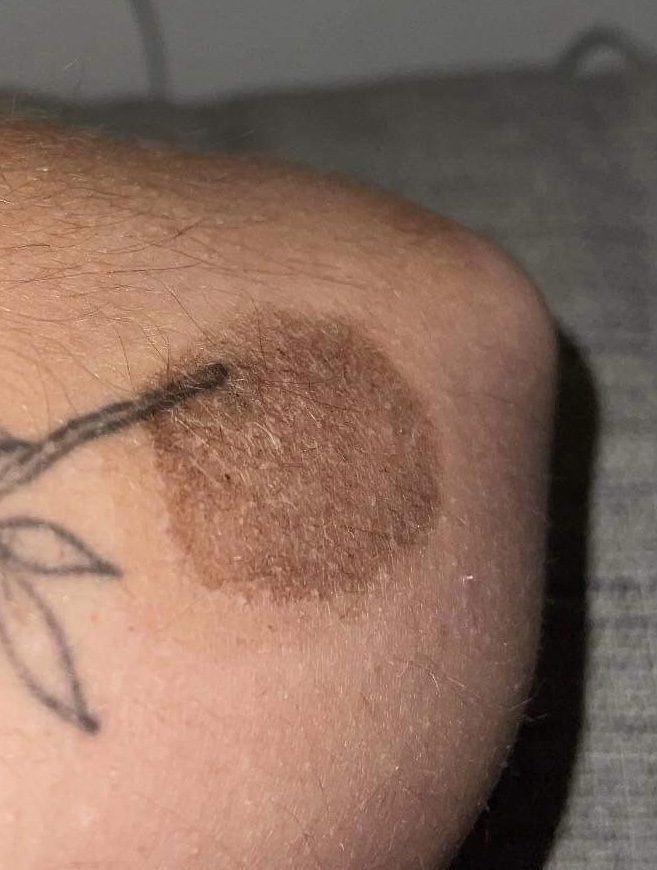
Just to reinforce this information, included is a picture of a nail pro’s arm. Some ‘rubber base’ was spilled on the desk. It was cleaned well with alcohol (IPA actually). No trace of it was noticed. It was then leaned on, and this horrible reaction appeared overnight. And it is VERY sore!
The brand is irrelevant but the product has a high level of monomers, specifically HEMA, as it happens.
We are seeing more and more allergies. Not nearly enough nail pros are able to recognize a possible allergy, and are ‘diagnosing’ all sorts of misinformation. Once an allergy exists there is no going back. The ingredient/s need to be identified and avoided forever. This can result in the end of a career or a client unable to wear anything but nail polish forever!
Entenda e acredite na ciência!
Chemical burn from contact with “rubber base” 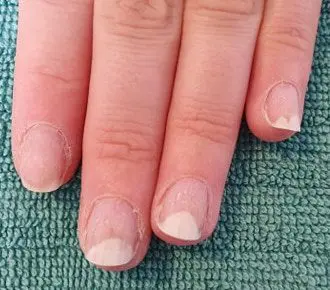
Onicólise do revestimento da unha 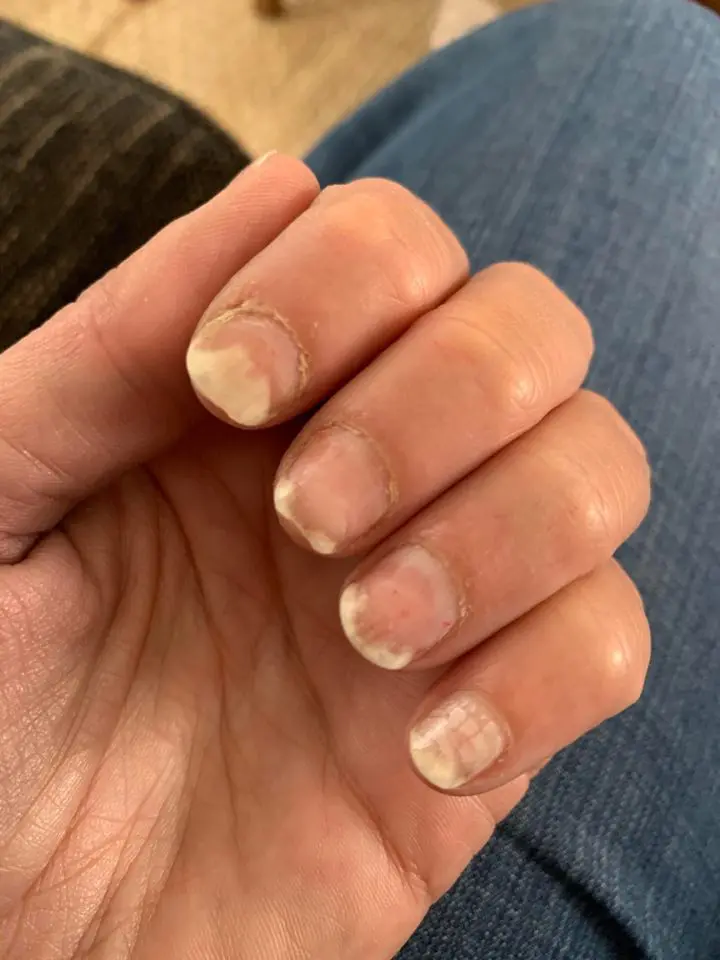
Onicólise do revestimento da unha 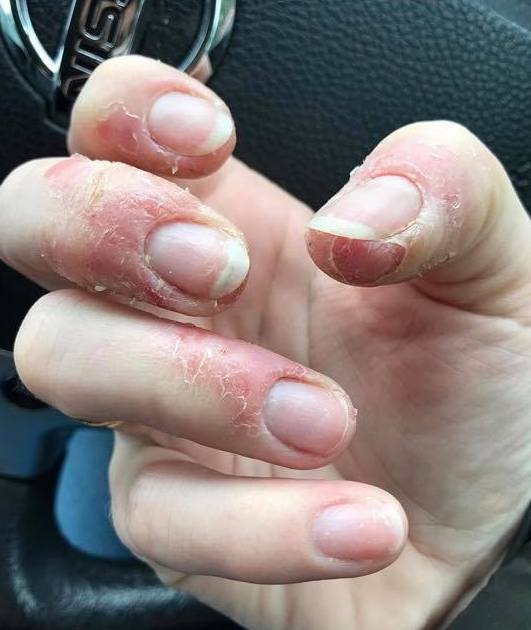
Dermatite de contato, avançada 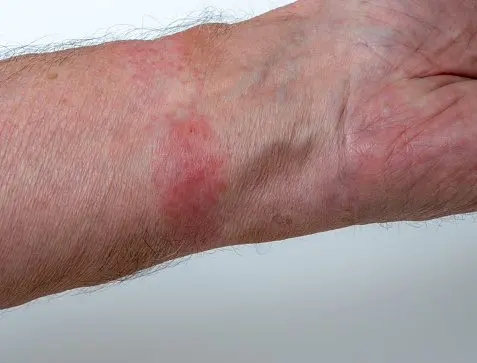
Reação alérgica