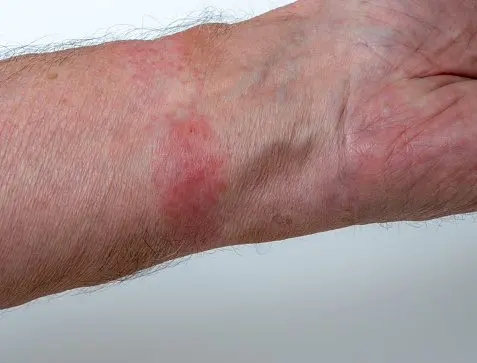
There are always questions about why some people develop a nail allergy and others don’t. Some even believe that, unless everyone develops a reaction, a product must be safe!
This is a perfect example of how every individual is different. Not every treatment/service protocol is suitable for every client. Why “one size doesn’t fit all”!
Os indivíduos são apenas isso: indivíduos.
This can be simply explained by understanding ‘overexposure’. There is a safe and unsafe level for every chemical but what that level is that goes from safe to unsafe for each individual is unknown.
A reaction happens when a person’s immune system detects something that it has seen before and doesn’t much like it. The antibodies rush to destroy it and destroy it they do. But, one day, the immune system considers the substance as a threat and produces an inappropriate reaction. It has been overexposed. This can happen almost immediately or over time. But, once it’s happened, the immune system will remember that ‘threat’ forever.
As pessoas que desenvolvem uma alergia alimentar geralmente têm uma indicação de que algo está errado. Podem ser problemas digestivos, talvez problemas de pele ou até mesmo uma sensação estranha na boca ou na garganta. Se essas reações forem detectadas, muitas vezes é possível, com um processo de eliminação, descobrir o que é e, então, evitar esse alimento.
The moment when a substance is seen as a ‘threat’ cannot be anticipated.
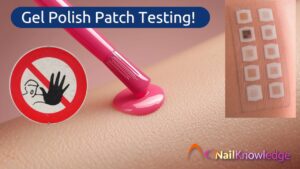
In nail coating products, acrylates and methacrylates are known allergens (why they must not touch the skin). But they have many uses. Someone could react after the first time wearing, for example, a UV gel polish. But no one will know what exposure to the substances has come before!
IMPORTANT: this is very unlikely to happen if there is no skin contact and the coating is cured correctly!
So this, basically, is why some develop an allergy to a product and others don’t. However, it can be almost entirely avoided!
– avoid any skin contact (even from the inhibition/sticky layer)

– used only matched systems with the correct UV lamp
– ensure a proper cure with correct timing and thin layers
– double cure if there is any doubt
– minimise dust by ‘at source’ dust capture
– do not thin the nail plate, therefore, making it more porous
– avoid products with a high % of acrylates and methacrylates that cannot be properly cured
– use trusted brands
There is also a lot of puzzlement when hands and fingernails react but feet and toenails don’t. The skin in both areas is slightly different and the feet are less sensitive to the penetration of the allergens. It doesn’t mean that the allergy doesn’t exist!
Remember: never diagnose! If you suspect an allergic reaction, remove all product immediately and suggest the client gets a medical diagnosis.
Faça nosso curso GRATUITO sobre Alergias e como elas ocorrem para saber mais.