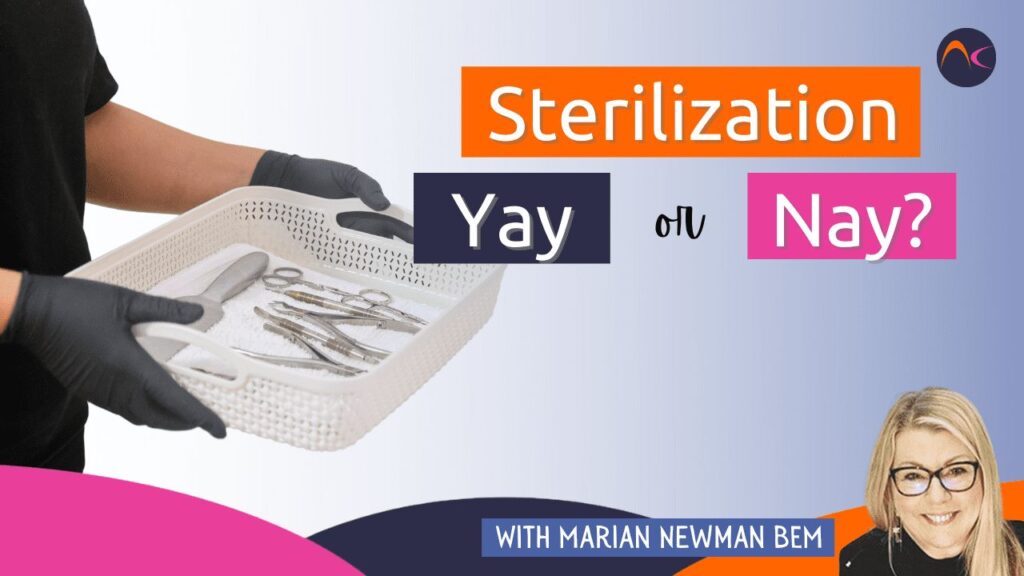
For the last two years, there have been endless discussions on Health & Safety measures and hygiene due to the pandemic. But, for decades, every country has had training courses that are clearly ‘not fit for purpose’. They do not teach their students about the decontamination levels that will guarantee to keep their clients (and themselves and employees) as safe as possible. We are talking about cleaning/sanitizing, disinfection, and sterilization.
Even with some lack of education, the pandemic should have brought some focus onto hygiene and understanding what is required for us, nail professionals. From some ‘digging’, it seems that there are several levels within the sector:
- những người coi trọng vệ sinh và khử nhiễm và hiểu rõ các cấp độ
- những người có sự hiểu biết hợp lý và làm tốt nhất
- những người muốn khách hàng của họ nghĩ rằng mức độ vệ sinh của họ cao, nhưng có thể không hiểu đầy đủ
- những người không chú trọng vào vấn đề vệ sinh thực sự.
Bạn là người nào?
The debate on whether nail services need an autoclave continues with plenty of arguments on both sides. In reality, an autoclave is essential for tools that may come into contact with any bodily fluids. This would suggest that nail services do not require this level of hygiene. But do they?
It is very easy to nick the skin with a file or cuticle nippers. It is also easy to cause a minor abrasion on the skin with a buffer, and it is definitely easy to cause an abrasion when using an e-file at the base of the nail and on the Proximal Nail Fold.
A cut on the skin is usually obvious as it will bleed. If it is a file that has caused the wound, we can discard it. If it is a metal tool, then it will likely have blood on it however minuscule. However, with a minor abrasion, the likelihood is that it will not be noticed immediately. But as soon as it happens it will become slightly wet. This is plasma from the blood that is clear and may have some white blood cells in it; it could be lymphatic fluid. Both are there to help protect the wound from infection. (Red blood cells and other blood bourn cells will arrive to heal the wound, and this is when the redness/inflammation can be seen some time after). As the PNF is living skin there can also be leakage of the contents of the skin cells.
Vì vậy, mô tả này cho thấy các công cụ có thể tiếp xúc với chất dịch cơ thể mà bạn không hề hay biết! Có lý lẽ cho việc sử dụng lò hấp, đặc biệt là nếu bạn sử dụng giũa điện tử trên da.
Ngoài ra còn có ý kiến cho rằng thợ làm móng chuyên nghiệp muốn thực hiện mọi biện pháp phòng ngừa về sức khỏe và an toàn nhất có thể, và muốn khách hàng biết điều đó để họ cảm thấy an toàn.
The autoclave is the highest level of decontamination but one level down from that is using a hospital-grade disinfection system. This is very specific and it should say in the brand specifications and marketing what level of pathogens it will destroy. It will have clear instructions on how to use it, and it will be strong enough to be harmful to the skin. For nail services with no autoclave, this level is non-negotiable. It must be part of any hygiene routine for metal tools. If the instructions are followed to the letter, it will be good enough for any minor contact with bodily fluids.
Một chất khử trùng thông thường sẽ không thể thực hiện công việc này một cách hiệu quả.
Đi xuống một mức là chất khử trùng cho bề mặt cứng. Chất này vẫn không thích hợp để tiếp xúc với da nhưng có thể dùng để lau bàn, sàn, công tắc đèn, tay nắm cửa, v.v. Chất này sẽ không làm sạch hoàn toàn các dụng cụ bằng kim loại.
The lowest level is ‘cleaning’ and this falls into two categories:
- Phương pháp tốt nhất là dùng xà phòng lỏng, nước chảy (nóng hoặc lạnh) và tiếp xúc đủ lâu với xà phòng và nước.
- Chất tẩy rửa gốc cồn, thường ở dạng gel. Nó ở dạng gel vì cồn cần tiếp xúc với bề mặt trong thời gian ngắn và gel bay hơi chậm hơn chất lỏng loãng.
Mức độ này là cần thiết để vệ sinh tay của cả thợ làm móng và tất cả khách hàng. Phương pháp đầu tiên luôn phải được thực hiện trước và sau đó được hỗ trợ tại bàn làm việc bởi phương pháp thứ hai. Phương pháp thứ hai không bao giờ được thay thế xà phòng và nước trong dịch vụ làm móng.
Phương pháp đầu tiên, sử dụng xà phòng và nước, cũng là một bước CẦN THIẾT trước khi hai cấp độ trên cùng (nồi hấp và chất khử trùng cấp bệnh viện) có thể được thực hiện hiệu quả! Mỗi dụng cụ phải được rửa bằng xà phòng lỏng và nước bằng bàn chải để làm sạch mọi mảnh vụn và dầu mỡ sẽ cản trở quá trình khử nhiễm.
Your safety, your client’s safety, and the safety of others around you are paramount. Do not cut corners. It is far better and far more professional to go over and above where hygiene is concerned.
Đọc thêm trong Vệ sinh tiệm làm móng đúng cách.