We’ve all seen it slapped across bottles on beauty shelves: “Enriched with Micronized Calcium!” It sounds sciencey and impressive, right? Like something your nails have been secretly crying out for all along. But just because it’s trending doesn’t mean it’s truly doing what marketers claim.
When it comes to micronized calcium, some nail product manufacturers suggest it helps your nails absorb calcium better, supposedly making them stronger and healthier. It sounds logical on the surface. After all, calcium is essential for strong bones and teeth. But nails? Well, that’s where things start to get murky.
How Micronized Calcium Is Used in Nail Products
Let’s start with the basics. Micronized calcium is just regular calcium that’s been ground down into an ultra-fine powder, sometimes as tiny as one micron (that’s a thousandth of a millimetre). It’s not a chemical change; it’s purely physical. This isn’t some magical new form of calcium that suddenly penetrates the body in ways regular calcium can’t. It’s simply smaller particles.
You’ll often hear comparisons made to talcum powder or floating dust, which are also examples of micronized substances. The idea is that because the particles are smaller, they might be more easily absorbed. But this is where the marketing stretches beyond what science actually supports.
The Marketing Myth of Absorption
According to Doug Schoon, one of the world’s leading scientific voices in the nail industry, these absorption claims don’t hold water, literally or figuratively. He’s spoken to marketers who say that since calcium is good for bones and teeth, it must be good for nails too. That’s a convenient leap, but not one grounded in actual evidence.
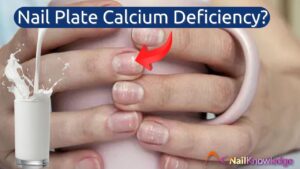
Here’s the kicker: nails are made of keratin, not bone. They don’t have blood flow, so they don’t “absorb” nutrients in the way living tissues do. Studies show that only trace amounts of calcium are found in nails, and interestingly, it’s usually just on the surface. Where does it come from? Most likely the water we wash our hands with. Tap water naturally contains dissolved calcium, and that’s the only place it really seems to come from in terms of nails.
So if water, which contains individual calcium molecules, can’t get into the deeper layers of the tấm móng tay, how exactly would a solid micronized particle, made up of thousands of molecules, manage to penetrate it? The answer is simple: it can’t. It just sits on the surface until it’s washed off.

Why Do Brands Use It, Then?
That’s the million-pound question. If micronized calcium doesn’t benefit the nails in any meaningful way, why do some brands include it?
The answer lies in perception. The beauty industry thrives on ingredients that sound beneficial. Micronized calcium gives products a kind of health halo. It adds a pseudo-scientific edge that makes them seem advanced or premium. For consumers who associate calcium with strength, the leap feels natural. But feeling natural doesn’t make it scientifically accurate.
There’s also the trend factor. Once a few brands start adding something and shouting about it, others often follow suit to stay competitive. It becomes more about shelf appeal than actual function.
Why Particle Size Doesn’t Help Micronized Calcium Work Better
In the case of canxi dạng vi hạt, not at all. This is truly one of those moments where the size of the particle doesn’t change its effectiveness, or in this case, its ineffectiveness.
Doug Schoon is refreshingly blunt on the matter. He says there’s simply no demonstrated benefit to putting any form of calcium in nail products, especially when it comes to promoting nail plate strength or health. Washing your hands with tap water will expose your nails to just as much useful calcium (if not more) than slathering on a fancy product with micronized particles.
So What Should You Look for Instead?
Rather than chasing hyped-up ingredients, look for nail products that are backed by real science and deliver proven benefits. Moisturisers containing ingredients such as glycerine, jojoba oil, or urea can help retain water and improve nail flexibility. Flexible nails are stronger and less likely to break.
If your goal is healthier nails, focus on consistent care: hydration, protection from harsh chemicals, and regular maintenance. Diet can help too, but again, it’s more about overall nutritional balance than mega-dosing one element like calcium.
Bottom Line: Don’t Be Fooled by Fancy Labels
It’s easy to be seduced by claims and buzzwords. After all, we want the best for our nails, and if a label promises strength and health through some high-tech sounding ingredient like micronized calcium, it’s tempting to believe.
But science isn’t about what sounds good, it’s about what works. And in this case, there’s just no credible evidence that micronized calcium delivers anything your nails actually need. It’s a well-crafted marketing story, not a miracle ingredient.
So the next time you spot a product touting its calcium content, ask yourself: Is this science or salesmanship? And remember, sometimes, the smallest particles make the least impact.