• Bỏ qua primary navigation
  • Bỏ qua nội dung chính
  • Bỏ qua footer
Kiến thức về móng tay

Kiến thức về móng tay

  • Các khóa học
  • Sách điện tử
  • Giỏ sách điện tử
  • Cơ sở tri thức
    • Cơ sở tri thức
    • Hỏi các chuyên gia
    • Thuật ngữ
  • Tin tức
  • Blog
  • Phòng trưng bày
    • Thư viện nghệ thuật làm móng
    • Nghệ sĩ làm móng
    • Tham gia Elite
  • Đăng nhập

Lưu trữ choTháng 3 31, 2025

Đốm trắng trên móng tay sau khi tháo gel

Đốm trắng trên móng tay: Do tổn thương hay mất nước?

White spots on nails after gel removal are a common concern among nail professionals and enthusiasts. They don’t result from dehydration but rather from improper removal techniques. UV gel manicures are safe when applied and removed correctly. Adhering to recommended wear times, typically two weeks, is crucial.
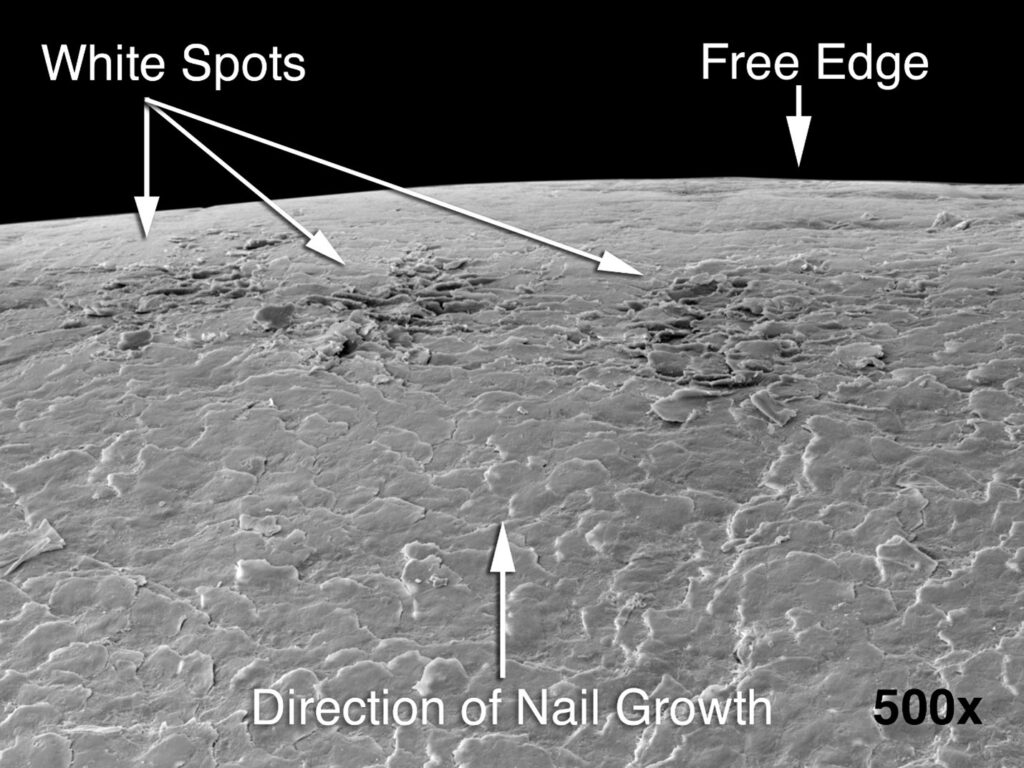
Improper removal of UV manicures can cause surface white spots on the nail plate.

Extending wear beyond four weeks makes removal harder. Incorrect curing with the wrong lamp also complicates the process. Proper techniques are essential for preventing damage. Moreover, using the right tools and solvents ensures a safe and effective service. For instance, acetone is commonly used due to its fast-acting properties and long history of safe use in nail care.

Why Dehydration Isn’t the Cause of White Spots

Dehydration affects the entire nail plate, not just specific spots. It’s reversible; soaking nails in water restores moisture quickly. Nail dehydrators temporarily remove moisture, but water reverses this effect. Acetone used in removal may slightly dehydrate the nail but doesn’t cause đốm trắng.

Nếu mất nước là nguyên nhân, các đốm trắng sẽ biến mất sau khi điều trị dưỡng ẩm. Tuy nhiên, chúng vẫn tồn tại, cho thấy một nguyên nhân khác. Ngoài ra, chất khử nước móng được sử dụng trước khi đắp acrylic sẽ để lại vẻ ngoài phấn và biến mất khi tiếp xúc với nước. Điều này chứng tỏ rằng mất nước không phải là nguyên nhân gây ra các đốm trắng sau khi loại bỏ gel.

Để minh họa thêm cho điểm này, hãy xem xét việc sử dụng chất khử nước móng tay trong việc cải thiện móng tay. Những sản phẩm này tạm thời loại bỏ độ ẩm khỏi bề mặt móng, tạo ra vẻ ngoài phấn. Tuy nhiên, hiệu ứng này sẽ ngay lập tức đảo ngược khi tiếp xúc với nước, cho thấy rằng mất nước không dẫn đến tổn thương vĩnh viễn hoặc đốm trắng.

Nguyên nhân thực sự: Thiệt hại bề mặt

White spots are caused by physical damage during improper gel removal. Scraping or prying at coatings dislodges nail cells, creating pits that appear whitish. Proper removal involves soaking coatings in acetone or solvents for sufficient time to avoid forceful scraping.

Rushing removal or using excessive force damages the nail plate. This damage isn’t caused by UV gel itself but by improper techniques. Images often show how scraping can uplift keratin cells, leading to visible white spots. Therefore, it’s crucial to avoid using metal or wooden tools that can dislodge nail cells.

Hơn nữa, việc sử dụng lực trong quá trình loại bỏ không chỉ gây ra thiệt hại ngay lập tức mà còn có thể dẫn đến các vấn đề lâu dài. Ví dụ, việc cạo liên tục có thể làm yếu móng theo thời gian, khiến móng dễ bị gãy hoặc nứt hơn.

Ngăn ngừa đốm trắng trong quá trình loại bỏ gel

To prevent white spots, treat the nail plate with care. Ensure adequate soak time during removal to avoid using force. Minimise filing or use a 240-grit abrasive if necessary. Educate clients about proper maintenance and wear times.

By adopting gentle techniques, you can protect clients’ natural nails while maintaining professional standards. Regular training and updates on best practices are essential for nail technicians. This includes understanding the chemistry behind nail products and how they interact with the nail plate.

Ngoài ra, giáo dục khách hàng đóng vai trò quan trọng trong việc ngăn ngừa hư hỏng. Thông báo cho khách hàng về tầm quan trọng của việc tuân thủ thời gian đeo được khuyến nghị và tránh dùng lực quá mức trong khi tháo giúp đảm bảo móng tay của họ luôn khỏe mạnh.

Kết luận và Thực hành tốt nhất

Các đốm trắng trên móng sau khi loại bỏ gel là do hư hại vật lý, không phải do mất nước. Hiểu được điều này giúp các chuyên gia áp dụng các biện pháp an toàn hơn. Làm móng gel UV an toàn khi thực hiện đúng cách. Các kỹ thuật loại bỏ phù hợp và giáo dục khách hàng là chìa khóa để ngăn ngừa hư hại.

Tóm lại, tập trung vào phương pháp áp dụng và loại bỏ đúng cách đảm bảo móng tay khỏe mạnh và khách hàng hài lòng. Bằng cách ưu tiên chăm sóc móng và giáo dục, các chuyên gia có thể nâng cao dịch vụ của mình và xây dựng lòng tin với khách hàng.

Để nâng cao hơn nữa hiệu quả thực hành của bạn, hãy cân nhắc những biện pháp thực hành tốt nhất sau đây:

  • Sử dụng công cụ chất lượng cao: Đầu tư vào các dụng cụ được thiết kế chuyên biệt để chăm sóc móng để đảm bảo kết quả an toàn và hiệu quả.
  • Đào tạo thường xuyên: Luôn cập nhật những kỹ thuật và sản phẩm mới nhất để duy trì tiêu chuẩn cao.
  • Giao tiếp với khách hàng: Hướng dẫn khách hàng cách chăm sóc và bảo dưỡng móng đúng cách để tránh hư tổn.

By incorporating these practices into your routine, you can provide superior service while protecting your clients’ nail health.

Thuộc chủ đề:Gel UV

Chất độc hại trong mỹ phẩm: Huyền thoại và sự thật

Chúng ta có đang bị lừa không?

Let’s talk about a question that stirs up a lot of emotions in the beauty world: Why are there toxic substances in cosmetics, and why don’t manufacturers just take them out? At first glance, it seems like a fair question, but when you dig a little deeper, it reveals more confusion than clarity. And that’s exactly the problem.

This kind of question is what experts call a “loaded question.” Why? Because it’s built on assumptions, ones that aren’t necessarily true. It presumes that cosmetics contain harmful levels of toxins, and that manufacturers are either careless or malicious in refusing to remove them. But is any of that actually true?

Let’s unpack this with science, not speculation, and bust some of the most persistent myths surrounding toxic substances in cosmetics.

Hiểu về nỗi sợ xung quanh các chất độc hại trong mỹ phẩm

Chúng ta cần bắt đầu với một sự thật cơ bản: mỹ phẩm là một trong những mặt hàng tiêu dùng an toàn nhất hiện nay. That’s not just an opinion. Regulatory bodies like Health Canada and the U.S. FDA have consistently maintained this stance. The idea that these products are “toxic” is not supported by credible science, it’s a narrative driven by fear-based advocacy groups who love to shout about danger but are suspiciously quiet when it comes to actual evidence.

Now, here’s where it gets tricky. People often assume that if a substance Có thể có độc, nó phải be dangerous at any level. But this is simply not true. Think about salt. Too much of it can be lethal. Yet, in the right amount, it’s essential for life. Context, and concentration matters. That’s why claims about “toxic substances in cosmetics” often miss the mark.

Có thực sự có chất độc hại trong mỹ phẩm không?

Let’s take a closer look at the usual suspects, those scary-sounding ingredients that get dragged through the mud on social media and in flashy headlines.

1. Formaldehyde
Yes, it’s in some cosmetics, but in lượng vết nhỏ ở dạng vi mô, typically under 0.01%. That’s about the same amount found naturally in apples, grapes, and even in the air you exhale. Our bodies sản xuất formaldehyde to build proteins. It’s also used in cosmetics as a preservative, making products safer by preventing the growth of bacteria and mould.

In fact, the trace levels used in nail hardeners, for example, are nowhere near what would be considered harmful. International safety guidelines, such as those from the ACGIH, set the bar far higher than what’s found in these products.

2. 1,4-Dioxan
Often mistaken for “dioxin” (a completely different, far more dangerous chemical), 1,4-dioxane is another misunderstood ingredient. Found in trace amounts in shampoos and cleansers, it’s not added deliberately but can occur as a by-product during manufacturing. It also happens to be naturally produced by fruits like bananas and tomatoes.

It’s not about manufacturers being sneaky, it’s about making gentler cleansers that don’t irritate the skin. Ironically, the very ingredients used to make products safer and milder are the ones being villainised.

3. Parabens
Biểu tượng cho các chiến dịch gây sợ mỹ phẩm, paraben đã bị liên kết sai với ung thư vú nhờ một nghiên cứu duy nhất, có sai sót đã bị bác bỏ hoàn toàn. Nghiên cứu tiếp theo không tìm thấy bất kỳ mối liên hệ nhân quả nào. Tuy nhiên, huyền thoại này vẫn tồn tại, mặc dù thực tế là paraben là một trong những chất bảo quản an toàn và hiệu quả nhất trong mỹ phẩm.

What’s more, they occur naturally in blueberries, carrots, and cocoa beans. Yes, even the organic kind. Nature isn’t toxin-free, and not all synthetic ingredients are harmful.

4. Chì
This one really gets people’s blood boiling. Advocacy groups often point to trace amounts of lead in lipstick as proof that cosmetics are dangerous. But here’s the kicker, those levels are so low, you’d have to ăn năm thỏi son môi mỗi ngày đạt đến mức không an toàn. FDA Hoa Kỳ và Bộ Y tế Canada đều xác nhận rằng mức chì trong mỹ phẩm không gây ra rủi ro.

Lead is naturally present in soil, water, and even air. You can’t completely avoid it. The key is keeping exposure well below harmful levels—which cosmetics do.

Khoa học rác rưởi so với Khoa học thực sự

Một trong những thủ phạm lớn nhất gây ra nỗi sợ hãi này là gì? Khoa học rác rưởi. That’s when groups misuse or twist scientific findings to fit their agenda. These organisations often rely on sensationalism to rake in donations, not facts to inform the public. They frame their arguments around half-truths and loaded questions, making experts look like they’re hiding something.

Science isn’t meant to scare, it’s meant to làm rõ. Như nhà hóa học người Canada, Tiến sĩ Joe Schwarcz đã nói, “Toxicity depends on concentration and route of exposure, not just presence.” Điều đó có nghĩa là một thứ gì đó có thể nguy hiểm khi nuốt vào nhưng hoàn toàn an toàn trên da. Hãy nghĩ theo cách này: chà muối lên da là vô hại, nhưng ăn quá nhiều có thể khiến huyết áp của bạn tăng vọt.

Vậy, chúng ta có nên lo lắng không?

Câu trả lời ngắn gọn là gì? KHÔNG. The presence of potentially toxic substances in cosmetics doesn’t mean they are harmful. The word “potentially” is key. Water, vitamins, even natural essential oils like tea tree and lavender can be toxic at high doses. But we don’t panic about eating bananas or using shampoo, do we?

The difference lies in how much, how often, and how it enters the body. Regulators assess all these factors before approving ingredients for use. When they say it’s safe, it’s because it is, based on real science, not social media.

Suy nghĩ cuối cùng

It’s time we stopped letting fear-based advocacy groups control the narrative around beauty products. Their tactics rely on scaring people with headlines like “toxic substances in cosmetics” while conveniently ignoring the actual science. The truth is, cosmetic products undergo rigorous testing and are highly regulated to ensure safety.

So, next time you hear someone panicking about a chemical in their moisturiser, remind them: everything is a chemical, even water, and it’s the dose that makes the poison.

Let’s embrace knowledge, not fear.

Thuộc chủ đề:Sữa dưỡng, Thuốc và Chất đánh bóng

Nâng cao kiến thức về làm móng

Tham gia bản tin của chúng tôi!
ĐĂNG KÝ...

Bản quyền © NailKnowledge

Kiến thức về móng tay

  • Sách điện tử
  • Về chúng tôi
  • Các khóa học
  • Tin tức
  • Blog
  • Bản tin
  • Thuật ngữ

Chính sách

  • Trang riêng tư
  • Điều khoản và điều kiện
  • Chính sách Cookie

Ủng hộ

  • Liên hệ với chúng tôi
  • Hỏi các chuyên gia
  • Hỗ trợ hệ thống
  • Câu hỏi thường gặp
Vietnamese
Vietnamese
English Portuguese Spanish