
Problems may occur when nail technicians ignore excessive inhalation of dust (or vapors). Filing can create a lot of dust that ends up in the breathing zone of the salon worker.
Disposable dust masks can be used to minimize inhalation of dust, as can source capture ventilation. Dust masks should never be used in place of proper ventilation. Even so, when properly used, the correct mask can be an important way to prevent inhalation of excessive amounts of dust particles. They are especially useful to those with pre-existing asthma, allergies, or other breathing related conditions.


Choosing the Best Dust Masks for Nail Salon Safety
The best dust masks are specifically designed to block dust. These are thicker than most masks and better able to block most of the fine particles that attempt to penetrate the mask. For any dust mask to work well it must fit well. Better quality dust masks will fit and seal more securely and comfortably and do a better job overall. Dispose of these masks regularly and follow the manufacturer’s directions for use. Avoid using surgical/doctor-type masks since these will not provide enough protection and should not be used in the salon setting. Doctor-type masks may help prevent the spread of germs but are not suitable for salon work.
Reducing Salon Dust with Electric File Nail Oils
I also recommend using electric file nail oil when filing to reduce the amount of dust in the air. These nail oils are especially designed to work with e-files and this is a highly effective way to significantly reduce the amount of fine dust in the salon air. The image shows how easily dust spreads to the breathing zone when electric file nail oils are not used.
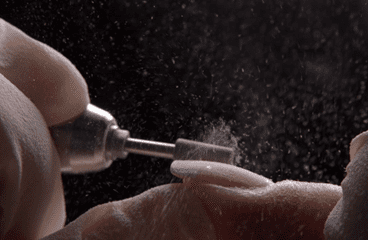
Image 19 A: A large volume of very small dusts particles are created by electric files.
Comparing Particle Size of Nail Dust: Hand Filing vs. E-Filing
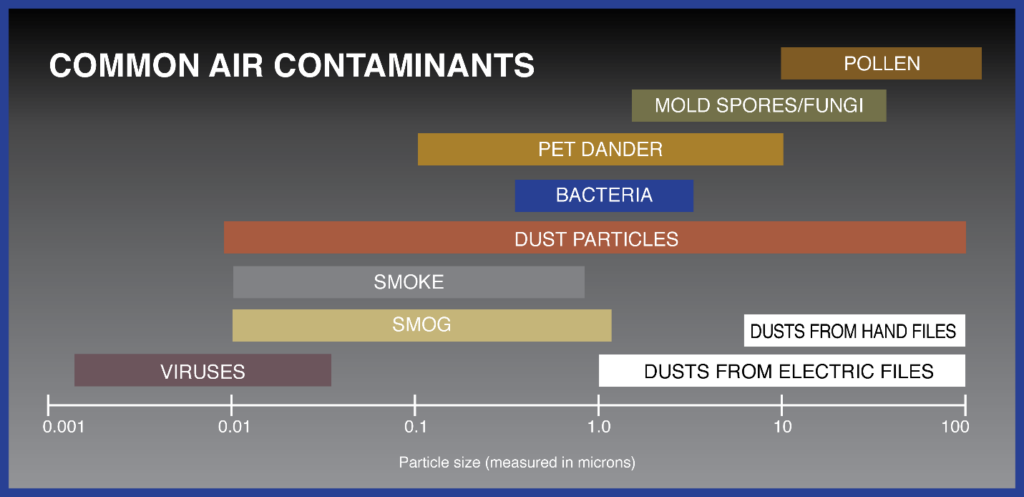
Image 18: Particle size of several air contaminants in relation to dusts created by hand filing and electric files.
The chart indicates the typical particle size of nail dust when hand and e-filing are compared. Note that e-files create much more of the smaller size dust particles as shown by the range of the hand file and e-file bars on the chart. The larger particles created by hand filling, tend to clump together and quickly fall out of the air to cover the tabletop, and floor, as well as to collect in the hair or inside the collar. They make a mess, but at least they aren’t in the air, so they can’t be breathed.
Risks of Small Dust Particles from E-Files in Nail Salons
Note that e-files create much more of the smallest dust particles, which are much lighter and can remain suspended in the salon air for hours. These extra-small dusts created by e-filing are a greater inhalation risk, so they are more important to control and avoid. These smaller particles are easier to inhale and get pulled deeper into the lungs. Of course, the lungs are good at handling dusts and getting rid of them. They have to be, we live in a dusty world and this chart shows that many even smaller practices are often inhaled, but that’s not a reason to ignore this issue.
Managing Visible and Invisible Nail Dust
Whatever method you use to file, it is important to keep your work area clean and to remove all visible dust, but be aware of invisible dust. Those smaller than 10 microns will not be easily seen and will float around the salon so that everyone can breathe them. Luckily, these invisible dusts are easy to control by:
- Good housekeeping practices to control dusts.
- Use of appropriate ventilation, e.g. “source capture” systems that remove dust from the source, as they form.
- Use of an electric file nail oil.
- Proper use of a suitable dust mask.