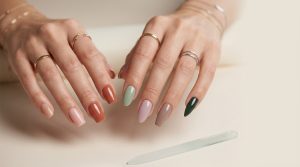
Are you among those who have often wondered, ‘Why do my nails go from strong and healthy to brittle and peeling as soon as I apply nail polish?’
We receive numerous inquiries similar to the following:
My nails are very strong and healthy, and they can grow very long, but as soon as I use nail polish they become brittle and start peeling, and they continue to do so until all the ‘old nail’ has grown out and the whole nail is replaced. I have tried 5-free, 7-free, and water-based polish, and I have also tried different removers. But no matter what, my nails get ruined every time I use polish. Do you have any suggestions on what I should do?

Banishing the Bane of Peeling Nails
If you’ve found yourself facing this nail dilemma, you’re not alone. In this article, we’ll delve into the reasons behind this common issue of nail peeling and provide valuable solutions to help you maintain healthy and beautiful nails, even when using nail polish.
Preventing Nail Peeling: The Golden Rule for Nail Polish Removal
Here are my top suggestions for addressing nail plate surface peeling:
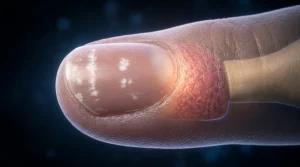
Never peel nail polish from your nail plate. This will weaken the surface layers. These weakened surface layers will eventually peel away when they reach the free edge. It may be months later, so the peeler forgot what they did. If you peel nail polish from your nails in May, expect the cell layers on the top-side of the free edge will peel in until September when those damaged nail cells finally grow off the free edge. Doing this repeatedly can lead to a state of constant surface peeling.
Some nail coatings adhere better, the longer you wear them. Long wearing nail polish has greater adhesion, so these are more likely to harm the surface when forcibly peeled off. Gently remove nail coatings, without the use of any force, e.g. no peeling, scraping, biting, etc. There is no such thing as gentle peeling or scraping, so don’t fool yourself into thinking you “lightly scrape” or “peel carefully”.
Keep your hands out of water. Each time you saturate the nail plate, surface layers swell apart and separate. Repeated soaking and drying cycles can weaken the bond between the upper layer and lower layers.
Don’t wash your hands too often. Yes, you can wash your hands too much. More than ten times a day can be hard on nails and skin. Soaps, cleansers and detergents can eventually strip away substances that help hold the surface cells to the underlying cells and this can lead to peeling. The same can occur when nails are exposed to cleaning solvents.
Unmasking the Truth About Nail Polish Labels: Quality vs. ‘Free’ Claims
It doesn’t matter if the polish is 5-free or 99-free, that’s just “marketing” and doesn’t say how good or how safe a nail polish is. Don’t think this is the problem or the solution. Buy high quality products, less expensive nail polishes are less expensive for a reason and often use inferior ingredients or are poorly formulated.
Short and Sweet: The Key to Preventing Polish Peeling
Keep nails shorter. The longer the nail plate, the more flexible the free edge, the more likely the polish will peel. This is especially true for those with thin, flexible nail plates. Cap the free edge by wrapping the base, color and topcoat around the free edge to the underside and give it some extra protection. Avoid skin contact. Wear gloves when digging or working with hands. Treat your nails like jewels, and don’t use them as tools.
Guarding Your Nails: Shielding Against the Sun’s Harmful Effects
Protect nails from the sun. The nail plate has a high natural SPF, so the nail bed is protected from UV exposure, but that means the upper layers absorb the UV. Long periods of excessive sunlight can weaken surface layers and cause them to come apart.
Nail Care Caution: The Perils of Over-Filing and Buffing
Don’t over file or buff the nail plate. Too much filing or buffing thins the nail and it is much harder for the polish to adhere to thin nails, than thicker nails. Don’t try to file away so-called “ridges”. The nail plate can’t grow ridges, those are actually grooves. Therefore, filing the plate smooth reduces and thins the entire nail plate to match the thinness of the deepest groove. That’s trouble waiting to happen- so don’t do it.
Nourishing Nails: The Benefits and Precautions of Using Nail Oils
Use nail oils, they can help reduce surface brittleness and help toughen the bonds between the surface and lower layers of nail cells, however, make sure to remove surface oils before applying any nail coating. Nail oils also absorb into the plate to make it more resistant to excessive water absorption.
Guarding Against Solvents: Protecting Your Nails from Harmful Exposure
Avoid over exposure to solvents. Solvents can remove surface oils and may also leach out substances that help to cement nail cell layers together. Occasional use of solvent-containing polish removers won’t have much effect on normal nails, but may have a noticeable effect on plates that have weakened adhesion due to other factors described above.
Demystifying Peeling Nails: Debunking Allergic Reaction Misconceptions
Peeling nail plates are never a sign of allergic reactions. The nail plate is not living and does NOT have an immune system, so allergic reactions are not possible.
Follow this link for a more in-depth understanding of the causes of peeling nails and how to address this common issue.