Chào mừng bạn đến với bài học ngắn về HEMA trong ngành làm móng!
Bài học này dành cho tất cả các chuyên gia làm móng, từ người mới bắt đầu đến các kỹ thuật viên có kinh nghiệm, cũng như những người đam mê làm móng muốn tìm hiểu thêm về thành phần quan trọng này trong các sản phẩm làm móng. Mục tiêu của chúng tôi là giải thích những kiến thức cơ bản về HEMA mà không làm bạn choáng ngợp bởi những thuật ngữ chuyên môn, để bạn có thể hiểu rõ hơn về các đặc tính, lợi ích và những rủi ro tiềm ẩn của nó.
Chúng tôi sẽ giới thiệu về HEMA, cơ chế hóa học của nó, các đặc tính và lợi ích, cũng như các ví dụ về các sản phẩm chăm sóc móng có chứa HEMA, và những lo ngại về an toàn có thể phát sinh liên quan đến việc sử dụng nó.
Vậy HEMA là gì?
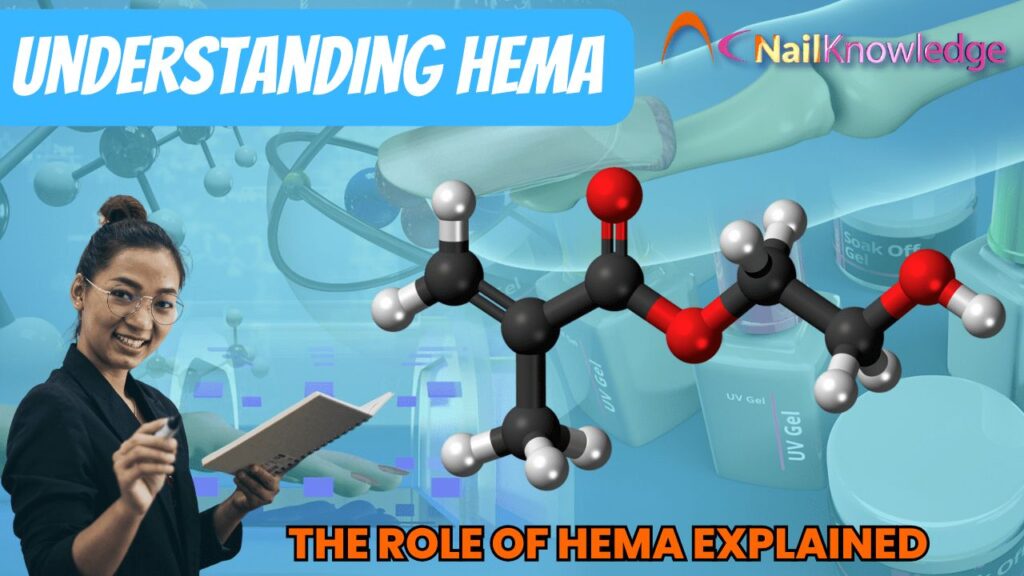
HEMA hay Hydroxyethyl Methacrylate (CAS # 868-77-9), là một monome, hay nói một cách đơn giản, là một thành phần lỏng thường được sử dụng trong ngành làm móng để tạo ra các sản phẩm móng chắc khỏe, bền bỉ và dẻo dai.
Sản phẩm này hoạt động bằng cách kết dính tốt với các thành phần khác trong sản phẩm và với móng tay tự nhiên của bạn. (HEMA cũng bám dính tốt trên bề mặt móng có chứa nước hoặc nơi có nước bề mặt, cũng như trên bề mặt móng đã được làm khô và chuẩn bị sẵn)
Khi các chất khởi động quang trong sản phẩm tiếp xúc với năng lượng tia UVA, HEMA sẽ tạo thành các chuỗi polymer dài, giúp hình thành một vật liệu rắn chắc và dẻo dai.
Điều này có nghĩa là khi bạn sử dụng sản phẩm có chứa HEMA, Nó có thể tạo ra một bề mặt mịn màng và đều đặn, ít bị sứt mẻ hoặc gãy vỡ hơn. HEMA cũng giúp sản phẩm bám dính tốt hơn vào móng tay tự nhiên của bạn và chống bong tróc.
HEMA là một chất gây dị ứng đã được biết đến, nhưng khi được sử dụng đúng cách và chuyên nghiệp, nó an toàn ở mức bằng hoặc thấp hơn tỷ lệ khuyến nghị là 35%.
Một số ví dụ về các sản phẩm làm móng có thể chứa HEMA bao gồm bột và dung dịch acrylic, sơn gel và lớp lót móng.
Các sản phẩm này được tạo thành từ hỗn hợp các thành phần khác nhau, bao gồm bột màu, hương liệu và các chất phụ gia khác, cùng với HEMA.
Hiểu rõ các rủi ro và biện pháp an toàn khi sử dụng HEMA trong các sản phẩm làm móng
Trong khi HEMA là một thành phần quan trọng trong nhiều sản phẩm chăm sóc móng, do đó cần lưu ý đến những rủi ro tiềm ẩn khi sử dụng chất này. Việc tiếp xúc với HEMA do sử dụng không đúng cách có thể dẫn đến kích ứng da, phản ứng dị ứng và các vấn đề sức khỏe khác.
Để giảm thiểu nguy cơ phơi nhiễm cho cả bạn và khách hàng, điều quan trọng là phải tuân thủ các biện pháp an toàn thích hợp khi sử dụng tất cả các sản phẩm làm móng. Điều này bao gồm đeo găng tay, làm việc tại nơi thông thoáng và luôn tránh tiếp xúc với da. Ngoài ra, bạn nên đảm bảo rằng hàm lượng HEMA (hydroxyethyl methacrylate) trong sản phẩm là 30% hoặc tốt nhất là thấp hơn.
Nếu bạn hoặc khách hàng của bạn gặp bất kỳ dấu hiệu kích ứng hoặc phản ứng dị ứng nào do sử dụng HEMA Nếu xuất hiện các triệu chứng như mẩn đỏ, sưng tấy, phồng rộp hoặc ngứa, hãy ngừng sử dụng sản phẩm ngay lập tức và đến gặp bác sĩ nếu cần thiết.

Các quy định liên quan đến việc sử dụng HEMA trong các sản phẩm chăm sóc móng tay khác nhau tùy theo quốc gia và khu vực. Tại Hoa Kỳ, Cơ quan Quản lý Thực phẩm và Dược phẩm (FDA) chịu trách nhiệm quản lý các sản phẩm chăm sóc móng tay và ban hành các hướng dẫn về việc sử dụng an toàn các thành phần như HEMA. Tại châu Âu và Vương quốc Anh, các cơ quan chức năng cũng đã ban hành các hướng dẫn về việc sử dụng an toàn HEMA trong các sản phẩm chăm sóc móng tay. Các sản phẩm chứa HEMA chỉ được phép sử dụng trong môi trường chuyên nghiệp.
Là một chuyên viên làm móng, điều quan trọng là bạn phải luôn cập nhật các quy định pháp lý và sử dụng các sản phẩm có chứa HEMA một cách an toàn và có trách nhiệm. Bằng cách tuân thủ các biện pháp phòng ngừa an toàn thích hợp và sử dụng sản phẩm theo hướng dẫn của nhà sản xuất, bạn có thể giúp giảm thiểu rủi ro tiếp xúc và đảm bảo an toàn cho bản thân cũng như khách hàng của mình.
Các tuyên bố về việc không chứa HEMA và sự hiện diện của Di-HEMA
Nếu một sản phẩm được quảng cáo là không chứa HEMA, tại sao trên nhãn lại ghi rằng sản phẩm đó có chứa Di-HEMA?
Đây là câu hỏi mà chúng tôi thường xuyên nhận được trên NailKnowledge. Vì vậy, chúng tôi sẽ giải đáp câu hỏi này ở đây kèm theo một ví dụ để làm rõ hơn.
Nếu một sản phẩm có chứa DI-HEMA nhưng lại được quảng cáo là KHÔNG CHỨA HEMA, đó là vì DI-HEMA là một thành phần tương tự nhưng có cấu trúc khác với HEMA.
Tuy nhiên, cần lưu ý rằng một số người có làn da nhạy cảm hoặc dị ứng với HEMA cũng có thể có phản ứng với DI-HEMA, vì đây vẫn là một loại methacrylate. Vì vậy, luôn cần đọc kỹ nhãn sản phẩm trước khi sử dụng bất kỳ sản phẩm mới nào, đặc biệt nếu bạn có tiền sử dị ứng hoặc nhạy cảm với da. Trên thị trường có nhiều sản phẩm không chứa HEMA, nhưng hãy lưu ý rằng nếu một người phát triển dị ứng với HEMA, rất có thể họ cũng dị ứng với các monome khác. Cách duy nhất để xác định chính xác là thực hiện xét nghiệm da bằng miếng dán để xác định thành phần cụ thể cần tránh.
Trên thị trường hiện có rất nhiều sản phẩm không chứa HEMA, nhưng cần lưu ý rằng nếu một người bị dị ứng với HEMA, rất có thể họ cũng dị ứng với các monome khác. Cách duy nhất để xác định chính xác là thực hiện xét nghiệm da bằng miếng dán để xác định thành phần cụ thể cần tránh.
So sánh: Hiểu về HEMA và Di-HEMA
Một ví dụ để so sánh mối quan hệ giữa HEMA và DI-HEMA có thể là so sánh sự khác biệt giữa sữa tách béo và sữa nguyên kem. Mặc dù cả hai đều là các loại sữa, nhưng chúng có những đặc tính khác nhau và được sản xuất theo những quy trình khác nhau.
Sữa tách béo được sản xuất bằng cách loại bỏ hàm lượng chất béo khỏi sữa nguyên chất, trong khi sữa nguyên chất vẫn giữ nguyên toàn bộ lượng chất béo có sẵn tự nhiên trong sữa. Mặc dù cả hai loại sữa đều có màu trắng và ở dạng lỏng, chúng lại có thành phần dinh dưỡng khác nhau và có thể được sử dụng theo những cách khác nhau trong nấu ăn và làm bánh.
Tương tự, mặc dù DI-HEMA có quan hệ hóa học với HEMA, nhưng chúng là hai thành phần khác nhau với các đặc tính và chức năng riêng biệt. Điều quan trọng là phải đọc kỹ nhãn sản phẩm và hiểu rõ các thành phần cụ thể có trong sản phẩm trước khi sử dụng, giống như việc hiểu rõ sự khác biệt giữa sữa tách béo và sữa nguyên kem khi nấu nướng hay làm bánh.
Kết luận: Hiểu về HEMA và lời mời khám phá sâu hơn
Đó là kết thúc bài học ngắn về HEMA, trong ngành làm móng. Chúng tôi hy vọng những thông tin này sẽ giúp bạn hiểu rõ hơn về những kiến thức cơ bản liên quan đến thành phần quan trọng này trong các sản phẩm làm móng.
Nếu bạn muốn tìm hiểu sâu hơn về cơ sở khoa học đằng sau các sản phẩm chăm sóc móng, chúng tôi mời bạn tham khảo “Chuyên gia làm móng chuyên nghiệp” khóa học. Khóa học này giúp bạn tìm hiểu sâu hơn về các nguyên lý hóa học đằng sau các sản phẩm chăm sóc móng, bao gồm vai trò của các monome, polyme, và HEMA. Khi đăng ký khóa học này, bạn sẽ có cái nhìn sâu sắc hơn về các sản phẩm mà bạn sử dụng hàng ngày cũng như cách sử dụng chúng một cách an toàn và hiệu quả.
Cảm ơn bạn đã đồng hành cùng Nail Knowledge trong hành trình học tập này. Chúng tôi rất mong được gặp lại bạn trên nền tảng trực tuyến trong thời gian sớm nhất!