A Colorful Connection
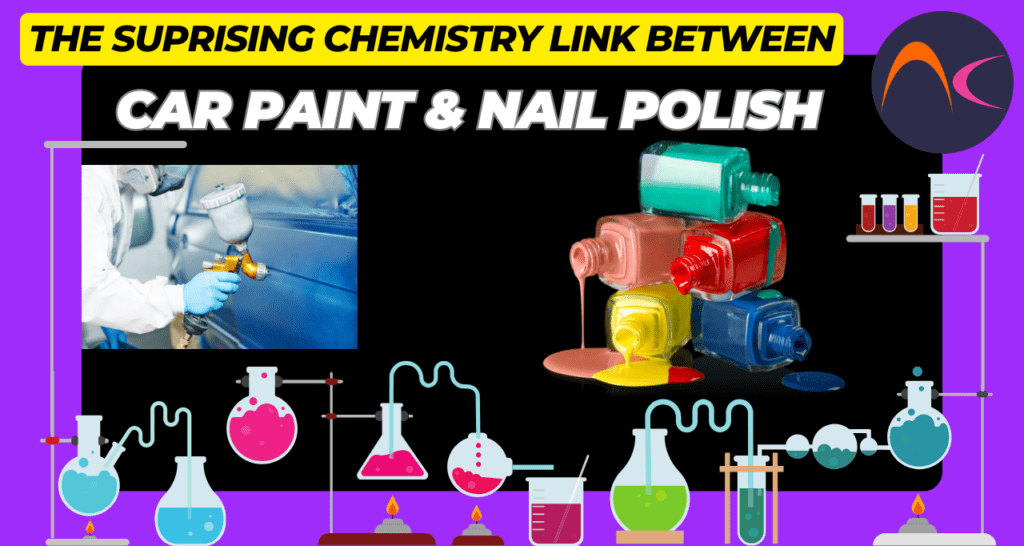
When Yvonne Millner turned heads by adorning her 1996 Mitsubishi Mirage with hundreds of bottles of nail polish, it made quite the media splash. However, what may seem like an unusual choice of material is more scientifically connected than you’d think. Nail polish and automobile paint share a common chemical ancestry.
Nitrocellulose – The Common Thread
At the heart of nail polish is nitrocellulose, a long-lasting film-forming agent derived from cellulose. But before it became a staple in nail polish, nitrocellulose had its debut in automobile paint, thanks to chemists at DuPont. Shortly after its introduction in car paint in the 1920s, patent literature began detailing formulations of nail enamels containing nitrocellulose. These patents revealed the depositing of a pigment-impregnated film on fingernails and toenails, mirroring the application on car surfaces. In fact, the popularity of nitrocellulose-based paint was so immense that it coated all General Motors’ cars within just four years. Although the auto industry has since moved on to other coatings, nitrocellulose remains a key component in many nail polishes today.
A Historical Glimpse
While the 1920s marked a technological leap in nail polish formula and production, the concept of nail adornment isn’t new. Records from European royal courts in the 17th and 18th centuries document the use of shiny, varnished nails. Even in the 19th century, recipe books from Britain and the U.S. included instructions for making nail paints, alongside recipes for more conventional items like bread.

The Ingredients that Make It Stick
Modern nail polish isn’t a recipe you’d find in your kitchen, mainly due to the unappetising ingredients. According to Paul Bryson, director of R&D at OPI Products, nail polish includes adhesive polymers, like tosylamide-formaldehyde resin (although this hasn’t been used in nail polish for some years now as many were worried about the formaldehyde connection even though it was safely contained in a resin), ensuring that the nitrocellulose adheres to the nail surface. Plasticisers, such as camphor, embed between polymer chains, making the polish flexible and resistant to cracking. To add color and shimmer, pigments and particles like mica are included. Thickening agents like stearalkonium hectorite prevent glittery particles from settling at the bottom of the bottle. Ultraviolet stabilisers like benzophenone-1 ensure that the polish maintains its color when exposed to UV light. All of these ingredients are dissolved or suspended in a solvent like butyl acetate or ethyl acetate, which evaporates, leaving behind a vibrant finish.
Changing Formulas and Concerns
Since the 1920s, nail polish formulas have remained relatively unchanged, except for responding to consumer demands. One notable modification was the removal of the plasticiser dibutyl phthalate in 2006 due to environmental and safety concerns. Toluene, another solvent, has also been eliminated by many companies for safety reasons.
Water-Based Revolution
One significant departure from the classic formula is the advent of water-based nail polishes. While they still require a solvent, pigment, and film-forming agent, they replace nitrocellulose with variants of styrene-acrylate copolymers. Unlike traditional formulas, water-based polishes don’t rely solely on solvent evaporation to dry. Instead, they utilise the permeability of keratin in nails to allow some water to pass through. This innovative approach is ideal for consumers seeking more environmentally friendly cosmetics or those sensitive to old formulas. However, many pathogens need water to survive which traditional polishes don’t have so other ingredients need to be added to keep the products safe for use.
Nail Polish – Where Chemistry Meets Beauty
The colorful world of nail polish holds a fascinating connection with the history of chemistry and technology. From its humble beginnings to modern innovations, nail polish chemistry continues to evolve while remaining a symbol of self-expression and style. So, next time you paint your nails, remember the hidden chemistry behind those dazzling colors – it’s truly a blend of art and science!