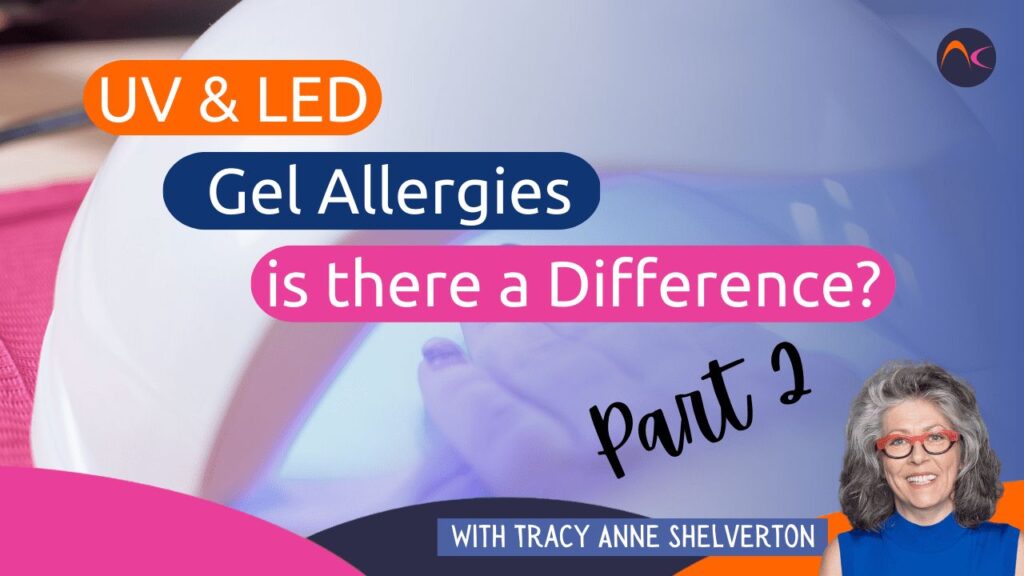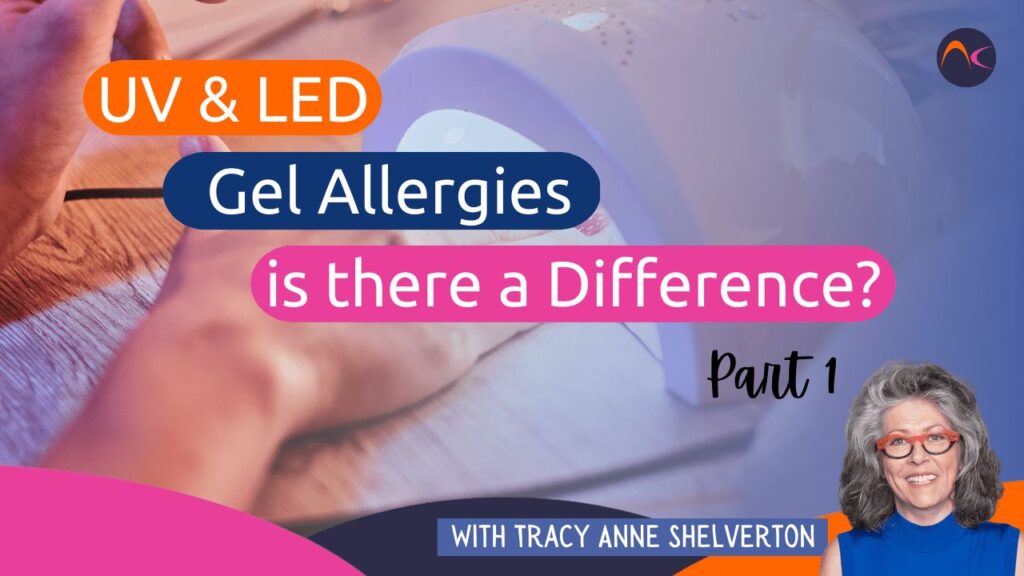
UV gel allergies are an allergic reaction to the chemicals used in UV-cured gel nail products. These products typically contain a combination of chemicals, including monomers, oligomers & photointiators, which are activated by the UV energy in the UV light to harden and cure the gel.


What’s UV Energy?
UV energy emitted by UV light is measured in nanometers. Nanometers are used to measure wavelengths of light and distances between atoms in molecules and our UV gel products some photoinitiators are matched with the nanometers to ‘receive’ the energy & that starts the curing process of our UV gel.
It’s important to note that all nail products labelled as “gel” are UV-cured, so it’s important to check the product label or consult with the manufacturer to determine the curing & application method.
It’s important to match the lamp that cures your gel with the gel that you use, this will ensure proper curing of your UV gel and help prevent allergies from occurring. The company retailing you the product should be able to answer all your questions before & after you buy their product, if they can’t it might be worth looking for another supplier.
How to recognize an allergic reaction
Allergic reactions to the allergens in UV-cured gels can range from mild irritation to more severe symptoms, such as redness, itching, swelling, or blisters. In some cases, the reaction may be delayed and appear several hours or days after the initial exposure to the gel (some reactions can take years before they manifest – an allergy could be built up over a long period of time) If you notice any of these symptoms at any time, remove all product & take care to recover your nail units and skin with a good oil & lotion.
TTo prevent UV gel allergies in the salon or education centre, it’s recommended to take certain precautions, such as wearing gloves during application and removal, good ventilation, avoiding skin contact with the gel as much as possible, and using only high-quality, reputable products that have been tested & certified for safety and leave all skin layers intact around the nail unit.
Repeated exposure to these (uncured or improperly cured) chemicals can also increase the risk of developing an allergy over time, be aware that it’s also possible to suffer an ‘acute allergy’ especially if you reacted to another allergen earlier.
Our skin and allergies
Our guardian seals protect us not only from pathogens but also from chemicals that may or may not be on our skin & our skin is our very own ‘built-in’ UV Radiation filter – removing any of your skin layers during a salon service could increase the chance of developing skin cancer.
We do not recommend self-patch testing the product on a small area of skin, leave that to the experts & avoid using a similar UV product if any signs of irritation or allergy occur until you know for sure which ingredient and or allergen caused the reaction in the first place. It is much easier to find a product you can use when you know what caused the problem.
What do you do if you suspect an allergic reaction to a UV Gel?
If you suspect that you have a UV gel allergy, it’s important to inform the brand & company you brought it from & seek medical attention for proper diagnosis and treatment before changing to another product, this will prevent any further allergic reactions and keep you and your clients safe in the salon.
Note: Almost all UV gels have been replaced with LED gels – but there are still significant amounts of UV gels around today, especially in ‘home’ kits.
Why not review PART 2 of this article on UV & LED Gel below.