Câu hỏi:
How does the grit of a nail file affect the natural nail? Are there grits that shouldn’t be used on the natural nail and why? I’ve been told not to use any coarser than a 180 grit on natural nails. But I don’t know if this is supported by science.
Trả lời:
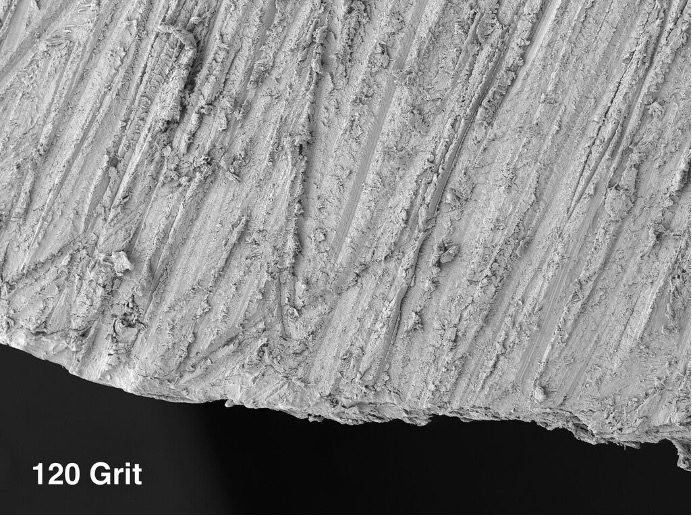
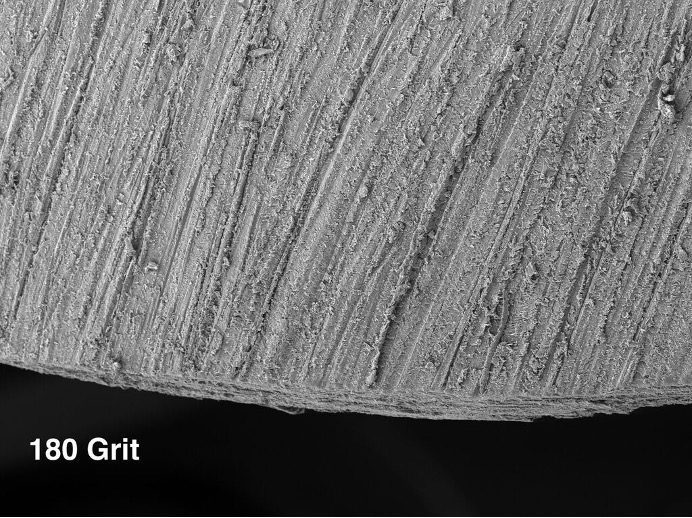
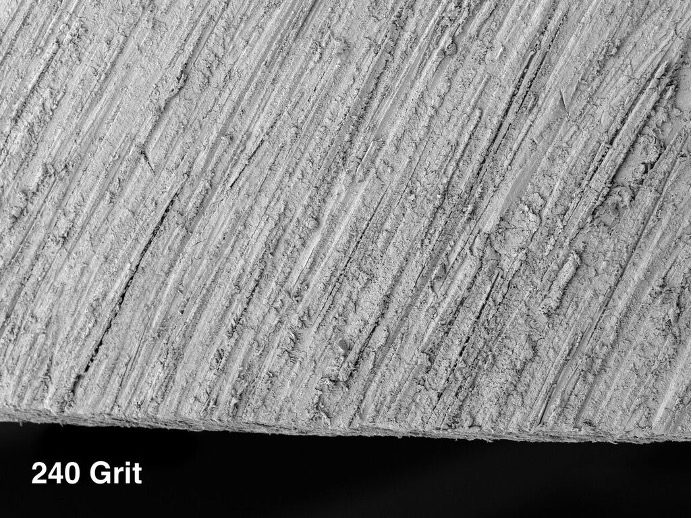
The “grit” describes the average size of the abrasive particles. The lower the grit number, the bigger the abrasive particles on the file. A 60 grit particle is a little more than three times larger than a 180 grit and five times larger than a 240 grit abrasive particle. That may not sound like much difference. But if you are 5 feet tall, someone five times larger would be 25 feet tall. It’s like comparing a Volkswagen with a two-story house. A good rule to remember is the lower the grit, the bigger the abrasive particle, and the deeper and wider the scratch it will leave on the nail plate.
In my opinion, the natural nail can be properly prepared using a 240 grit. Of course, if the nail plate is properly cleaned and prepared. This requires removing oils, debris, and dead cuticle tissue from the nail plate’s surface since these can block the adhesion of all nail coatings.
Problems develop when the nail plates are not properly cleaned and carefully prepared. This is one reason why I recommend that clients wash their hands with a clean and disinfected nail brush BEFORE the service begins to remove surface oils as well as bacterial and fungal organisms. Rather than take the time to prepare the nail plate properly, some choose to do their nail prep work with a 180 grit file. This will remove surface oils along with a few of the upper layers of the nail plate. It can result in excessive thinning of the nail plate. This is especially more likely if proper care isn’t taken and too much downward force is applied.

Anything lower than 180 grit is risky business when used on the natural nail plate. It is very likely to lead to excessive damage. In my view, the only reason for using grits lower than 180 is to reduce the thickness of the existing nail coatings for quicker solvent removal. Reducing the coating thickness decreases soaking time. This should be done cautiously to avoid damage to the underlying nail plate and bed.