• Saltar a la navegación principal
  • Saltar al contenido principal
  • Saltar al pie de página
Conocimientos de uñas

Conocimientos de uñas

  • Cursos
  • Libros electrónicos
  • Cesta de libros electrónicos
  • Base de conocimientos
    • Base de conocimientos
    • Pregunte a los expertos
    • Glosario
  • Noticias
  • Blog
  • Galería
    • Galería Nail Art
    • Artistas de uñas
    • Únete a la élite
  • Inicio de sesión

Archivo de 1 de diciembre de 2023

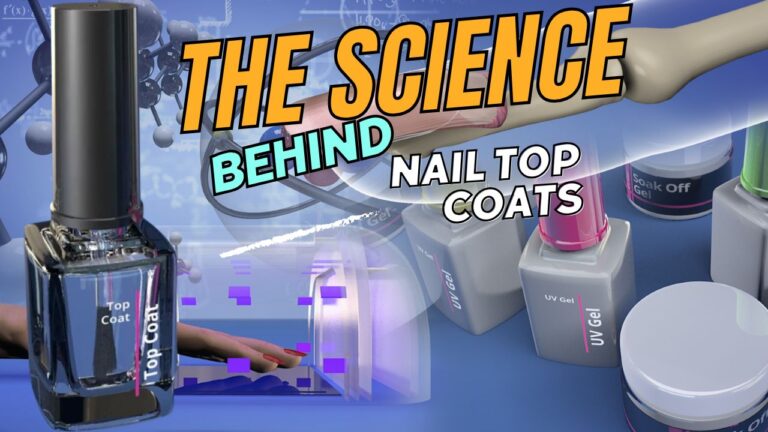
La ciencia detrás del esmalte de uñas

Nail care goes beyond simply choosing the right nail polish color; it’s a captivating blend of science and art that produces incredible results. And in this exciting world of nail products, the unsung hero is none other than the humble nail top coat. Shall we have a look at the fascinating science behind this unassuming yet essential finishing touch.

El acabado brillante del esmalte de uñas

We all adore that mirror-like shine that a good top coat provides. But have you ever wondered how it works its magic? At its core, a top coat is designed to deliver a high-gloss finish that not only enhances the manicure but also offers protection.

La ciencia: Top coats contain film-forming ingredients that create a transparent shield over your nail polish. These ingredients are usually quick-drying and formulated to produce a gleaming surface. Think of it as a protective glass layer, made to preserve and enhance the colours beneath.

Durabilidad y resistencia al astillado

The last thing we want is for our perfect nail art or vibrant colour to chip or fade prematurely. A top coat plays a pivotal role in extending the life of your manicure, ensuring it stays intact for longer.

La ciencia: The formulation of a top coat often includes hardening agents like acrylic or polymer resins. These substances provide strength and resilience to your nail polish, making it more resistant to the wear and tear of daily life. It’s like giving your nails an invisible suit of armor.

Nail Top Coat Aceleración del tiempo de secado

Esperar a que se sequen las uñas puede parecer una eternidad, pero un top coat puede ayudar a acelerar el proceso.

La ciencia: Muchos top coats están diseñados con fórmulas de secado rápido que actúan evaporándose rápidamente. Esto no solo te ahorra un tiempo precioso, sino que también reduce las posibilidades de que se manchen o abollen tus uñas recién pintadas.

Prevención de la decoloración

La luz del sol y las actividades diarias pueden hacer que el esmalte de uñas se decolore o cambie de color con el tiempo. Un buen top coat para uñas puede venir al rescate.

La ciencia: Some top coats include UV filters or colour stabilisers that help shield your manicure from the harmful effects of sunlight. They act as a barrier against the elements, preserving the vibrancy of your nail polish. This is true for gel top coats too!

Esmalte de uñas alisador de imperfecciones

If you’ve ever had a slightly uneven nail polish application, a top coat can be your saviour. It helps in smoothing out minor imperfections, giving your manicure a polished look.

La ciencia: Los top coats pueden contener ingredientes autonivelantes para alisar las superficies irregulares y garantizar que las uñas parezcan impecables y bien acabadas.

Longevidad y brillo del esmalte de uñas

A top coat isn’t just about aesthetics; it’s about making your manicure last.

La ciencia: The chemistry of a top coat involves the careful selection of ingredients to achieve not only a high-gloss finish but also long-lasting wear. It’s the science of balance, combining elements that deliver both shine and durability.

In conclusion, the seemingly simple nail top coat is a masterpiece of science and artistry. It enhances the beauty of your nails, protects your manicure, and ensures your nail art stays flawless. The next time you apply a top coat, you’ll have a deeper appreciation for the science that transforms your nails into dazzling works of art.

Paso a paso: Cómo arreglar una abolladura en el esmalte de uñas

  • The key is to ‘float’ the new color over the dent
  • When applying top coat, load your brush just enough that you dont have to go back over it – this will give the perfect finish.
Capa de color dañada
Reaplicar suavemente, sin presionar el cepillo
Reapply smoothly – no pressure on brush
Los daños se suavizan
Apply Top Coat – no pressure on brush
Nail Top Coat, rayas de presión
La presión dará rayas
Aplicación del esmalte de uñas
Smooth finish – damage can’t be seen

FAQ’s

1. ¿Para qué sirve un top coat?
A nail top coat serves several essential purposes in nail care. It provides a glossy finish, enhances the longevity of your manicure, protects nail polish from chipping, and can also add strength to your nails. Essentially, it’s the final step that seals and perfects your nail look.

2. ¿Cómo aplico un top coat de uñas para obtener los mejores resultados?
Para conseguir los mejores resultados con un top coat para uñas, sigue estos pasos:

  • Espera a que el esmalte esté casi seco (pero no del todo) antes de aplicar el top coat.
  • Apply a thin, floaty layer of top coat, starting from the base and ending with a gentle swipe along the tips of your nails to seal the edges.
  • Deje que la capa de acabado se seque por completo para obtener un acabado brillante y resistente al desconchado.

3. ¿Puedo utilizar un esmalte transparente normal como capa final?
While regular clear nail polish can provide some protection and shine, it’s not as effective as a dedicated nail top coat. Top coats are specifically formulated with ingredients like quick-drying resins and UV filters to provide superior gloss, durability, and protection. Using a specialized top coat will yield better results.

4. ¿Con qué frecuencia debo volver a aplicar un top coat para uñas?
To maintain the longevity and shine of your manicure, it’s a good practice to reapply a nail top coat every few days. This helps refresh the gloss and adds an extra layer of protection to prevent chipping and fading. You can also apply a fresh top coat as part of your regular nail maintenance routine when you notice signs of wear and tear.

Publicado en: Información general, Lociones, pociones y abrillantadores, Química del producto

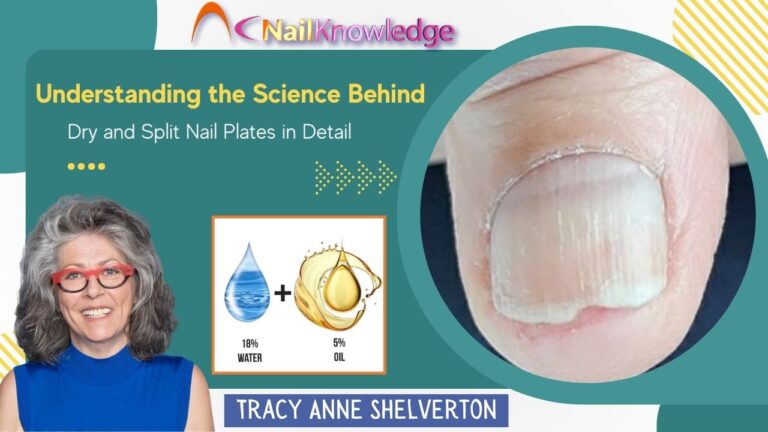
La ciencia de las uñas secas y partidas en detalle

First and foremost, let’s delve into the intricate science behind dry and split nail plates. Let’s understand the balance of oil and water within the nail plate and how it influences the health and strength of your nails.

A normal natural nail contains about 18% water and 5% oil. Optimal flexibility occurs when the nail plate holds around 25% moisture.

Uñas naturales
Uñas naturales perfectas
Porcentaje de agua y aceite de la uña natural
Proporción de agua y aceite en la uña natural

However, excessive water can weaken and damage the nail plate, similar to how a sponge shrinks as it dries out, leaving behind a dry and brittle nail plate. This process starts a vicious cycle that will only be stopped if we continue to add more moisture. It can take quite some time to recover the nail plate but as long as nail plate cells are being produced we will be successful.

antes y después de la placa de la uña
Nail plate recovery – the lateral nail folds and the existence of the onychodermal band & hyponychium are now recovered and the difference is obvious, the proximal nail fold needs a little more time.

El equilibrio: Cómo la humedad mantiene las placas ungueales fuertes y flexibles

Nail plates that are consistently exposed to water, especially with soap, become soft and weak due to this ongoing process. Remember, soap dissolves oil. It takes a few hours for the nail plate to fully recover its normal ‘oil & water’ levels

Without a doubt, maintaining a proper moisture balance is essential for healthy natural nails. When the moisture balance is right, your natural nails can better withstand trauma due to their flexibility. Think of it like shock absorbers in a car or on a bicycle—they absorb the bumps in the road, ensuring you arrive without any bruises. Flexibility in the nail plate serves a similar purpose.

Los Aceites Esenciales: Cómo nutren y protegen las placas ungueales

5% Oil – Where Does It Come From?

These oils are produced in the nail bed and slowly penetrate through the nail plate from bottom to top, where they may eventually be washed away. These oils keep both the nail plate and the bed epithelium flexible. These oils are composed of ‘lipids,’ including squaleen and cholesterol.

Oil and water don’t naturally mix, so how can both penetrate the nail plate? It doesn’t seem logical for both to use the same channel, so could it be that they each take a different route? The scientific community hasn’t reached a definitive conclusion, but it’s suspected that they indeed take different paths. Here’s one possible explanation:

– Water enters the nail plate cell directly through the cell wall.

– Oil cannot penetrate the cell wall and instead seeps through the remaining spaces between the nail plate cells.

El poder protector de los aceites: Cómo fortalecen tus uñas secas y partidas

Los aceites plastifican la lámina ungueal; se mueven mucho más lentamente y se evaporan con menos rapidez. Como resultado, el aceite bloquea tanto las vías de entrada como de salida del agua.

The outcome is less brittle, more flexible nails—stronger, in essence. Because the oil remains in the nail plate for a longer period, it has a significant effect on the overall condition of the nail plate.

But what if this balance is disrupted by trauma or conditions like eczema, psoriasis, lichen planus, or even a fungal infection? The nail plate and nail bed may become dehydrated. But what if everything seems normal otherwise?

Desentrañar la matriz: Cómo se forman las células de la lámina ungueal y por qué importan las imperfecciones

For this, we need to examine the matrix where the nail plate cells are produced.

La matriz produce células de la placa ungueal 24 horas al día, 7 días a la semana. A los 21 años funciona a pleno rendimiento, después se ralentiza.

Think of a tennis ball machine continuously spitting out tennis balls—this is how the matrix works. If something isn’t quite right there, cells may still be produced but not as perfectly as they should be. This creates weaker nail plate cells that may appear normal but lack the strength of perfectly formed nail plate cells.

There are of course exceptions. You don’t have to be old to have abnormal nail plate cells—it can happen to young people too if they are suffering from psoriasis, lichen planus, Alopecia or Eczema. Babies are sometimes born with nail matrix’ that are not yet fully formed although these catch up quickly after birth.

La presión de la placa ungueal: cómo las imperfecciones crean surcos y valles

Once on the nail bed, the nail plate is under pressure from all sides—the lateral side walls, the nail bed, and the proximal nail fold all stabilize the nail plate as it moves along the nail bed. This pressure is significant, and if a cell isn’t perfect, it collapses, creating surcos en la uña plate, with the weakest cells in the valley and the strongest cells on top of the hill, this is why buffing or filing the nail plate to make it even & shiny creates even more damage, you unwittingly remove the vínculos más fuertes.

A veces se forman pequeñas estructuras parecidas a cuentas que hacen que la lámina ungueal se deshaga.

Ranuras y valles para clavos
 Placa ungueal con ranuras 
Perlas de uñas en la placa ungueal
Beaded Ridge nail plate (the ‘beads’ are visible at the top of the ridge as well as the groves)

El efecto dominó: cómo el descuido y las células anómalas pueden provocar uñas secas y partidas

Imagine that the nail plate doesn’t receive extra care from external oils, and suppose truly abnormal cells are produced that are under the same pressure from the side walls, etc., then, just like anything that dries out, the nail plate cells start to separate— its pure stress from dryness (think of paint on a wooden window, for example—if the seal is broken, it’s a downhill slide). If water then penetrates and that water evaporates, it causes more dehydration, and the puzzle pieces that make up our nail plate cells simply come apart—resulting in a horizontal split in the nail plate.

Figura 6
Figura 7

Figura 6. 28-01-2023 – you can see here how the nail plate crumbles at its weakest point. After about 5 months of intensive nail care on the 10-5-2023 the nail plates still have groves (that’s the defect in the nail matrix that we can do nothing about) but the nail plate is whole again, its in good condition and now flexibility keeps the nail plate cells together.

Figura 7. On the left, the nail groves are dry and cause the nail plate cells to spit verticaly and the nail plate is not sitting in the paronichium cup as it should. After intensive nail care, the nail plate is now in the paronichium cup, the lateral nail folds can do their job and the onychodermal band is visibly doing its job and the nail plate is no longer fractured.

Entender cómo ocurre esto y qué se necesita para resolver el problema hará que su salón sea uno de los más concurridos de la región y tendrá clientes de salón para toda la vida.

It is however important to realize that non of these solutions are immediate – but – with time and goed nail unit care and maintenance you will achieve them.

Fotos: Tracy Anne Shelverton, Jozephine Frijters y Xuan Chu

Publicado en: Información general, Afecciones de las uñas

Mejora tus conocimientos sobre uñas

Suscríbase a nuestro boletín
SUSCRÍBETE...

Copyright © NailKnowledge

Conocimientos de uñas

  • Libros electrónicos
  • Quiénes somos
  • Cursos
  • Noticias
  • Blog
  • Boletín
  • Glosario

Políticas

  • Página de privacidad
  • Condiciones generales
  • Política de cookies

Ayuda

  • Póngase en contacto con nosotros
  • Conozca a los expertos
  • Pregunte a los expertos
  • Soporte del sistema
  • Preguntas frecuentes
Spanish
Spanish
English Portuguese Vietnamese