• Saltar a la navegación principal
  • Saltar al contenido principal
  • Saltar al pie de página
Conocimientos de uñas

Conocimientos de uñas

  • Cursos
  • Libros electrónicos
  • Cesta de libros electrónicos
  • Base de conocimientos
    • Base de conocimientos
    • Pregunte a los expertos
    • Glosario
  • Noticias
  • Blog
  • Galería
    • Galería Nail Art
    • Artistas de uñas
    • Únete a la élite
  • Inicio de sesión

Tecnología de uñas

Explicación del pH en el cuidado de las uñas: Guía para profesionales de la manicura

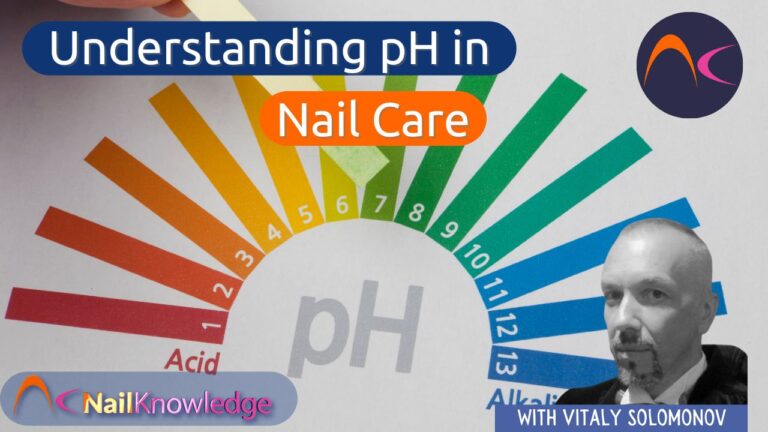
El pH en el cuidado de las uñas

The concept of pH is widely discussed in beauty and nail care, but it’s often misunderstood. While pH plays a crucial role in the overall health of skin and hair, it’s important to clarify that nails themselves do not have a measurable pH value. Nails are solid structures made primarily of keratin, a protein, and pH applies only to aqueous (water-based) solutions. However, understanding how pH impacts the surrounding skin, nail products, and overall nail health is essential for nail technicians.

¿Qué es el pH en el cuidado de las uñas?

pH stands for “potential hydrogen” and measures the acidity or alkalinity of a substance on a scale from 0 to 14:

  • Acidic: Un pH inferior a 7
  • Neutral: Un pH de 7
  • Alkaline (Basic): Un pH superior a 7

The skin surrounding the nails typically has a slightly acidic pH, usually between 4.5 and 5.5. This natural acidity serves as a protective barrier against bacteria, fungi, and other harmful microorganisms. Maintaining this balance is crucial for overall nail and skin health.

¿Tienen pH las uñas?

No, nails do not have a measurable pH value. Nails are composed of keratinised cells—solid, fibrous proteins that lack free hydrogen ions or water content necessary for pH measurement. While some articles suggest that nails have a “natural pH,” this is scientifically inaccurate. Instead, what can be influenced is the entorno de superficie of the nails due to external factors like water absorption, product application, or exposure to harsh chemicals.

¿Tienen las uñas un valor pH en el cuidado de las uñas?

While nails themselves don’t have a pH, the products applied to them—such as esmaltes de uñas, removers, gels, or creams—do have measurable pH values. These products can affect:

  1. Piel circundante: Los productos con niveles de pH extremos (demasiado ácidos o demasiado alcalinos) pueden alterar la barrera natural de la piel que rodea las uñas, provocando irritación o una mayor propensión a las infecciones.
  2. Nail Plate Condition: Prolonged exposure to certain products can alter the moisture balance within the nail plate, making it brittle or overly flexible.
  3. Rendimiento del producto: Nail products like primers or cleansers are often formulated with specific pH levels to optimise adhesion or removal processes.

Microorganismos

Our skin is full of all kinds of microorganisms, they help us stay healthy but sometimes they turn into monsters and start to attack us – but that’s a story for another day.

Nails are also surrounded by microorganisms and when we put artificial nail products on them the microorganisms that need oxygen to survive die – and the ones that function without oxygen stay alive.

Everyday on the socials we see what happens when our resident microorganisms become opportunistic and turn on us – pseudomonas aeruginosa is one of them.

An interesting fact: Men have a more moist layer of skin than women – testosterone is responsible for more oil and thicker skin and women have more estrogen which helps to maintain collagen and elasticity, removing any and or all of these skin layers as a ‘nail treatment’ and doing so will affect the pH balance of the skin in and around the nail unit.

Factores que influyen en la salud de las uñas

Rather than focusing on “nail pH,” professionals should prioritise factors that genuinely impact nail health:

  1. Niveles de hidratación: Las uñas pueden absorber agua de su entorno, lo que las ablanda temporalmente pero no cambia su composición inherente.
  2. Seguridad del producto: El uso de productos suaves tanto para las uñas como para la piel circundante ayuda a mantener la salud general (de la unidad ungueal).
  3. Salud de la piel: The cuticle area and surrounding skin play an important role in protecting nails from external damage. It’s important to maintain healthy skin or to improve it without exception.
  4. Técnicas de aplicación: Una preparación y unas técnicas de aplicación adecuadas garantizan la eficacia del producto al tiempo que minimizan los daños.

Consejos para técnicos de uñas

Prestar servicios eficaces de cuidado de las uñas:

  • Utilice productos diseñados para uso profesional que sean suaves tanto para las uñas como para la piel circundante.
  • Avoid prolonged exposure to harsh chemicals (e.g., acetone or acidic primers).
  • Enseñar a los clientes a mantener unas uñas sanas protegiendo las cutículas y la piel circundante.
  • Concéntrese en la hidratación recomendando cremas o aceites de manos que favorezcan la salud de la piel sin alterar su equilibrio natural.

Conclusión

While nails themselves do not have a measurable pH value due to their solid keratin structure, the concept of pH remains relevant in nail care through its impact on surrounding skin and product performance. By understanding how products interact with nails and skin, nail technicians can make informed choices that promote safety, health, and integrity for their clients.

Remember: it’s not about measuring “nail pH” but about ensuring that products work harmoniously with the body’s natural systems to maintain healthy nails and skin.

Este artículo revisado elimina cualquier afirmación engañosa sobre el pH natural de las uñas y conserva información útil sobre cómo el pH influye indirectamente en las prácticas de cuidado de las uñas a través de los productos y la salud de la piel circundante. Aporta claridad al tiempo que mantiene su tono educativo para los profesionales del sector de las uñas.

Publicado en: Información general, Servicios de uñas, Tecnología de uñas

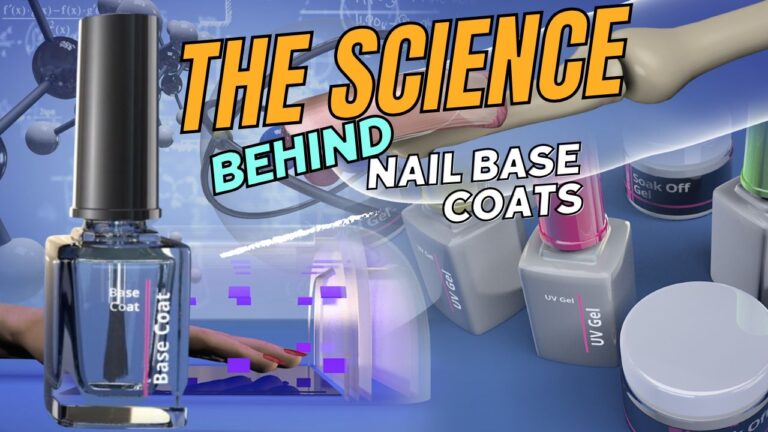
La ciencia detrás de la capa base

Las ventajas de las bases para uñas

When it comes to achieving a flawless and long-lasting manicure, the role of a nail base coat is often underestimated. This seemingly simple product offers a range of benefits that go beyond just enhancing the appearance of your nails. In this article, we’ll explore the science and secrets behind nail base coats, revealing how they provide essential adhesion, protection, smoothing, and even prevention of yellowing. Join us on a journey through the world of nail science to understand the numerous advantages of incorporating a nail base coat into your nail care routine.

La química de las bases de uñas

The science behind how a nail base coat works is quite fascinating. At its core, a base coat is formulated to perform several crucial functions that help ensure your nail polish adheres well and your manicure lasts longer. Let’s have a look at the science behind it:

Adherencia del esmalte de uñas

The primary function of a base coat is to provide a strong adhesive bond between your natural nails and the nail polish you apply. Without it, the esmalte de uñas puede que no se adhieran correctamente, provocando desconchones y descamación. Lo mismo ocurre con las bases de esmalte en gel.

La ciencia: Base coats typically contain special polymers and adhesive agents that create a chemical bond with the keratin in your nails. Keratin is a protein that makes up your nails, and the base coat’s formulation allows it to hold onto them effectively.  This adhesion is vital for the longevity of your manicure.

Protección con esmalte de uñas

A base coat acts as a protective barrier between your nails and the pigments and sustancias químicas presentes en los esmaltes de uñas. This barrier prevents direct contact and can help shield your natural nails from staining – which you might be tempted to file off – causing your nails to be thinner and inadvertently causing damage.

La ciencia: Base coats often contain film-forming ingredients, like nitrocellulose or acrílico polímeros. Estas sustancias crean una capa protectora que bloquea la absorción de los pigmentos de color del esmalte. También actúan como escudo frente a sustancias químicas potencialmente nocivas, reduciendo el riesgo de que las uñas se decoloren o debiliten.

Alisado

Las capas base están diseñadas para crear una superficie lisa en las uñas, ocultando imperfecciones y estrías. Este lienzo liso garantiza una aplicación uniforme e impecable del esmalte.

La ciencia: Some base coats contain ingredients like silica or other fillers that help in filling in tiny imperfections and ridges on the nail’s surface. This smoothing effect provides a consistent base for your nail polish, resulting in a polished appearance.

Prevención del amarilleamiento

El uso frecuente de esmaltes, especialmente con colores oscuros o muy pigmentados, puede amarillear las uñas con el tiempo. Una capa de base puede minimizar este problema.

La ciencia: Las bases suelen incluir filtros UV o blanqueadores ópticos que ayudan a proteger las uñas y evitar que amarilleen.

Flexibilidad y durabilidad

Las capas base están formuladas para proporcionar un equilibrio entre flexibilidad y durabilidad. Deben ser lo suficientemente flexibles como para moverse con las uñas naturales sin agrietarse y, al mismo tiempo, ofrecer una superficie duradera para soportar el esmalte.

La ciencia: The chemistry of base coat formulation involves selecting specific resins and plasticizers to achieve the right balance of flexibility and durability. Resins like tosylamide resin are commonly used in base coats to enhance both adhesion and flexibility.

In summary, the science behind a nail base coat involves the careful selection and combination of various ingredients to achieve adhesion, protection, smoothing, and other desirable properties. The formulation of a base coat is a precise process that relies on chemistry and material science to create a product that not only enhances the performance of your nail polish but also helps maintain the health and appearance of your natural nails. So, the next time you apply a base coat, you’ll have a better understanding of the science working behind the scenes to give you that perfect, long-lasting manicure.

Publicado en: Lociones, pociones y abrillantadores, Tecnología de uñas, Química del producto

Descubra los secretos de la banda onicodérmica

La banda onicodérmica

We see it every day while we’re at work, but do we really know what it is? Let’s take a closer look at Doug Schoon’s illustration to get a better understanding.

If we attempt to view it from behind the free edge, it appears like this:

• The Onychodermal Band is non-living tissue. It’s an extension of the bed epithelium.
• It has a gray-brownish color.

La banda onicodérmica: Una barrera protectora oculta

Entre el placa para clavos and the nail bed lies the bed epithelium. When the bed epithelium reaches the end of the lecho ungueal y se pliega sobre sí misma, se convierte en la Banda Onicodérmica. Este tejido estrecho y compactado actúa como una barrera patógena adicional por debajo de la piel libre. borde de la lámina ungueal. Forma una asociación con la hiponiquio and together they become a super seal – it often goes unnoticed and is nearly invisible. You have to look closely to perceive it.

La banda onicodérmica es algo translúcida, una fina capa bajo el borde distal (borde libre) del placa para clavosque abarca toda la anchura de la lámina ungueal y bordea el blanco visible del borde libre.

La banda onicodérmica sirve para impedir que los organismos infecciosos y contaminantes más pequeños se infiltren en el lecho ungueal. Si se vulnera este tejido protector (barrera patógena), la uña la placa se separa del lecho ungueal causing onycholysis and dramatically increasing the risk of infection.

Its partner in the nail unit is the Hyponychium and that hyponychium is one of the four guardian seals of the nail unit, designed to protect the lecho ungueal from germs and other infections, such as fungus or yeast. While the hiponiquio is composed of living epidermal tissue. It’s important to note that the Onychodermal Band is non-living tissue and needs to remain elastic to perform its job effectively.

Mejorar la elasticidad: Aplicar aceite detrás del borde libre para la salud de las uñas

Aplicación de aceite detrás del borde libre, en lugar de encima de la placa ungueal, puede ayudar a mantener la elasticidad necesaria, incluso si la banda onicodérmica ya se ha desprendido.

Medidas de precaución y consideraciones autoinmunes para el cuidado de las uñas

Cuidado al utilizar un Efile para acortar la uña que sale de un mejora de las uñas behind the free edge or if you use a sharp instrument to clean under the free edge, might accidentally damage it, and you’ll immediately see the consequences as onycholysis.

Algunas enfermedades autoinmunes también pueden influir:

• Psoriasis
• Lichen Planus
• Eczema

Todas ellas son enfermedades que pueden afectar a la banda onicodérmica, la matriz ungueal, la lámina ungueal o el lecho ungueal, lo que provoca la rotura del sello. La aplicación de aceite detrás del borde libre es crucial porque el aceite repele el agua, mantiene el sello guardián elástico y no proporciona una fuente de nutrición para los gérmenes, ofreciendo una excelente protección.

In this image, you can clearly see how psoriasis can affect it. When the ‘oil slick’ blister forms, the bed epithelium is directly affected by the upwards pressure of the blister dislodging it from the nail bed.  As the nail plate moves (perpetual motion) and the damaged bed epithelium gets closer to the free edge onycholysis is a fact and the nail bed is exposed to any and all pathogens.

Sometimes, you may also notice that the hyponychium is pulled along with the Onychodermal Band. Something simple (but not always noticed) like product shrinkage can easily cause this to happen. If you recognize this happening, stop with your nail product until the hyponychium is recovered or find a more flexible product. Here, too, a good quality oil is your friend. If you work with a cuticle pusher or an e-file in this area, you’re likely to cause more irritation.

The Onychodermal Band is of utmost importance for the overall health of the nail unit and must be treated with care. Being cautious during cleaning under the free edge is necessary. It’s better to clean with a soft brush and oil, always avoiding sharp objects under the free edge to keep the nail unit healthy.

En conclusión

The Onychodermal Band may go unnoticed in our daily lives, but it plays a crucial role in protecting our nails from infections and maintaining their overall health. Understanding its function and how to care for it is essential for nail health and hygiene. So, next time you’re working on your nails, remember the significance of the Onychodermal Band and treat it with the care it deserves to keep your nails looking and feeling their best.

Publicado en: Información general, Tecnología de uñas

Una exploración cultural de la tecnología de las uñas en la época victoriana

Victorian Age: 1837 AD – 1901 AD (Reign of Queen Victoria)

Un estudio sobre moda y sociedad

Durante la Era Victoriana, la tecnología de las uñas desempeñó un papel importante en las prácticas de moda y belleza. En este artículo, exploraremos las influencias culturales de la tecnología de las uñas en la Era Victoriana, con un alto grado de perplejidad y estallido.

La sociedad victoriana y las prácticas de belleza

The Victorian Era was a time of social and cultural change, with fashion and beauty practices serving as a means of expressing one’s status and identity. Nail technology played a significant role in these practices, with elaborate nail designs and care techniques becoming increasingly popular.

• Estándares de belleza: En la sociedad victoriana, los cánones de belleza estaban muy influidos por el estatus social y los roles de género. Se esperaba que las mujeres mantuvieran un cierto nivel de apariencia física, incluidas unas uñas y manos bien cuidadas.
• La influencia de la reina Victoria: Queen Victoria’s reign had a significant impact on Victorian society, including beauty and fashion practices. The Queen herself was known for her impeccable personal style, which included well-manicured nails.

La aparición de prácticas modernas para el cuidado de las uñas

Durante la época victoriana empezaron a surgir prácticas modernas para el cuidado de las uñas, que sentaron las bases de la tecnología actual. En estas prácticas influyeron tanto la belleza como la salud.

• Productos para el cuidado de las uñas: Nail care products such as cuticle creams, nail files, and buffers became widely available during the Victorian Age. These products helped to improve the health and appearance of nails, making them an essential part of beauty routines.
• Salones de manicura: Los salones de manicura también empezaron a surgir durante la época victoriana, proporcionando un espacio para que las personas recibieran servicios profesionales para el cuidado de las uñas. Estos salones también servían como lugares de reunión social, lo que subraya aún más la importancia del cuidado de las uñas en la sociedad victoriana.

Tendencias de la moda

Fashion trends also played a significant role in the cultural influences of nail technology in the Victorian Age. Nails were seen as an extension of one’s personal style, with intricate designs and colors becoming increasingly popular.

• Diseños de uñas elaborados: Los diseños de uñas elaborados con encajes, flores y otros motivos intrincados fueron muy populares durante la época victoriana. A menudo se creaban a mano, lo que demostraba el arte y la creatividad de los técnicos de uñas.
• La influencia de la moda gótica: La época victoriana también fue conocida por su moda gótica, que influyó mucho en los diseños de uñas. Eran populares los colores oscuros y los diseños atrevidos, que reflejaban el estilo sombrío y dramático de la moda gótica.
• El papel de las joyas: Jewelry was an essential part of Victorian fashion, and this included nail jewelry. Elaborate nail charms and rings were often worn as a way to enhance the overall appearance of one’s hands and nails.

En conclusión

Nail technology played a significant role in fashion and beauty practices during the Victorian Era. The emergence of modern nail care practices and elaborate nail art designs reflects the changing social and cultural norms of the time. Fashion trends and the influence of Queen Victoria’s personal style also highlight the importance of nail technology in Victorian society.

Publicado en: Información general, Tecnología de uñas

Una exploración cultural de la tecnología de las uñas en el Renacimiento

Inca Empire: 14th Century AD – 17th Century AD

Expresión artística y tendencias de la moda

El Renacimiento fue una época de grandes avances artísticos y culturales en Europa, y la práctica de la tecnología de las uñas no fue una excepción. En este artículo, exploraremos las influencias culturales de la tecnología de las uñas en el Renacimiento, con un alto grado de perplejidad y estallido.

Expresión artística

Nail technology during the Renaissance was seen as a form of artistic expression, with elaborate nail art designs becoming increasingly popular. The nails were seen as an extension of one’s personal style and were used to complement clothing and accessories.

• The Birth of Manicures: During the Renaissance period, the practice of manicures began to emerge. The nails were cleaned, trimmed, and filed, and then painted with elaborate designs and colors. The first recorded use of the term “manicure” dates back to the 17th century, although the practice likely began much earlier.
• Intricate Designs: The Renaissance was a time of great artistic expression, and nail technology was no exception. Intricate designs featuring floral patterns, geometric shapes, and religious symbolism were commonly seen on the nails of both men and women.
• The Influence of Renaissance Art: The art of the Renaissance period heavily influenced nail art designs. The use of perspective, chiaroscuro, and other techniques commonly found in Renaissance art were incorporated into nail art designs, creating a new form of artistic expression.

Tendencias de la moda

Fashion trends also played a significant role in the cultural influences of nail technology in the Renaissance. The nails were seen as a way to complement and enhance one’s overall style, and were often coordinated with clothing and accessories.

• The Emergence of Nail Polish: During the Renaissance, nail polish was invented as a way to add color and shine to the nails. Initially, nail polish was made from natural materials such as beeswax, egg whites, and vegetable dyes. Later, the invention of synthetic materials led to the development of modern nail polish.
• Social Status: As with many aspects of Renaissance society, the style and care of one’s nails were heavily influenced by social status. The upper classes often had their nails painted with elaborate designs and bright colors, while the lower classes were more reserved in their nail care practices.
• The Influence of French Fashion: French fashion played a significant role in the cultural influences of nail technology in the Renaissance. The French court was known for its elaborate fashion and beauty practices, and the style of French fashion was often imitated throughout Europe.

En conclusión

Durante el Renacimiento, la tecnología de las uñas era una forma de expresión artística y una declaración de moda. La aparición de las manicuras y los elaborados diseños de uñas, así como el uso de esmaltes, ponen de relieve la importancia de la tecnología de las uñas en la sociedad renacentista. La influencia del arte renacentista y de la moda francesa aún puede verse en el arte moderno de las uñas, lo que lo convierte en un aspecto atemporal y en constante evolución de la industria de la belleza.

Publicado en: Información general, Tecnología de uñas

Una exploración cultural de la tecnología de las uñas en los antiguos incas

Inca Empire: 1438 AD – 1533 AD

Rituales y simbolismo

La tecnología de las uñas tiene una larga historia en la región andina de Sudamérica, y la antigua civilización inca tiene sus propias y singulares influencias culturales en esta práctica. En este artículo, exploraremos las influencias culturales de la tecnología de uñas en la antigua Inca, con un alto grado de perplejidad y estallido.

Significado espiritual

Durante la Edad Media, la tecnología de las uñas tenía fines funcionales, principalmente protegerlas de daños e infecciones. Se utilizaba una mezcla de aceite y hollín para recubrir las uñas y protegerlas de la suciedad y otras sustancias nocivas.

Diseños simbólicos

The Inca believed that the nails held spiritual power and energy, and as such, nail care was an important part of their spiritual practices. The length and shape of the nails were believed to be indicators of the individual’s physical and spiritual health, with long and well-groomed nails signifying strength and vitality.

Importancia ritualista

Nail technology was also an important part of Inca rituals and ceremonies, with elaborate nail art designs being used to represent various aspects of Inca culture and mythology. Symbols such as the sun, moon, and stars were commonly used in nail art, representing the Inca’s reverence for celestial bodies.

Condición social

La sociedad inca tenía una jerarquía estricta, y la tecnología de las uñas se utilizaba como forma de distinguir el estatus social. La nobleza y la clase dirigente eran conocidas por llevar las uñas pintadas con diseños intrincados y colores brillantes, mientras que las clases bajas eran más reservadas en sus prácticas de cuidado de las uñas.

Materiales naturales

La tecnología inca para las uñas se basaba en gran medida en materiales naturales, como hierbas y pigmentos derivados de plantas y minerales. Se creía que el uso de materiales naturales en el cuidado de las uñas estaba más alineado con la energía espiritual de la tierra y, por tanto, se consideraba más poderoso que los materiales sintéticos.

Influencia en la tecnología moderna de las uñas

Las influencias culturales de la tecnología de uñas de los antiguos incas aún pueden verse en el arte de uñas moderno, con muchos diseños que incorporan símbolos y temas de la cultura andina. El uso de materiales naturales en el cuidado de las uñas también es cada vez más popular, lo que refleja un creciente interés por las prácticas de belleza ecológicas y sostenibles.

En conclusión

La tecnología de las uñas en los antiguos incas estaba profundamente arraigada en las creencias espirituales y las prácticas rituales. El uso de elaborados diseños de uñas como representación de la cultura y la mitología incas, así como la importancia del estatus social, ponen de relieve la importancia de la tecnología de las uñas en la sociedad inca. Las influencias culturales de la tecnología de uñas inca siguen inspirando el arte de uñas moderno, convirtiéndolo en un aspecto fascinante y diverso de la industria de la belleza.

Publicado en: Información general, Tecnología de uñas

  • « Ir a la página anterior
  • Página 1
  • Página 2
  • Página 3
  • Ir a la página siguiente »

Mejora tus conocimientos sobre uñas

Suscríbase a nuestro boletín
SUSCRÍBETE...

Copyright © NailKnowledge

Conocimientos de uñas

  • Libros electrónicos
  • Quiénes somos
  • Cursos
  • Noticias
  • Blog
  • Boletín
  • Glosario

Políticas

  • Página de privacidad
  • Condiciones generales
  • Política de cookies

Ayuda

  • Póngase en contacto con nosotros
  • Pregunte a los expertos
  • Soporte del sistema
  • Preguntas frecuentes
Spanish
Spanish
English Portuguese Vietnamese