• Saltar a la navegación principal
  • Saltar al contenido principal
  • Saltar al pie de página
Conocimientos de uñas

Conocimientos de uñas

  • Cursos
  • Libros electrónicos
  • Cesta de libros electrónicos
  • Base de conocimientos
    • Base de conocimientos
    • Pregunte a los expertos
    • Glosario
  • Noticias
  • Blog
  • Galería
    • Galería Nail Art
    • Artistas de uñas
    • Únete a la élite
  • Inicio de sesión

Uñas de bricolaje que salen mal

Qué hay que tener en cuenta al rehacer o reajustar las uñas postizas

There’s something incredibly satisfying about removing old gel polish or giving artificial nails a good rebalance. It’s like hitting the refresh button on your client’s hands. But here’s a question we should all ask ourselves: Are we really checking everything we need to when redoing or rebalancing artificial nail enhancements? Because if not, we might be missing warning signs that can turn into serious nail health problems.

When you’ve soaked off that old product or filed back for a rebalance, it’s more than just prepping for a new design. It’s also your window of opportunity, your only real chance to check the client’s natural nails for any signs of trouble. And yes, there’s a lot more to see than just a bit of lifting or growth.

Inspecting the Nail Plate When Redoing Artificial Nail Enhancements

We tend to focus on the surface, rightly so. After all, that’s where we apply product, create shape, and show off our work. But when redoing artificial nail enhancements, we must look closely at the natural nail underneath.

Yellowing on the nail plate? That could be a red flag for onycholysis or inner nail plate damage.
Greenish discolouration? Classic sign of the beginning of a bacterial infection, Pseudomonas aeruginosa is the usual suspect here.
Chalky white patches? That’s potentially white superficial onychomycosis, a type of fungal infection that can easily be mistaken for nothing more than product damage.

Each of these conditions has one thing in common. They are contraindicaciones. That means you should no continue the service without further assessment or referral. But here’s the kicker: they all need to be treated differently, so identifying the right issue matters.

Why You Must Check Under the Free Edge During Nail Rebalancing

Here’s where things get even trickier. While most techs are trained to inspect the surface of the nail plate, far fewer routinely check underneath the free edge.

Now, I get it. It’s easy to skip. Clients are often in a hurry, we’re watching the clock, and if you’re working with a dark gel colour or builder gel, any issues underneath are effectively masked. But skipping this check is like only cleaning your kitchen counters and ignoring the mould in your fridge. Just because you can’t see it doesn’t mean it’s not there.

Let me show you why this matters.

Onycholysis and What It Means for Redoing Artificial Nail Enhancements

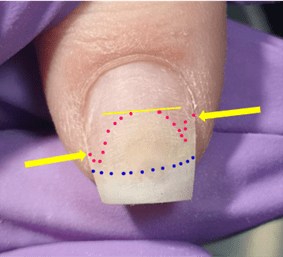
A colleague of mine once discovered significant onicólisis when removing her own artificial nails. Now, she knew her stuff, she just hadn’t realised the lateral nail walls were part of what we call the “guardian seals” of the nail unit. Once removed, it revealed widespread nail plate detachment.

What’s shocking is that the onycholysis had eaten up two-thirds of her nail, something you’d never spot from above. The yellow arrows she marked on the photo showed the detachment spreading right into the lateral nail fold. The nail looked completely normal from the top but was hiding a whole world of trouble beneath.

And guess what? That “world of trouble” becomes a five-star resort for bacteria if left untreated.

I want to show you something: Onycholysis

This is what one of my colleagues saw when she removed her artificial nail product – I forgive her for the missing lateral side walls at the time she didn’t realize they were one of the 4 guardian seals of the nail unit.

  • La línea amarilla muestra dónde está unida la lámina ungueal al lecho ungueal como debe ser.
  • Las flechas amarillas muestran dónde termina la onicolisis, pero también la cantidad de placa ungueal desprendida en el pliegue ungueal lateral.
  • El rosa señala el extremo proximal de la onicólisis.
  • Los puntos azules donde banda onicodérmica y el hiponiquio debe ser.
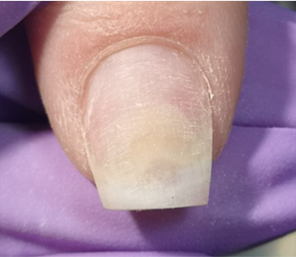
Onicólisis
Onicólisis – A detailed Look

Have a look at this picture of the nail unit from under the free edge. The yellow arrows and line show the detachment of the hyponychium and onychodermal band.
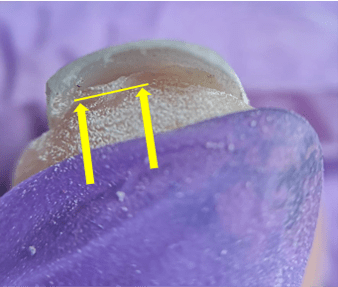
Onycholysis behind the free edge.

Now imagine if this colleague, was just doing an infill maybe from a dark blue or black hard gel or builder gel polish, no way she would see just how bad the onycholysis is a menos que mirara detrás del borde libre. La onicólisis consume casi 2/3rd ¡de la uña! Es espacio suficiente para que una familia de bacterias y otros patógenos malignos se tomen unas vacaciones durante 6 meses.

Missing the Signs? Here’s What Can Happen…

Infections don’t wait for your next appointment. If an area of onycholysis is left unchecked, it can create the perfect moist, dark, and protected environment for bacteria like Pseudomonas aeruginosa to move in and wreak havoc.
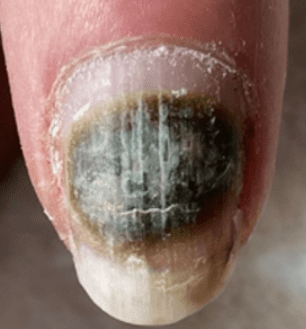
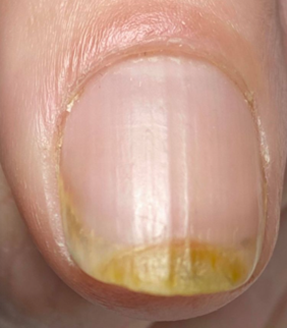
Infección bacteriana por Pseudomonas Aeruginosa
Pseudomonas Aeruginosa bacterial infection – almost resolved

One salon client here in the Netherlands dealt with such an infection for six months, despite following protocols and seeking proper treatment. That’s how long it can take to correct something that may have started out as a tiny patch of lifting or a crack in the product. And no, removing the nail plate wasn’t an option. Those kinds of extreme measures are for medical professionals, not nail techs.

And it’s not just bacteria. Fungal infections like onicomicosis superficial blanca can also take hold if water gets trapped under damaged enhancements. These often show up as powdery white patches, sometimes brushed off as “just dryness” or over-buffing damage, when in fact, they require completely different care.
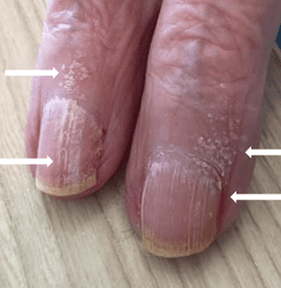
Onicomicosis superficial blanca

When to Pause During Rebalancing Artificial Nail Enhancements

We all want to give clients beautiful nails, but beauty can’t come at the cost of health. If you see signs of infection or nail trauma, stop. Explain your concerns professionally, show them what you see (photos help a ton here), and refer them to a GP or podiatrist if needed.

Sometimes, infections or reactions aren’t your fault. Maybe the client whacked their hand, cracked the product, and let water seep in. Maybe they’ve developed an allergy to an ingredient. That’s not on you. But missing it? Ignoring it? That’s where things go wrong.

Education Is Power – Keep Learning

We don’t live in a static industry. Nail technology, medical knowledge, and hygiene protocols evolve all the time. What you learned five years ago might already be outdated. That’s why ongoing education is not a luxury, it’s a necessity.

When redoing or rebalancing artificial nail enhancements, you’re not just applying a pretty surface. You’re making health checks. You’re being a professional. You’re being a guardian of your client’s natural nail health.

So next time you prep for a refill or remove that last layer of gel, take a breath. Look under the free edge. Take your time. Ask yourself: “Am I seeing everything I need to see?”

Because prevention isn’t just better than cure, it’s the difference between flawless nails and six months of painful, stubborn recovery.

Let’s keep eyes open, keep learning, and above all, keep those nail beds happy and healthy.
Publicado en: Uñas de bricolaje que salen mal, Información general

Uñas de gel que salen mal

Evite daños y reacciones alérgicas con consejos de expertos

Las mejoras en las uñas pueden ser bonitas, pero ¿qué ocurre cuando tu rutina de uñas causa más daño que bien?

The nail industry is booming, with countless enthusiasts turning to DIY nail kits at home. However, a recent social media post from Amy Brown Meyer highlights the potential risks of improper nail care. Amy shared her concerns about irritation after a home gel manicure, sparking a detailed and eye-opening response from Tracy Anne Shelverton, our nail expert.

Tracy’s response is a masterclass in understanding nail and skin health, emphasizing how improper techniques like overfiling or trimming (too much) skin can compromise the protective skin layers around your nails. This not only leads to irritation and swelling but opens the door to potential allergic reactions and or irritation caused by the chemicals in artificial nail products.

Cómo las uñas de gel DIY pueden dañar tu salud ungueal

Según Tracy, la piel que rodea las uñas forma parte de la precintos guardianes that protect your nails and nail units from pathogens and allergens. However, improper techniques like el perfilado excesivo, el recorte agresivo o el uso incorrecto de las herramientas puede debilitar esta barrera.

Cuando esto sucede:

  • La piel se irrita, lo que provoca enrojecimiento, hinchazón y respuestas inmunitarias.
  • Los alérgenos de los productos en gel no curados pueden penetrar en las capas dañadas de la piel, desencadenando potencialmente reacciones alérgicas permanentes.

Without the protective skin barrier, the compounds in artificial nail products especially those containing acrylates, can easily enter the body, causing both short-term irritation and long-term sensitivity.

Reacciones alérgicas a las uñas de gel: Riesgos y repercusiones a largo plazo

Un dato alarmante es que las reacciones alérgicas a los productos para las uñas pueden tener implicaciones que van más allá de la manicura. Tracy advierte de que los mismos compuestos que se encuentran en todos los productos para uñas artificiales que necesitan endurecerse también se utilizan en adhesivos médicos y cemento dental.

Lo que esto significa para usted:

  • Desarrollar una alergia ahora podría complicar futuros tratamientos médicos, como cirugía ortopédica o trabajos dentales.
  • Las reacciones alérgicas pueden provocar hinchazón, picor, enrojecimiento e incluso sensibilidad crónica a las sustancias químicas relacionadas.

Pasos para proteger las uñas y la piel

Si te gusta arreglarte las uñas en casa, hay formas de mantener la seguridad y proteger la salud de tus uñas:

  • Respeta tu barrera cutánea: Evite limar o recortar en exceso los pliegues de las uñas (la piel que las rodea).
  • Evite el contacto con la piel: Asegúrese de que los productos para uñas artificiales, especialmente los geles no curados, no toquen su piel durante la aplicación.
  • Dar tiempo a la piel para que se cure: Si nota irritación o enrojecimiento, deje de utilizar los productos y permita que al menos tres meses para que tu piel se recupere.
  • Consider Testing for Allergies: If you suspect an allergic reaction, consult a dermatologist for patch testing to identify allergens.
  • Infórmate: Invierte en una formación adecuada para aprender técnicas seguras de aplicación de uñas. Cursos y libros electrónicos como los que ofrece Conocimientos de uñas puede ayudarle a dominar el arte de mejorar las uñas sin poner en peligro su salud.

Una lección para entusiastas y profesionales de las uñas

The story of Amy’s irritated nails is a powerful reminder that beauty should never come at the cost of health. Whether you’re a DIY enthusiast or a professional nail technician, understanding the science behind nails, artificial nail products and skin is crucial for safe and beautiful results.

Preguntas frecuentes sobre las uñas de gel y las reacciones alérgicas

Q: Can gel nails cause allergic reactions?
Sí, las uñas de gel contienen acrilatos, que son alérgenos. Si estos entran en contacto con la piel, sobre todo si la barrera cutánea está comprometida, pueden desencadenar reacciones alérgicas como enrojecimiento, hinchazón o picor.

P: ¿Cómo puedo evitar la irritación de las uñas de gel DIY?
Evite perfilarse demasiado las uñas o recortar la piel. Asegúrese de que los productos de gel sin curar no toquen su piel durante la aplicación.

P: ¿Qué debo hacer si experimento irritación después de una manicura de gel?
Deje de utilizar todos los productos para uñas inmediatamente y permita que la piel se cure. Consulte a un profesional si los síntomas persisten, y considere la posibilidad de realizar pruebas de alergia si es necesario.

¿Quiere saber más?

Libera todo tu potencial con el Paquete completo NailKnowledgeel recurso definitivo para entusiastas y profesionales de las uñas.

With lifetime access to everything NailKnowledge has to offer, you’ll gain expert guidance and tools to achieve salon-quality nails while keeping your hands healthy and beautiful.

What’s Included in the NailKnowledge Complete Bundle?

  • 3 cursos completos
  • 18 lecciones
  • 35 Puntos de conocimiento
  • 6 libros electrónicos líderes del sector
  • El tuyo Perfil del artista/salón para mostrar su experiencia

Whether you’re just starting out or looking to deepen your expertise, this one-time purchase equips you with all the tools, insights, and resources to elevate your nail skills.

Sin cuotas continuas, sólo toda una vida de conocimientos.

Nailknowledge paquete completo

Proteja sus uñas, proteja su salud y conserve el mejor aspecto de sus manos de la forma correcta.

Publicado en: Uñas de bricolaje que salen mal, Información general, Salud y seguridad, Afecciones de las uñas

Mejora tus conocimientos sobre uñas

Suscríbase a nuestro boletín
SUSCRÍBETE...

Copyright © NailKnowledge

Conocimientos de uñas

  • Libros electrónicos
  • Quiénes somos
  • Cursos
  • Noticias
  • Blog
  • Boletín
  • Glosario

Políticas

  • Página de privacidad
  • Condiciones generales
  • Política de cookies

Ayuda

  • Póngase en contacto con nosotros
  • Pregunte a los expertos
  • Soporte del sistema
  • Preguntas frecuentes
Spanish
Spanish
English Portuguese Vietnamese