Not All Damaged Nails Are Created Equal
Most of us have snapped a nail, caught a finger in a door, or peeled off a set of acrylics and cringed at what was underneath. Damaged nails are something almost everyone experiences at some point, but what actually happens beneath the surface depends entirely on where the damage occurred. Some nails bounce back within weeks. Others carry the mark of an injury for months, or even permanently. Understanding why requires a quick look at the biology driving every nail you grow.
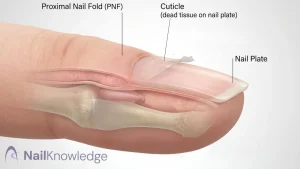
Your nail is not just a flat plate sitting on your fingertip. It is a complex structure produced by living tissue, and that tissue has a hierarchy. At the top of that hierarchy sits the nail matrix.
💡 Idea principal
Whether damaged nails recover fully depends on whether the nail matrix was affected. Surface-level damage grows out and disappears, but matrix injuries can alter nail shape, thickness, and structure for months or permanently. Watching how a nail regrows over three to six months gives the clearest picture of how serious the damage really was.

The Nail Matrix: The Engine Behind Every Nail
The nail matrix is a crescent-shaped band of specialised cells tucked under the base of your nail, just beneath the skin at the back of your finger. These cells divide constantly, pushing older cells forward and compressing them into the hard keratin plate we recognise as the nail. The pale half-moon shape visible on some thumbs, called the lunula, is actually the visible edge of the matrix peeking through.
Here is the critical point: the matrix is the only part of your nail that actually grows new nail. The plate itself is dead tissue once it leaves the matrix. So if damage reaches the matrix, the consequences are far more serious than a surface scratch or a broken tip.
If you want to understand the full picture of Cuando la matriz de la uña se daña, the science behind ridges and white spots makes a lot more sense once you know how the matrix builds each layer of the nail plate.
Surface Damage vs. Deep Damage: A Key Distinction
Not every nail trauma reaches the matrix. A lot of common damage stays at the plate level or affects the nail bed, the skin underneath the nail. Bruising under the nail from a knock, white spots that may be associated with minor impact, or temporary thinning from over-filing all sit in this category. Because the matrix is untouched, the nail grows out normally and the damage disappears over time.
Surface-level damage is frustrating, but it is temporary. The nail plate simply grows forward and carries the damage with it until it reaches the free edge and gets filed away.
Deep damage is a different story. When trauma, repeated pressure, infection, or aggressive nail work reaches the matrix cells, those cells can be disrupted, scarred, or destroyed. Since the matrix is what shapes the nail, any change to it shows up directly in the nail that grows from that point forward.
What Permanent Nail Damage Actually Looks Like
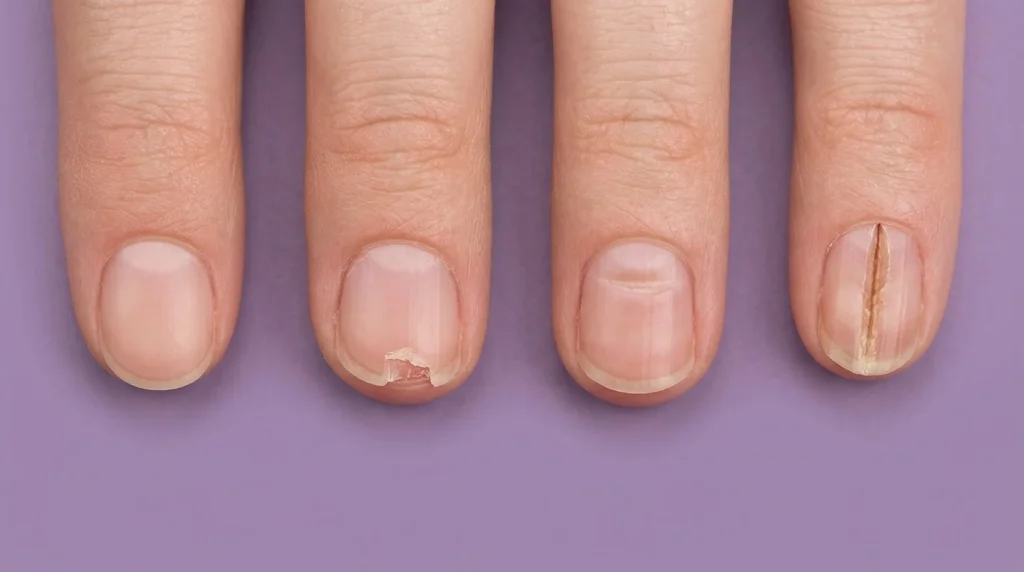
Permanent or long-lasting damage from matrix injury shows up in recognisable ways. Longitudinal ridges running from base to tip can be associated with matrix disruption and are among the changes that may appear after matrix injury. These form when a section of the matrix is producing slightly less or differently structured keratin than the cells beside it. The groove or ridge you see on the surface is a direct map of that disruption underneath.
Changes in nail thickness are another indicator. A nail that grows back thinner than it used to be, or develops an unusual curve or hook at the tip, may be associated with altered matrix activity. In more severe cases, a nail may grow back split down the middle, with a permanent groove or even two separate sections forming from a single finger. Recurring splits in the same nail may be associated with underlying matrix disruption, though dryness, brittleness, and other factors can also contribute.
Colour changes can also persist. A nail that consistently grows in with a pale, opaque, or slightly discoloured band may be reflecting altered keratinisation from a compromised section of matrix tissue.
How Long Does Nail Damage Take to Show Up?
This is where nail biology gets genuinely fascinating. Because the matrix produces nail slowly, the effects of an injury do not appear at the surface immediately. Fingernails grow at roughly 3-4mm per month on average, though this varies by age, health, and which hand you use most. The factors behind nail growth rate are more complex than most people realise, and they directly affect how quickly damage becomes visible and how long recovery takes.
An injury to the matrix might not show up visibly at the nail surface for two to four weeks. Then, as the nail grows, that disrupted section travels slowly toward the tip. A full fingernail takes roughly four to six months to grow from matrix to free edge. That means the full picture of any matrix injury only becomes clear after several months have passed.
It also means that apparent recovery can be misleading. A nail might look normal again within a few months if the disruption was mild and the matrix healed. But if the matrix sustained permanent structural change, the altered nail growth continues indefinitely.
Common Causes of Serious Nail Damage
Crush injuries are the most dramatic cause. Slamming a finger in a door or dropping something heavy on it can bruise or scar the matrix directly. But serious matrix damage does not always come from obvious trauma.
Repeated low-level pressure matters just as much. Habits like pressing or picking at the skin around the nail base, aggressive cuticle work, or wearing shoes that compress the toes over years may each gradually contribute to altered matrix function. This is why certain patterns of nail ridging may be associated with behavioural habits as well as single injuries.
Fungal infections that penetrate deeply, certain medications, and systemic health conditions may also affect the matrix from the inside. In these cases, the nail deformity reflects a biological disruption rather than physical trauma, but the mechanism is the same: altered matrix cells produce altered nail.
Can Damaged Nails Recover Fully?
Sometimes, yes. The matrix has some capacity to heal, particularly from minor injuries or temporary disruptions. If the damage was isolated and the matrix cells were disturbed rather than destroyed, normal production can resume and the nail gradually grows back to its original appearance. This is genuinely encouraging for most everyday nail damage scenarios.
But when matrix cells are permanently scarred or lost, that section of the matrix cannot regenerate. The nail growing from those cells will reflect the change indefinitely. In medical terms, this is called a nail dystrophy, and it can range from a single faint ridge to a significantly deformed nail depending on how much of the matrix was affected.
The honest answer is that time tells. Watching how a nail grows back over three to six months gives the clearest picture of whether the matrix has recovered or whether the change is lasting.
Understanding why nails change after injury is one thing. Knowing how to assess those changes, recognise the difference between temporary disruption and lasting damage, and understand what each visual sign actually means takes a deeper foundation in nail anatomy and biology.
If nail science genuinely interests you, MyNailEra’s verified learning content covers nail anatomy in depth, and Era, your personal nail coach, can help you connect what you see on your nails to what is happening underneath. Explore the topic properly and see how much more sense your nails start to make.