El HEMA (metacrilato de hidroxietilo) se ha convertido en uno de los ingredientes de los que más se ha hablado en los últimos años.
Es un ingrediente que se utiliza en MUCHOS productos. Lo usan los dentistas, los cirujanos ortopédicos. También se utiliza en la impresión 3D y en muchas otras aplicaciones. También se ha utilizado en productos para recubrimiento de uñas durante mucho tiempo, ¡de forma segura!


¿Por qué ahora hay una ‘guerra’ contra el HEMA?
En 2018, la Asociación Británica de Dermatólogos publicó un artículo de investigación que nombraba específicamente al HEMA como un alérgeno de alto nivel y la causa principal de una ‘epidemia de alergias’. También mencionaron otros ingredientes utilizados en recubrimientos de uñas, pero este era el ‘malo’. También fue nombrado ‘alérgeno del año’ en 2018 por algunas fuentes. Isobornil acrilato en 2020, que es otro ingrediente comúnmente utilizado en recubrimientos de uñas.
La situación surge de las ventas minoristas de esmaltes en gel UV y, sin duda, se ha extendido a la industria profesional. Está muy claro que el problema del consumidor se debe a lámparas UV que no curan adecuadamente, el contacto excesivo con la piel y los altos niveles de HEMA que ayudan a mantener el precio bajo. Todo esto se ha replicado en la industria profesional.
Una vez que un individuo desarrolla una alergia, es de por vida. Por lo tanto, aquellos consumidores con alergia y aquellos que están en camino de desarrollarla, visitan el salón para una laca de uñas en gel UV y, ¡boom, síntomas de alergia! No más laca de uñas en gel UV para ellos, lo que equivale a clientes perdidos.
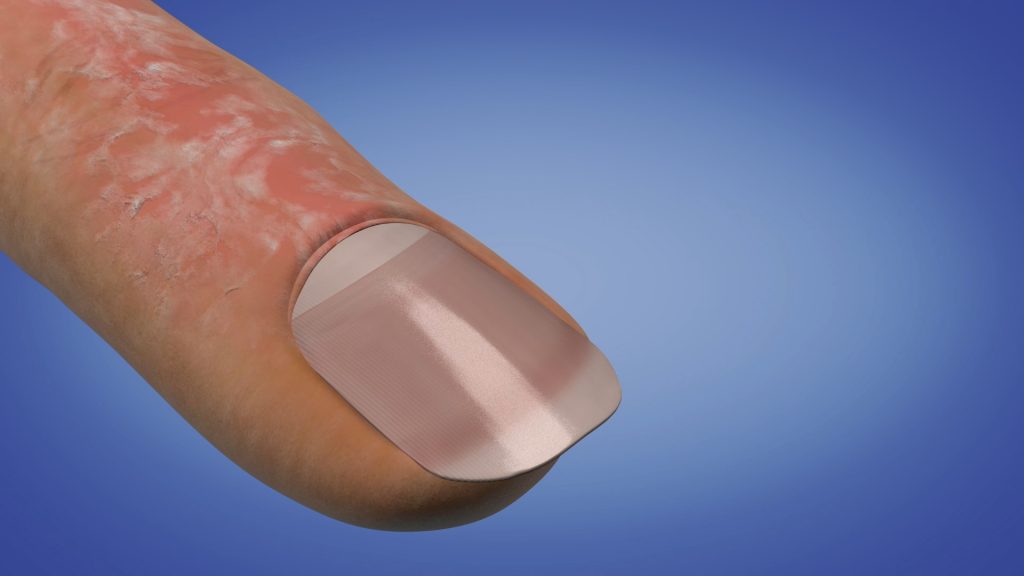
Pero algunos clientes que nunca han tocado una versión minorista también están desarrollando alergias. Aunque el HEMA ha sido identificado como un alérgeno conocido, ¡no es el único ni mucho menos! La ÚNICA solución es una prueba de alergia realizada por un dermatólogo para identificar la causa. Cambiar de marca NO es la respuesta. Pasar a un producto sin HEMA no es la respuesta. La causa es la que hay que identificar.
Los productos cosméticos se encuentran entre los más seguros del mundo y cada ingrediente debe estar autorizado para su uso, normalmente con un límite máximo recomendado de %. El límite máximo de HEMA es de 35%. Sin embargo, incluso en concentraciones bajas, debe utilizarse con precaución.
Veteranos de la industria de más de 30 años han utilizado estos productos durante todo este tiempo con escasa o nula incidencia de alergias. Se trata de un problema moderno que sólo puede aumentar a menos que haya una mayor aceptación y comprensión del problema.
Ahora hay muchas marcas de HEMA gratuitas en el mercado y, si usted, como profesional, y muchos de sus clientes han desarrollado una alergia que se sabe que es a HEMA, entonces esta es la respuesta. Si la situación le preocupa, esta podría ser la respuesta, ¡pero no si el problema no es HEMA! Si no está trabajando de manera limpia y segura, eventualmente ocurrirán alergias a otros ingredientes para algunos. ¡No si, sino cuándo!
Toda la familia de acrilatos y metacrilatos son alérgenos potenciales. Si usted o sus clientes desarrollan una alergia, debe informárselo a su dentista. También, si son necesarios procedimientos ortopédicos. De lo contrario, ¡podría encontrar lo que le causa alergia dentro de su cuerpo en lugar de en un recubrimiento de uñas que se pueda quitar fácilmente!
El cambio está empezando a ocurrir. A partir del 3 de junio de 2021, los productos de consumo que contienen HEMA (y di-HEMA, que es mucho menos alérgeno y diferente del HEMA) no pueden ser comercializados. A partir del 3 de septiembre de 2021, no deben estar disponibles en el mercado en toda Europa. Estos productos deben etiquetarse como ‘solo para uso profesional’ y solo venderse a profesionales con la creencia de que sabrán cómo usarlos de forma segura. Teniendo en cuenta que la incidencia de alergias en los profesionales de las uñas y sus clientes ha superado las cifras de consumidores, esto es un poco preocupante.
En conclusión, el HEMA no es el demonio que se dice que es. El problema son los productos mal formulados, las malas prácticas de trabajo y el uso de una lámpara UV incorrecta que no cura adecuadamente los recubrimientos. Puede que no sea el HEMA lo que cause la alergia, sino cualquiera de los otros ingredientes, y esta situación es de por vida, no temporal.
No deje de ver nuestro último vídeo sobre HEMA en la industria de las uñas.