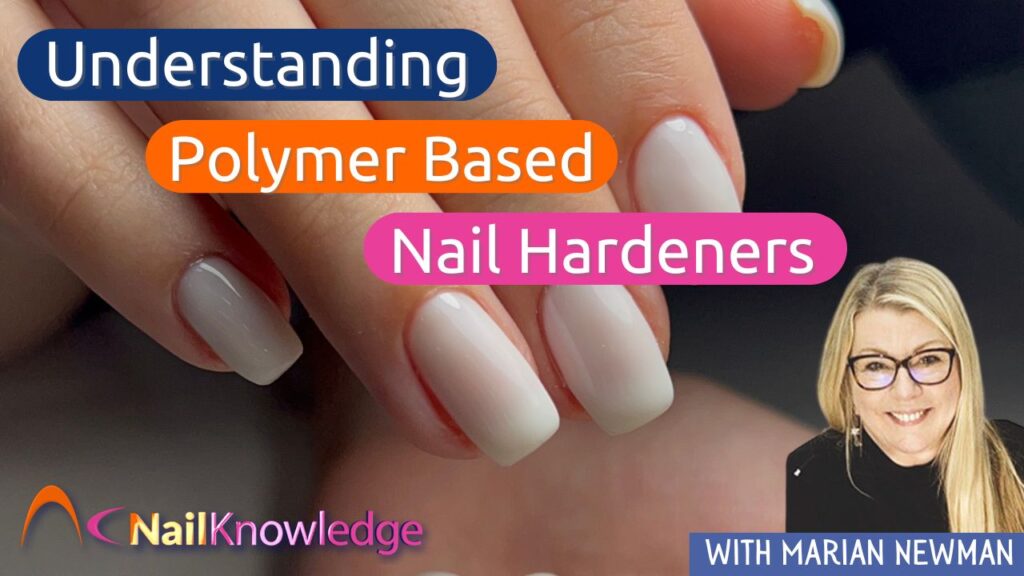
Os endurecedores de unhas modernos que usam polímeros em vez de formalina ou dimetil ureia funcionam de forma diferente, mas ainda podem oferecer benefícios de proteção. Aqui está um detalhamento de como eles funcionam, seus mecanismos e se podem resolver problemas como rachaduras e descamação recorrentes.
Como funcionam os endurecedores de unhas à base de polímeros
Polymer-based nail hardeners generally work by creating a durable coating on the surface of the nail, rather than forming crosslinks within the keratin structure (which formalin and dimethyl urea would do). The polymers used are often acrylics, resins, or other film-forming agents that bond to the nail’s surface, creating a shield that helps prevent physical damage.
Esse revestimento:
- Atua como uma barreira protetora contra a perda de umidade e os fatores de estresse ambiental.
- Reduz o impacto do desgaste diário, que pode enfraquecer as unhas com o tempo.
- Adiciona resistência e espessura temporárias à superfície da unha, tornando-a menos propensa a dobrar ou quebrar.
Os endurecedores de unhas à base de polímeros formam ligações cruzadas?
No, most polymer-based nail hardeners do not form crosslinks within the nail’s keratin. Crosslinking involves creating covalent bonds within or between keratin molecules, which formalin (a derivative of formaldehyde) does by directly reacting with the proteins in the nail. Dimethyl urea also promotes crosslinking but is less harsh than formaldehyde.
Polymer-based hardeners, by contrast, rely on forming a physical film on top of the nail. This is more of a mechanical barrier than a chemical reinforcement within the nail matrix itself. Some advanced formulations may contain specific ingredients that interact with the keratin surface or enhance adhesion, but they don’t chemically bond in the same way as crosslinking agents.
Eficácia para rachaduras e descascamento
Para unhas propensas a rachar e descascar, os endurecedores à base de polímeros podem oferecer alguns benefícios, mas podem não ser tão eficazes quanto os agentes de reticulação, como a formalina, a longo prazo.
Here’s why:
- Rachaduras e descascamento: These are often caused by underlying weakness or layering of the nail plate, which crosslinking agents address by strengthening the keratin structure. Polymer-based hardeners might reduce immediate damage by forming a protective barrier, but they don’t address the fundamental weakness that leads to splitting and peeling.
- Solução temporária: Polymer-based hardeners can help prevent further damage, but they’re more of a temporary fix. Because they don’t change the structural integrity of the nail itself, they may not fully resolve recurring splits and peeling, especially if the nail is already weak or brittle.
- Menor potencial de danos: Como ponto positivo, os endurecedores à base de polímeros tendem a ser mais suaves e menos propensos a causar fragilidade do que os endurecedores de reticulação tradicionais, que às vezes podem tornar as unhas excessivamente duras e propensas a quebrar. Para pessoas com unhas sensíveis, eles podem ser uma opção mais segura para o uso diário.
Comparação geral com endurecedores de unhas à base de formalina
While polymer-based hardeners provide surface-level protection, they generally won’t reinforce the nail from within as effectively as formalin-based products. However, they are often safer for long-term use, as formaldehyde-containing products can cause irritation, allergies, and excessive brittleness when overused.
Em resumo
- Endurecedores de unhas à base de polímeros protegem a unha formando um revestimento durável em vez de se ligarem quimicamente à queratina.
- Eles não formam ligações cruzadas dentro da estrutura da unha, portanto, seu efeito é mais de proteção externa do que de fortalecimento interno.
- Embora eles possam reduz temporariamente a quebra, as rachaduras e a descamaçãoNo entanto, eles podem não tratar a causa raiz de forma tão eficaz quanto os agentes de reticulação, como a formalina.
- No entanto, eles são, em geral mais seguro e menos agressivo nas unhas, o que as torna uma boa opção para pessoas com unhas sensíveis ou já quebradiças.
If you experience recurring splits and peeling, you may benefit from alternating between polymer-based hardeners and a mild crosslinking agent, under the guidance of a nail care professional, to balance strength and flexibility. Additionally, regular moisturizing and maintaining a balanced diet with adequate biotin, vitamins, and minerals can help improve nail health from within.