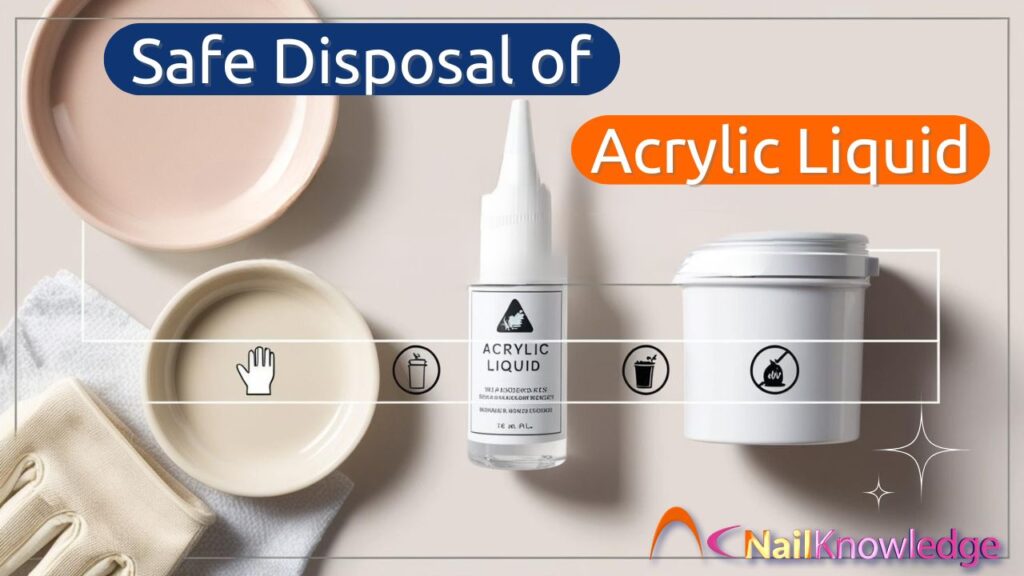
There’s something undeniably satisfying about a fresh acrylic nail set, the shine, the shape, the sheer artistry. But once the client leaves and you’re left with your tools, your dappen dish still half-full of liquid monomer, a crucial question arises: how do you manage the descarte de líquido acrílico de forma segura e responsável?
It might seem like a small thing, pouring out a bit of unused product. But when it comes to acrylic liquid, also known as monomer, improper disposal can be both dangerous and environmentally harmful. Let’s break it down, not just what you deve fazer, mas por que é importante.
Entendendo a natureza do líquido acrílico
First off, it helps to understand what we’re working with. Líquido acrílicoO monômero do seu prato dappen é um composto químico poderoso. Quando misturado com pó de polímero, it hardens into the durable acrylic nails many of us know and love. But before it cures, that liquid is highly volatile, flammable, and capable of causing irritation or allergic reactions with repeated exposure.
Think of it like paint thinner or nail polish remover—it may be commonplace in your toolkit, but it demands respect. The fumes alone can be irritating to the lungs, and spills can wreak havoc on surfaces. This isn’t the kind of thing you just rinse down the sink or chuck into a regular rubbish bin. So, what do you do?
A maneira correta de lidar com o descarte de líquido acrílico
O método mais seguro para a descarte de líquido acrílico depends on the amount you’re dealing with. Small amounts left behind after a service can be managed quite easily and safely:
1. Combine com pó acrílico
If there’s just a little liquid left in your dappen dish, you can mix it with an equal amount of acrylic powder. This causes the monomer to begin curing, turning it into a semi-solid mass that’s far less dangerous than the raw liquid. Once it hardens, this mixture can be tossed in the bin with your regular salon waste. Easy, right?
2. Nunca misture grandes quantidades
Here’s where it gets risky. Mixing more than 30ml (or about one ounce) of líquido acrílico com pó can generate heat as it cures. We’re not talking mild warmth, we’re talking temperatures that can scorch skin or, in extreme cases, ignite a fire. If you’ve ever felt a nail tip warm up during curing, you’ve already had a glimpse of the chemical reaction at work.
3. Limpe e contenha
If you’re not combining with powder, use a disposable paper towel to wipe out any residual liquid from your dappen dish. That towel should be sealed in a plastic bag before throwing it away. Why the extra step? Acrylic liquid evaporates quickly, releasing strong fumes. A sealed bag helps contain those vapours and keeps your bin from smelling like a chemistry lab.
Por que o descarte adequado é importante
It’s not just about keeping your salon tidy, it’s about protecting your health and the environment. Pouring monomer down the sink or toilet can contaminate water supplies. It’s not something treatment plants are equipped to filter out, and over time, repeated disposal like this can contribute to broader environmental pollution.
From a personal health perspective, repeated skin contact with uncured monomer can lead to irritation, sensitisation, or even long-term allergies. Once someone becomes allergic to a substance like this, they’re often allergic for life, and that can be career-ending in the nail industry.
A inalação de vapores pode não causar danos imediatos, mas, com o tempo, a exposição pode levar a dores de cabeça, nausea, and respiratory irritation. That’s why good ventilation is critical, and why proper cleanup is more than just a chore.
O que não fazer
It’s worth being crystal clear here—some disposal methods are simply unsafe. Here’s a quick list of don’ts quando se trata de líquido acrílico:
- Don’t pour it down the sink, toilet, or drain.
- Don’t dump it into outside soil or gutters.
- Don’t burn it or let it evaporate in open air.
- Don’t store used paper towels or soaked wipes in open bins.
If your local waste management facility offers hazardous waste disposal services, that’s an ideal option for any bulk leftover product.
Dicas para práticas mais seguras em salões de beleza
Fazer melhorias nas unhas de acrílico pode ser uma forma de arte, mas a limpeza é uma ciência. Aqui estão algumas dicas para manter sua rotina segura e sustentável:
- Use apenas o que você precisa. Reduzir o desperdício na fonte significa menos preocupação com o descarte posterior.
- Mantenha as tampas nos contêineres. Isso reduz a evaporação e mantém os vapores sob controle.
- Armazene os líquidos em um local fresco e seco. O calor e a luz podem degradar o produto e aumentar o risco.
- Use luvas. Sempre. Mesmo para limpezas rápidas.
- Ventile seu espaço. Um bom fluxo de ar pode fazer uma enorme diferença na qualidade e no conforto do ar.
Considerações finais
No final das contas, a descarte de líquido acrílico is part of being a responsible beauty professional. It’s not just about ticking a safety box, it’s about protecting yourself, your clients, and the planet. Acrylics may be small, but the impact of their ingredients can be significant if mishandled.
Portanto, da próxima vez que você olhar para aquela pequena poça no fundo do seu prato de dappen, lembre-se: manuseie-a com inteligência. Alguns segundos extras de cuidado podem evitar muitos problemas mais tarde.