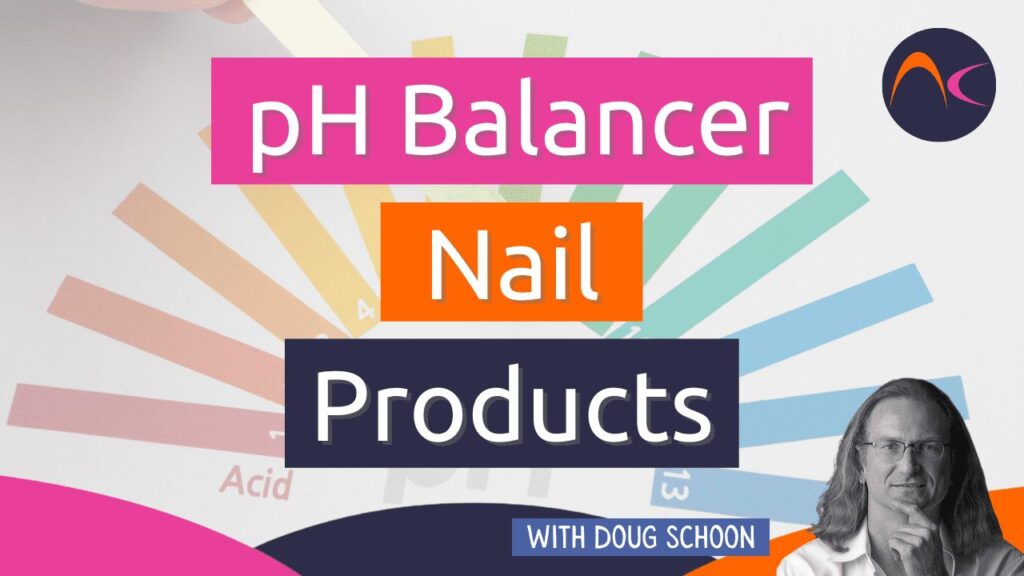
Understanding the products we use, when to use them, and why, is imperative in the nail business. Today we are going to discuss pH balancer nail products.
If you understand pH, it will make many other important concepts much easier to understand. The pH is a measure of the acidity or alkalinity of water. Water normally isn’t acid or alkaline; it’s exactly in the middle at the neutral point. Some people use the word “basic” instead of “alkaline”, but these terms are identical.
One of the most important things to understand is that only water can have a pH, nothing else. No exceptions. Only water, which includes the water found in water-containing products. Nothing else can have pH. For instance, nail oil does not have a pH because it contains no water. However, if you mix the oil with water to make a lotion, the lotion will have a pH. This will be the pH of the water in the mixture. Dissolving other substances in water can change the water’s pH to become more acid or alkaline, depending on what’s added.
Interestingly, when you measure pH, you measure how much acid or alkaline substance is dissolved into the water at that moment. For example, if I blow bubbles in water, the water will change from “neutral” to “acidic”. That is because the carbon dioxide in my breath will be dissolved into the water and make carbonic acid. The pH can be used to measure precisely how much acid or alkaline material is dissolved in the water phase, which is why pH is an important measure of quality for lotions, creams, and other water-containing cosmetics. When a product is made incorrectly, the pH will often be different. Most manufacturers will specify the allowable pH range for a product and may reject a batch if the pH is wrong.

The nail plate contains water, but the pH of the nail is difficult to determine. It is known that the pH of the water inside the nail plate can be temporarily altered if exposed to acidic or alkaline substances. Vinegar, for example, is acidic. If the nails are soaked in vinegar, it is expected that the pH of the nail plate will become more acidic. The same would be true if the nail plate were soaked in an alkaline baking soda solution; the plates would become more alkaline. As the pH of the water in the nail changes, it causes a slight change in the physical shape of the proteins inside the nail plate as they adjust to the new pH of the water in which they are submerged. There can also be some minor chemical changes on the surface of the nail plate that are related to pH.
These changes alone are small, however, combined they can produce a minor improvement in surface adhesion. Altering the pH won’t make a huge difference, but it can help a little. The idea behind a pH balancer is to temporarily alter the pH of the nail plate, ideally making it likely to improve adhesion. Eventually, the nail plate will be restored back to its normal pH. This is a temporary effect lasting hours, not days. When should you use such products? If the manufacturer of the nail coating system instructs the use of a pH balancer, then this should be adhered to. I recommend that you carefully follow those instructions. In that case, the pH balancer is being used as a step in a “system”, designed to ensure improved adhesion to the nail plate. So not following this step could adversely affect your final results.
My answer is completely different in the case of using a pH balancer that was not specifically designed for use with that nail coating product. If that pH balancer isn’t recommended by the manufacturer, you should call them to make sure they aren’t concerned about some unforeseen issues you may not have considered. I’d recommend caution. My recommendation is to listen to the nail coating manufacturer and follow their directions. They’re the ones that can give you the best information about how to best use their products.