• Pular para navegação primária
  • Pular para o conteúdo principal
  • Pular Rodapé
NailKnowledge

NailKnowledge

  • Cursos
  • Livros eletrônicos
  • Cesta de livros eletrônicos
  • Base de conhecimento
    • Base de conhecimento
    • Pergunte aos especialistas
    • Glossário
  • Notícias
  • Blog
  • Galeria
    • Galeria de arte para unhas
    • Artistas de unhas
    • Junte-se à elite
  • Login

Arquivos para março 31, 2025

Manchas brancas nas unhas após a remoção do gel

White Spots on Nails: Damage or Dehydration?

White spots on nails after gel removal are a common concern among nail professionals and enthusiasts. They don’t result from dehydration but rather from improper removal techniques. UV gel manicures are safe when applied and removed correctly. Adhering to recommended wear times, typically two weeks, is crucial.
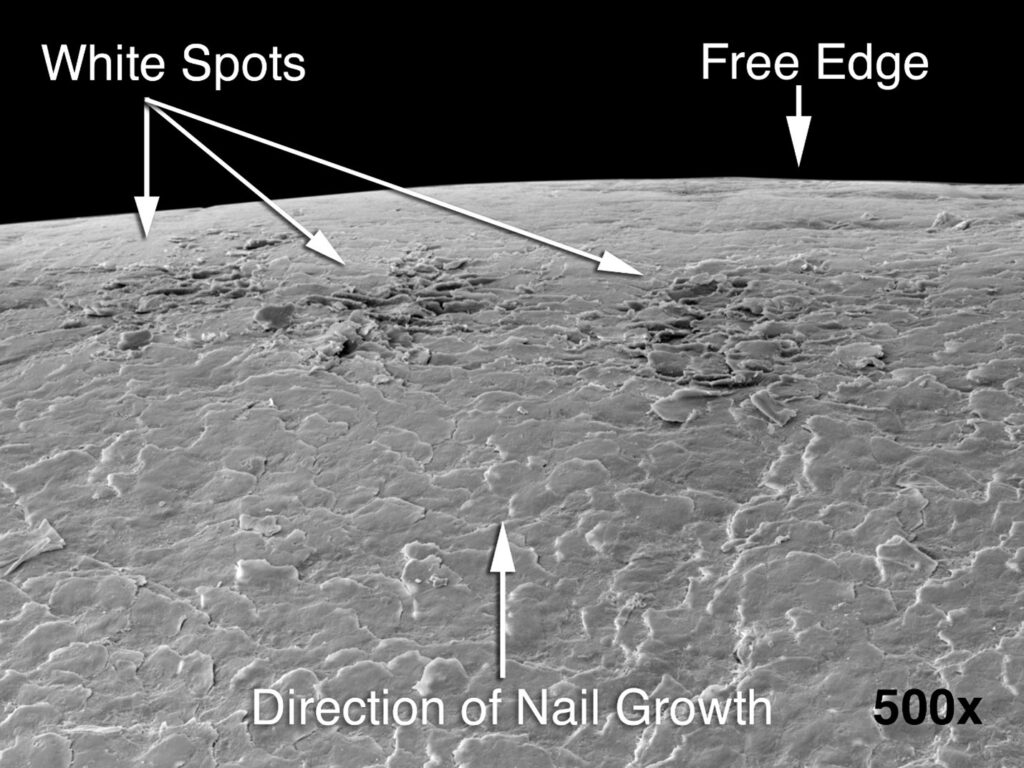
Improper removal of UV manicures can cause surface white spots on the nail plate.

Extending wear beyond four weeks makes removal harder. Incorrect curing with the wrong lamp also complicates the process. Proper techniques are essential for preventing damage. Moreover, using the right tools and solvents ensures a safe and effective service. For instance, acetone is commonly used due to its fast-acting properties and long history of safe use in nail care.

Why Dehydration Isn’t the Cause of White Spots

Dehydration affects the entire nail plate, not just specific spots. It’s reversible; soaking nails in water restores moisture quickly. Nail dehydrators temporarily remove moisture, but water reverses this effect. Acetone used in removal may slightly dehydrate the nail but doesn’t cause white spots.

If dehydration were the cause, white spots would disappear after hydrating treatments. However, they persist, indicating another cause. Additionally, nail dehydrators used before applying acrylic enhancements leave a chalky appearance that vanishes with water contact. This demonstrates that dehydration is not responsible for the white spots seen after gel removal.

To further illustrate this point, consider the use of nail dehydrators in nail enhancements. These products temporarily remove moisture from the nail surface, creating a chalky appearance. Yet, this effect is instantly reversed upon contact with water, showing that dehydration does not lead to permanent damage or white spots.

The Real Cause: Surface Damage

White spots are caused by physical damage during improper gel removal. Scraping or prying at coatings dislodges nail cells, creating pits that appear whitish. Proper removal involves soaking coatings in acetone or solvents for sufficient time to avoid forceful scraping.

Rushing removal or using excessive force damages the nail plate. This damage isn’t caused by UV gel itself but by improper techniques. Images often show how scraping can uplift keratin cells, leading to visible white spots. Therefore, it’s crucial to avoid using metal or wooden tools that can dislodge nail cells.

Moreover, the use of force during removal not only causes immediate damage but can also lead to long-term issues. For example, repeated scraping can weaken the nail plate over time, making it more prone to breaks or splits.

Preventing White Spots During Gel Removal

To prevent white spots, treat the nail plate with care. Ensure adequate soak time during removal to avoid using force. Minimise filing or use a 240-grit abrasive if necessary. Educate clients about proper maintenance and wear times.

By adopting gentle techniques, you can protect clients’ natural nails while maintaining professional standards. Regular training and updates on best practices are essential for nail technicians. This includes understanding the chemistry behind nail products and how they interact with the nail plate.

Additionally, client education plays a significant role in preventing damage. Informing clients about the importance of adhering to recommended wear times and avoiding excessive force during removal helps ensure their nails remain healthy.

Conclusion and Best Practices

White spots on nails after gel removal are caused by physical damage, not dehydration. Understanding this helps professionals adopt safer practices. UV gel manicures are safe when done correctly. Proper removal techniques and client education are key to preventing damage.

In conclusion, focusing on correct application and removal methods ensures healthy nails and satisfied clients. By prioritising nail care and education, professionals can enhance their services and build trust with clients.

To further enhance your practice, consider the following best practices:

  • Use High-Quality Tools: Invest in tools designed specifically for nail care to ensure safe and effective results.
  • Regular Training: Stay updated with the latest techniques and products to maintain high standards.
  • Comunicação com o cliente: Educate clients on proper nail care and maintenance to prevent damage.

By incorporating these practices into your routine, you can provide superior service while protecting your clients’ nail health.


Arquivado em: Gel UV

Substâncias tóxicas em cosméticos: Mitos versus fatos

Estamos sendo enganados?

Let’s talk about a question that stirs up a lot of emotions in the beauty world: Why are there toxic substances in cosmetics, and why don’t manufacturers just take them out? At first glance, it seems like a fair question, but when you dig a little deeper, it reveals more confusion than clarity. And that’s exactly the problem.

This kind of question is what experts call a “loaded question.” Why? Because it’s built on assumptions, ones that aren’t necessarily true. It presumes that cosmetics contain harmful levels of toxins, and that manufacturers are either careless or malicious in refusing to remove them. But is any of that actually true?

Let’s unpack this with science, not speculation, and bust some of the most persistent myths surrounding toxic substances in cosmetics.

Entendendo o medo em relação às substâncias tóxicas nos cosméticos

Precisamos começar com uma verdade fundamental: os produtos cosméticos estão entre os bens de consumo mais seguros disponíveis. That’s not just an opinion. Regulatory bodies like Health Canada and the U.S. FDA have consistently maintained this stance. The idea that these products are “toxic” is not supported by credible science, it’s a narrative driven by fear-based advocacy groups who love to shout about danger but are suspiciously quiet when it comes to actual evidence.

Now, here’s where it gets tricky. People often assume that if a substance pode ser tóxico, ele deve be dangerous at any level. But this is simply not true. Think about salt. Too much of it can be lethal. Yet, in the right amount, it’s essential for life. Context, and concentration matters. That’s why claims about “toxic substances in cosmetics” often miss the mark.

Existem realmente substâncias tóxicas nos cosméticos?

Let’s take a closer look at the usual suspects, those scary-sounding ingredients that get dragged through the mud on social media and in flashy headlines.

1. Formaldehyde
Yes, it’s in some cosmetics, but in quantidades microscópicas de traços, typically under 0.01%. That’s about the same amount found naturally in apples, grapes, and even in the air you exhale. Our bodies produzir formaldehyde to build proteins. It’s also used in cosmetics as a preservative, making products safer by preventing the growth of bacteria and mould.

In fact, the trace levels used in nail hardeners, for example, are nowhere near what would be considered harmful. International safety guidelines, such as those from the ACGIH, set the bar far higher than what’s found in these products.

2. 1,4-Dioxano
Often mistaken for “dioxin” (a completely different, far more dangerous chemical), 1,4-dioxane is another misunderstood ingredient. Found in trace amounts in shampoos and cleansers, it’s not added deliberately but can occur as a by-product during manufacturing. It also happens to be naturally produced by fruits like bananas and tomatoes.

It’s not about manufacturers being sneaky, it’s about making gentler cleansers that don’t irritate the skin. Ironically, the very ingredients used to make products safer and milder are the ones being villainised.

3. Parabens
O garoto-propaganda das campanhas de medo dos cosméticos, os parabenos foram erroneamente associados ao câncer de mama graças a um único estudo falho que, desde então, foi totalmente desacreditado. A pesquisa de acompanhamento não encontrou nenhuma ligação causal. Ainda assim, o mito persiste, apesar do fato de os parabenos estarem entre os conservantes mais seguros e eficazes dos cosméticos.

What’s more, they occur naturally in blueberries, carrots, and cocoa beans. Yes, even the organic kind. Nature isn’t toxin-free, and not all synthetic ingredients are harmful.

4. Chumbo
This one really gets people’s blood boiling. Advocacy groups often point to trace amounts of lead in lipstick as proof that cosmetics are dangerous. But here’s the kicker, those levels are so low, you’d have to comer cinco tubos de batom por dia para atingir níveis inseguros. A FDA dos EUA e a Health Canada confirmaram que os níveis de chumbo nos cosméticos não representam risco.

Lead is naturally present in soil, water, and even air. You can’t completely avoid it. The key is keeping exposure well below harmful levels—which cosmetics do.

Ciência lixo versus ciência real

Um dos maiores culpados por todo esse medo? Ciência lixo. That’s when groups misuse or twist scientific findings to fit their agenda. These organisations often rely on sensationalism to rake in donations, not facts to inform the public. They frame their arguments around half-truths and loaded questions, making experts look like they’re hiding something.

Science isn’t meant to scare, it’s meant to esclarecer. Como diz o químico canadense Dr. Joe Schwarcz, “Toxicity depends on concentration and route of exposure, not just presence.” Isso significa que algo pode ser perigoso quando ingerido, mas perfeitamente seguro na pele. Pense da seguinte forma: esfregar sal na pele é inofensivo, mas comer em excesso pode fazer sua pressão arterial subir.

Então, devemos nos preocupar?

A resposta curta? Não. The presence of potentially toxic substances in cosmetics doesn’t mean they are harmful. The word “potentially” is key. Water, vitamins, even natural essential oils like tea tree and lavender can be toxic at high doses. But we don’t panic about eating bananas or using shampoo, do we?

The difference lies in how much, how often, and how it enters the body. Regulators assess all these factors before approving ingredients for use. When they say it’s safe, it’s because it is, based on real science, not social media.

Considerações finais

It’s time we stopped letting fear-based advocacy groups control the narrative around beauty products. Their tactics rely on scaring people with headlines like “toxic substances in cosmetics” while conveniently ignoring the actual science. The truth is, cosmetic products undergo rigorous testing and are highly regulated to ensure safety.

So, next time you hear someone panicking about a chemical in their moisturiser, remind them: everything is a chemical, even water, and it’s the dose that makes the poison.

Let’s embrace knowledge, not fear.

Arquivado em: Loções, poções e esmaltes

Aumente o nível de suas percepções sobre as unhas

Participe de nosso boletim informativo!
ASSINAR...

Direitos autorais © NailKnowledge

NailKnowledge

  • Livros eletrônicos
  • Sobre nós
  • Cursos
  • Notícias
  • Blog
  • Boletim informativo
  • Glossário

Políticas

  • Página de privacidade
  • Termos e condições
  • Política de cookies

Suporte

  • Entre em contato conosco
  • Pergunte aos especialistas
  • Suporte ao sistema
  • Perguntas frequentes
Portuguese
Portuguese
English Spanish Vietnamese