• Pular para navegação primária
  • Pular para o conteúdo principal
  • Pular Rodapé
NailKnowledge

NailKnowledge

  • Cursos
  • MyNailEra
  • Livros eletrônicos gratuitos
  • Base de conhecimento
    • Base de conhecimento
    • Pergunte aos especialistas
    • Glossário
  • Notícias
  • Blog
  • Login

Cuidados com os pés e anatomia

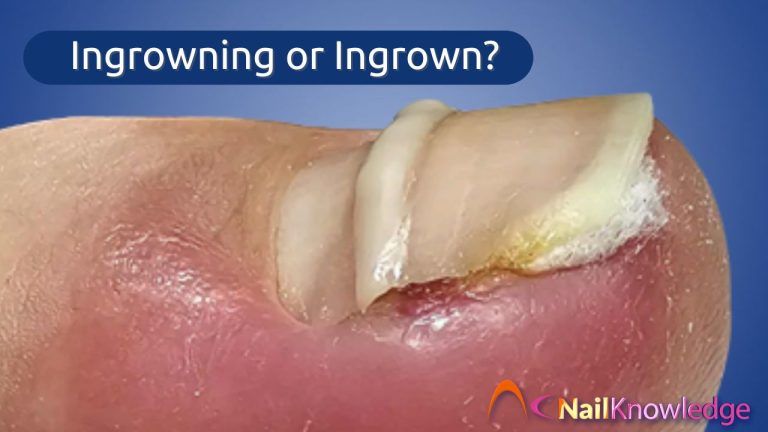
Unha encravada ou encravada no dedo do pé - Causas, sintomas e conselhos sobre cuidados

Understanding an Ingrowing vs Ingrown Toenail

An ingrowing toenail occurs when the edge of the nail starts pressing into the surrounding skin.

An ingrown toenail happens when that edge pierces the skin, often leading to inflammation or infection.

Knowing the difference helps prevent the problem from becoming painful or infected.

Common Causes of an Ingrown Toenail

An ingrown toenail (or nail growing into the skin) can result from several factors, including:

  • Shoes that are too narrow or tight
  • Cutting nail corners too short or too round
  • Incorrect nail shape or trauma to the toe
  • Picking or tearing at the nail folds
  • Naturally curved or thick toenails
  • Misaligned toe position
  • Prolonged moisture around the toes

Regular maintenance and correct cutting techniques reduce your risk.

Signs and Symptoms of Ingrown or Ingrowing Nails

When the skin is not yet pierced (ingrowing nail):

  • Redness around the nail edge
  • Swelling or mild inflammation
  • Tenderness or pressure pain when walking

When the nail pierces the skin (ingrown toenail):

  • Increased inflammation
  • Pus or discharge
  • Sharp, throbbing pain or local infection

Recognising these early signs allows timely professional care before infection develops.

What You Can Do for a Mild Ingrowing Toenail

It’s best not to treat an ingrown toenail yourself, but you can support healing and comfort by:

  • Cutting toenails straight across, never too short, and avoiding rounded corners
  • Wearing well-fitting, supportive shoes with adequate toe space
  • Keeping the area clean, dry, and lightly moisturised with natural nail oil or gentle lotion
  • Consulting a (medical) podiatrist if soreness continues or you’re uncertain about safe care
  • Contacting your GP for referral if redness, swelling or pain increases

These simple steps often prevent the condition from worsening.

You Could Also Protect Your Feet by Avoiding These Actions

You could make small changes that help recovery and stop further irritation:

  • Skip foot baths – soft, moist skin raises infection risk
  • Don’t cut into nail corners – temporary relief often leads to deeper nail embedding later
  • Visit a podiatrist for safe pressure relief, such as:
    • Removing excess callus
    • Applying a soft protective dressing (Ligasano or Copaline)
    • Using a nail brace to lift the edge of the nail and reduce pressure 
  • If the skin is already pierced or inflamed, only a medical podiatrist should perform treatment, usually following a doctor’s referral.

When an Ingrown Toenail Needs Medical Treatment

If an ingrown toenail keeps recurring or causes constant pain, a medical specialist may perform a wedge excision — removing a small nail section and treating the nail root (matrix) with phenol to stop regrowth.

This is considered a last-resort option.

Working closely with a medical podiatrist is generally more effective and helps identify what’s causing the problem.

With the right footwear, regular maintenance, and correct nail trimming, most clients stay pain-free and infection-free without surgery.

Professional Advice for Nail and Foot Care Specialists

As a nail or foot professional, understanding the difference between an ingrowing and ingrown toenail helps you guide clients safely.

Avoid invasive work, maintain excellent hygiene, and refer to a qualified podiatrist whenever infection or broken skin is present.

Education, prevention, and gentle care go a long way toward maintaining healthy, comfortable feet.

Key Takeaway

Early awareness and small adjustments — correct trimming, good footwear, and timely podiatry advice — can stop a mild ingrowing nail from becoming a painful, infected ingrown toenail.

Prevention is always easier than treatment.

Ingrown toenail – treatment pedi sani hoorn

Arquivado em: Cuidados com os pés e anatomia

Why Foot Hygiene in Hot Weather Matters More Than You Think

Summer’s here and the temperature’s climbing, but while you’re reaching for sunscreen and iced drinks, there’s one part of your body quietly suffering in the heat: your feet. Foot hygiene in hot weather isn’t exactly the most glamorous topic, yet it’s one of those small daily rituals that can make a big difference in how you feel (and smell). Think about it: your feet are trapped in shoes all day, sweating away with every step. Ignore them too long, and they’ll remind you loudly or they could be in open slippers or sandals, seems better but is it?

Why Summer Challenges Foot Hygiene in Hot Weather

When temperatures soar, your feet don’t get a break. They’re usually tucked into shoes, wrapped in socks, or exposed to hot pavements in sandals. This creates the perfect storm of sweat, friction, and bacteria, three ingredients that don’t mix well if you’re hoping for odour-free, blister-free feet.

Feet have more sweat glands per square inch than any other part of the body. That’s not a fun fact you want to test the hard way. Without proper care, sweaty feet can become a breeding ground for fungi and bacteria, leading to everything from athlete’s foot to nail infections. Not to mention that unmistakable whiff when you kick your shoes off after a long day.

The Role of Foot Hygiene in Hot Weather

You might not give it much thought, but maintaining good foot hygiene in hot weather is about more than just feeling fresh. It’s your best defence against infections, skin irritation, and that dreaded foot odour. Think of it like brushing your teeth, essential, daily, and way less fun when skipped.

Start with a simple daily wash. Sounds obvious, but you’d be surprised how many people skip washing their feet properly. Letting water run over them in the shower doesn’t count. Get in there with soap and a gentle scrub, especially between the toes where moisture likes to hide. After washing, dry thoroughly with a highly absorbent towel paying particular attention to any little wounds that you spot, yes, even between the toes. That little bit of extra effort can prevent fungal growth that comes to visit if given the chance but is notoriously difficult to get rid of.

Choose the Right Footwear (and Rotate It!)

When it’s hot out, what you wear on your feet can make or break your hygiene game. Breathable materials are key, think canvas, mesh, or leather. Avoid plastic shoes like the plague. They trap heat and moisture, turning your feet into mini steam rooms.

If you’re on your feet all day, don’t wear the same pair of shoes two days in a row. Give them a chance to air out. Rotating your footwear helps keep sweat and bacteria from building up, which is a game-changer in hot climates. If that’s not possible use a shoe drying machine, there are many effective ones available that work very well.

Socks Matter More Than You Think

Socks are your feet’s first line of defence against sweat. Cotton might seem like a good choice, but it actually holds onto moisture. Try moisture-wicking fabrics instead, like wool blends or synthetic fibres designed to pull sweat away from the skin. Change your socks at least once a day, more if you’re prone to sweaty feet.

And here’s a tip most people overlook: flip your socks inside out before tossing them in the wash. That way, the sweat and dead skin cells on the inside get cleaned properly.

Pedicures Aren’t Just for Aesthetics

Regular foot care can go a long way in maintaining hygiene. You don’t need a fancy spa appointment, just a simple home pedicure once a week. Soak your feet for a couple of minutes  in warm water, exfoliate with a pumice stone, and trim your nails straight across to avoid ingrown toenails. Apply a light, non-greasy moisturizer to keep skin soft without trapping sweat.

Keeping your toenails clean and trimmed is more than a cosmetic thing. Dirt and bacteria can easily collect under long nails, and cracked heels can trap sweat and grime, creating perfect spots for infections to take root.

If you wear Gelpolish on your toenails, nail care and maintenance is essential, unlike the nails of our hands, we cannot see when a problem occurs under our gelpolish on our toes, using a high quality nail & skin oil is essential to guard against any unwanted pathogens especially if your wear your gelpolish for longer than the recommended time.

Preventing Smelly Feet: Foot Hygiene in Hot Weather

Let’s be honest, no one wants to be the person with the stinky shoes. But in summer, even the cleanest feet can start to smell. The culprit? Bacteria breaking down sweat. This is a good thing, it helps keep our feet healthy, but too much bacteria allowed to get out of control is an invitation for our feet to get nice and smelly.   

There is more than one effective way to combat this:

  • Keep your feet clean & dry and get used to nail & skin maintenance
  • Avoid callous buildup that splits, especially on the heals do not remove all of it – leave a thin layer behind, your heels need a little protection
  • Use antibacterial foot sprays or powders. They help keep moisture and odor under control when you cant keep them clean and dry

For a (temporary) natural remedy:

  • Try soaking your feet in for a couple of minutes in cool black tea (don’t forget to dry well afterwards between your toes). The tannic acid acts as an astringent, closing pores and reducing sweating. Plus, it has antibacterial properties. It’s not a miracle cure, but it does offer some relief when things get sweaty.

Don’t Forget Public Spaces

Hot weather means beach days, public pools, and locker rooms, all breeding grounds for foot fungus. Always wear flip-flops or water shoes in communal showers and changing areas. Even quick contact with these surfaces can be enough to pick up something unpleasant.

When you get home, check your feet for small wounds and wash your feet immediately and apply a high quality nail and skin oil en lotion. It’s a small habit that helps keep any hitchhiking fungi or bacteria from settling in.

Keep It Routine, Keep It Simple

What is the best part about foot hygiene in hot weather? It’s not rocket science. With just a few simple habits, daily washing, dry socks, breathable shoes and nail & skin maintenance of your feet as well as your hands, you can avoid the most common (and most embarrassing) foot issues. It’s about prevention, not cure. And once you build it into your daily routine, it becomes second nature.

So, next time you slip on your sandals or lace up your trainers, spare a thought for the hard-working feet beneath you. They deserve more than just occasional attention. Treat them well, especially when the heat’s on, and they’ll carry you comfortably through the summer, fresh, clean, and odour-free.

Arquivado em: Cuidados com os pés e anatomia

Como levantar uma preocupação médica, como uma verruga, em um salão de beleza

Por que tratar de uma verruga em um salão de beleza é mais importante do que você pensa

As nail technicians, we’re often closer to our clients’ skin, literally, than anyone else in their lives. While pampering someone’s feet or hands, we might catch sight of something they haven’t noticed or have chosen to ignore. It could be dry skin, discolouration, or something a little more concerning, like a verruca. Now, nobody gets into the beauty industry to play doctor, but when it comes to identifying something contagious or potentially harmful, such as a verruca in a nail salon, staying silent isn’t an option. Let’s face it, though: bringing up a potential medical issue can feel awkward. You don’t want to embarrass your client, and you certainly don’t want to sound accusatory or unprofessional. So how do you handle it gracefully? Here’s how you can navigate these tricky moments with compassion, tact, and confidence.

Reconhecendo e respondendo a uma possível verruga ou problema nos pés

Saber o que procurar é sua primeira defesa. As verrugas, comumente chamadas de verrugas plantares, are caused by the human papillomavirus (HPV). They usually appear on the soles of the feet and can look like small, rough lumps of skin, often with little black dots at the centre. They can be painful, especially when under pressure from walking or standing. Crucially, they’re contagious, easily spread in communal areas like pools, showers, and yes, salons. In a busy nail salon environment where tools and spaces are shared, spotting a verruca in a nail salon setting is not just a medical concern; it’s a professional and ethical responsibility. While you can’t diagnose conditions (and shouldn’t attempt to), being aware of the signs helps you act appropriately.

Por que tratar você mesmo uma verruga em um salão de beleza é um risco

It’s tempting to want to help, especially if your client looks worried or unsure. But resist the urge to just go over it with polish or ignore it entirely. Using tools on or near a verruca risks spreading the virus, not just to other parts of your client’s foot, but potentially to your other clients or even to yourself. As a nail tech, your job is to provide a clean, safe, and enjoyable experience. That includes knowing when a client should be referred to a podiatrist. Saying “I think this might be something to check out with a specialist” is not a sign of limitation, it’s a sign of professionalism.

Falando sobre uma verruga com sensibilidade e confiança

Nobody wants to hear they’ve got something unusual on their feet during what’s supposed to be a relaxing pedicure. That’s why your tone and timing matter so much. First and foremost, stay calm. If you look uncomfortable, your client will sense that and might feel embarrassed or even defensive. Here’s a script-style suggestion you could adapt: “I’ve noticed a little area here that looks like it might be a verruca. They’re really common and not usually serious, but they can be contagious, so it’s best to get it checked by a podólogo before we do any foot treatments.” You’re not diagnosing or blaming. Instead, you’re simply flagging something in a kind, matter-of-fact way, like you’d mention a chipped nail or dry cuticles, just with a bit more care.

Como evitar o constrangimento em um ambiente pessoal ou público

Let’s not underestimate how vulnerable clients can feel during a salon visit. Feet, in particular, are a sensitive topic for many. If you spot a verruca in a nail salon where the client is seated next to others, be discreet. Lower your voice. Don’t make a fuss. Avoid words that carry stigma like “infectious” or “disease.” Instead, keep your language neutral and reassuring. You might say something like: “This is just something I want to flag for your wellbeing, it’s easy to treat and very common.” Framing it this way prevents shame and keeps the trust between you and your client intact.

Ajudando os clientes com indicações de verrugas além da cadeira do salão de beleza

Your responsibility doesn’t end with pointing it out. You can go a step further by helping your client access professional care. That might mean keeping a list of trusted local podiatrists, having a few business cards on hand, or even offering to look up a name while they’re still with you. Doing so doesn’t just show that you care, it also reinforces your credibility and professionalism. You’re not just saying, “This is a problem.” You’re saying, “Here’s a solution.”

Fazendo com que os clientes se sintam bem-vindos após o tratamento

If a client has taken your advice, sought treatment, and is now ready to return, your approach should be warm and inclusive. Avoid making it a big deal. They might already feel a bit self-conscious, so keep the mood light. A simple “Lovely to see you again, how are your feet feeling now?” acknowledges their journey without making it awkward. That small kindness helps them feel comfortable and valued, and it shows you were invested in their wellbeing, not just their booking.

Considerações finais: Profissionalismo com um toque pessoal

Trazer à tona uma preocupação médica como um verruga em um salão de beleza might never feel entirely easy, but it’s a vital part of our role as beauty professionals. It’s not about crossing a line, it’s about holding the line when it comes to hygiene, safety, and care. Handled thoughtfully, these moments can actually deepen your relationship with your client. They’ll see that you’re not just there to give them shiny nails or soft heels, you’re there to look out for them. And that kind of care is what brings people back, again and again. So the next time you spot something unusual, don’t panic. Take a breath. Approach it with kindness, clarity, and a pinch of courage. You’ve got this.

Arquivado em: Cuidados com os pés e anatomia

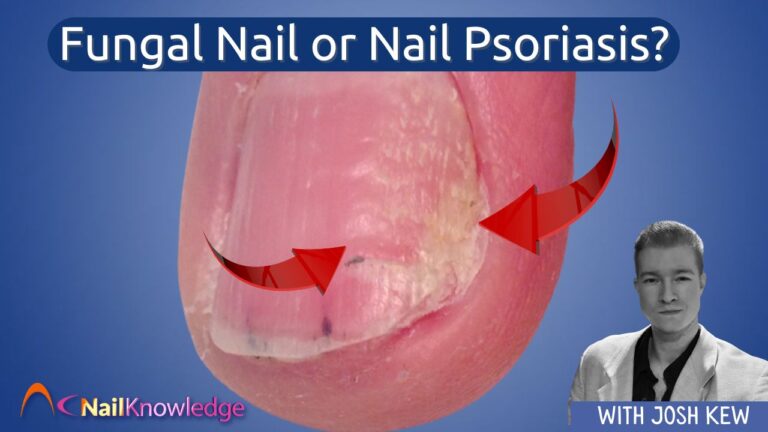
Diferença entre infecções fúngicas das unhas e psoríase das unhas

Unha com fungo ou psoríase nas unhas?

How Nail Pros Can Spot the Difference between Fungal Nail and Nail Psoriasis… and when to Refer

As a nail professional, your clients trust you to notice changes in their nails, and you’re often the first to spot signs of something unusual. Two of the most commonly confused conditions are fungal nail infections and nail psoriasis. Both can cause discolouration, thickening, and unha escamosa mas exigem abordagens muito diferentes.

Knowing what to look for and when to refer to a podiatrist can make a big difference to your clients’ nail health.

O que é uma infecção fúngica nas unhas?

Uma infecção fúngica das unhas (também conhecida como onicomicose) is caused by a buildup of dermatophyte mould fungi that invade the nail plate, the skin underneath it (the nail bed) or any or all of the skin of the foot itself. These organisms thrive in warm, moist environments and often begin by infecting the skin between the toes (athlete’s foot) before spreading to the toenails.

Fig A: Looks like a fungal infection in a toe– it was tested and it is.
Fig B: Looks like a fungal infection in a fingernail – it was tested, and it is.
Fig C: Looks like Psoriasis was treated as Psoriasis and finally it was tested and it’s a fungal infection
Fig. D1
Fig. D2

Fig. D1 e Fig. D2: Looks like Psoriasis – It was tested and it’s a fungal infection but in this case, it could also be Psoriatic!

Fungal infections are contagious and can spread through shared footwear, nail tools, or damp environments like swimming pools, gyms and even your shower at home. Although a fungal infection can affect one or multiple nails, it may slowly worsen over time without treatment. You don’t have to be old to get one as fungal infections are often seen in young footballers or runners, the reason for this is damage to the unidade de pregos durante a corrida ou jogo, geralmente um minitrauma de algum tipo que dá aos fungos a chance de se enraizarem, mas até mesmo calçados muito pequenos podem causar uma abertura na placa ungueal onde os fungos podem se instalar.

O que é psoríase das unhas?

A psoríase é uma doença inflamatória da pele de longa duração que também pode afetar uma ou todas as partes da unhas. Na psoríase ungueal, o sistema imunológico acelera a produção de células da pele ao redor e sob a unha, levando ao acúmulo de células e ao crescimento anormal da unha.

A psoríase das unhas é não contagiosoA psoríase é uma doença degenerativa, mas pode ser angustiante e causar desconforto ou alterações na aparência das unhas. Pode afetar apenas as unhas ou fazer parte de sintomas mais amplos de psoríase na pele ou até mesmo nas articulações (artrite psoriática).

Como são as infecções fúngicas das unhas

As infecções fúngicas das unhas geralmente começam na ponta ou na lateral da unha e se espalham lentamente.

Sinais comuns:

  • Descoloração amarela, marrom ou branca
  • Fragmentado ou unha quebradiça bordas
  • Unhas espessadas
  • Levantamento da unha do leito ungueal (onicólise)
  • Detritos escamosos sob a unha
  • Um cheiro de mofo ou desagradável

Frequentemente vinculado a:

  • Trauma nas unhas
  • Uso de calçados apertados, não respiráveis ou mal ajustados
  • Athlete’s foot (tinea pedis)
  • Andar descalço em áreas comuns
  • Compartilhamento de ferramentas para unhas
Sapatos apertados, gravatas amassadas e D5 em várias posições

Como é a psoríase das unhas

A psoríase das unhas pode afetar todas as partes da unha ou partes separadas dela matriz de unhas (which forms the nail plate) or the nail bed (beneath the nail). It can appear even if the client doesn’t have visible psoriasis on the skin.

Sinais comuns:

  • Pequenos buracos (amassados minúsculos) na placa ungueal
  • A salmon-pink “oil drop” patch under the nail
  • Ranhuras ou sulcos ao longo da unha
  • Thickened skin under the nail (subungual hyperkeratosis)
  • Manchas brancas ou hemorragias por estilhaços
  • Unhas que se levantam do leito ungueal, geralmente em várias unhas
Gota de óleo psoriático no leito ungueal
Fig. 2: Gota de óleo psoriático no leito ungueal
Pitting psoriático na placa superior da unha
Fig. 3: Pitting psoriático na placa ungueal superior
Psoríase no leito ungueal e recuperação com a manutenção adequada das mãos e das unhas
Fig. 4: Psoríase no leito ungueal e recuperação com a manutenção adequada das mãos e das unhas

As alterações psoriásicas nas unhas geralmente são simétricas e podem afetar uma ou várias unhas ao mesmo tempo.

Por que é importante

Essas duas condições podem parecer muito semelhantes, mas as causas e os tratamentos são completamente diferentes. It’s impossible to diagnose either with just the eye – Fungal infections can only be properly diagnosed with a test – Psoriasis needs to be diagnosed by a Dermatologist.

Treating a fungal nail with antifungal won’t help if the problem is actually psoriasis. Likewise, treating nail psoriasis with topical steroids or an antifungal product won’t touch a fungal infection.

That’s why it’s essential to refer clients to a podiatrist if you see any persistent changes or signs of infection.
***Os testes podem excluir ou confirmar uma infecção fúngica.

Quando encaminhar seu cliente

Consulte um podólogo se seu cliente tiver:

  • Dor, inchaço, sangramento ou sensibilidade ao redor da unha
  • Unhas com mau cheiro ou que parecem infectadas
  • Symptoms that aren’t improving after self-treatment
  • Alterações em várias unhas, especialmente se elas parecerem simétricas
  • Histórico pessoal ou familiar de psoríase ou problemas de pele
  • Any unusual or concerning changes you’re unsure about

A podiatrist can take a nail sample, test for fungal infection, and make a clear diagnosis. They’ll also create a treatment plan tailored to your client’s needs.

Como você pode ajudar

You’re not expected to diagnose, but you são in the perfect position to notice early changes. Your trained eye, paired with good hygiene and proper referrals, plays a huge role in protecting your client’s well-being.

By referring to a podiatrist when something doesn’t seem right, you’re giving your clients the best care possible and helping them get the treatment they need sooner rather than later.

Pensamento final

Nail health is about more than just looks. Whether it’s fungus or psoriasis, catching it early can prevent long-term damage and give your client peace of mind. If something doesn’t look right, trust your instincts and refer to a podiatrist. You could be the first person to make a real difference in their health journey.

*** 1.Tsunemi Y, Takehara K, Miura Y, Nakagami G, Sanada H, Kawashima M. Screening for tinea unguium by Dermatophyte Test Strip. Br J Dermatol. 2014;170(2):328-31.

Arquivado em: Cuidados com os pés e anatomia, Condições das unhas

Como identificar um melanoma nas unhas

A Podiatrist’s Guide to Catching This Silent Threat

As a podiatrist, I spend my days knee-deep (or should I say toe-deep?) in everything from ingrown toenails to verrucas. But every so often, I see something far more sinister, something that could quite literally be a matter of life or death: nail melanoma. The challenge? Many people don’t know how to spot nail melanoma, making early detection difficult and increasing the risk of late diagnosis.

Now, I know what you’re thinking. “Melanoma? In the nail?” Yes, it happens. It is what famous musician Bob Marley suffered from and what led to his unfortunate passing. And the tricky part? It’s shockingly easy to miss. That’s why whether you’re a fellow podiatrist, a nail technician, or just someone who loves a good pedicure, you need to know what to look out for.

So, let’s get into it—what does nail melanoma look like, and when should you be sending that client or patient straight to a dermatologist?

O que exatamente é o melanoma de unha e como identificá-lo?

Nail melanoma (or subungual melanoma, if we’re getting fancy) is a rare but aggressive type of câncer de pele que se forma sob a unha. Geralmente começa na matriz da unha (a parte oculta sob a cutícula), o que dificulta a detecção em seus estágios iniciais.

Unlike the more common superficial spreading melanoma that you might see on sun-exposed skin, nail melanoma doesn’t need sunlight to thrive. It’s sneaky, slow-growing, and often ignored until it’s too late.

Como identificar o melanoma de unha: os sinais sutis que podem passar despercebidos

Here’s where things get tricky. Nail melanoma can masquerade as a bruise, fungal infection, or even just a natural pigmentation change—especially in people with darker skin tones, where nail pigmentation is more common. However, it is crucial to remember: never attempt to self-diagnose a nail melanoma. If you notice any of these changes and are unsure, seek medical evaluation rather than assuming it is harmless. Early professional assessment could be life-saving. Key Signs to Watch For:

1. A Dark Streak That Doesn’t Grow Out

A dark brown or black stripe running vertically down the nail is the most common sign. But here’s the catch—it doesn’t move up or grow out as the nail does. If that “bruise” isn’t budging after a few months, it’s time to investigate.

2. Pigment That Extends Onto the Skin (Hutchinson’s Sign)

If the pigmentation spills over onto the cuticle or surrounding skin (called Hutchinson’s sign), consider it a red flag. This is a classic sign of melanoma creeping beyond the placa ungueal.

3. Uma faixa de unha nova ou em mudança

If someone has had a faint nail streak for years without any change, it’s probably benign. But if a new streak appears, gets wider, darkens, or changes shape, that’s when alarm bells should start ringing.

4. Distrofia ou destruição das unhas

Melanoma doesn’t always stay neatly under the nail—it can distort, split, or destroy the nail plate. If a nail is lifting, crumbling, or disintegrating without obvious trauma or infection, you need to dig deeper (not literally, please).

5. A Persistent “Infection” That Won’t Clear

Think it’s a fungal nail? Maybe. But if antifungals aren’t working, and the nail is getting worse, reconsider your diagnosis. Melanoma can sometimes mimic onicomicose (unhas com fungos), e confundir as duas pode atrasar o tratamento que salva vidas.

6. Dor, sangramento ou crescimento irregular sob a unha

Melanoma doesn’t always come in neat, stripey packages. It can present as a lump, ulceration, or spontaneous bleeding under the nail. If a client says, “I don’t remember injuring it, but it just won’t stop bleeding,” levar isso a sério.

Who’s at Risk?

Melanoma doesn’t discriminate, but some people are at maior risco do que outros:

  • Pessoas com tons de pele mais escuros (they’re more likely to develop subungual melanoma than fair-skinned individuals).
  • Pessoas com histórico de trauma na unha (though it’s not always linked).
  • Indivíduos com histórico familiar de melanoma.
  • Pessoas que passam muito tempo ao sol sem protetor solar.
  • Qualquer pessoa com mais de 50 anos (embora possa ocorrer em qualquer idade).

Quando encaminhar? Como identificar o melanoma de unha e agir rapidamente

If you are a practitioner or technician and spot any of the warning signs above, do not hesitate—always refer to a medical doctor (MD) or dermatologist immediately. A delay in diagnosis significantly increases the risk of melanoma spreading, making early referral critical. Even if you are uncertain, it is far better to be overly cautious than to miss a potentially life-threatening condition.

Os encaminhamentos urgentes devem ocorrer quando:

  • Aparece uma faixa escura nova ou variável, especialmente em uma unha.
  • Pigmentation extends onto the skin (Hutchinson’s sign).
  • A unha está se levantando, quebrando ou ulcerando sem uma causa clara.
  • There’s a persistent “infection” that doesn’t respond to treatment.
  • Uma lesão na unha é dolorosa, sangra ou muda rapidamente.

Time is of the essence. Melanoma under the nail is often diagnosed late, meaning it has a higher risk of spreading (metastasising). Learning to spot nail melanoma early, whether you’re a podiatrist, nail technician, or simply monitoring your own health, could be life-saving.

Considerações finais: Confie em seu instinto

If something about a nail doesn’t sit right with you, refer it. No one will fault you for being cautious—but missing a melanoma could have devastating consequences.

For podiatrists and nail techs, we’re often the first line of defence. The average person isn’t inspecting their own toenails with a magnifying glass, so if we don’t spot it, who will?

So next time you see a stubborn nail streak, don’t dismiss it. It could be a bruise… or it could be something much worse.

E no mundo do melanoma, A detecção precoce é tudo.

Você já viu uma unha suspeita?

If you’ve ever come across a case that turned out to be something serious, let’s talk about it. Awareness saves lives, and the more we share, the better we get at spotting these silent threats.

Fique atento, fique curioso e mantenha as unhas sob controle!

Arquivado em: Cuidados com os pés e anatomia, Condições das unhas

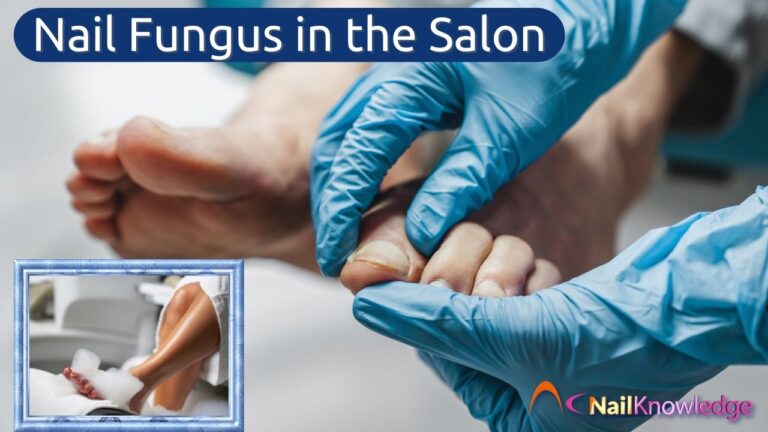
Fungos nas unhas no salão de beleza

Como identificá-la, interrompê-la, tratá-la e quando consultar um podólogo

If you work in a nail salon, chances are you’ve encountered nail fungus in the salon without even realising it. These infections, known as onychomycosis, are more common than many people think. Although they aren’t immediately dangerous, they can be persistent and unsightly, making them difficult to eradicate. This underscores the importance of early detection and effective management, especially in a salon setting where hygiene is critical.

So, how do you spot nail fungus early, what should you do if a client has it, and when is it time to refer them to a podiatrist? Let’s break it all down, step by step.

O que são fungos nas unhas (onicomicose)?

Nail fungus (onychomycosis) is a slow-growing infection caused by fungal organisms called dermatophytes. These fungi feed on keratin, one of the proteins that makes up nails and skin, leading to thickened, discoloured, and often unhas quebradiças.

A infecção pode começar em uma unha e, se não for tratada, pode se espalhar para outras, inclusive para as unhas das mãos, embora as unhas dos pés sejam muito mais comumente afetadas.

But here’s the kicker: nail fungus is stubborn. It doesn’t clear up on its own and often requires months of treatment. That’s why early detection and proper management are so important especially in a salon setting where hygiene is everything.

Identificação de fungos nas unhas no salão de beleza

Nos estágios iniciais, unha com fungos infections can be sneaky. They don’t always scream “Hey, I’m a fungal infection!” Em vez disso, elas geralmente começam pequenas, com apenas uma leve descoloração em algum lugar dentro ou ao redor da unha ou leito ungueal. Com o tempo, porém, eles se tornam muito mais óbvios.

Sinais e sintomas a serem observados:

  • Descoloração – Yellow, white, or brown patches on the nail. Some nails may even appear greenish or black in severe cases.
  • Espessamento – The nail may become unusually thick, making it difficult to cut.
  • Fragilidade – The edges of the nail may crumble, split, or break away easily.
  • Lifting (Onycholysis) – The nail may separate from the nail bed, creating a gap where dirt and bacteria can collect.
  • Distorção – The shape of the nail may change, becoming more curved or uneven.
  • Odor – In some cases, fungal nails can develop a slightly unpleasant smell.

Fungal nails don’t always cause pain, but if the infection progresses, the thickened nail can press against shoes, leading to discomfort or even secondary bacterial infections.

Diagnóstico diferencial: é realmente uma infecção fúngica?

Not every thick, discoloured, or damaged nail is caused by fungus. As a nail technician, it’s important to know the difference between a fungal infection and other conditions that can mimic it.

Condições que podem se parecer com fungos nas unhas:

  • Trauma – Repeated pressure from tight shoes or injury can cause thickening, white patches, and even nail detachment.
  • Psoríase – Psoriatic nails often have pitting (small dents), thickening, and a yellowish or red discolouration.
  • Eczema & Other Skin Conditions – These can cause brittle, flaky nails that may look similar to fungal infections.
  • Infecções bacterianas – Greenish nails, often seen in salon clients, are usually caused by a Pseudomonas bactérias em vez de fungos.
  • Envelhecimento das unhas – As we age, our nails naturally thicken and become more brittle, which can sometimes mimic fungal changes.

If you’re unsure whether a client has a fungal infection or another condition, do not attempt to diagnose it yourself. Remember, accurately identifying nail fungus in the salon is crucial for appropriate referral to a podiatrist for proper testing and confirmation.

O que você deve fazer se encontrar fungos nas unhas no salão de beleza?

1. Não realize um tratamento na unha afetada

It’s tempting to try and cover up a discoloured nail that may or may not be a fungal infection with polish or gel, but that won’t solve the problem. In fact, it can make things worse by trapping moisture and encouraging fungal growth. Plus, working on an infected nail puts your clients at risk especially if they are not properly cleaned and disinfected.

Instead, gently explain to the client what you’ve noticed and recommend they seek professional advice.

2. Desinfetar tudo

Fungal infections spread through tiny spores, which can linger on tools, nail files, and in footbaths. To prevent cross-contamination:

  • Lave todas as ferramentas e superfícies de metal com água e sabão primeiro
  • Use desinfetantes de grau hospitalar em todas as superfícies e ferramentas de metal.
  • Dispose of single-use items like nail files and buffers.
  • Limpe adequadamente os pedilúvios entre os clientes.

3. Aconselhar o cliente sobre as próximas etapas

If you suspect a fungal nail infection, advise your client to visit a podiatrist. Many people don’t realise that fungal infections need medical treatment, simply cutting or filing the nail won’t make it go away. The only way to be sure it is a fungal infection is to test for it.

Opções de tratamento para unhas com fungos

Uma vez diagnosticados, os clientes têm uma série de opções de tratamento. Como técnico de unhas, a compreensão desses tratamentos o ajudará a instruir seus clientes e a apoiá-los em sua jornada pela saúde das unhas.

1. Antifúngicos tópicos (vernizes, cremes e soluções)

Eles são aplicados diretamente na unha e podem ajudar em casos leves, embora exijam o uso regular por meses. As opções mais populares incluem:

  • Amorolfina (Loceryl) – A medicated nail lacquer.
  • Terbinafine (Lamisil)- Um forte spray antifúngico
  • Ciclopirox (Curanail) – Another antifungal varnish.
  • Tea Tree Oil & Natural Remedies – Some clients swear by them, but results vary.

2. Medicamentos antifúngicos orais (somente com prescrição médica)

For more severe cases, podiatrists may prescribe oral antifungals like:

  • Terbinafina – One of the most effective options, usually taken for 3–6 months.
  • Itraconazole (Sporanox) – Another option, often used for those who can’t take terbinafine.

3. Terapia a laser

Some clinics offer laser treatment to target fungal infections. This can be effective, but it’s expensive and not always widely available and again results vary.

4. Remoção de unhas (em casos extremos)

Se a infecção for grave, o podólogo pode recomendar a remoção completa da unha. Isso permite o tratamento direto do leito ungueal e evita que o fungo se espalhe ainda mais.

Quando consultar um podólogo

As a salon professional, you’re not expected to diagnose or treat fungal infections—but you can play a vital role in guiding your clients to the right help.

Encaminhar um cliente a um podólogo se:

  • A unha está espessada, descolorida ou esfarelando.
  • A infecção está se espalhando por várias unhas.
  • O cliente está com a infecção há muito tempo, sem melhora.
  • The client has diabetes or poor circulation (these conditions increase the risk of complications).
  • A unha está se levantando ou causando dor.

Os podólogos podem confirmar se o problema é fúngico (usando testes de laboratório, se necessário) e oferecer o tratamento mais adequado.

Considerações finais: Protegendo seus clientes e seu salão de beleza

Fungal nails are a common but often overlooked issue in salons. As a professional, your job isn’t just to make nails look pretty—it’s also to protect your clients’ health.

By learning to recognise possible fungal infections, maintaining strict hygiene standards, and referring clients to podiatrists when needed, you’re setting yourself apart as a knowledgeable and responsible nail technician.

And let’s be honest, nobody wants fungus ruining their flawless pedicure. So, stay vigilant, educate your clients, and keep your salon a fungus-free zone.

Arquivado em: Cuidados com os pés e anatomia

  • Página 1
  • Página 2
  • Página 3
  • Ir para Próxima página »

Aumente o nível de suas percepções sobre as unhas

Participe de nosso boletim informativo!
ASSINAR...

Direitos autorais © NailKnowledge

NailKnowledge

  • MyNailEra
  • Livros eletrônicos
  • Sobre nós
  • Cursos
  • Notícias
  • Blog
  • Boletim informativo
  • Glossário

Políticas

  • Página de privacidade
  • Termos e condições
  • Política de cookies

Suporte

  • Entre em contato conosco
  • Conheça os especialistas
  • Pergunte aos especialistas
  • Suporte ao sistema
  • Perguntas frequentes
Portuguese
Portuguese
English Spanish Vietnamese