• Pular para navegação primária
  • Pular para o conteúdo principal
  • Pular Rodapé
NailKnowledge

NailKnowledge

  • Cursos
  • MyNailEra
  • Livros eletrônicos gratuitos
  • Base de conhecimento
    • Base de conhecimento
    • Pergunte aos especialistas
    • Glossário
  • Notícias
  • Blog
  • Login

Loções, poções e esmaltes

O que é esmalte de unha respirável?

O que é esmalte respirável e como ele difere do esmalte comum?

In recent years, beauty enthusiasts, professionals and marketeers have introduced the concept of breathable nail polish, sparking curiosity and debate among consumers. While this product is growing in popularity, many are left wondering: What exactly is breathable nail polish, and how does it differ from traditional nail polish? Let’s delve into this topic, demystify the concept, and explore the benefits and potential misconceptions surrounding it.

O básico: O que é esmalte de unha respirável?

O esmalte respirável é um tipo de revestimento de unhas projetado com uma formulação exclusiva que permite que quantidades mínimas de moléculas de água e oxigênio passem pela camada de esmalte. Isso é obtido por meio de uma tecnologia avançada de polímeros que cria pequenas lacunas microscópicas no esmalte. Essas lacunas são tão pequenas que são invisíveis a olho nu, mas grandes o suficiente para permitir que as moléculas de oxigênio e água se movam pela superfície do esmalte.

The term “breathable” refers to this. Breathable polish is designed to mimic the natural exchange of air and moisture that occurs when nails are left bare.

Why Do Nails Need to “Breathe”?

The short answer: They don’t.

Nails are made of keratin, a hard, non-living protein. Like hair, nails do not “breathe,” as they lack blood vessels or living cells that would require oxygen. Instead, nails receive their nutrients and oxygen from the blood supply within the nail bed. This means that the concept of “breathing nails” is more of a marketing term than a biological necessity.

No entanto, a ideia de esmalte respirável atrai as pessoas que acreditam que a passagem de ar e água através do revestimento das unhas pode contribuir para unhas mais saudáveis ou proporcionar outros benefícios. Ainda não se sabe se essas alegações são válidas, mas o ângulo de marketing tem agradado a muitos.

A diferença entre esmalte de unha respirável e comum

Embora tanto os esmaltes respiráveis quanto os tradicionais tenham a função principal de adicionar cor, brilho e proteção às unhas, eles diferem em sua composição e desempenho. Aqui estão as principais diferenças:

Permeabilidade:

Polonês respirável: Allows the passage of oxygen and water molecules. This permeability is especially important for individuals who follow certain religious practices, such as Islam, where water must reach the surface of the nails during ablution for prayers.

Polonês comum: Cria uma barreira menos porosa que impede a passagem de água e oxigênio.

Aplicação e sensação:

Os esmaltes respiráveis geralmente têm uma textura mais leve em comparação com as fórmulas tradicionais, que podem parecer mais espessas ou mais pesadas nas unhas.

Reivindicações do mercado:

Os esmaltes respiráveis são comercializados como sendo melhores para a saúde das unhas, embora essas alegações não tenham respaldo científico sólido. Eles também atraem as pessoas que procuram um esmalte que se alinhe a determinado estilo de vida ou escolhas éticas.

Processo de remoção:

Both types of polish are typically removed using acetone or nail polish remover, so the removal process is not significantly different.

O apelo do esmalte de unha respirável

  1. Observância religiosa: Um dos principais motivos da popularidade do esmalte de unha respirável é sua compatibilidade com as práticas islâmicas. Durante o wudu (ablução), a água deve tocar todo o corpo, inclusive a superfície das unhas. Os esmaltes comuns geralmente são vistos como uma barreira a essa exigência. O esmalte respirável resolve essa preocupação permitindo a passagem da água, o que o torna uma escolha popular entre as mulheres muçulmanas, embora não passe água suficiente para entrar em contato com toda a unha.
  2. Benefícios percebidos para a saúde: While nails do not require oxygen to “breathe,” some proponents of breathable polish argue that its water and air permeability helps maintain a healthier environment for the nail bed, potentially preventing issues like brittleness or fungal growth. However, it’s important to note that these claims are not universally supported by scientific studies.
  3. Conveniência: Alguns usuários acham que o esmalte respirável lasca com menos facilidade ou proporciona uma sensação mais natural nas unhas. Além disso, a natureza leve da fórmula a torna atraente para quem prefere rotinas de beleza minimalistas.

Possíveis equívocos sobre o esmalte de unha respirável

It’s important to approach the concept of breathable nail polish with realistic expectations. Here are some common misconceptions:

  1. A respirabilidade é igual à saúde das unhas: Como mencionado anteriormente, as unhas não precisam respirar. Quaisquer benefícios percebidos para a saúde do esmalte respirável provavelmente se devem à qualidade da formulação e não à sua permeabilidade.
  2. A água e o oxigênio penetram totalmente no polonês: Embora o esmalte respirável seja projetado para permitir a passagem de algumas moléculas de água e oxigênio, a quantidade que chega ao leito ungueal é mínima. Essa característica é mais relevante por motivos simbólicos ou religiosos do que por um impacto biológico substancial.
  3. Todos os esmaltes respiráveis são iguais: Nem todas as marcas de polimento respirável são criadas da mesma forma. As diferentes formulações podem variar em sua permeabilidade, qualidade e durabilidade reais.

Escolhendo entre esmalte respirável e comum

Em última análise, a decisão de usar um esmalte respirável ou comum depende de suas preferências e necessidades pessoais. Aqui estão alguns fatores a serem considerados:

  1. Práticas religiosas ou culturais: Se a permeabilidade à água for uma prioridade por motivos religiosos, o polimento respirável é uma escolha óbvia.
  2. Estilo de vida: O esmalte respirável pode ser uma boa opção se você preferir uma fórmula leve ou se estiver interessada em explorar novas inovações de beleza.
  3. Preocupações com a saúde das unhas: Se você estiver preocupado com danos às unhas, considere outros aspectos dos cuidados com as unhas, como hidratar o leito ungueal, evitar removedores agressivos e fazer pausas no uso do esmalte.

Conclusão

Breathable nail polish is an innovative product that has carved out a niche in the beauty market. While its primary appeal lies in its permeability, its actual benefits beyond convenience and religious compatibility may be limited. It’s essential to understand the science (or lack thereof) behind the claims and choose a product that aligns with your lifestyle and values. Whether you opt for breathable polish or traditional formulas, remember that proper care and mindful beauty practices are the best way to maintain healthy nails.
Arquivado em: Loções, poções e esmaltes

Por que é inteligente não aplicar esmalte em gel em unhas danificadas

Entendendo os riscos de reaplicar o revestimento de unhas sem permitir a recuperação adequada

When your nails are damaged, it’s essential to let the nail plate recover before reapplying any nail coating. Failing to do so can lead to complications, making it important to choose the best plan of action for nail health and appearance.

Visualizando o impacto: Antes e depois

Antes: Normal nail coating after about 10 days, featuring one layer of a Builder Gel for shine and a bit of stability.

Foto 1: Gel do construtor antes de um acidente

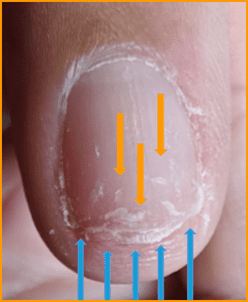
Depois: O All Builder In A Bottle arrancou a placa ungueal junto com a borda livre da placa ungueal.

Foto 2: Danos na placa ungueal após um acidente

A importância de selar a placa ungueal

If we look at photo 2 and the yellow arrows, we need first to seal the upper layers of the nail plate before applying more Gel Polish, and if we cannot do that a more permanent base coat will need to be applied, if we don’t do this we will create pockets for air, moisture or both under our gel polish

  • Air – causes lifting
Bolsas de ar na placa ungueal

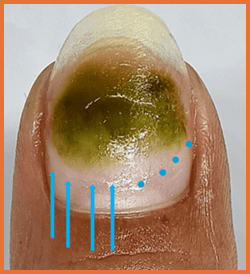
These pockets can trap various contaminants your nails come into contact with, such as dirt, bacteria, and moisture. If caught early, the product can be removed and replaced to prevent issues. However, if not addressed, trapped moisture can create an ideal breeding ground for opportunistic pathogens like Pseudomonas aeruginosa, leading to potential infections.

A umidade retida causa pseudomonas aeruginosa

 O que podemos fazer para evitar que os problemas ocorram?

Accidents happen, we can’t prevent those but our clients can help with good maintenance of their nail enhancements. A good quality oil helps prevent a build up of moisture and also helps to keep your nail and nail coating flexible and less prone to breaking or cracking, so a win win for your client but also for your salon, longer lasting gorgeous nails and happier clients.

É possível recuperar a placa ungueal?

É possível, pois há um produto especial no mercado que está disponível em todo o mundo. Tratamentos como esse selam novamente as camadas superiores da placa ungueal de dentro para fora e você poderá reaplicar o produto para unhas artificiais sem problemas.

Without this product its smart to prep your nail plate with a good nail plate cleanser, and apply a semi-permanent nail product such as acrylic Liquid & Powder – Acryl has more than one advantage over a hard gel or an acrygel, it is designed to remain on a nail plate for longer periods of time and that’s important to know with this kind of nail plate damage, but if necessary, it can also be safely removed by thinning with a nail file and soaking off the last layer for optimal control and no extra damage to the nail plate.

Riscos da aplicação de aprimoramentos de unhas de curta duração em unhas danificadas

Placing a ‘short life‘ nail enhancement on a damaged nail plate is asking for problems and complications – something we would like to avoid in the nail salon. Doing so can create pocket lifting or a great home for opportunistic pathogens that are hanging around waiting to do their thing, recovery of the nail plate after such an infection takes considerably longer than recovering the original damage of the nail coating being ripped off.

It’s a good idea to inform your salon clients about the pros and cons of nail plate and nail unit maintenance with oils and lotions, its not just a sales pitch, your clients are paying you good money for nail coatings – having spent that money they also have a responsibility to keep them in the best possible condition and your responsibility is to provide a safe lasting service with minimal chance of causing infections.

FazerDon’tProduto para unhasConsulte o MD
Mantenha-se limpo e faça escolhas inteligentesDisfarçar com produtos para unhas artificiais sem um planoIBX, óleo e loçãoSe a unha ficar infectada ou mudar de cor
Use um produto semipermanente para ajudar na recuperaçãoUse hard gel or an acrygel – removal is difficultAcrílico -L&P 
Oil 4dd’s Óleo e loção de alta qualidade 

Contraindicação: Se a cliente já apresentar sinais de uma possível infecção, vermelhidão, inchaço ou qualquer alteração na cor, não reaplique NENHUM produto para unhas artificiais. Consulte as diretrizes de higiene, um especialista em cuidados com as mãos ou entre em contato com um médico

Arquivado em: Informações gerais, Loções, poções e esmaltes, Gel UV

Compreensão e uso adequado do Builder Gels

Many nail professionals misunderstand the true purpose of builder gels, leading to their misuse and a tarnished reputation. Builder gels are not just thicker gels to be layered on for added strength; they have specific applications and techniques that, when used correctly, can enhance nail structure and strength without causing adverse reactions.

Conceitos errôneos sobre a força do gel construtor

A builder gel is a high-viscosity (thicker) gel, but this does not mean that simply applying a layer will enhance the nail’s strength more than a regular gel.

É assim que muitos o usam e depois se perguntam por que estão recebendo reações de seus clientes que duram a vida toda e podem significar que eles não podem mais usar nenhum tipo de gel!

O verdadeiro objetivo dos géis de construção: Criar estrutura e força

A gel construtor is formulated so you can build structures with it. For example, you can create a perfect apex on a flat nail. OR for a unha fraca, you can build a ‘backbone’ to create maximum strength. This is a slightly thicker line down the centre of the nail to make the whole length stronger but still look aesthetically pleasing and not thick and ugly.

Um builder pode fazer isso, pois ele manterá sua forma, ao contrário de um gel mais fino, que simplesmente escorrerá para as paredes laterais antes da cura. Essa é a maneira de usar um construtor.

Os perigos da aplicação incorreta de géis construtores

Aplicar uma camada espessa pensando que isso criará a resistência está errado. Ela terá uma aparência feia e espessa e provavelmente não será curada adequadamente, de modo que o monômeros não reagidos can leach out or be released during shaping and removal causing an allergy. Game over!

A melhor maneira de usar um construtor é aplicar primeiro uma camada muito fina, geralmente chamada de camada de deslizamento, algumas marcas recomendam a cura, enquanto outras recomendam não curar. Em seguida, sobre essa camada fina, crie um formato necessário para a unha específica e a camada deslizante ajudará a mantê-la no lugar até a cura. Essa camada ainda deve ser fina para curar adequadamente. Pode ser necessária outra camada estruturada, o que não tem problema.

A aplicação adequada evita reações adversas

Concluindo, não pegue seu construtor e aplique-o como rotina. Use-o como ele deve ser usado, pois assim ele fará o trabalho para o qual foi projetado e terá muito menos probabilidade de causar uma reação.

Todas essas reações que são percebidas como um problema com um comprador estão erradas. Se você estiver usando um produto de boa qualidade, será a má aplicação que causará o grande problema.

Arquivado em: Informações gerais, Loções, poções e esmaltes

O álcool isopropílico 99% pode remover eficazmente todos os óleos superficiais e a umidade da placa ungueal?

We are asked this question a lot, and you are right to call them surface oils. The nail plate contains a lot of oil, but our focus is on removing the surface oils because they can block adhesion. Understanding the complexity of nail oils and the effectiveness of different solvents in removing these oils is crucial for achieving optimal results in nail care.

 Let’s explore why using a professionally designed nail cleaner is more effective than relying on pure isopropyl alcohol alone.

A complexidade dos óleos para unhas

O placa ungueal contains a lot of oil, but we only want to remove surface oils because they can block adhesion. We are making a simplification when we say the nail plate contains “oil”. Óleo para unhas A placa ungueal contém muitas substâncias oleosas diferentes, e algumas são muito mais difíceis de remover da placa ungueal do que outras. Os óleos naturais da placa ungueal são uma mistura complexa de mais de uma dúzia de ceras e substâncias oleosas diferentes. A maioria dessas substâncias é secretada pelo tecido que envolve a placa ungueal, mas algumas são transferidas do cabelo para as unhas quando entram em contato umas com as outras. Nem todas as substâncias oleosas encontradas na lâmina ungueal podem ser removidas quando a lâmina ungueal é limpa com acetona, álcool ou acetato de etila, os solventes mais comuns usados.

Eficácia do solvente na limpeza das unhas

That’s because not all types of nail plate oily substances are soluble in every solvent.  Some are more soluble in acetone, while others are more soluble in isopropyl alcohol.  In other words, different solvents selectively remove various contaminants from the surface of the nail plate. Some solvents can leave behind contaminants that may fill up and/or block the various tiny spaces where the nail coating would normally seep into, harden and anchor itself more firmly to the surface of the nail plate.  This helps explain why cleansing the nail plate is so important to good adhesion. A scientifically designed nail surface cleanser will contain a synergistic blend of solvents and other beneficial additive ingredients that are more likely to do a superior job when compared to using isopropyl alcohol alone. That’s why I recommend using professionally designed nail cleaners and avoiding less effective substitutes.

Arquivado em: Loções, poções e esmaltes, Química dos produtos

A verdade sobre a acetona: Essencial, eficiente e muitas vezes mal compreendida

Acetone is a solvent. It is not an allergen as some think. The human body produces small amounts of acetone through metabolism. It is however an irritant which means it can dry skin faster than natural moisture can be produced. This can cause some symptoms that are often misdiagnosed as an allergy.

Remoção eficiente de gel UV e revestimentos de unhas

Acetone is a crucial product in the nail industry as it is the most efficient remover for both UV gel products and liquid and powder nail coatings. It quickly breaks the bonds without melting them, altering the structure so it can be easily removed from the nails.

Uma maneira de entender como isso funciona é imaginar que um rolo de papel toalha de cozinha é colocado em um balde de água. Ele ficará mole e perderá sua estrutura, mas ainda será papel. Se for seco, a estrutura será diferente, pois não estará mais em folhas organizadas, mas ainda será papel em um estado caótico.

Acetone’s Role in Nail Product Removal

Embora possa ressecar a pele, continua sendo a opção mais eficiente porque o tempo de contato com a pele é mantido o mais curto possível.

There are many ‘acetone free’ polish removers where acetone is replaced by ethyl acetate or butyl acetate. These will remove polish but are not so efficient so takes longer to do the job. This results in longer skin contact with an equally drying solvent.

Minha recomendação aos consumidores é usar acetona para remover o polimento, pois ela é mais rápida e o contato com a pele é o mais curto possível. As alternativas exigem mais fricção e um contato mais longo com a pele.

Por que o grau cosmético é essencial para o cuidado das unhas

Mas compre apenas acetona adequada para uso cosmético. É improvável que a acetona vendida em lojas como a DIY seja impura e pode conter traços de ingredientes inadequados para o contato com a pele, podendo até ser um alérgeno. A acetona pura de fornecedores de produtos de beleza é melhor para uso em serviços de unhas.

Don’t be scared of acetone, other than understanding the fact that it is very flammable and any flame near to it can cause a flashback. Acetone should be stored in the cool and dark as it is very volatile meaning it evaporates easily so keep all containers of acetone covered to stop evaporation as it does have a strong smell that many don’t like or believe to be harmful.

It is the most efficient for nail coating removal and is often an ingredient in cleansers. It is not so effective alone for cleansing and dehydrating the nail plate. A mix of a solvent and alcohol (such as isopropyl alcohol, IPA) is the most efficient for this job.

Verificação científica da acetona

A acetona não danifica, enfraquece ou altera a estrutura da placa ungueal natural.
Ele não desnatura a queratina nem causa danos permanentes.

A acetona remove temporariamente os óleos e a umidade da superfície, o que pode fazer com que as unhas fiquem secas. Esse é um efeito cosmético, não um dano estrutural, e é totalmente reversível com a hidratação adequada e o uso regular de óleo para unhas.

Arquivado em: Informações gerais, Loções, poções e esmaltes, Química dos produtos

O impacto das bases removíveis na saúde das unhas

As bases removíveis oferecem uma solução conveniente para quem muda a cor das unhas com frequência, mas qual é o custo real dessa conveniência para a saúde de suas unhas?

Este artigo analisa os equívocos comuns e os riscos potenciais associados às camadas de base removíveis.

Revelando a verdade sobre os revestimentos de base removíveis

We are receiving a lot of questions from nail professionals regarding the safety of peel-off basecoats. A common inquiry concerns the correct method of removal: “Are peel-off basecoats safe as long as they are peeled from the base of the nail plate toward the tips, supposedly going with the grain of the keratin cells?”

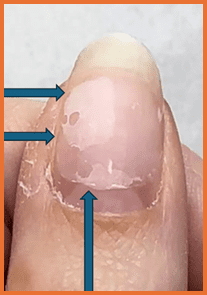
If they did as you described, then they would be going “against the grain”, since any so-called grain in the nail would run across the width of the nail plate. Keratin fibers inside the nail cells lays across the width of the nail plate, which is why the nail plate typically splits across the width of the plate and not down the length. Therefore, the grain doesn’t seem to make a difference, at least when it comes to nail surface damage. People with healthy nail plates may not see damage when these base coats are used according to directions.  Even so, if the nail plate is already damaged, these peelable nail coatings can worsen existing damage. If the nail plates become dry-appearing or small white spots develop on the surface of the plate, then I would recommend that the wearer should discontinue use and/or reevaluate how they are using and removing these products. 

Como o uso inadequado de bases peel-off pode afetar a saúde das unhas

These types of peel-off basecoats are more likely to worsen existing nail surface damage, but it is very common that people ignore directions and do it “their way” and then blame the product when it doesn’t work.  Users will likely notice decreased wear time. In other words, they won’t get the same wear.  These basecoats are likely to shorten wear time by as much as 50%.  Often those who use these types of products are people who want to change their nail color often and doing so can also increase nail damage.

Arquivado em: Informações gerais, Loções, poções e esmaltes, Serviços para unhas

  • « Ir para Página anterior
  • Página 1
  • Páginas intermediárias omitidas ...
  • Página 3
  • Página 4
  • Página 5
  • Página 6
  • Página 7
  • Páginas intermediárias omitidas ...
  • Página 11
  • Ir para Próxima página »

Aumente o nível de suas percepções sobre as unhas

Participe de nosso boletim informativo!
ASSINAR...

Direitos autorais © NailKnowledge

NailKnowledge

  • MyNailEra
  • Livros eletrônicos
  • Sobre nós
  • Cursos
  • Notícias
  • Blog
  • Boletim informativo
  • Glossário

Políticas

  • Página de privacidade
  • Termos e condições
  • Política de cookies

Suporte

  • Entre em contato conosco
  • Conheça os especialistas
  • Pergunte aos especialistas
  • Suporte ao sistema
  • Perguntas frequentes
Portuguese
Portuguese
English Spanish Vietnamese