• Pular para navegação primária
  • Pular para o conteúdo principal
  • Pular Rodapé
NailKnowledge

NailKnowledge

  • Cursos
  • MyNailEra
  • Livros eletrônicos gratuitos
  • Base de conhecimento
    • Base de conhecimento
    • Pergunte aos especialistas
    • Glossário
  • Blog
  • Login
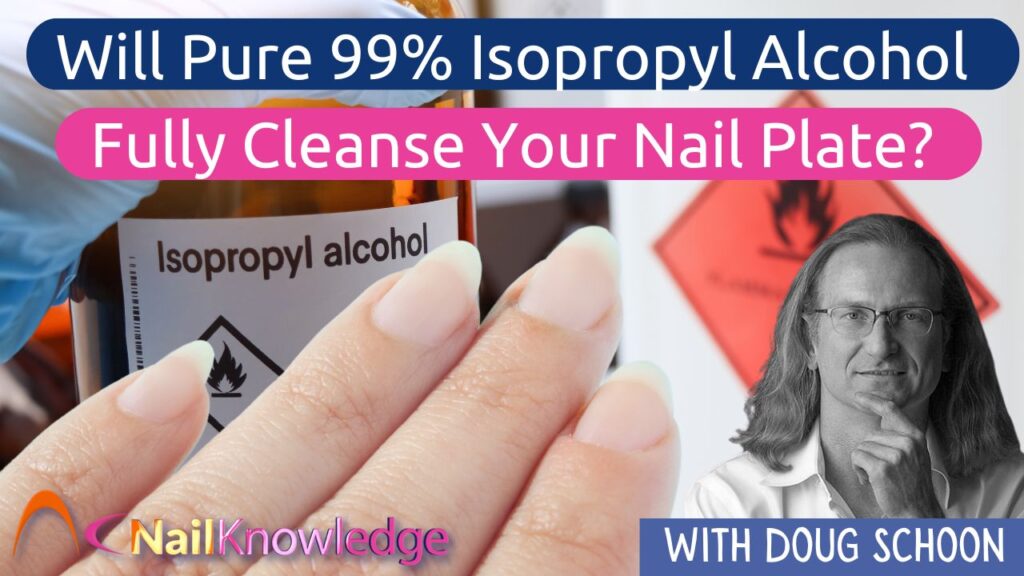
O Pure 99% Isopropyl Alcohol limpa totalmente a placa ungueal?

O álcool isopropílico 99% pode remover eficazmente todos os óleos superficiais e a umidade da placa ungueal?

25 de julho de 2024 por Doug Schoon

856 visualizações

Este artigo foi útil?
Erro ao enviar a classificação

We are asked this question a lot, and you are right to call them surface oils. The nail plate contains a lot of oil, but our focus is on removing the surface oils because they can block adhesion. Understanding the complexity of nail oils and the effectiveness of different solvents in removing these oils is crucial for achieving optimal results in nail care.

 Let’s explore why using a professionally designed nail cleaner is more effective than relying on pure isopropyl alcohol alone.

A complexidade dos óleos para unhas
O placa ungueal contains a lot of oil, but we only want to remove surface oils because they can block adhesion. We are making a simplification when we say the nail plate contains “oil”. Óleo para unhas A placa ungueal contém muitas substâncias oleosas diferentes, e algumas são muito mais difíceis de remover da placa ungueal do que outras. Os óleos naturais da placa ungueal são uma mistura complexa de mais de uma dúzia de ceras e substâncias oleosas diferentes. A maioria dessas substâncias é secretada pelo tecido que envolve a placa ungueal, mas algumas são transferidas do cabelo para as unhas quando entram em contato umas com as outras. Nem todas as substâncias oleosas encontradas na lâmina ungueal podem ser removidas quando a lâmina ungueal é limpa com acetona, álcool ou acetato de etila, os solventes mais comuns usados.

Eficácia do solvente na limpeza das unhas

That’s because not all types of nail plate oily substances are soluble in every solvent.  Some are more soluble in acetone, while others are more soluble in isopropyl alcohol.  In other words, different solvents selectively remove various contaminants from the surface of the nail plate. Some solvents can leave behind contaminants that may fill up and/or block the various tiny spaces where the nail coating would normally seep into, harden and anchor itself more firmly to the surface of the nail plate.  This helps explain why cleansing the nail plate is so important to good adhesion. A scientifically designed nail surface cleanser will contain a synergistic blend of solvents and other beneficial additive ingredients that are more likely to do a superior job when compared to using isopropyl alcohol alone. That’s why I recommend using professionally designed nail cleaners and avoiding less effective substitutes.
Este artigo foi útil?
Erro ao enviar a classificação

Categorised: Loções, poções e esmaltes, Química dos produtos

Related Articles

A verdade sobre o uso de acetona nas unhas

The Truth About Acetone Use in Nails

When it comes to nail care, few topics stir as much confusion as acetone use in nails. Is it drying?…

Read More
Curando a tensão em unhas de gel

Excessive Curing Tension in Gel Nails

Let’s talk about curing tension in gel nails, something most gel nail lovers have experienced but might not fully understand.…

Read More
Por que meu esmalte de unha está borbulhando?

Why is my nail polish bubbling?

Why It Happens and How to Prevent It for a Perfect Finish You’ve just painted your nails. The colour looked…

Read More
Como o polimento em gel cura

Gel Polish Curing Explained: Behaviour, Lamps and Common Problems

Gel polish curing is a chemical process, not simply a matter of time spent under a lamp. Many common problems…

Read More
O esmalte de unha tem prazo de validade?

Does Nail Polish Expire

Does Nail Polish Expire and Can Old or Expired Nail Products Cause Reactions. A very common question from both consumers…

Read More
Entendendo a real diferença entre a base de borracha, o Builder in a Bottle e o Hard Gel

The Truth Behind Rubber Base and BIAB: Marketing vs Chemistry

Understanding the Real Difference Between Rubber Base, Builder in a Bottle, and Hard Gel Why This Matters Students and new…

Read More

Aumente o nível de suas percepções sobre as unhas

Participe de nosso boletim informativo!
ASSINAR...

Direitos autorais © NailKnowledge

NailKnowledge

  • MyNailEra
  • Livros eletrônicos
  • Sobre nós
  • Cursos
  • Notícias
  • Blog
  • Boletim informativo
  • Glossário

Políticas

  • Página de privacidade
  • Termos e condições
  • Política de cookies

Suporte

  • Entre em contato conosco
  • Conheça os especialistas
  • Pergunte aos especialistas
  • Suporte ao sistema
  • Perguntas frequentes
Portuguese
Portuguese
English Spanish Vietnamese