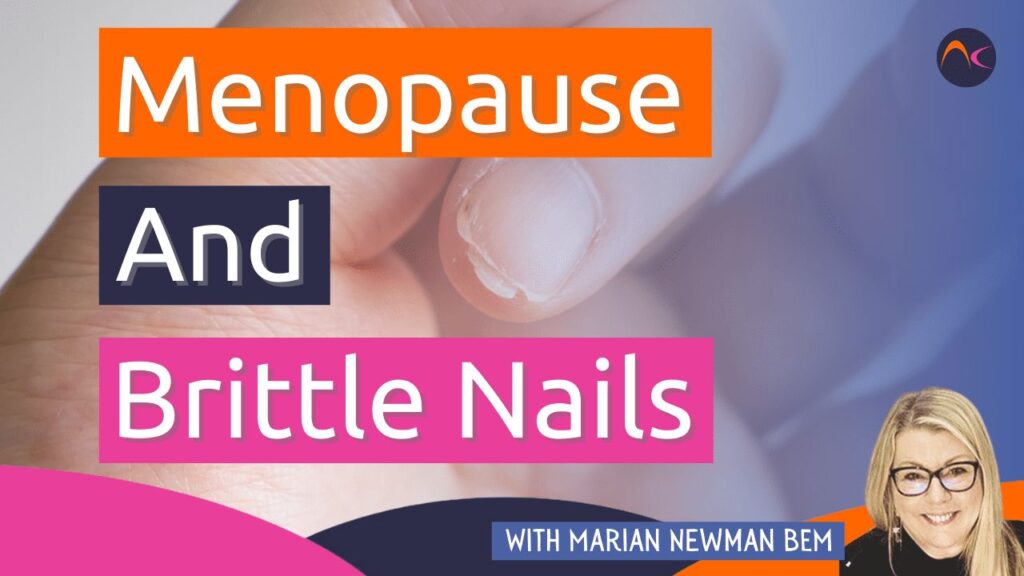
Menopause causes many changes in a woman’s body. For instance, women lose about 25% of their body collagen during menopause. The result is thinner skin with less elasticity or brittle nails or loss of hair and loss of the collagen from the skin.
Como a perda de colágeno pode causar unhas quebradiças? Isn’t the nail plate made of keratin, not collagen?
Yes, that is true. Keratin is in epidermis, nails, hair, horn, feathers and hooves. Collagen is in dermis, cartilage, bone and tendons. A matriz da unha also contains collagen. Collagen supports the structure of the nail matrix, so a loss of collagen can affect the way the nail plate grows. The matrix is the birthplace of the nail plate. Changes in the nail matrix can result in changes to the nail plate. Usually, these changes take one to two months before noticed, since that’s how long it will take for the nail plate to grow from the matrix and emerge from under the proximal nail fold. Hormones can also cause the nail matrix to work more slowly, which can make the nail plate grow thinner. Nail plates that grow thinner are weaker and overly flexible. The nail plate can also become more brittle.
Those going through menopause most often reported brittle nails; however, people often confuse weak nails for brittle nails. How can you tell the difference? Weak nails tend to be overly flexible and can tear more quickly, especially at the side walls where the nail grows past the nail bed. Also, weak nails tend to split more easily.
Brittle nails are not flexible and snap off across the width of the plate. They can also chip or shatter more easily. Some women blame hormone replacement therapy for these problems, but their nail problems are more likely caused by the hormonal changes during menopause. I say this because even women that don’t use hormone replacement therapy often report the same types of nail problems. Some women using hormone replacement therapy also see improvements in their nails.

O que pode ser feito para esses tipos de problemas nas unhas?
Se a lâmina ungueal for fina e muito flexível, um tratamento de fortalecimento das unhas pode ajudar, mas esse tratamento só deve ser usado até que as lâminas ungueais se tornem mais rígidas e não sejam mais excessivamente flexíveis.
Once the plate reaches the desired rigidity, discontinue use until the nail plate grows out and once again becomes overly flexible. Some nail hardeners containing methylene glycol aka formaldehyde, and these can reduce the flexibility of the nail plate and will increase nail brittleness, so NEVER use these on brittle nails, only on weak or thin nails with too much flexibility.
O tratamento diário com óleo penetrante de alta qualidade para unhas também pode aumentar a flexibilidade das unhas quebradiças. Manicures semanais com óleo quente podem fazer maravilhas para as placas de unhas quebradiças.
Also, new UV cured treatments which cure with good adhesion to the upper layer of the nail plate, are an effective treatment for thin, weak or brittle nails. These will reinforce and protect the nail plate without increasing nail brittleness.