• Bỏ qua primary navigation
  • Bỏ qua nội dung chính
  • Bỏ qua footer
Kiến thức về móng tay

Kiến thức về móng tay

  • Các khóa học
  • Sách điện tử
  • Giỏ sách điện tử
  • Cơ sở tri thức
    • Cơ sở tri thức
    • Hỏi các chuyên gia
    • Thuật ngữ
  • Tin tức
  • Blog
  • Phòng trưng bày
    • Thư viện nghệ thuật làm móng
    • Nghệ sĩ làm móng
    • Tham gia Elite
  • Đăng nhập

Lưu trữ choTháng 10 22, 2023

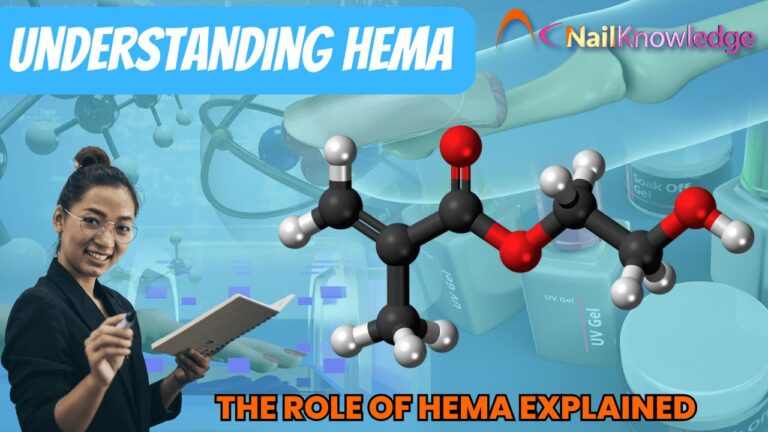
Vai trò của HEMA trong ngành công nghiệp làm móng

Welcome to our mini lesson on HEMA in the nail industry!

This lesson is aimed at all nail professionals, from beginners to advanced technicians, as well as nail enthusiasts who want to learn more about this important ingredient in nail products. Our goal is to explain the basics of HEMA without overwhelming you with technical jargon, so that you can better understand its properties, benefits, and potential risks.

We’ll cover what HEMA is, the chemistry behind it, its properties and benefits, examples of nail products that contain HEMA, and potential safety concerns related to its use. 

So what is HEMA? 

HEMA or Hydroxyethyl Methacrylate (CAS# 868-77-9), is a monomer or simply put, a liquid ingredient that’s commonly used in the nail industry to create strong, durable and flexible nail products.

It works by bonding well with other ingredients in the product and with your natural nails. (HEMA adheres as well to a nail plate containing water or where surface water is present as a dry well prepped nail plate)

When the photo initiators in the product are exposed to UVA energy HEMA forms long polymer chains of molecules, which help create a strong and flexible solid material.

This means that when you apply a product with HEMA, it can create a smooth and even surface that’s less likely to chip or break. HEMA can also help the product stick and adhere better to your natural nails and resist lifting.
HEMA is a known allergen but when used correctly and professionally, it is safe at or below the recommended percentage of 35%. 

Some examples of nail products that might contain HEMA include acrylic powders and liquids, gel polishes, and nail primers.

These products are made up of a mixture of different ingredients, including pigments, fragrances, and other additives, along with HEMA.

Understanding the Risks and Safety Precautions of HEMA Use in Nail Products

Trong khi HEMA is an important ingredient in many nail products, it’s important to be aware of the potential risks associated with its use. Exposure to incorrect use of HEMA can lead to skin irritation, allergic reactions, and other health problems.

To minimize the risk of exposure for both you and your client, it’s important to follow proper safety precautions when working with all nail products. This includes wearing gloves, working in a well-ventilated area, and avoiding skin contact at all times. Additionally, it is advisable to ensure that the percentage of HEMA (hydroxyethyl methacrylate) in the products is 30% or, preferably, lower.

If you or your clients experience any signs of irritation or allergic reaction from using HEMA containing products, such as redness, swelling, blisters or itching, stop using the product immediately and seek medical attention if necessary.

Regulatory guidelines related to HEMA use in nail products vary by country and region. In the United States, the Food and Drug Administration (FDA) regulates nail products and sets guidelines for the safe use of ingredients like hema. In Europe and the united kingdom, they have also established guidelines for the safe use of HEMA in nail products. Products containing HEMA are restricted to professional use only.

As a nail technician, it’s important to stay up-to-date with regulatory guidelines and to use HEMA containing products safely and responsibly. By following proper safety precautions and using products according to manufacturer instructions, you can help minimize the risk of exposure and keep yourself and your clients safe.

HEMA-Free Claims and the Presence of Di-HEMA

If a product is advertised as HEMA free, why does the label say that it contains Di-HEMA?
This is a question we get asked a lot on NailKnowledge. So we will address it here with an example to put it into context.
If a product contains DI-HEMA but is advertised as HEMA-FREE, it is because DI-HEMA is a similar ingredient but is structurally different from HEMA.

However, it’s important to note that some individuals who are sensitive or allergic to HEMA may also have a reaction to DI-HEMA, as it is still a type of methacrylate. So, it’s always important to read product labels carefully before using any new product, especially if you have a history of skin allergies or sensitivities.  There are many HEMA free products available on the market but be aware, if an individual develops an allergy to HEMA, it is very likely they are also allergic to other monomers. The only way of knowing is to have a dermatological patch test to identify the exact ingredient to avoid.

There are many HEMA free products available on the market but be aware, if an individual develops an allergy to HEMA, it is very likely they are also allergic to other monomers. The only way of knowing is to have a dermatological patch test to identify the exact ingredient to avoid.

Drawing Parallels: Understanding HEMA and Di-HEMA

An example to compare the relationship between HEMA and DI-HEMA could be comparing the difference between skimmed milk and whole milk. Although both are types of milk, they have different properties and are produced differently.

Skimmed milk is produced by removing the fat content from whole milk, while whole milk contains all the fat that naturally occurs in milk. While both types of milk are white and liquid, they have different nutritional profiles and can be used differently in cooking and baking.

Similarly, while DI-HEMA is chemically related to HEMA, they are different ingredients with different properties and functions. It’s important to read product labels carefully and understand the specific ingredients included in a product before using it, just like it’s important to understand the difference between skimmed milk and whole milk when cooking or baking.

Wrapping Up: Understanding HEMA & An Invitation to Dive Deeper

That concludes our mini lesson on HEMA, in the nail industry. We hope you found this information helpful in understanding the basics of this important ingredient in nail products.

If you’re interested in diving deeper into the science behind nail products, we invite you to check out our “Essential Nail Professional” course. This course provides a more comprehensive exploration of the chemistry behind nail products, including the role of monomers, polymers, and HEMA. By enrolling in this course, you’ll gain a deeper understanding of the products you use every day and how to use them safely and effectively.

Thank you for learning with Nail Knowledge and we look forward to seeing you online real soon!

Thuộc chủ đề:Thông tin chung, Dịch vụ làm móng, Hóa học sản phẩm

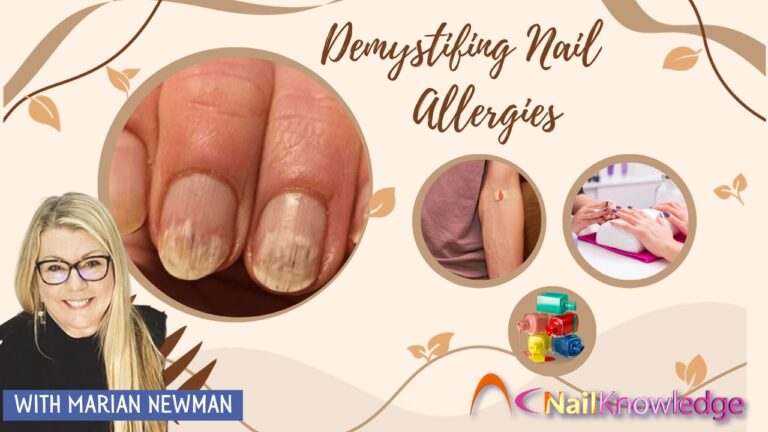
Giải mã dị ứng móng tay

Hiểu về nguyên nhân, triệu chứng và cách chăm sóc có trách nhiệm

There is still a great deal of obvious confusion over nail allergies and what to do about them.

Tìm kiếm lời khuyên về dị ứng móng tay trên mạng xã hội

Có vô số hình ảnh trên SM yêu cầu ý kiến, mặc dù nhiều hình ảnh nói rằng chúng tôi không phải là bác sĩ nên không thể chẩn đoán được. Vậy thì sao?

If clients have been wearing nail coatings that are known to be allergenic and symptoms appear it doesn’t matter if they have had the same nail service for a long period of time with no reaction as it can take years for an immune response to occur. 

The only next step is to seek a medical diagnosis. Many general practitioners lack knowledge about common acrylate reactions, often dismissing them as fungal infections or prescribing antibiotics or steroid creams.

No one should take antibiotics unless necessary as the body can build up an immunity to them and they will not work when their use is urgent. Steroid creams can thin the skin and do not cure an allergic reaction.

Các bước thiết yếu để xác định phản ứng dị ứng và nấm

The definitive step to remedy an allergic reaction involves complete removal of the allergen, which, in this case, refers to the nail coating.

Để xác định xem triệu chứng có phải do nhiễm nấm hay không thì xét nghiệm là phương pháp cần thiết.

The only real answer to know what to do with a potential allergy is to have a dermatology patch test and one specifically for acrylates and methacrylates (which not all dermatologists are qualified to do!). If a GP refuses to refer the patient to a dermatologist, then they should be advised that the patient has had a known allergen such as a nail coating. Once this is done and results are received, the very specific ingredient can be avoided.

Kiểm tra các sản phẩm không chứa HEMA cho dị ứng móng tay

It can be worth trying one nail with a HEMA-free product but the individual may, by that time, be allergic to many other acrylates or on the verge of becoming allergic. But if a client is insistent it can be done as long as the client agrees to return in one week to have it removed to see the condition of the nail plate and nail bed.

Kiểm tra chất gây dị ứng trước: Điều bắt buộc trước khi sơn móng tay

Until this testing has been carried out no coating should be applied. If it is then the nail professional is liable for causing any further damage and wide open to a liable action.

Khi xảy ra phản ứng, khách hàng phải được khuyến khích báo cáo với Cơ quan Tiêu chuẩn Thương mại thông qua Văn phòng Tư vấn Công dân và thợ làm móng phải báo cáo với nhà sản xuất.

Phòng ngừa dị ứng móng tay: Bảo dưỡng móng đúng cách và an toàn sản phẩm làm móng

Có nhiều chất gây dị ứng được biết đến được sử dụng trong các sản phẩm làm móng nhưng chúng được phép vì sản phẩm không được chạm vào da và phải được xử lý đúng cách. Vui lòng xem tất cả thông tin của chúng tôi trên chữa bệnh đúng cách và xem video của chúng tôi về móng tay Dị ứng và cách chúng xảy ra, để hiểu rõ hơn.

Điều hướng phản ứng HEMA và Monomer

It is not always HEMA that is the problem but reacting to HEMA can lead to reactions from other monomers.

Điều rất quan trọng là mọi chuyên gia làm móng phải hiểu rõ phải làm gì trong những trường hợp này, bất kỳ hành động nào không đúng đều là thiếu chuyên nghiệp và khiến khách hàng gặp phải các vấn đề và tổn thương lâu dài.

Thuộc chủ đề:Thông tin chung, Phá vỡ huyền thoại, Tình trạng móng tay, Dịch vụ làm móng

Nâng cao kiến thức về làm móng

Tham gia bản tin của chúng tôi!
ĐĂNG KÝ...

Bản quyền © NailKnowledge

Kiến thức về móng tay

  • Sách điện tử
  • Về chúng tôi
  • Các khóa học
  • Tin tức
  • Blog
  • Bản tin
  • Thuật ngữ

Chính sách

  • Trang riêng tư
  • Điều khoản và điều kiện
  • Chính sách Cookie

Ủng hộ

  • Liên hệ với chúng tôi
  • Gặp gỡ các chuyên gia
  • Hỏi các chuyên gia
  • Hỗ trợ hệ thống
  • Câu hỏi thường gặp
Vietnamese
Vietnamese
English Portuguese Spanish