• Saltar a la navegación principal
  • Saltar al contenido principal
  • Saltar al pie de página
Conocimientos de uñas

Conocimientos de uñas

  • Cursos
  • Libros electrónicos
  • Cesta de libros electrónicos
  • Base de conocimientos
    • Base de conocimientos
    • Pregunte a los expertos
    • Glosario
  • Noticias
  • Blog
  • Galería
    • Galería Nail Art
    • Artistas de uñas
    • Únete a la élite
  • Inicio de sesión

Archivo de 22 de octubre de 2023

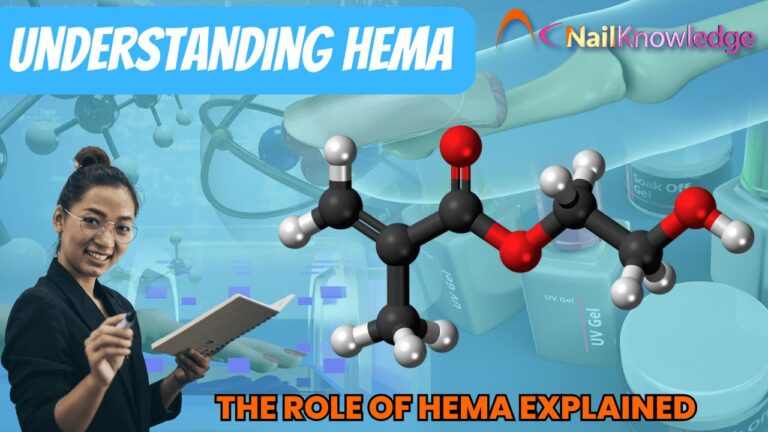
El papel del HEMA en la industria de las uñas

¡Bienvenidos a nuestra minilección sobre HEMA en la industria de las uñas!

This lesson is aimed at all nail professionals, from beginners to advanced technicians, as well as nail enthusiasts who want to learn more about this important ingredient in nail products. Our goal is to explain the basics of HEMA sin abrumarle con jerga técnica, para que pueda comprender mejor sus propiedades, beneficios y riesgos potenciales.

We’ll cover what HEMA is, the chemistry behind it, its properties and benefits, examples of nail products that contain HEMA, y los posibles problemas de seguridad relacionados con su uso. 

¿Qué es el HEMA? 

HEMA or Hydroxyethyl Methacrylate (CAS# 868-77-9), is a monomer or simply put, a liquid ingredient that’s commonly used in the nail industry to create strong, durable and flexible nail products.

It works by bonding well with other ingredients in the product and with your natural nails. (HEMA adheres as well to a nail plate containing water or where surface water is present as a dry well prepped nail plate)

When the photo initiators in the product are exposed to UVA energy HEMA forms long polymer chains of molecules, which help create a strong and flexible solid material.

This means that when you apply a product with HEMA, it can create a smooth and even surface that’s less likely to chip or break. HEMA can also help the product stick and adhere better to your natural nails and resist lifting.
HEMA is a known allergen but when used correctly and professionally, it is safe at or below the recommended percentage of 35%. 

Algunos ejemplos de productos para las uñas que pueden contener HEMA include acrylic powders and liquids, gel polishes, and nail primers.

These products are made up of a mixture of different ingredients, including pigments, fragrances, and other additives, along with HEMA.

Comprender los riesgos y las precauciones de seguridad del uso de HEMA en productos para las uñas

En HEMA is an important ingredient in many nail products, it’s important to be aware of the potential risks associated with its use. Exposure to incorrect use of HEMA can lead to skin irritation, allergic reactions, and other health problems.

To minimize the risk of exposure for both you and your client, it’s important to follow proper safety precautions when working with all nail products. This includes wearing gloves, working in a well-ventilated area, and avoiding skin contact at all times. Additionally, it is advisable to ensure that the percentage of HEMA (hydroxyethyl methacrylate) in the products is 30% or, preferably, lower.

If you or your clients experience any signs of irritation or allergic reaction from using HEMA que contengan productos, como enrojecimiento, hinchazón, ampollas o picor, deje de utilizar el producto inmediatamente y busque atención médica si es necesario.

Regulatory guidelines related to HEMA use in nail products vary by country and region. In the United States, the Food and Drug Administration (FDA) regulates nail products and sets guidelines for the safe use of ingredients like hema. In Europe and the united kingdom, they have also established guidelines for the safe use of HEMA in nail products. Products containing HEMA are restricted to professional use only.

As a nail technician, it’s important to stay up-to-date with regulatory guidelines and to use HEMA containing products safely and responsibly. By following proper safety precautions and using products according to manufacturer instructions, you can help minimize the risk of exposure and keep yourself and your clients safe.

Declaraciones de ausencia de HEMA y presencia de Di-HEMA

If a product is advertised as HEMA free, why does the label say that it contains Di-HEMA?
Esta es una pregunta que nos hacen a menudo en NailKnowledge. Así que la abordaremos aquí con un ejemplo para ponerla en contexto.
If a product contains DI-HEMA but is advertised as HEMA-FREE, it is because DI-HEMA is a similar ingredient but is structurally different from HEMA.

However, it’s important to note that some individuals who are sensitive or allergic to HEMA may also have a reaction to DI-HEMA, as it is still a type of methacrylate. So, it’s always important to read product labels carefully before using any new product, especially if you have a history of skin allergies or sensitivities.  There are many HEMA free products available on the market but be aware, if an individual develops an allergy to HEMA, it is very likely they are also allergic to other monomers. The only way of knowing is to have a dermatological patch test to identify the exact ingredient to avoid.

There are many HEMA free products available on the market but be aware, if an individual develops an allergy to HEMA, it is very likely they are also allergic to other monomers. The only way of knowing is to have a dermatological patch test to identify the exact ingredient to avoid.

Estableciendo paralelismos: HEMA y Di-HEMA

An example to compare the relationship between HEMA and DI-HEMA could be comparing the difference between skimmed milk and whole milk. Although both are types of milk, they have different properties and are produced differently.

La leche desnatada se produce eliminando el contenido graso de la leche entera, mientras que la leche entera contiene toda la grasa que se encuentra de forma natural en la leche. Aunque ambos tipos de leche son blancos y líquidos, tienen perfiles nutricionales distintos y pueden utilizarse de manera diferente en la cocina y la repostería.

Similarly, while DI-HEMA is chemically related to HEMA, they are different ingredients with different properties and functions. It’s important to read product labels carefully and understand the specific ingredients included in a product before using it, just like it’s important to understand the difference between skimmed milk and whole milk when cooking or baking.

Concluyendo: Comprender el HEMA y una invitación a profundizar

Así concluye nuestra mini lección sobre HEMA, en la industria de las uñas. Esperamos que esta información le haya sido útil para comprender los aspectos básicos de este importante ingrediente de los productos para las uñas.

If you’re interested in diving deeper into the science behind nail products, we invite you to check out our “Essential Nail Professional” course. This course provides a more comprehensive exploration of the chemistry behind nail products, including the role of monomers, polymers, and HEMA. By enrolling in this course, you’ll gain a deeper understanding of the products you use every day and how to use them safely and effectively.

¡Gracias por aprender con Nail Knowledge y esperamos verte en línea muy pronto!

Publicado en: Información general, Servicios de uñas, Química del producto

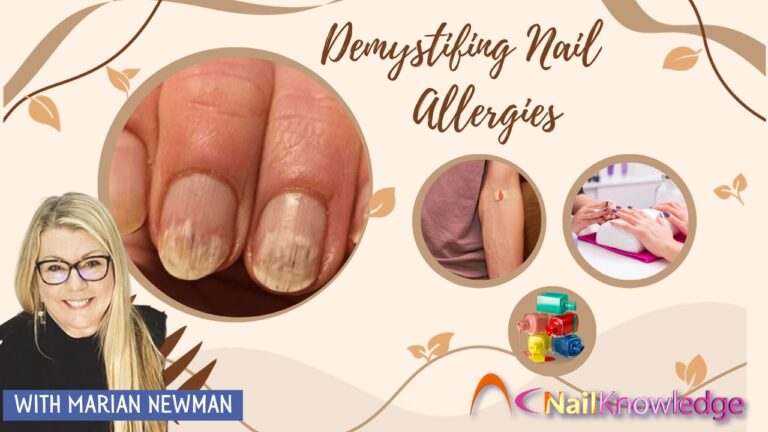
Desmitificar las alergias ungueales

Entender las causas, los síntomas y la atención responsable

There is still a great deal of obvious confusion over nail allergies and what to do about them.

Buscando consejo para la alergia a las uñas en las redes sociales

Hay innumerables fotos en SM pidiendo opiniones, aunque muchos afirman que no somos médicos por lo que no podemos diagnosticar. ¿Entonces qué?

If clients have been wearing nail coatings that are known to be allergenic and symptoms appear it doesn’t matter if they have had the same nail service for a long period of time with no reaction as it can take years for an immune response to occur. 

The only next step is to seek a medical diagnosis. Many general practitioners lack knowledge about common acrylate reactions, often dismissing them as fungal infections or prescribing antibiotics or steroid creams.

No one should take antibiotics unless necessary as the body can build up an immunity to them and they will not work when their use is urgent. Steroid creams can thin the skin and do not cure an allergic reaction.

Pasos esenciales para las reacciones alérgicas y la identificación de hongos

The definitive step to remedy an allergic reaction involves complete removal of the allergen, which, in this case, refers to the nail coating.

Para determinar si un síntoma se debe a una infección fúngica, el método esencial son las pruebas.

The only real answer to know what to do with a potential allergy is to have a dermatology patch test and one specifically for acrylates and methacrylates (which not all dermatologists are qualified to do!). If a GP refuses to refer the patient to a dermatologist, then they should be advised that the patient has had a known allergen such as a nail coating. Once this is done and results are received, the very specific ingredient can be avoided.

Productos sin HEMA para alergias ungueales

It can be worth trying one nail with a HEMA-free product but the individual may, by that time, be allergic to many other acrylates or on the verge of becoming allergic. But if a client is insistent it can be done as long as the client agrees to return in one week to have it removed to see the condition of the nail plate and nail bed.

Pruebas previas de alergenos: Imprescindible antes de aplicar el recubrimiento de uñas

Until this testing has been carried out no coating should be applied. If it is then the nail professional is liable for causing any further damage and wide open to a liable action.

Cuando se produce una reacción, hay que animar a la clienta a que lo comunique a la Oficina de Atención al Ciudadano (Citizens Advice Bureau) y al profesional de uñas a que lo comunique al fabricante.

Prevención de las alergias ungueales: Curado correcto y seguridad de los productos ungueales

Hay muchos alérgenos conocidos que se utilizan en los productos para las uñas, pero están permitidos, ya que el producto no debe entrar en contacto con la piel y debe estar bien curado. Consulte toda nuestra información sobre a cura adecuada y vea nuestro vídeo sobre clavos Alergias y cómo se producenpara entenderlo mejor.

Reacciones con HEMA y monómeros

It is not always HEMA that is the problem but reacting to HEMA can lead to reactions from other monomers.

Es muy importante que todos los profesionales de las uñas sepan qué hacer en estas circunstancias, ya que todo lo que no sea esto es poco profesional y expone a sus clientes a problemas y daños a largo plazo.

Publicado en: Información general, Acabar con los mitos, Afecciones de las uñas, Servicios de uñas

Mejora tus conocimientos sobre uñas

Suscríbase a nuestro boletín
SUSCRÍBETE...

Copyright © NailKnowledge

Conocimientos de uñas

  • Libros electrónicos
  • Quiénes somos
  • Cursos
  • Noticias
  • Blog
  • Boletín
  • Glosario

Políticas

  • Página de privacidad
  • Condiciones generales
  • Política de cookies

Ayuda

  • Póngase en contacto con nosotros
  • Conozca a los expertos
  • Pregunte a los expertos
  • Soporte del sistema
  • Preguntas frecuentes
Spanish
Spanish
English Portuguese Vietnamese