• Bỏ qua primary navigation
  • Bỏ qua nội dung chính
  • Bỏ qua footer
Kiến thức về móng tay

Kiến thức về móng tay

  • Các khóa học
  • MyNailEra
  • Sách điện tử miễn phí
  • Cơ sở tri thức
    • Cơ sở tri thức
    • Hỏi các chuyên gia
    • Thuật ngữ
  • Tin tức
  • Blog
  • Đăng nhập

Thông tin chung

Những điều cần lưu ý khi làm lại hoặc điều chỉnh lại bộ móng giả

There’s something incredibly satisfying about removing old gel polish or giving artificial nails a good rebalance. It’s like hitting the refresh button on your client’s hands. But here’s a question we should all ask ourselves: Are we really checking everything we need to when redoing or rebalancing artificial nail enhancements? Because if not, we might be missing warning signs that can turn into serious nail health problems.

When you’ve soaked off that old product or filed back for a rebalance, it’s more than just prepping for a new design. It’s also your window of opportunity, your only real chance to check the client’s natural nails for any signs of trouble. And yes, there’s a lot more to see than just a bit of lifting or growth.

Inspecting the Nail Plate When Redoing Artificial Nail Enhancements

We tend to focus on the surface, rightly so. After all, that’s where we apply product, create shape, and show off our work. But when redoing artificial nail enhancements, we must look closely at the natural nail underneath.

Yellowing on the nail plate? That could be a red flag for onycholysis or inner nail plate damage.
Greenish discolouration? Classic sign of the beginning of a bacterial infection, Vi khuẩn Pseudomonas Aeruginosa is the usual suspect here.
Chalky white patches? That’s potentially white superficial onychomycosis, a type of fungal infection that can easily be mistaken for nothing more than product damage.

Each of these conditions has one thing in common. They are chống chỉ định. That means you should không continue the service without further assessment or referral. But here’s the kicker: they all need to be treated differently, so identifying the right issue matters.

Why You Must Check Under the Free Edge During Nail Rebalancing

Here’s where things get even trickier. While most techs are trained to inspect the surface of the nail plate, far fewer routinely check underneath the free edge.

Now, I get it. It’s easy to skip. Clients are often in a hurry, we’re watching the clock, and if you’re working with a dark gel colour or builder gel, any issues underneath are effectively masked. But skipping this check is like only cleaning your kitchen counters and ignoring the mould in your fridge. Just because you can’t see it doesn’t mean it’s not there.

Let me show you why this matters.

Onycholysis and What It Means for Redoing Artificial Nail Enhancements

A colleague of mine once discovered significant bong móng when removing her own artificial nails. Now, she knew her stuff, she just hadn’t realised the lateral nail walls were part of what we call the “guardian seals” of the nail unit. Once removed, it revealed widespread nail plate detachment.

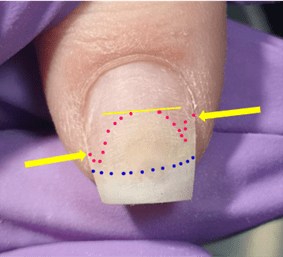
What’s shocking is that the onycholysis had eaten up two-thirds of her nail, something you’d never spot from above. The yellow arrows she marked on the photo showed the detachment spreading right into the lateral nail fold. The nail looked completely normal from the top but was hiding a whole world of trouble beneath.

And guess what? That “world of trouble” becomes a five-star resort for bacteria if left untreated.

I want to show you something: Onycholysis

This is what one of my colleagues saw when she removed her artificial nail product – I forgive her for the missing lateral side walls at the time she didn’t realize they were one of the 4 guardian seals of the nail unit.

  • Đường màu vàng cho thấy vị trí mà móng tay bám vào giường móng như bình thường.
  • Các mũi tên màu vàng chỉ ra vị trí kết thúc của hiện tượng bong móng, đồng thời cũng cho thấy mức độ bong tróc của lớp móng ở nếp gấp móng bên.
  • Các chấm màu hồng ở phần gần của vùng bong móng.
  • Các chấm xanh ở những nơi mà dải móng và phần dưới móng tay nên như thế nào.
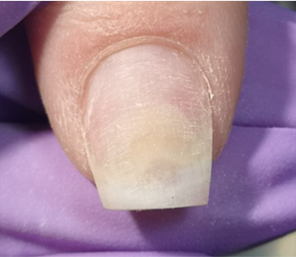
bong móng
bong móng – A detailed Look

Have a look at this picture of the nail unit from under the free edge. The yellow arrows and line show the detachment of the hyponychium and onychodermal band.
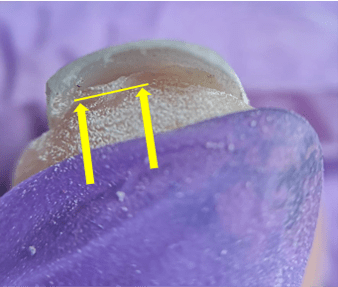
Onycholysis behind the free edge.

Now imagine if this colleague, was just doing an infill maybe from a dark blue or black hard gel or builder gel polish, no way she would see just how bad the onycholysis is trừ khi cô ấy nhìn ra phía sau mép tự do. Tình trạng bong móng chiếm gần 2/3thứ ba của móng tay! Đó là không gian đủ rộng để một “gia đình” vi khuẩn và các tác nhân gây bệnh nguy hiểm khác “nghỉ dưỡng” trong suốt 6 tháng!

Missing the Signs? Here’s What Can Happen…

Infections don’t wait for your next appointment. If an area of onycholysis is left unchecked, it can create the perfect moist, dark, and protected environment for bacteria like Vi khuẩn Pseudomonas Aeruginosa to move in and wreak havoc.
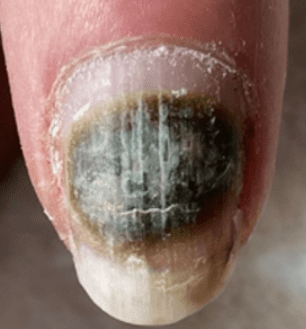
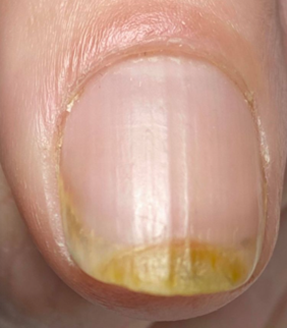
Nhiễm trùng do vi khuẩn Pseudomonas aeruginosa
Pseudomonas Aeruginosa bacterial infection – almost resolved

One salon client here in the Netherlands dealt with such an infection for six months, despite following protocols and seeking proper treatment. That’s how long it can take to correct something that may have started out as a tiny patch of lifting or a crack in the product. And no, removing the nail plate wasn’t an option. Those kinds of extreme measures are for medical professionals, not nail techs.

And it’s not just bacteria. Fungal infections like bệnh nấm móng nông màu trắng can also take hold if water gets trapped under damaged enhancements. These often show up as powdery white patches, sometimes brushed off as “just dryness” or over-buffing damage, when in fact, they require completely different care.
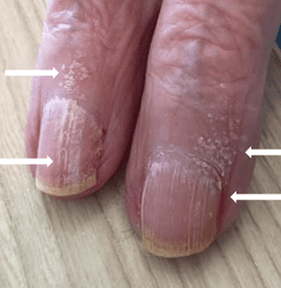
Bệnh nấm móng nông màu trắng

When to Pause During Rebalancing Artificial Nail Enhancements

We all want to give clients beautiful nails, but beauty can’t come at the cost of health. If you see signs of infection or nail trauma, stop. Explain your concerns professionally, show them what you see (photos help a ton here), and refer them to a GP or podiatrist if needed.

Sometimes, infections or reactions aren’t your fault. Maybe the client whacked their hand, cracked the product, and let water seep in. Maybe they’ve developed an allergy to an ingredient. That’s not on you. But missing it? Ignoring it? That’s where things go wrong.

Education Is Power – Keep Learning

We don’t live in a static industry. Nail technology, medical knowledge, and hygiene protocols evolve all the time. What you learned five years ago might already be outdated. That’s why ongoing education is not a luxury, it’s a necessity.

When redoing or rebalancing artificial nail enhancements, you’re not just applying a pretty surface. You’re making health checks. You’re being a professional. You’re being a guardian of your client’s natural nail health.

So next time you prep for a refill or remove that last layer of gel, take a breath. Look under the free edge. Take your time. Ask yourself: “Am I seeing everything I need to see?”

Because prevention isn’t just better than cure, it’s the difference between flawless nails and six months of painful, stubborn recovery.

Let’s keep eyes open, keep learning, and above all, keep those nail beds happy and healthy.
Thuộc chủ đề:Tự làm móng tay sai lầm, Thông tin chung

Triệu chứng bệnh vẩy nến móng tay ở khách hàng

How to Identify Nail Psoriasis Symptoms in Clients with Confidence and Care

As nail professionals, we often spend more time examining our clients’ nails than they do themselves. Whether you’re prepping for a manicure, applying gel, or giving a hand massage, you’re in a unique position to notice early warning signs of certain conditions, like nail psoriasis. It’s not uncommon for clients to be completely unaware of what’s happening under the polish. Spotting potential nail psoriasis symptoms in clients isn’t about diagnosing but about being observant and informed so you can offer the best advice and ensure their wellbeing.

So how do you recognise the signs of nail psoriasis without alarming your client, and when should you recommend they speak to a healthcare provider? Let’s explore the clues, what they mean, and how to navigate the conversation professionally.

Recognising the Visual Clues of Nail Psoriasis in the Salon

Nail psoriasis can be tricky to spot because it shares symptoms with other nail conditions. Most commonly, it appears in individuals who already have psoriasis on their skin, but it’s not limited to them. Interestingly, only about 5 percent of people with psoriasis experience symptoms limited to the nail plate. However, those with psoriatic arthritis, especially in fingers and toes, often show signs in their nails as well.

This condition isn’t contagious. It doesn’t come from bacteria, fungi, or any outside source. Instead, it’s rooted in the immune system and often runs in families. That means it’s not a hygiene issue, which is an important distinction to make when explaining it to a client.

You’re not expected to identify medical issues. But spotting changes in the nails helps you offer guidance and shows your professionalism.

Changes in Colour and Surface Texture to Watch For

When scanning your client’s nails during a service, there are a few tell-tale signs that may point to nail psoriasis symptoms in clients. One of the most recognisable is the “salmon patch.” These look like tiny drops of oil or blood trapped under the nail plate and tend to appear pinkish or reddish in tone.

Other discolouration might include patches of green, yellow, or brown. These could be mistaken for fungal infections or bruising, but if seen in combination with other symptoms, they may be signs of psoriasis.

Surface texture is another clue. The nail plate might develop small pits or indentations, like pinpricks scattered across the surface. These pits can be random or neatly aligned, giving the nails an unusual, rough appearance even though they haven’t been filed.

In more advanced cases, the nail may become thicker, appear chalky underneath, or start crumbling at the free edge. This brittleness is a result of weakened nail structure, not neglect.

Nail Separation, Bleeding and Tenderness

If you notice the nail lifting from the nail bed, beginning at the free edge and pulling back toward the cuticle, this condition is known as onycholysis. It’s a common issue for those with nail psoriasis and can open the door to secondary infections.

You might also see xuất huyết dằm, tiny black lines running in the direction of nail growth. These are caused by broken capillaries in the nail bed and are usually harmless, but their presence along with other signs strengthens the case for referring the client to a medical professional.

Redness in lưỡi liềm (the half-moon at the base of the nail) and inflammation around the nail folds (known as paronychia) can also be part of the picture. These symptoms may make the nails feel sore or tender, which the client might casually mention in conversation without realising it’s a sign of something more.

Communicating Your Concerns Without Alarm

When you’re faced with several of these symptoms at once, it’s wise to gently suggest your client consult a dermatologist or podiatrist. The key here is tone. Avoid sounding alarmed or overly clinical. Instead, speak in calm, neutral language that keeps the focus on their health.

For example, you could say: “I’ve noticed a few changes in your nails that I think are worth showing to a dermatologist. It’s nothing to panic about, but it could be something like nail psoriasis, and they’ll be able to give you a clear answer.”

This approach respects the client, keeps their dignity intact, and shows that you’re looking out for their overall wellbeing, not just their manicure.

Safe Practices for Nail Psoriasis in the Salon Environment

Despite its appearance, nail psoriasis is not caused by an infection, and it cannot be passed from one person to another. That means it’s completely safe to carry out nail services, as long as the client is comfortable and the nail bed is not open or actively inflamed.

In fact, well-applied artificial nail coatings can help protect the nail from further trauma. UV gel manicures, acrylic overlays, and other professional coatings are not harmful to the condition. Just be sure the nail isn’t lifting or damaged to the point of exposing the nail bed, as that could invite irritation or infection.

Everyday Nail Care Advice for Clients with Nail Psoriasis Symptoms

Although there is no cure, many clients benefit from practical, everyday care tips to manage nail psoriasis. Encourage them to keep nails short and the free edge smoothly filed. Suggest wearing gloves while doing housework or gardening, especially during colder months. A high-quality skin conditioner can help prevent cracking and dryness, which often aggravate symptoms.

Comfortable, well-fitting shoes are also important, particularly for those who exercise regularly. For clients open to medical treatment, let them know there are therapies available, from topical creams to injections and light treatments. This may offer significant relief, even if results take time to appear.

Khi nào nên giới thiệu khách hàng của bạn

Tham khảo ý kiến bác sĩ chuyên khoa chân nếu khách hàng của bạn có:

  • Đau, sưng, chảy máu hoặc đau nhức xung quanh móng
  • Móng tay có mùi hôi hoặc trông giống như bị nhiễm trùng
  • Symptoms that aren’t improving after self-treatment
  • Thay đổi ở nhiều móng tay, đặc biệt nếu chúng trông đối xứng
  • Tiền sử cá nhân hoặc gia đình bị bệnh vẩy nến hoặc các bệnh về da
  • Any unusual or concerning changes you’re unsure about

Think your client has a fungal nail infection? It might actually be nail psoriasis. Learn how to spot the difference, avoid misdiagnosis, and protect salon hygiene.

Final Thoughts on Spotting Nail Psoriasis Symptoms in Clients

As a beauty professional, you’re not there to diagnose tình trạng y tế, but your role can still be powerful. By being informed about nail psoriasis symptoms in clients, you’re better equipped to support them with empathy, professionalism and the right advice.

Clients trust you not just for beautiful nails, but for your expertise. When you notice changes in nail texture, colour, or structure, you have the opportunity to guide them toward the care they might need, without judgment or alarm. That’s a mark of true professionalism.

Fungal Infection or Nail Psoriasis? Here’s How to Tell the Difference

Think your client has a fungal nail infection? It might actually be nail psoriasis. Learn how to spot the difference, avoid misdiagnosis, and protect salon hygiene.

Thuộc chủ đề:Thông tin chung, Tình trạng móng tay, Dịch vụ làm móng

Phương pháp chăm sóc móng bằng nước cốt chanh có đáng không?

Nhìn kỹ hơn vào xu hướng chăm sóc móng tay bằng nước cốt chanh

We’ve all heard it: when life gives you lemons, use them on your nails. Okay, maybe not quite that phrase, but the idea of a chăm sóc móng tay bằng nước chanh has floated around beauty blogs and Pinterest boards for years. It’s one of those home remedies that promises brighter, stronger, healthier nails with ingredients from your kitchen. Sounds perfect, right?

But not so fast. While the allure of natural nail care is tempting, there’s a flip side to this citrusy trick that not everyone talks about. So, before you start dunking your fingers in lemon juice, let’s take a deeper dive into what this treatment actually does and whether it’s really worth the squeeze.

Phương pháp chăm sóc móng bằng nước cốt chanh là gì?

Touted as a multi-purpose fix for stained, brittle, or fungal-prone nails, the lemon juice nail treatment is exactly what it sounds like: applying fresh lemon juice to your nails and cuticles, either directly, mixed with olive oil, or as a soak.

The appeal lies in the simplicity. Vitamin C? Check. Natural antiseptic? Yup. A kitchen staple that smells great? Absolutely. And, according to DIY devotees, it’s supposed to:

  • Loại bỏ vết ố vàng hoặc đổi màu trên móng tay
  • Brighten the overall appearance of the nail plate
  • Tăng cường móng tay yếu bằng vitamin C
  • Fight minor fungal infections thanks to citric acid

It’s easy to see why people give it a try. Plus, compared to pricey nail serums and treatments, it’s incredibly low-cost.

Liệu nó có thực sự hiệu quả không?

Loại. Nước chanh có thể giúp loại bỏ vết bẩn trên bề mặt, như vết bẩn từ sơn móng tay hoặc hút thuốc, nhờ tác dụng tẩy trắng nhẹ của nó. Hãy nghĩ về nó như kem đánh răng làm trắng, nhưng dành cho móng tay của bạn. Sử dụng một cách tiết kiệm, đặc biệt là khi trộn với dầu ô liu, nó thậm chí có thể cung cấp một chút độ ẩm và độ bóng.

There’s also something satisfying about rubbing a slice of lemon across your fingertips. It feels clean, zesty, refreshing. And sure, vitamin C is an essential nutrient that contributes to collagen production, which plays a role in nail strength.

But here’s the kicker. Just because vitamin C is in lemon juice doesn’t mean your nails will soak it up and start growing like wildflowers. The actual amount absorbed through the nail plate is likely minimal, and the benefit is more anecdotal than scientifically proven.

Những nguy cơ tiềm ẩn của việc tự làm móng tay từ cam chanh

This is where things get interesting. While the lemon juice nail treatment might seem harmless, there’s a surprising danger that comes with it, especially if you’re a sun-lover.

Have you ever heard of phytophotodermatitis? It sounds like a spell from Harry Potter, but it’s actually a very real and unpleasant skin reaction. Here’s how it works. Citrus juices like lemon or lime can linger on your skin. If you then go out into the sun, certain compounds in the juice chemically react with UV light, causing redness, streaks, rashes, or even painful blisters.

These reactions can take a day or two to show up, often looking like sunburn, eczema, or even second-degree burns. And get this. They can last for weeks. Not exactly the glowing beauty look you were going for.

Nail professionals and dermatologists warn that even small, raw amounts of lemon juice applied to the skin, especially around the nails and cuticles, can absorb and trigger this effect. So while you’re soaking your nails for beauty, you might be setting yourself up for a seriously uncomfortable experience if you go outdoors too soon after.

Thuốc chữa móng tay tự nhiên bằng chanh có thực sự đáng giá không?

It depends on your goal and your sun exposure. If you’re indoors, trying to gently remove vết bẩn trên móng tay trước khi sơn lớp sơn mới, a one-time lemon juice rub might be fine. Especially if you rinse thoroughly and moisturise afterwards.

But if you’re looking for something to strengthen your nails or treat ongoing issues like nấm hoặc giòn, you’re probably better off using treatments specifically designed for that purpose. Ones that don’t risk turning your skin into a rashy science experiment.

And definitely, definitely don’t sit by a sunny window or go outside right after a lemon juice soak. Trust us, those streaky rashes are not worth it.

Các giải pháp thay thế làm sáng và tăng cường móng an toàn hơn

Nếu chăm sóc móng tay bằng nước chanh doesn’t quite feel safe anymore, don’t worry. There are safer, more effective ways to give your nails the TLC they deserve:

  • Sử dụng bút tẩy trắng móng tay để làm sáng móng tay
  • Dưỡng ẩm với dầu biểu bì that contain jojoba or vitamin E
  • Exfoliate gently with a nail buffer to remove surface stains

The best part? These methods won’t leave you nervously avoiding sunlight like a vampire in July.

Nhận định của chúng tôi về việc sử dụng nước chanh để chăm sóc móng tay khỏe mạnh

Home remedies can feel comforting. There’s something empowering about using natural, familiar ingredients to care for ourselves. But it’s important to remember that “natural” doesn’t always mean safe or effective.

The lemon juice nail treatment might seem like a harmless beauty hack, but between the risk of phytophotodermatitis and the lack of strong scientific backing, it’s probably better kept as a once-in-a-while experiment, not a go-to nail routine.

Đôi khi, tốt nhất là bạn nên giữ lại chanh khi pha trà.

Thuộc chủ đề:Thông tin chung, Phá vỡ huyền thoại

Móng tay bị kẹp sau khi tháo gel?

If you’ve ever looked down at your nails and noticed one of them narrowing oddly at the tip, sometimes even feeling a little tight or uncomfortable, you’re not alone. A question that comes up frequently in salons and online forums is: “What is this strange shape happening to my nail?” More often than not, it’s something called a pinched nail, and it’s especially common after gel removal.

This seemingly small change can feel alarming, particularly if it’s a new development. The good news? It’s usually reversible once you understand the underlying causes — and that’s exactly what we’re unpacking today. Whether it appeared suddenly or was masked by a product like builder gel hoặc BIAB, a pinched nail after gel removal is your nail’s way of telling you it needs a little extra care.

Móng tay bị kẹp chính xác là gì?

Một móng tay bị kẹp đề cập đến một tấm móng tay that appears to taper unnaturally at the free edge, creating a tight, sometimes concave shape that hugs the fingertip more than usual. It can look like the nail is being squeezed from the sides, hence the term pinched. Some people describe it as a claw-like or “sucked in” appearance at the tip, while others notice discomfort or even slight pressure under the nail.

It’s not always a cause for panic, but it is a sign that your nails are trying to tell you something.

Tại sao bạn thường thấy móng tay bị kẹp sau khi tháo gel

This might sound familiar: you soak off your gel, buff lightly, and suddenly notice your nail looks… different. Tighter. Narrower at the tip. That’s the pinched nail showing up, and it’s incredibly common right after removing gel polish or gel overlays.

Why? Because gel products, especially those with a rigid structure like builder gels or hard gels, bond closely with the nail.

Việc loại bỏ chúng liên quan đến sự kết hợp của axeton and physical filing, two things that, when paired, can wreak havoc on the nail’s natural moisture and structure. Acetone shrinks and dehydrates the nail plate, while filing thins it, especially around the edges. This combo weakens the sidewalls, and without that support, the nail can start to collapse inward, mimicking the look of a pinched nail. Even if you’ve been super careful, small bits of overfiling across several appointments can add up. And the thinner the free edge becomes, the more prone it is to curling or “pinching” once the gel is gone and the nail is left unsupported.

This is why many people notice a pinched nail only after gel is removed — not because it appeared suddenly, but because the gel had been masking the shape change all along.

Sự co ngót của gel và phản ứng của hyponychium có thể thay đổi hình dạng móng như thế nào

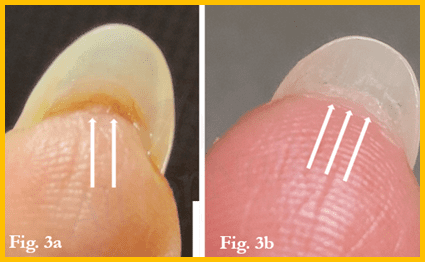
Behind the free edge of the nail plate lies the hyponychium, one of the important guardian seals, what you may not be aware of is a lot of BIAB’s or Builder Gels shrink when they cure, how much they shrink depends on the ingredients, but know that they all do to some extent and if you have filed into the lateral nail folds and weakened the nail plate the structure of the nail is compromised and the nail plate will change shape. The other part of the problem is due to the pressure on the free edge the hyponychium will be irritated and part of its defense when its irritated is to call in the troops and thicken a little, causing more pressure on the underside of the free edge. How do we know this? During the Covid-19 pandemic a lot of our consumers removed their own nail product as this couldn’t be infilled, so 2 things happened:

  1. Họ đã đổ quá nhiều thứ vào trong nỗ lực loại bỏ sản phẩm
  2. They couldn’t get their nails redone and vùng dưới móng có thời gian để hồi phục.

Hình 3a: Hạ móng hơi nhô lên

Fig 3b: Three months into lockdown – the hyponychium is relaxed the nail plate is not damaged by filing into the lateral nail folds or roughing up the nail plate before reapplying the Gel.

Nguyên nhân phổ biến gây ra tình trạng móng tay bị kẹp

Now that we’ve tackled the gel connection, let’s look at other factors that can trigger or worsen a pinched nail:

1. Làm đầy các thành bên

Possibly the biggest offender. Over time, repeated filing — even gentle — can thin the sidewalls, especially when removing enhancements like Plexigel. Once those side areas lose structure, the nail’s free edge is left vulnerable and can start curling inwards as it grows.

2. Mất nước do ngâm Acetone

Acetone, while great for product removal, pulls moisture from both the nail plate and surrounding skin. If you’ve ever felt that chalky, tight sensation post-soak, you know the feeling. Prolonged exposure, especially if followed by buffing, can temporarily (or permanently) warp the nail shape.

3. Giải phẫu tự nhiên hoặc chấn thương lặp đi lặp lại

Một số người có xu hướng tự nhiên dễ bị kẹp móng tay hơn do giường móng tay shape. But if it’s something you’ve only recently noticed, look at lifestyle habits. Typing, picking, tapping, or even frequent exposure to pressure under the free edge can distort growth over time.

4. Thay đổi ở vùng dưới móng

The hyponychium, the sensitive skin under the free edge, can shift or recede if irritated. This may happen due to overfiling, chemical exposure, gel shrinkage during curing or friction. When this skin detaches or becomes inflamed, the nail may grow in tighter, adding to that pinched look.

Cách chăm sóc và phòng ngừa tình trạng móng tay bị kẹp

If you suspect you’re dealing with a pinched nail, don’t panic. It’s often reversible with a little care and patience.

1. Nghỉ ngơi

Hãy tránh xa các biện pháp cải thiện và cho móng của bạn cơ hội để phục hồi. Một tháng không dùng gel hoặc loại bỏ sẽ giúp móng phát triển bình thường và phục hồi hình dạng tự nhiên.

2. Bù nước, bù nước, bù nước

Nails need moisture just like skin. Apply a good quality nail & skin oil  behind the free edge at least 4 times a day. Rinse your hands a few times a day with an Allantoïne & Ureum rinse, this will help recondition the nail and surrounding tissue, and finish with a little of your favorite lotion, if it contains Allantoïne and Ureum that’s an added bonus and your nails and nail area will love you for it.

3. Giảm thiểu chấn thương tiếp theo

During this recovery period, Keep nails trimmed short to prevent catching or bending. Be gentle when typing, opening containers, or using your nails as tools (just don’t!).

4. Tránh dũa những vùng mỏng

Skip the sidewalls entirely when buffing or shaping for now. Focus only on gentle surface smoothing if needed — and avoid pressure.

5. Theo dõi các mẫu

If it’s spreading to other nails or worsening, it could signal an underlying health or nutritional issue. Keep an eye out and consider speaking to a pro if you’re concerned.

Suy nghĩ cuối cùng

A pinched nail might start as a subtle cosmetic change, but it’s often a message from your body or your habits, that something needs adjusting. Whether it’s overfiling, dehydration, trauma, product shrinkage or just the aftermath of gel removal, paying attention early can help you course-correct and avoid long-term damage.

Điểm tích cực?

Móng tay có khả năng phục hồi. Với một kế hoạch phục hồi tốt, sự chăm sóc và một vài thay đổi nhỏ trong thói quen của bạn, hầu hết các móng tay bị kẹp có thể phục hồi hoàn toàn khỏe mạnh và đẹp.

Thuộc chủ đề:Thông tin chung, Tình trạng móng tay

Các vấn đề về nếp nhăn và chữa lành trên móng tay cái

Khi nói đến việc tạo nên lớp sơn móng hoàn hảo, ngón cái thường đặt ra những thách thức riêng. Bài viết này sẽ phân tích những vấn đề thường gặp như hiện tượng nứt nẻ và sơn không khô hoàn toàn mà nhiều người gặp phải khi sơn móng ngón cái, đặc biệt tập trung vào quy trình sơn và vai trò của thiết bị sấy móng.

Vai trò của việc áp dụng không đều cho móng tay nhăn nheo

Một trong những nguyên nhân chính dẫn đến hiện tượng nứt nẻ và lớp sơn lót không khô đều ở ngón cái là do việc thoa lớp sơn lót không đều. Ngón cái dễ gặp vấn đề này hơn do bề mặt rộng và phẳng hơn so với các ngón tay khác, dẫn đến lớp sơn dày hơn hoặc không đều. Khi lớp sơn lót được thoa quá dày, đặc biệt là ở hai bên ngón cái, ánh sáng làm khô có thể không thể polymer hóa hiệu quả toàn bộ lớp sơn. Việc khô không hoàn toàn này dẫn đến bề mặt nhăn nheo và có thể ảnh hưởng đến độ bền của lớp sơn móng.

Thực hành tốt nhất cho ứng dụng lớp phủ nền trên ngón tay cái

Để giải quyết những vấn đề này, điều quan trọng là phải áp dụng phương pháp tiếp cận có mục tiêu khi áp dụng lớp sơn lót cho ngón tay cái. Sau đây là một số mẹo:

  • Thoa mỏng: Đảm bảo thoa một lớp mỏng và đều khắp toàn bộ móng, đặc biệt chú ý đến hai bên móng nơi sản phẩm dễ tích tụ.
  • Ứng dụng riêng biệt: Hãy cân nhắc việc phủ lớp sơn lót riêng cho ngón tay cái, điều này giúp bạn tập trung hơn và kiểm soát được độ dày của lớp sơn.
  • Kỹ thuật bảo dưỡng: Đặt ngón tay cái đúng vị trí dưới đèn chiếu, đảm bảo tất cả các phần của móng đều được tiếp xúc đầy đủ.

Lợi ích của lớp nền phản chiếu trong quá trình làm móng

Phần đế có lớp gương trong đèn sấy móng được thiết kế để tăng cường hiệu quả của quá trình sấy. Cách thức hoạt động như sau:

  • Bề mặt phản chiếu: Lớp nền có bề mặt phản chiếu giúp phản xạ ánh sáng UV hoặc LED trở lại móng tay, đặc biệt là ở những vùng khó tiếp cận như hai bên và đầu móng.
  • Làm khô đều: Sự phản chiếu này đảm bảo ánh sáng chiếu vào đều hơn, có khả năng giảm các vấn đề như nhăn và đóng rắn không hoàn toàn.

Có cần thiết phải dùng đế phản chiếu không?

Điều chỉnh kỹ thuật phủ lớp sơn lót nên là bước đầu tiên của bạn và một lớp sơn lót phản chiếu có thể đóng vai trò hỗ trợ bổ sung. Tuy nhiên, hiệu quả của nó phụ thuộc phần lớn vào loại đèn sấy bạn sử dụng và những thách thức cụ thể mà bạn gặp phải khi xử lý móng. Nếu bạn vẫn gặp vấn đề mặc dù đã tối ưu hóa kỹ thuật phủ, việc kết hợp một lớp sơn lót phản chiếu có thể đáng để cân nhắc.

Khuyến nghị cuối cùng cho nếp nhăn trên móng tay

Đối với những người đang vật lộn với tình trạng nhăn nheo và móng tay cái không khô hoàn toàn, hãy tập trung vào việc hoàn thiện lớp sơn lót trước. Điều này bao gồm việc phủ các lớp mỏng, đều và đảm bảo tiếp xúc đúng với ánh sáng chiếu vào móng. Nếu vấn đề vẫn tiếp diễn, hãy khám phá các tùy chọn thiết bị tiên tiến như đèn chiếu sáng có đế phản chiếu có thể cung cấp giải pháp bạn cần để có được lớp sơn móng hoàn hảo và lâu trôi.

Bằng cách hiểu những khía cạnh quan trọng này và thực hiện một vài điều chỉnh chiến lược, bạn có thể cải thiện đáng kể vẻ ngoài và độ bền của lớp sơn móng tay, đặc biệt là ở những vùng khó sơn như ngón tay cái.

Thuộc chủ đề:Thông tin chung, Dịch vụ làm móng

Móng Gel Tự Làm Bị Sai

Tránh Thiệt Hại và Phản Ứng Dị Ứng với Lời Khuyên Của Chuyên Gia

Việc làm đẹp móng có thể rất đẹp, nhưng điều gì sẽ xảy ra khi thói quen chăm sóc móng của bạn gây hại nhiều hơn là có lợi?

The nail industry is booming, with countless enthusiasts turning to DIY nail kits at home. However, a recent social media post from Amy Brown Meyer highlights the potential risks of improper nail care. Amy shared her concerns about irritation after a home gel manicure, sparking a detailed and eye-opening response from Tracy Anne Shelverton, our nail expert.

Tracy’s response is a masterclass in understanding nail and skin health, emphasizing how improper techniques like overfiling or trimming (too much) skin can compromise the protective skin layers around your nails. This not only leads to irritation and swelling but opens the door to potential allergic reactions and or irritation caused by the chemicals in artificial nail products.

Làm thế nào móng tay gel tự làm có thể gây hại cho sức khỏe móng tay của bạn

Theo Tracy, lớp da quanh móng tay của bạn là một phần của hải cẩu bảo vệ that protect your nails and nail units from pathogens and allergens. However, improper techniques like dũa quá mức, cắt tỉa quá mức hoặc sử dụng dụng cụ không đúng cách có thể làm suy yếu rào cản này.

Khi điều này xảy ra:

  • Da bị kích ứng, dẫn đến đỏ, sưng và phản ứng miễn dịch.
  • Các chất gây dị ứng từ các sản phẩm gel chưa đông cứng có thể xâm nhập vào các lớp da bị tổn thương, có khả năng gây ra phản ứng dị ứng vĩnh viễn.

Without the protective skin barrier, the compounds in artificial nail products especially those containing acrylates, can easily enter the body, causing both short-term irritation and long-term sensitivity.

Phản ứng dị ứng với móng gel: Rủi ro và tác động lâu dài

Một thực tế đáng báo động là phản ứng dị ứng với các sản phẩm làm móng có thể có tác động vượt ra ngoài việc làm móng của bạn. Tracy cảnh báo rằng các hợp chất giống nhau được tìm thấy trong tất cả các sản phẩm làm móng nhân tạo cần phải đông cứng cũng được sử dụng trong keo dán y tế và xi măng nha khoa.

Điều này có ý nghĩa gì với bạn:

  • Nếu bị dị ứng ngay lúc này, các phương pháp điều trị y tế trong tương lai, chẳng hạn như phẫu thuật chỉnh hình hoặc nha khoa, sẽ trở nên phức tạp hơn.
  • Phản ứng dị ứng có thể dẫn đến sưng, ngứa, đỏ và thậm chí là nhạy cảm mãn tính với các hóa chất liên quan.

Các bước bảo vệ móng tay và da của bạn

Nếu bạn thích làm móng tại nhà, có nhiều cách để đảm bảo an toàn và bảo vệ sức khỏe móng của bạn:

  • Tôn trọng hàng rào bảo vệ da của bạn:Tránh dũa quá nhiều hoặc cắt tỉa phần nếp gấp móng tay (phần da xung quanh móng tay).
  • Tránh tiếp xúc với da: Đảm bảo các sản phẩm làm móng giả, đặc biệt là gel chưa đông cứng, không chạm vào da trong quá trình sử dụng.
  • Cho da thời gian để chữa lành: Nếu bạn thấy bị kích ứng hoặc mẩn đỏ, hãy ngừng sử dụng sản phẩm và để ít nhất ba tháng để làn da của bạn được phục hồi.
  • Consider Testing for Allergies: If you suspect an allergic reaction, consult a dermatologist for patch testing to identify allergens.
  • Tự giáo dục bản thân: Đầu tư vào đào tạo phù hợp để học các kỹ thuật đắp móng an toàn. Các khóa học và sách điện tử như những khóa học do Kiến thức về móng tay có thể giúp bạn thành thạo nghệ thuật làm đẹp móng mà không ảnh hưởng đến sức khỏe.

Bài học dành cho những người đam mê và chuyên gia làm móng

The story of Amy’s irritated nails is a powerful reminder that beauty should never come at the cost of health. Whether you’re a DIY enthusiast or a professional nail technician, understanding the science behind nails, artificial nail products and skin is crucial for safe and beautiful results.

Câu hỏi thường gặp về móng gel và phản ứng dị ứng

Q: Can gel nails cause allergic reactions?
Có, móng gel chứa acrylate, là chất gây dị ứng. Nếu những chất này tiếp xúc với da, đặc biệt là khi hàng rào bảo vệ da bị tổn thương, chúng có thể gây ra các phản ứng dị ứng như đỏ, sưng hoặc ngứa.

H: Làm sao tôi có thể ngăn ngừa tình trạng kích ứng do làm móng gel tự chế?
Tránh dũa móng quá nhiều hoặc cắt da. Đảm bảo các sản phẩm gel chưa đông cứng không chạm vào da trong quá trình sử dụng.

H: Tôi phải làm gì nếu bị kích ứng sau khi làm móng gel?
Ngừng sử dụng tất cả các sản phẩm làm móng ngay lập tức và để da lành lại. Tham khảo ý kiến chuyên gia nếu các triệu chứng vẫn tiếp diễn và cân nhắc xét nghiệm dị ứng nếu cần thiết.

Bạn muốn tìm hiểu thêm?

Mở khóa toàn bộ tiềm năng của bạn với Bộ sản phẩm NailKnowledge đầy đủ, nguồn tài nguyên tuyệt vời dành cho cả những người đam mê làm móng và chuyên gia.

With lifetime access to everything NailKnowledge has to offer, you’ll gain expert guidance and tools to achieve salon-quality nails while keeping your hands healthy and beautiful.

What’s Included in the NailKnowledge Complete Bundle?

  • 3 Khóa học toàn diện
  • 18 Bài học
  • 35 Điểm Kiến Thức
  • 6 Sách điện tử hàng đầu trong ngành
  • Của riêng bạn Hồ sơ nghệ sĩ/Salon để thể hiện chuyên môn của bạn

Whether you’re just starting out or looking to deepen your expertise, this one-time purchase equips you with all the tools, insights, and resources to elevate your nail skills.

Không có phí liên tục, chỉ có kiến thức trọn đời.

Bộ sản phẩm Nailknowledge đầy đủ

Bảo vệ móng tay, bảo vệ sức khỏe và giữ cho đôi tay của bạn luôn đẹp nhất theo cách đúng đắn.

Thuộc chủ đề:Tự làm móng tay sai lầm, Thông tin chung, Sức khỏe và An toàn, Tình trạng móng tay

  • Trang 1
  • Trang 2
  • Trang 3
  • Các trang tạm thời đã được bỏ qua …
  • Trang 30
  • Chuyển đến Trang sau »

Nâng cao kiến thức về làm móng

Tham gia bản tin của chúng tôi!
ĐĂNG KÝ...

Bản quyền © NailKnowledge

Kiến thức về móng tay

  • MyNailEra
  • Sách điện tử
  • Về chúng tôi
  • Các khóa học
  • Tin tức
  • Blog
  • Bản tin
  • Thuật ngữ

Chính sách

  • Trang riêng tư
  • Điều khoản và điều kiện
  • Chính sách Cookie

Ủng hộ

  • Liên hệ với chúng tôi
  • Gặp gỡ các chuyên gia
  • Hỏi các chuyên gia
  • Hỗ trợ hệ thống
  • Câu hỏi thường gặp
Vietnamese
Vietnamese
English Portuguese Spanish