Sau khi tẩy lớp sơn gel hoặc điều chỉnh lại bộ móng giả, điều quan trọng là phải kiểm tra bề mặt móng của khách hàng để phát hiện bất kỳ dấu hiệu bất thường nào.
Chúng tôi không muốn thấy …
- Móng tay bị vàng
Điều này có thể là bong móng hoặc tổn thương lớp móng bên trong
- Các vết xanh lục trên hoặc dưới móng tay
Đây có thể là dấu hiệu ban đầu của một bệnh nhiễm trùng do vi khuẩn
- Các vùng bề mặt màu trắng xám trên móng tay
Đây có thể là bệnh nấm móng bề mặt màu trắng
Cả ba trường hợp này đều là những dấu hiệu chống chỉ định cho việc tiếp tục cung cấp dịch vụ cho khách hàng, và cả ba đều cần được xử lý theo những cách hoàn toàn khác nhau. (Xem trong Tình trạng móng tay (mục)
Nhưng có bao nhiêu người trong chúng ta thực sự để ý phía sau móng tự nhiên ở phần đầu móng? Hãy thành thật với chính mình đi – tôi biết thợ làm móng của tôi làm thế, nhưng chúng tôi được đào tạo cùng một nơi nên điều đó cũng hợp lý thôi.
Tôi muốn cho bạn xem một thứ: bong móng
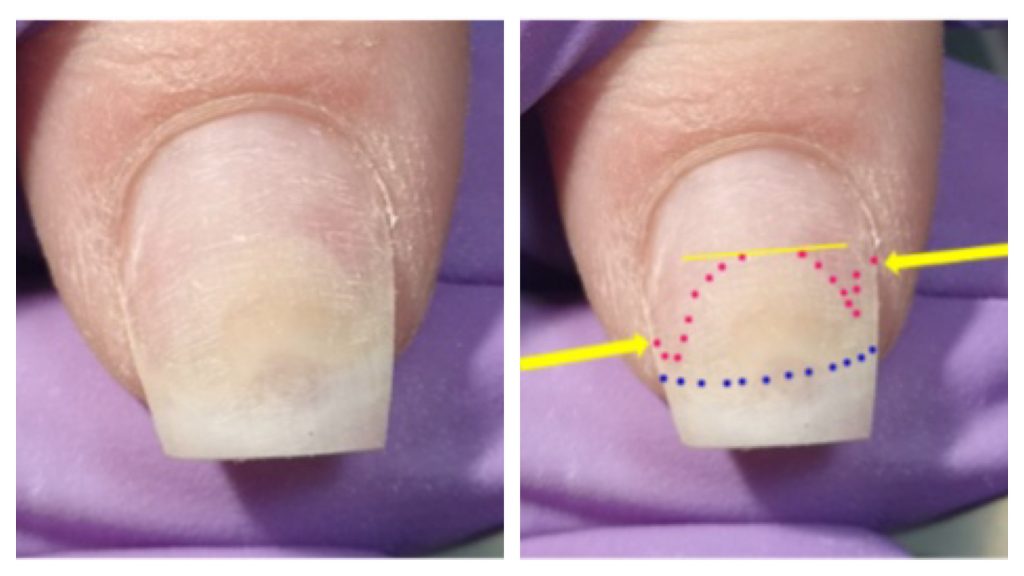
Đây là cảnh tượng mà một người bạn cùng lớp của tôi đã thấy khi cô ấy tháo bộ móng giả ra – tôi thông cảm cho cô ấy vì lúc đó cô ấy không nhận ra rằng những phần móng bên hông bị thiếu chính là một trong bốn “con dấu bảo vệ” của bộ móng.
Đường màu vàng cho thấy vị trí mà móng tay bám vào giường móng như bình thường.
Các mũi tên màu vàng chỉ ra vị trí kết thúc của hiện tượng bong móng, đồng thời cũng cho thấy mức độ bong tróc của lớp móng ở nếp gấp móng bên.
Các chấm màu hồng ở phần gần của vùng bong móng.

Các chấm xanh ở những nơi mà dải móng và phần dưới móng tay nên như thế nào.
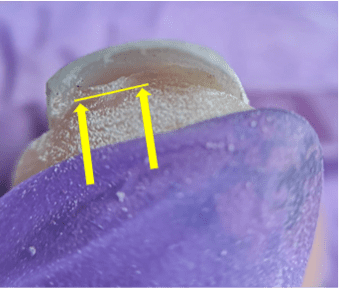
Hãy xem bức ảnh này chụp phần móng từ phía dưới mép tự do. Các mũi tên và đường kẻ màu vàng chỉ ra sự bong tróc của lớp da dưới móng và dải da móng.
Giờ hãy thử tưởng tượng nếu tiệm làm móng này chỉ tiến hành phủ lớp gel lấp đầy bằng gel cứng màu xanh đậm hoặc đen, hoặc sơn gel làm nền – chắc chắn cô ấy sẽ không nhận ra tình trạng bong tróc móng nghiêm trọng đến mức nào trừ khi cô ấy nhìn ra phía sau mép tự do. Tình trạng bong móng chiếm gần 2/3thứ ba của móng tay! Đó là không gian đủ rộng để một “gia đình” vi khuẩn và các tác nhân gây bệnh nguy hiểm khác “nghỉ dưỡng” trong suốt 6 tháng!
Nếu chúng ta bỏ lỡ điều đó thì sẽ ra sao?
Điều này thực sự xảy ra! Nhiễm trùng do vi khuẩn Pseudomonas aeruginosa.
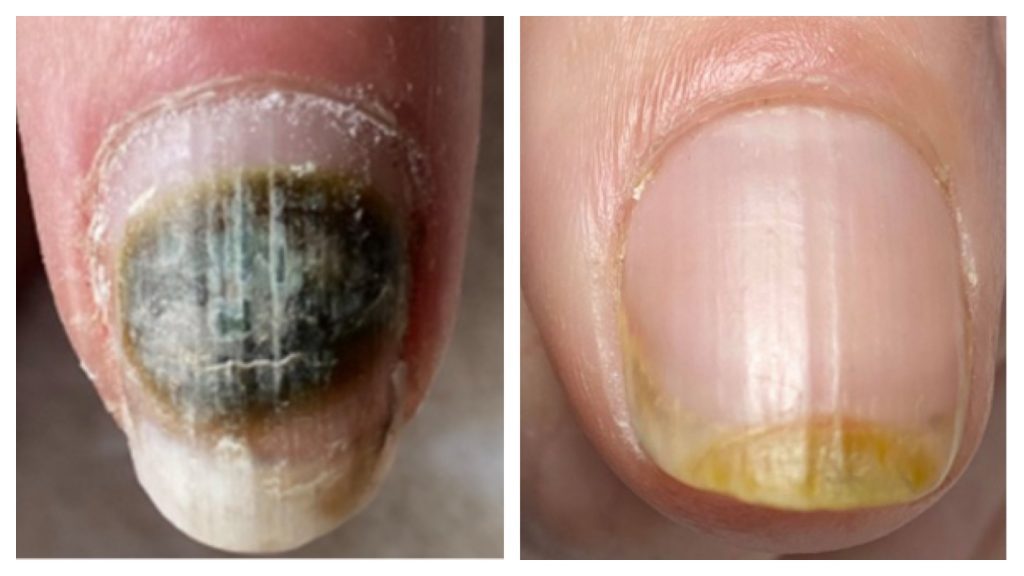
Đây chính là tình huống mà bạn không bao giờ muốn gặp phải. Khách hàng của một tiệm làm móng tại Hà Lan này đã tuân thủ quy trình điều trị trong 6 tháng qua nhằm giảm thiểu tình trạng nhiễm trùng do vi khuẩn. Việc loại bỏ lớp móng không phải là một phương án khả thi, và chúng tôi sẽ không thực hiện điều đó trừ khi có yêu cầu từ bác sĩ hoặc điều dưỡng chuyên khoa, và chỉ trong điều kiện được kiểm soát chặt chẽ.
Cuối cùng – Bệnh nấm móng nông màu trắng
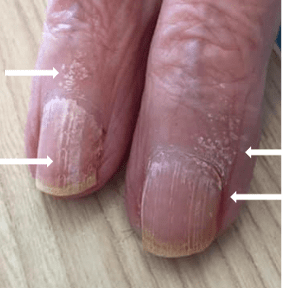
Nhiễm nấm móng bề mặt màu trắng là một bệnh nhiễm nấm bề mặt có thể ảnh hưởng không chỉ đến móng tay mà còn cả da – Tại Hà Lan, chúng tôi có một phác đồ điều trị dành cho bệnh nhiễm trùng này – xin lưu ý rằng chưa bao giờ Hãy cạo phần đó ra khỏi móng tay vì nó có thể dễ dàng lan rộng, bay lơ lửng trong không khí và có thể xâm nhập vào phổi của bạn.
Nhưng – nếu chúng ta phát hiện ra những vấn đề này sớm hơn – nếu chúng ta quan sát kỹ phần mép tự do trong quá trình cân bằng lại, và nếu chúng ta chú ý trong quá trình tháo gỡ, chúng ta có thể phát hiện và giải quyết các vấn đề trước khi chúng trở thành cơn ác mộng.
Đôi khi những chuyện như vậy cứ thế xảy ra, không phải lúc nào cũng do bạn làm hay không làm gì đó; có thể sản phẩm móng giả chỉ bị nứt, nước thấm vào và vi khuẩn Pseudomonas aeruginosa (loại vi khuẩn này không phải vô cớ mà được gọi là tác nhân gây bệnh cơ hội) đã hoành hành và bám rễ, có thể sản phẩm bị nứt và cô ấy dễ bị nhiễm WSO và vi khuẩn này đã xâm nhập (điều này hoàn toàn có thể xảy ra) và có thể khách hàng của bạn đột nhiên có dấu hiệu phản ứng dị ứng với sản phẩm của bạn (tránh tiếp xúc với da sẽ giúp ích trong trường hợp này) nhưng khi bạn không biết phải tìm kiếm điều gì và bạn lo lắng cho khách hàng của mình, việc bạn cố gắng che giấu điều đó là điều gần như dễ hiểu, nhưng xin đừng làm vậy.
Hãy tìm hiểu kỹ và giải quyết vấn đề; tai nạn là điều khó tránh khỏi, đó không phải là vấn đề, vấn đề nằm ở chỗ phớt lờ chúng hoặc không có thông tin chính xác để ngăn chặn chúng ngay từ đầu.
Đừng chỉ dừng lại ở việc học tập mà hãy không ngừng trau dồi kiến thức; thời thế thay đổi, kiến thức ngày càng được mở rộng, khoa học y tế phát triển với tốc độ đáng kinh ngạc – việc bắt kịp xu hướng là trách nhiệm của chúng ta!