• Bỏ qua primary navigation
  • Bỏ qua nội dung chính
  • Bỏ qua footer
Kiến thức về móng tay

Kiến thức về móng tay

  • Các khóa học
  • Sách điện tử
  • Giỏ sách điện tử
  • Cơ sở tri thức
    • Cơ sở tri thức
    • Hỏi các chuyên gia
    • Thuật ngữ
  • Tin tức
  • Blog
  • Phòng trưng bày
    • Thư viện nghệ thuật làm móng
    • Nghệ sĩ làm móng
    • Tham gia Elite
  • Đăng nhập

Chất lỏng và bột

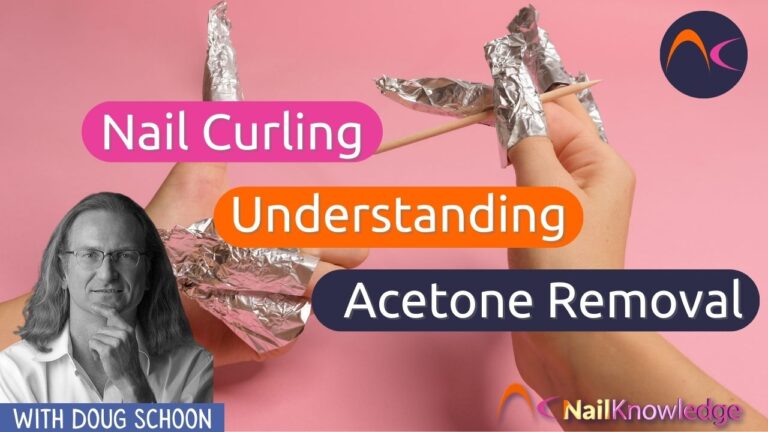
Ngăn ngừa móng tay cong: Hiểu tác động của việc loại bỏ acetone

As a nail technician, you strive to provide your clients with the best possible experience and results. However, encountering unexpected issues like nail curling after using acetone for removal can be frustrating for both you and your clients.

In this blog post, we’ll cover the reasons behind nail curling during acetone removal and explore effective strategies to prevent this from happening. Whether you’re a seasoned nail professional or just starting out, understanding the science behind nail reactions to acetone and implementing preventive measures can elevate your service quality and client satisfaction.

Understanding Acetone Removal and Nail Curling

The Impact of Nail Plate Thickness and Water Content

I would guess that the nail plates which are curling are thinner than the other nails. The acetone will absorb some water which will lower the water content of the nail plate. The nail plate normally contains about 15% water. Even when you lower the water content even by just a few percent, it can make a big difference, especially for thin nail plates. 

Unlocking the Science: Nail Plate Structure and Moisture Dynamics

Much of the water inside the nail plate is located between the layers of nail cells. The science is a bit unclear about how many layers make up a “typical” normal nail plate, but the latest research suggests that about 50 layers of nail cells is a good estimate.

Whenever the water (aka moisture) leaves the nail plate, these layers will draw closer together. This can slightly alter the shape of any nail plate, to varying degrees. Thinner nail plates are much more likely to curl when they lose a little water. 

Preventing Nail Curling: Effective Strategies for Nail Plate Health and Strength

The first thing I would try is to regularly perform hot oil manicures, once or twice per month and daily use of a high quality, penetrating nail oil.  Doing so will increase the oil content of the nail plate, making it more difficult for water to leave the nail plate’s layers, and therefore slow down or prevent thinner nails from curling.  

Also, avoid filing the nails even thinner than they already are.  This is one of the biggest mistakes nail technicians make, over filing the top surface of the nail plate. This out-of-date technique is still taught by many nail schools and training courses. Respect the nail plate. The less this upper surface is filed, the better. It’s better to keep the nail plates thick and strong!

Thuộc chủ đề:Thông tin chung, Chất lỏng và bột, Dịch vụ làm móng, Gel UV

Kỹ thuật viên làm móng: Viêm da dị ứng từ các sản phẩm làm móng

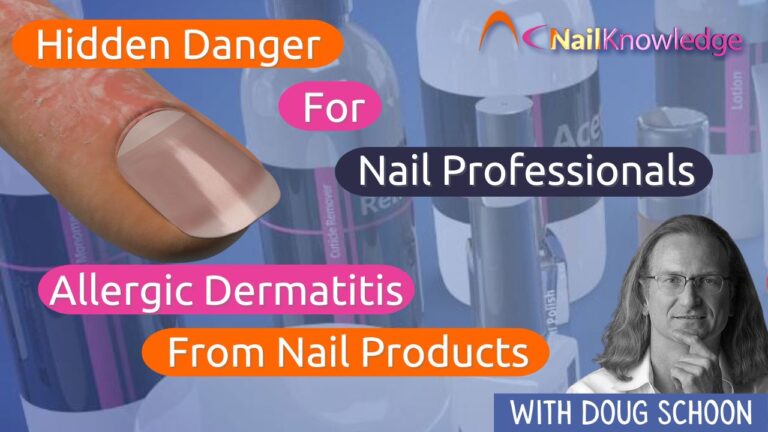
Working as a nail technician can be a fulfilling career, offering the opportunity to create beautiful manicures and boost clients’ confidence. However, amidst the artistry and client satisfaction lies a hidden danger for some: allergic reactions to nail products, such as UV gels, which can result in allergic dermatitis. Despite the meticulous care taken by many technicians, exposure to these substances poses significant risks and challenges that need to be addressed effectively.

Chúng tôi đề cập đến những trải nghiệm của một thợ làm móng như vậy, mặc dù đã thực hiện các biện pháp phòng ngừa, cô ấy vẫn phải vật lộn với các phản ứng dị ứng làm suy nhược. Thông qua câu chuyện của cô ấy và hiểu biết sâu sắc từ các chuyên gia trong ngành, chúng tôi khám phá ra tầm quan trọng của các biện pháp an toàn, kiến thức về sản phẩm và các chiến lược chủ động để ngăn ngừa viêm da dị ứng và bảo vệ cả sức khỏe và tuổi thọ nghề nghiệp.

Sự khó khăn của bệnh viêm da dị ứng ở thợ làm móng

Đây là câu hỏi thường gặp mà chúng tôi nhận được từ các thợ làm móng đang phải vật lộn với thách thức khó khăn là phản ứng dị ứng với gel UV.

Unfortunately, my initial training using UV gels wasn’t great and I had overexposed myself before I knew it was a problem. Now, despite taking plenty of precautions I have severe reactions. I am very careful to use nitrile gloves and protect my hands, but sadly it’s not working. I have the most severe case of allergic dermatitis that is debilitating at times.  I have had allergy patch testing and know I am allergic to my products. Is there any hope for me? Or do I have to start considering giving up my job?

Doug Schoon’s Insights: Preventing Allergic Reactions in Nail Technicians

Wow, what can I say?  Other than “Don’t let this happen to you”.  The same will happen to many others because they don’t take the necessary precautions to work safely.

Vai trò của các thành phần và biện pháp phòng ngừa

People don’t become allergic to products, they become allergic to ingredients, so switching products usually won’t help them. Often these problems are a result of mixing products not intended to be used together or using the wrong nail lamp OR using pigments, glitters or other colorants that are not safe for cosmetic use. Or just from constantly exposing the skin to under cured dust/filings.

Những quyết định khó khăn cho thợ làm móng khi đối mặt với bệnh viêm da dị ứng

Găng tay Nitrile dùng một lần cho thợ làm móng và chuyên gia
Găng tay nitrile dùng một lần là lựa chọn tốt nhất cho các tiệm làm đẹp, độ dày găng tay 8 mil là tốt nhất.

Sadly, the best answer when extreme conditions like this occur is, “find a new line of work and stop using or wearing nail coating products forever”. Once a serious allergy develops, it will most likely worsen with each additional exposure. It sounds like that’s what has happened to this soon to be “former” nail technician.  

Phòng ngừa các vấn đề về da ở thợ làm móng: Các chiến lược chính để can thiệp sớm

At the first signs of skin problems, this nail technician could have prevented problems from worsening simply by ensuring proper cure and avoiding skin contact with dust, filings, sticky layers, UV gel, etc. 

Keeping brush handles, containers and other objects free of sticky UV gel residues is also important.

Hiểu về vai trò của kem bảo vệ đối với thợ làm móng

To make gloves more effective, some will wear “barrier creams” underneath their gloves and on the wrist and forearms.  Barrier creams are skin coating creams that can slow penetration of allergy causing substances into the skin where they activate allergic reactions.

Tuy nhiên, kem bảo vệ KHÔNG phải là sản phẩm thay thế cho găng tay và phải sử dụng thận trọng vì chúng thường chứa các thành phần từ họ silicon.

Even small traces of silicones can block adhesion if they contaminate the nail plate, so be sure to carefully clean the client’s nail plates and avoid getting any silicone containing cream or lotion on tools or brushes.

Bảo vệ sự nghiệp của bạn: Ưu tiên các biện pháp an toàn

Finally, protect your career and the investment you’ve made to get where you are today. Please be serious about working safely. 

Thuộc chủ đề:Thông tin chung, Sức khỏe và An toàn, Chất lỏng và bột, Gel UV

Thuốc và độ nhạy cảm của móng tay với tia UV

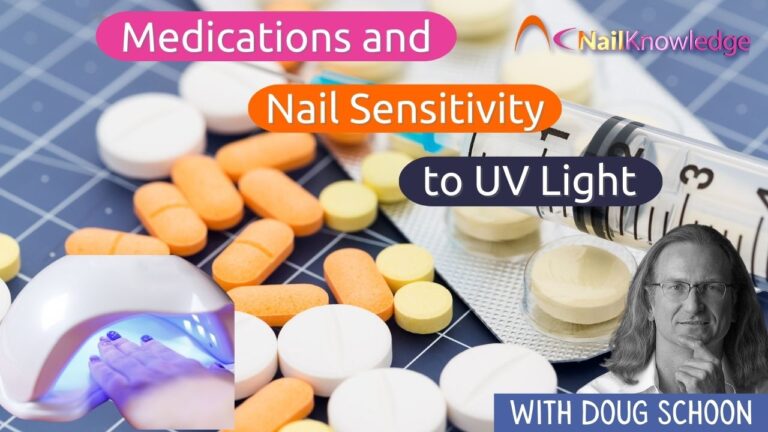
Recently, a customer raised an important question regarding the potential effects of medications on nail health, particularly in relation to UV exposure. We understand the significance of this topic and are here to shed light on how certain medications can impact nail sensitivity to UV light.

Using a medication that heightens sensitivity to UV can lead to adverse skin reactions when using a UV nail lamp.

Understanding Medication-Induced Photosensitivity in Nail Health

The nail plates themselves are not adversely affected, but the skin may be more easily burned while using these medications or treatments.  This is called a “Photosensitivity” and this can lead to skin irritation or an allergic response.

Medication-Induced Photosensitivity: Oral and Topical Medications

This can occur with medications taken orally or applied topically. The most well-known example is the antibiotic tetracycline, but there are several dozen medications that can cause these types of sensitivities.

Typically, the skin will react within minutes, but sometimes the reaction is delayed a few hours. Often the reaction will appear as exaggerated redness or swelling and blisters can form.  The skin can become very itchy. The reaction isn’t always isolated to the area of exposure and even adjacent unexposed skin can display symptoms.

Protective Measures and Medical Advice for Minimizing UV Exposure

Wearing sunscreen or covering the hand with a cloth or UV protective gloves can help minimize exposure. However, for advice that involves medication, it is always best to ask the prescribing physician.  In these cases, the doctor will most likely advise their patient to skip such services, until they’ve completed taking their medication. Better to be safe than sorry, as the saying goes.

Thuộc chủ đề:Thông tin chung, Chất lỏng và bột, Gel UV

Phá vỡ huyền thoại về bột làm móng Acrylic: Sự thật bạn cần biết

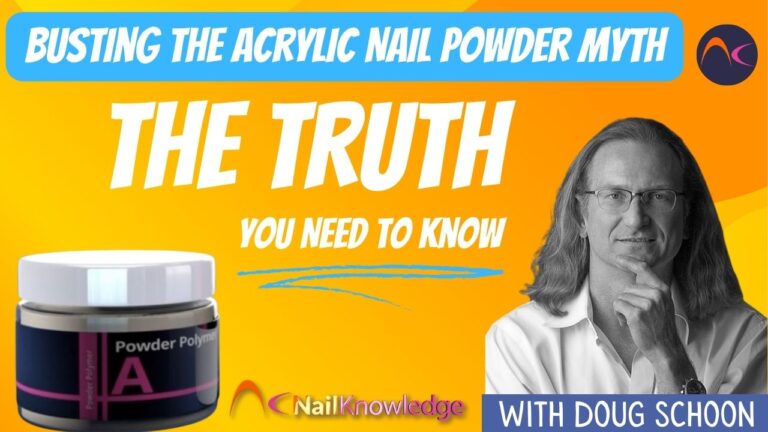
Aren’t all acrylic nail powders just a blend of ethyl and methyl methacrylate? Aren’t they basically all the same?

No, acrylic nail powder varies greatly and it is a myth that they are all the same. Wonder who started this myth? No surprise, it was started by those who sell low quality nail powders. Of course, they want to fool nail professionals into using inferior and/or incorrect nail powders. They can’t make money if nail technicians use the powder that was specifically designed for use with the monomer of their choice.  So, they fooled them into believing a “powder is a powder”, which is false.

Thành phần bột làm móng và cách sử dụng MMA an toàn

Here are the facts – nail powders are polymer blends and their compositions vary widely. For instance, a nail powder could be a blend of 10% poly ethyl methacrylate, which is the polymerized form of ethyl methacrylate and 90% poly methyl methacrylate. Or it could contain the reverse, 90% poly ethyl methacrylate and 10% poly methyl methacrylate, and every combination in-between.

When methyl methacrylate or MMA is polymerized to make bột làm móng tay giả, this is considered a safe and appropriate use for this monomer.  This is NOT the same as using MMA monomer as the liquid component in a system. I don’t recommend using MMA monomer nail products because they are likely to lead to damage of the nail plate.  

Mở khóa sức mạnh của bột làm móng Co-polymer tùy chỉnh

It is important to understand that nail powders are often customized “co-polymers”.  A co-polymer is a polymer containing two types of monomers in their structure and not just blended together. Co-polymers are completely different from those created by physically blending two different types of polymers. Co-polymers are one polymer, made from two different monomers.  This means that knowledgeable scientists can create hundreds of powders that all have ethyl and methyl methacrylate and each powder will be different in strength, durability and ease of use.

There is an even more important difference, as I discussed in Volume l of my Face-to-Face series, it is VERY important to understand that various nail powders contain varying amounts of benzoyl peroxide or BPO. The amount of BPO used depends on the formulation of the monomer liquid component of the system.  Some monomer liquids require more BPO, while others need less. The BPO concentration is usually between 1-2%, however there is a VERY big difference between a nail powder containing 1% verses a nail powder containing 2% BPO. A nail powder with 2% BPO contains twice as much BPO as a powder with only 1%. 

Vai trò quan trọng của BPO trong bột làm móng Acrylic

The amount of BPO in the powder determines how “completely” the liquid monomer will cure. Too little BPO, the enhancement will under-cure. Too much BPO, the enhancement will over-cure.  Over-curing can lead to discoloration, brittleness, cracking, breaking, chipping and loss of adhesion or lifting.

Những nguy hiểm của lớp sơn móng tay chưa khô

Under cured nail coatings may have a lower resistance to staining or they can be overly flexible and have increased cracking at the stress zones near the free-edge.

However, there is a much more important problem to consider, under-cured nail coatings are much more likely to cause adverse skin reactions for clients and nail professionals.  Under-curing leaves excessive amounts of monomer trapped in the coating. Therefore, fresh dust and filings may be rich in monomer. Prolonged or repeated contact to monomer-rich dust and filings may lead to skin overexposure, which is a leading cause of allergy to nail enhancements.

Mức độ BPO phù hợp: Điều cần thiết để làm móng đẹp hơn

If you use the incorrect powder, it may not contain the correct amount of benzoyl peroxide. In other words, don’t use a 1% BPO containing nail powder with systems designed for use with a 1.5% BPO powder, and the opposite is true.  Even a half percent difference in BPO can lead to an under-cured enhancement and higher risk of skin irritation or allergies.

This is especially true during the first hour after creating the enhancement. This is when the coating contains the highest concentration of uncured monomer and the potential for over exposing the skin is at its highest.


Thuộc chủ đề:Chất lỏng và bột, Sữa dưỡng, Thuốc và Chất đánh bóng, Phá vỡ huyền thoại

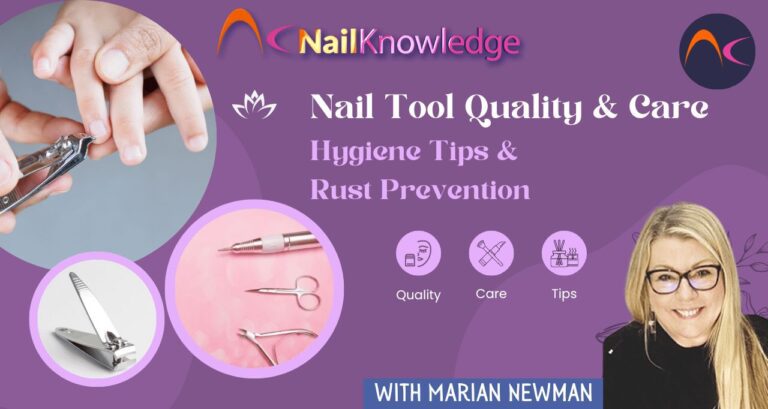
Chất lượng và cách chăm sóc dụng cụ làm móng: Mẹo vệ sinh và phòng ngừa rỉ sét

Có vẻ như vẫn còn nhiều nhầm lẫn về quy trình vệ sinh dụng cụ làm móng.

A recent blog ‘dụng cụ làm móng phủ‘ was published, however, the blog I’m discussing here has a slightly different emphasis as it delves into the topic of tool quality and maintenance.

Hiểu về các loại thép không gỉ cho dụng cụ làm móng

Stainless steel comes in various grades, and when it comes to nail tools, you want to focus on the ones that are also used in the food and medical fields. The top-notch choices are typically stainless steel grades 304 and 316. There’s another grade known as 420, which is sometimes claimed to have medical uses, but it’s generally of lower quality compared to the first two options.

The quality of steel will be reflected in the price an also if the tool is a unique shape. The majority are manufactured in Pakistan and China and are ‘off the shelf’. There are very few, if any new and unique designs in recent years..

Dụng cụ làm móng phủ: Phân biệt sự thật với các tuyên bố về mỹ phẩm

Có một xu hướng về các công cụ phủ. Đây là lý do thẩm mỹ và không có gì khác. Nếu có bất kỳ khiếu nại nào về sản phẩm thuộc bất kỳ loại nào, chúng tôi, với tư cách là những người chuyên nghiệp, hoàn toàn có quyền yêu cầu bằng chứng về khiếu nại từ một người kiểm tra độc lập! Hãy nhớ điều này.

Hãy hỏi mọi thứ!!!

Doug Schoon đã viết trong một Blog gần đây về trộn sản phẩm/brands in answer to those who say I’ve been mixing for years and had no problem: Who told you could and it is safe?? We are not scientists nor chemists we are nail professionals although rather too much science needs to be known and understood than many are comfortable with But that is the job and we deal with the public and their (and our) health and safety is our #1 priority!

Tăng tuổi thọ của dụng cụ làm móng thông qua các quy trình vệ sinh

Về các quy trình vệ sinh: chúng ta có thể kéo dài tuổi thọ của dụng cụ bằng cách bảo vệ độ sắc bén của chúng và tránh hư hỏng hoặc trầy xước.

Đặt các cạnh sắc vào hộp thủy tinh sẽ làm chúng cùn. Tương tự như việc ngâm chúng trong chất lỏng gốc nước quá lâu!

Bất kỳ vết xước nào trên kim loại đều sẽ thúc đẩy sự ăn mòn tức là rỉ sét. Hãy cẩn thận với các dụng cụ có khắc tên thương hiệu vì điều này tương tự như vết xước và có thể bị ăn mòn nếu không được chăm sóc.

Hầu hết các chất khử trùng độc quyền đều được pha loãng với nước, vốn được biết là có thể gây ăn mòn trong những trường hợp không mong muốn nhưng có thể tránh được.

The most important first step is to scrub every tool with soap and water, then submerge in correctly diluted disinfectant. Only leave it in there for the time instructed. Then remove them, rinse with water and dry. Then store them in a clean and closed container.

Đây là yêu cầu của hầu hết các thương hiệu nhưng lưu ý có thể có sự khác biệt về thời gian ngâm.

Wiping or spraying tools is NOT enough!!  This does not clean the crevices in a hinge for example an etched surface or even where a coating has worn away. Spraying is only spraying a metal that will have skin or nail debris or oils and creams on it so will not reach the surface to do any geed at all. (same goes for files and buffers)

Trên hết, hãy làm theo hướng dẫn của nhà sản xuất và nếu bạn không chắc chắn, hãy hỏi họ. Tất cả các chất khử trùng phải có số EN để cho biết chúng đã được thử nghiệm với những gì (xem biểu đồ trong Blog trước) Tầm quan trọng của vệ sinh trong ngành làm móng

Không cần phải rỉ sét các dụng cụ kim loại nếu bạn làm theo hướng dẫn. Thêm vào đó, có nhiều cách để bảo vệ lớp phủ. Một dụng cụ được phủ có thể trông đẹp khi mới nhưng một dụng cụ có những chỗ bị mòn trông thật bẩn!

Không có lý do gì mà chất khử trùng gốc nước lại gây hại cho dụng cụ của bạn. Hiểu các bước và quy trình thì khoản đầu tư của bạn sẽ bền lâu.

It’s important to check if your supplier provides a sharpening service. If they do, your nail tools should return to you as sharp as they were when they were brand new, not just as dull as some people have experienced.

Kết luận

Khi nói đến việc chăm sóc, vệ sinh và phòng ngừa rỉ sét cho dụng cụ làm móng, kiến thức là công cụ tốt nhất của bạn. Hiểu biết về các loại thép không gỉ khác nhau được sử dụng trong dụng cụ làm móng và lựa chọn các tùy chọn chất lượng cao có thể đảm bảo tuổi thọ và hiệu suất. Hãy cẩn thận với các xu hướng mỹ phẩm như dụng cụ phủ và luôn xem xét kỹ lưỡng các tuyên bố về sản phẩm, yêu cầu bằng chứng khi cần thiết.

Hygiene protocols play a pivotal role in extending the life of your nail tools. Avoid practices that can dull or damage them and follow manufacturer instructions meticulously, including proper disinfection procedures. Remember that water-based disinfectants, when used correctly, are safe for your tools.

Cuối cùng, hãy cân nhắc xem nhà cung cấp của bạn có cung cấp dịch vụ mài không, vì điều này có thể trẻ hóa các dụng cụ của bạn và duy trì độ sắc bén theo thời gian. Bằng cách tuân theo các hướng dẫn này và luôn cập nhật thông tin, bạn có thể đảm bảo rằng các dụng cụ làm móng của mình không chỉ đáp ứng các tiêu chuẩn của ngành mà còn cung cấp hiệu suất nhất quán và đáng tin cậy trong suốt vòng đời của chúng.

Thuộc chủ đề:Chất lỏng và bột, Sữa dưỡng, Thuốc và Chất đánh bóng, Hóa học sản phẩm, Gel UV

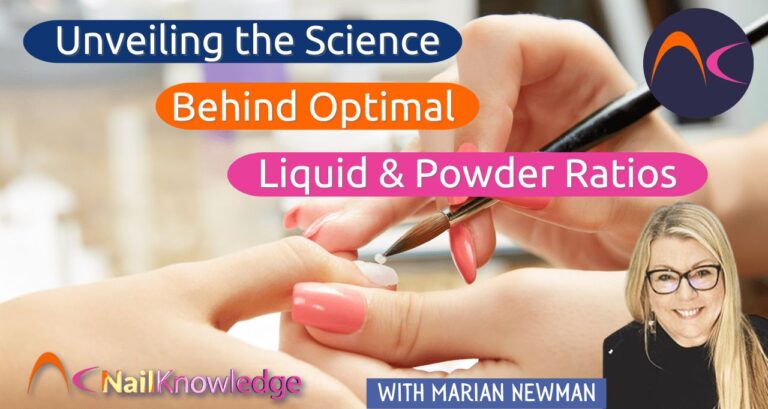
Tiết lộ khoa học đằng sau tỷ lệ chất lỏng và bột tối ưu

Thinking about application skills and the critical role of liquid and powder ratios. The ratios hold the key to achieving nail perfection aesthetically and for longevity.

We explore how the ratios shape the essence of our craft from bead formation to mastering structure.

Mối quan tâm về monome trong gel UV và ứng dụng L&P

By now I hope most nail professionals are aware of the issues with high %’s of monomers in Gel được xử lý bằng tia UV. If there are so many they cannot all properly cure and some are left behind trapped in the solid coating and can leach out during wear.

The same applies to L&P. The monomer is the liquid and the powder is the polymer that also carries the initiator. The monomers need the initiator to start the polymerisation process but, instead of the UV energy that the UV-cured gels need, the energy comes from the heat of the finger and the temperature of the atmosphere.

Nếu bạn sử dụng tỷ lệ quá ướt, sẽ không có đủ chất khởi tạo trên ít hạt polyme của bột để bắt đầu các monome liên kết với nhau để tạo thành polyme. Vì vậy, rất nhiều monome bị giữ lại trong lớp phủ rắn. Chúng không chỉ có thể rò rỉ ra ngoài mà còn tạo ra lớp phủ không đủ bền như mong muốn và có thể dẫn đến vỡ.

Hoàn thiện nghề thủ công: Làm chủ tỷ lệ hạt

Getting the correct L&P ratio is down to practice and those new to the system or a new brand must spend some time practicing picking up beads. The bead should melt into a glossy sphere. It should not be so wet that it could drip off the brush or be too dry that the bead is an irregular shape. The most usual ratio is medium dry.

Cách bạn nhúng cọ và lau nhiều như thế nào vào cạnh của danh sách sẽ phụ thuộc vào kích thước của hạt bạn cần nhặt và điều này sẽ cần có thời gian luyện tập.

Cách nhúng cọ đã đổ đầy bột vào là một bước khác cần thực hành. Bạn chỉ nên nhúng đầu cọ vào bột. Một số người thích vẽ một đường thẳng trên bột, trong khi những người khác chỉ nhúng. Cả hai đều đúng nhưng lượng bột cần lấy là khía cạnh quan trọng. Ví dụ, một chiếc đinh nhỏ không cần một hạt lớn như ngón tay cái. Và thực hành sẽ giúp bạn biết cần phải nhúng bao nhiêu chất lỏng vào cọ và nhúng cọ vào bột trong bao lâu.

Một cách thực hành tốt là quyết định kích thước hạt cần thiết và sau đó lấy đủ monome và đủ bột để tạo thành một quả cầu thủy tinh. Đặt nó trên một tấm nhựa (sẽ không tan chảy) và xem nó lắng xuống như thế nào. Trong vài giây, nó sẽ tan chảy thêm thành một mái vòm thủy tinh và không lan rộng quá nhiều. Nếu nó không phải là thủy tinh hoặc có hình dạng không đều thì nó quá khô. Nếu nó lan rộng thì nó quá ướt. Tiếp tục thực hành điều này cho đến khi bạn có thể nhặt một hạt có kích thước chính xác và tỷ lệ chính xác. Loại bỏ bất kỳ hạt nào trông không ổn.

Some people like to ‘feed the bead’. This is when the widest part of the brush is pressed onto the bead which gives it more liquid. This will almost certainly create a too wet ratio. So will redipping the brush into the liquid once the bead is placed on the nail.

Cách tốt nhất để đạt được tỷ lệ chính xác là bằng lượng chất lỏng chính xác trong cọ và lấy bột chính xác. Điều này cũng giúp tăng tốc độ thoa phấn.

Chuyên môn của nhà sản xuất: Vai trò quan trọng trong việc xác định tỷ lệ tối ưu

Các nhà sản xuất nên biết tỷ lệ chính xác cho sản phẩm của họ. Có một số loại bột màu đục cần nhiều chất lỏng hơn bình thường và điều này cần được dạy trong giáo dục dành cho người mới bắt đầu hoặc chuyển đổi.

Tạo ra hình dạng hạt lý tưởng: Thách thức những quan niệm sai lầm phổ biến

The videos that can be seen everywhere where the bead is applied to the nail and allowed to almost run down the length of the nail demonstrates a very wet bead that will leave a lot of uncured monomers in the coating. The bead should be manipulated into the correct shape by the brush as most of the liquid will have been used up by the polymer powder.

Một lần nữa, điều này đi kèm với việc thực hành về lực tác động lên cọ và góc nghiêng của cọ.

Phần kết luận

Something that looks so easy in skilled hands is actually a lot of careful practice and experience. It is not as easy as it looks and needs thought and practice. The structure is key with the apex perfectly positioned and a thin free edge and a blended edge at the base of the nail with no ridge to grow up and look unsightly

Tất cả những điều này sẽ đảm bảo bạn cung cấp dịch vụ tốt nhất cho khách hàng, lớp phủ và các cải tiến sẽ trông tuyệt đẹp và bền trong 2-3 tuần trước khi cần bảo trì.

Một điểm nữa cần đề cập là chất lượng tốt L&P, correctly applied and with a perfect structure, will break in an accident. This should happen before the natural nail breaks or is pulled off the nail bed. This seems to be happening a lot lately and is caused by too dry ration or too thick coatings. It is extremely painful and takes a very long time to heal.

For more in-depth insights on achieving perfect nails, don’t miss our comprehensive guide on Cọ sơn móng tay: Chuẩn bị và chăm sóc. Tìm hiểu cách giữ cọ sơn móng tay luôn trong tình trạng tốt nhất để có kết quả hoàn hảo.

Thuộc chủ đề:Chất lỏng và bột, Sữa dưỡng, Thuốc và Chất đánh bóng, Hóa học sản phẩm

  • Trang 1
  • Trang 2
  • Trang 3
  • Chuyển đến Trang sau »

Nâng cao kiến thức về làm móng

Tham gia bản tin của chúng tôi!
ĐĂNG KÝ...

Bản quyền © NailKnowledge

Kiến thức về móng tay

  • Sách điện tử
  • Về chúng tôi
  • Các khóa học
  • Tin tức
  • Blog
  • Bản tin
  • Thuật ngữ

Chính sách

  • Trang riêng tư
  • Điều khoản và điều kiện
  • Chính sách Cookie

Ủng hộ

  • Liên hệ với chúng tôi
  • Hỏi các chuyên gia
  • Hỗ trợ hệ thống
  • Câu hỏi thường gặp
Vietnamese
Vietnamese
English Portuguese Spanish