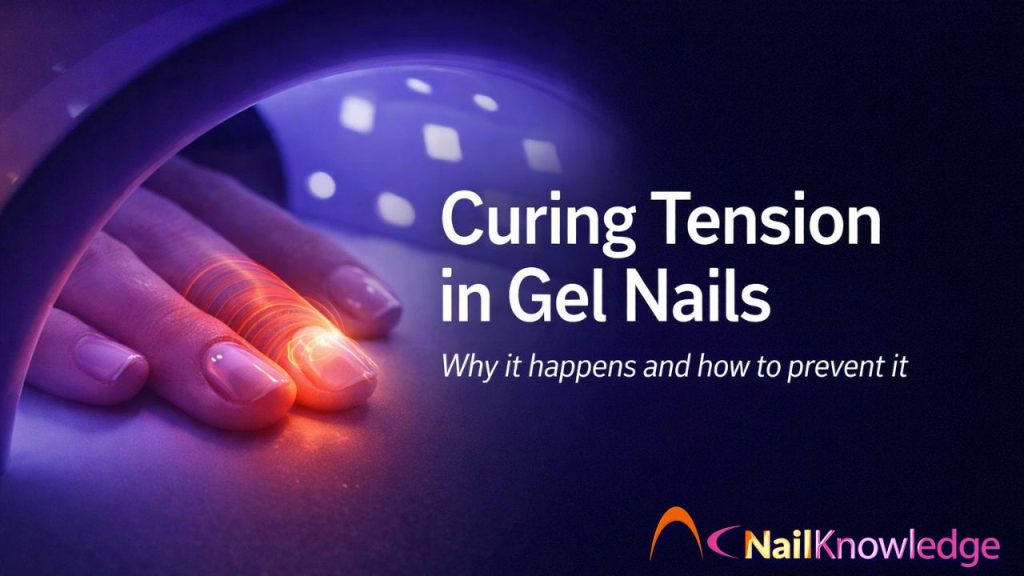
Hablemos sobre la curación de la tensión en las uñas de gel, algo que la mayoría de los amantes de las uñas de gel han experimentado pero que quizás no comprenden del todo. Esa extraña sensación de ardor o tirantez durante la curación es una señal clásica de la tensión en las uñas de gel. Ya sabes, estás ahí sentada con las manos bajo la lámpara UV o LED, admirando tu set recién hecho, cuando de repente… ay. Esa punzada aguda de calor te golpea y te quedas preguntándote: “¿Es esto normal?”.”
¿Esa sensación? Normalmente es un signo de exceso de tensión en el curado, un problema mucho más común de lo que se piensa. Y aunque pueda parecer un efecto secundario inofensivo del proceso de curado del gel, en realidad puede ser una señal de advertencia de que tus uñas no están del todo contentas.
Desglosemos todo: qué es, por qué sucede y cómo detenerlo en seco.


¿Qué es el curado de tensión en uñas de gel?
Tensión excesiva de curado se refiere a la intensa sensación de tirantez o opresión que algunas personas sienten cuando el esmalte en gel se endurece bajo una lámpara UV o LED. A menudo se siente como un pico repentino de calor o presión, especialmente durante los primeros 10 segundos de curado.
Pero, ¿qué está pasando realmente?
Cuando los productos en gel se curan, sufren una reacción química, un proceso llamado polimerización. El gel se transforma de un estado líquido o semilíquido a una capa dura y sólida. Este cambio provoca que las moléculas del gel se unan rápidamente y se encojan ligeramente. Esa contracción crea tensión entre el gel y la uña natural.
Ahora, si se aplica demasiado producto, o si la fórmula es demasiado fuerte, o si el curado ocurre demasiado rápido (como con una lámpara de alta potencia), esa tensión aumenta, al igual que la incomodidad.
Piénsalo como tratar de encoger rápidamente plástico film sobre una superficie blanda. Si el plástico se tensa demasiado rápido o con demasiada fuerza, algo se va a tirar o romper. Tu placa ungueal termina atrapada en el fuego cruzado.
¿Por qué sucede?
No hay un único culpable detrás de la tensión excesiva de curado. Varios factores pueden estar en juego, a menudo apilándose unos sobre otros:
- Aplicación Gruesa: Más producto significa más encogimiento. Si las capas se aplican demasiado gruesas, el calor interno generado durante el curado tiene más dificultad para disiparse uniformemente.
- Lámparas de Alta PotenciaLas lámparas LED superpotentes pueden curar en exceso el gel, acelerando la reacción e intensificando el calor y la tensión.
- Uñas limadas en exceso o dañadasSi tus uñas naturales han sido limadas en exceso o adelgazadas, son más vulnerables al estrés del curado.
- Productos Altamente ReactivosAlgunas fórmulas de gel son más agresivas que otras. Los geles duros, por ejemplo, son más propensos a causar tensión que los geles blandos o los tipos builder-in-a-bottle.
- Tiempo de enfriamiento inadecuadoPasar directamente de una capa a la siguiente sin dejar que las uñas se enfríen unos segundos puede generar tensión interna.
Así que sí, aunque es normal sentir un poco de calor durante el curado, ¿esa punzada aguda y dolorosa? No es normal, y no es necesaria.
Cómo evitar la tensión al curar uñas de gel
¿Las buenas noticias? No tienes que sufrir por belleza. Con algunos retoques bien pensados, puedes reducir drásticamente o eliminar por completo la tensión excesiva de curado.
1. Aplicar capas finas
Es tentador ponerse una capa gruesa para acelerar las cosas, pero la paciencia es tu mejor amiga aquí. Las capas finas y uniformes se curan de manera más eficiente y generan menos calor. Menos volumen = menos encogimiento = menos tensión. Matemáticas simples.
2. Usa una Lámpara de Menor Potencia (o Cura en Pulsos)
Algunas lámparas incluso tienen un “modo de bajo calor” que aumenta la intensidad gradualmente, una excelente opción si experimenta regularmente molestias al curar.
3. Elegir el Producto Adecuado
Cada marca es diferente. Si siente constantemente esa tensión ardiente, considere cambiar a ingredientes de mejor calidad. Busque fórmulas etiquetadas como “bajo calor”, “extraíble con quitaesmalte” o “para uñas sensibles”. Suelen tener ingredientes menos reactivos, lo que reduce el riesgo de tensión excesiva durante el curado.
4. Protege la lámina ungueal
Sé amable con tus uñas naturales. Evita limar en exceso y usa siempre un toque suave al preparar. Una placa ungueal sana e intacta es mucho más resistente al estrés del curado. Piensa en ello como un edificio: si la base es débil, es más probable que la estructura de encima se agriete o se desprenda.
5. Deja que las uñas se enfríen entre capas
Puede parecer algo pequeño, pero darle a tus uñas 10-15 segundos para enfriarse entre capas puede marcar una gran diferencia. Le da a la capa anterior la oportunidad de estabilizarse antes de añadir más calor y tensión encima.
Riesgos a largo plazo de ignorarlo
Si la tensión de curado excesiva no se controla, no solo causa dolor temporal, sino que puede provocar problemas a largo plazo. Estos incluyen:
- Separación de uñasEl gel que se separa de la placa ungueal puede causar levantamiento, lo que provoca roturas o descamación prematuras.
- Daño en la placa unguealLa exposición repetida al calor extremo y la tensión puede causar adelgazamiento o sensibilidad permanentes.
- InfeccionesSi levantar crea huecos, la humedad puede filtrarse, creando un caldo de cultivo para bacterias u hongos.
En resumen, ignorar las señales no es solo incómodo, puede poner en riesgo la salud de tus uñas.
¿Sigue siendo la curación de gel una reacción exotérmica?
Sí. El curado del gel siempre ha sido, y sigue siendo, una reacción química exotérmica. A medida que se forman cadenas de polímeros durante el curado, cada nuevo enlace molecular libera una pequeña cantidad de calor. Cuando miles de estas reacciones ocurren rápidamente, ese calor se vuelve notable en la uña. Esta química no ha cambiado ni ha sido descartada. La razón por la que este blog se centra en la tensión de curado es porque la sensación de calor está influenciada no solo por la liberación de calor químico, sino también por la rapidez con la que el producto se encoge y se adhiere a la placa de la uña. La polimerización rápida aumenta el estrés interno y la presión sobre el tejido sensible, lo que puede hacer que el calor se sienta más agudo o más intenso. En la práctica, ambos procesos ocurren juntos. La química crea el calor, y la tensión y la contracción del curado influyen en la intensidad con la que se siente.
Reflexiones finales
No se puede negar la magia de una manicura de gel fresca, el brillo, la fuerza, la durabilidad. Pero esa belleza nunca debería costar la salud o la comodidad de tus uñas.
La tensión excesiva de curado es la forma en que tu cuerpo dice: “Oye, algo no está del todo bien aquí”. Y como la mayoría de las cosas en belleza, la prevención es más fácil (y menos dolorosa) que la reparación.
Así que la próxima vez que sientas esa sacudida, da un paso atrás. Reevalúa tu técnica, tus productos y tus herramientas. Con algunos ajustes conscientes, puedes mantener tus uñas luciendo impecables, sin el fuego.