Hay un héroe silencioso en cada manicura, y la mayoría de la gente apenas piensa en él. El top coat. Esa capa final y brillante se trata como una ocurrencia tardía, un simple potenciador de brillo aplicado al final. Pero la ciencia que ocurre dentro de esa pequeña botella es realmente fascinante, y una vez que la entiendas, nunca más te saltarás este paso.
Ahora mismo, esmalte de acabado están teniendo un serio momento de reexaminación cultural. Las comunidades de belleza en TikTok e Instagram están obsesionadas con por qué algunas manicuras se descascaran después de dos días, mientras que otras parecen recién pintadas durante dos semanas. La respuesta, casi siempre, se reduce al top coat.
Esto no se trata solo de brillo. Se trata de química, protección y el tipo de manicura duradera que realmente sobrevive a tu vida. Entender lo que hay en esa botella lo cambia todo sobre cómo la eliges y la usas.
💡 Idea principal
Un esmalte de acabado no es solo un brillo reluciente. Es un sofisticado escudo fabricado con polímeros formadores de película, filtros UV y solventes cuidadosamente diseñados que protegen tu color, resisten las astillas y extienden drásticamente la vida de tu manicura. Comprender lo que hay dentro de la botella lo cambia todo sobre cómo lo eliges y lo usas.


¿Qué sucede realmente cuando aplicas una capa superior?
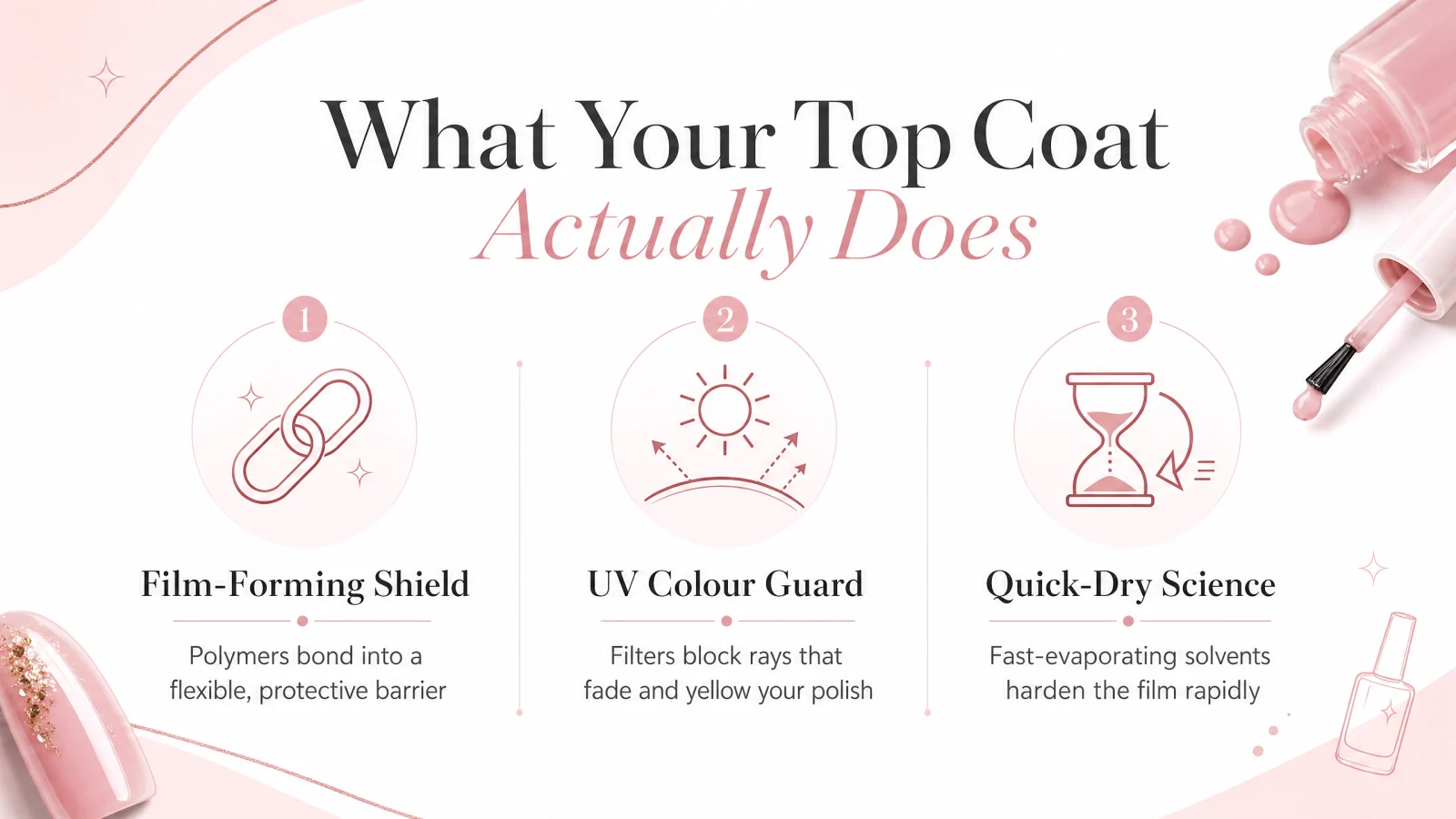
Aquí es donde se pone realmente interesante. Un top coat para uñas no es simplemente una capa de esmalte transparente. Es una fórmula cuidadosamente diseñada construida en torno a polímeros formadores de película, más comúnmente nitrocelulosa, que se extiende sobre la uña y luego se une a medida que los solventes se evaporan.
Lo que queda es una película transparente y flexible.
Esa película hace varias cosas a la vez. Sella el color debajo, fija el pigmento y crea una barrera física entre tu esmalte y el mundo exterior. Cada vez que tus uñas golpean un teclado, abren una lata o frotan una superficie, es la capa superior la que absorbe el impacto, no tu color.
La flexibilidad es fundamental en este caso. Un esmalte de acabado que se seque y quede demasiado rígido se agrietará con la flexión natural de la uña. Las mejores fórmulas están diseñadas para adaptarse al movimiento de la uña en lugar de resistirse a él, y precisamente por eso resistencia a chips varía drásticamente entre productos.
El ingrediente del filtro UV del que nadie habla
Muchos premium esmalte de acabado ahora incluye filtros UV, y esta es una de las características más infravaloradas en todo el mundo del cuidado de las uñas.
La luz del sol es implacable con el color de las uñas.
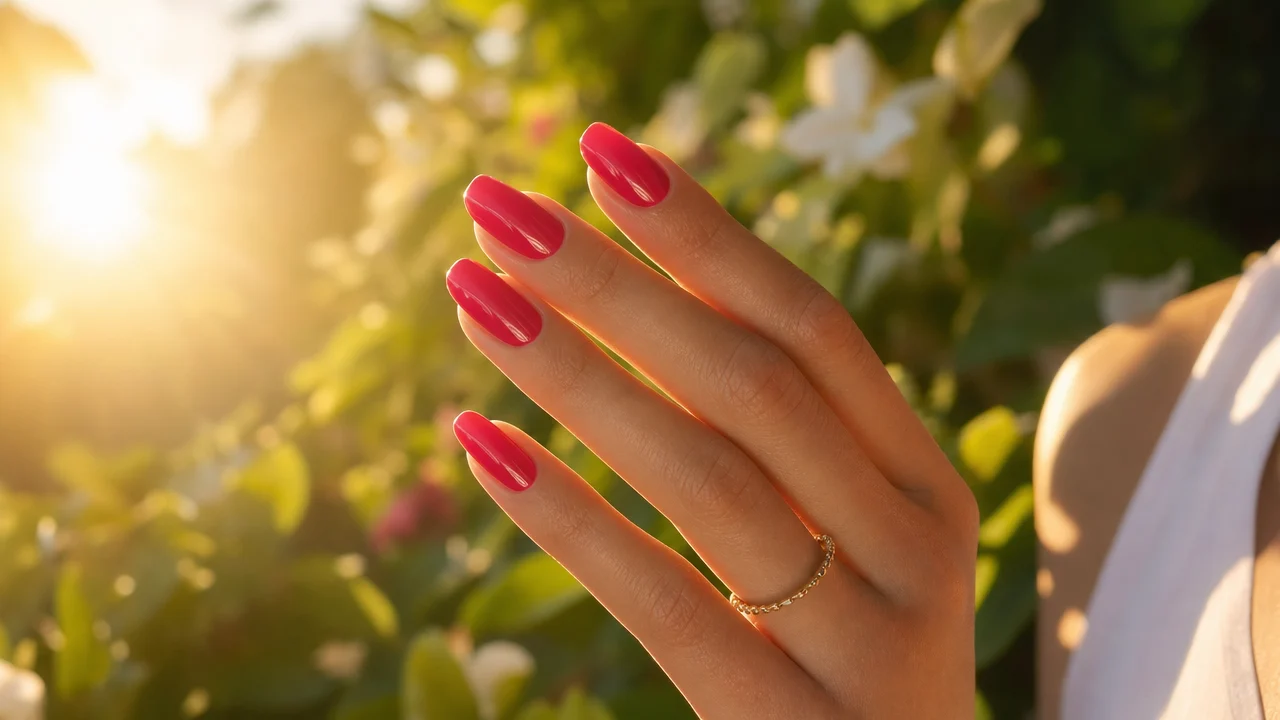
Los rayos ultravioleta descomponen las moléculas de colorante del esmalte de uñas con el paso del tiempo, lo que hace que los colores se desvanezcan, cambien o se vuelvan amarillentos. Una capa superior con ingredientes que absorben los rayos UV actúa como una especie de protector solar para tu manicura, ralentizando esa degradación y manteniendo el color intacto durante más tiempo. Si alguna vez has notado que un rojo intenso se vuelve ligeramente anaranjado tras una semana bajo el sol del verano, has visto los efectos del daño de los rayos UV en acción. El equipo de NailKnowledge señala esto como una de las principales razones por las que dos personas que utilizan el mismo esmalte pueden acabar con resultados completamente diferentes al cabo de diez días, incluso con una aplicación idéntica.
Y ya que estamos hablando de durabilidad de la manicura, vale la pena saber que la química del top coat no existe de forma aislada. La salud de la uña que está debajo también juega un papel muy importante. Cómo cuidar la piel alrededor de tus uñas afecta qué tan bien se adhiere y funciona cualquier producto a largo plazo.
Por qué las fórmulas de secado rápido se sienten como magia (porque de alguna manera lo son)
En esmalte de secado rápido es una de esas innovaciones de belleza que parece casi demasiado buena para ser verdad. Te pintas las uñas, aplicas la capa superior y, en cuestión de minutos, puedes usar las manos. ¿Cómo?
Todo se reduce a la ingeniería de disolventes.
Las fórmulas de esmalte de uñas estándar evaporan sus solventes a un ritmo bastante predecible. Las fórmulas de secado rápido usan una mezcla diferente de solventes, unas que se evaporan más rápido, atrayendo los polímeros formadores de película a su estructura final en una fracción del tiempo. Algunas también incluyen ingredientes que aceleran activamente el entrecruzamiento de las cadenas de polímeros, esencialmente acelerando el proceso de endurecimiento a nivel molecular.
El compromiso, históricamente, era que las fórmulas de secado más rápido a veces sacrificaban flexibilidad o durabilidad. Pero las modernas formulaciones de capa superior para uñas han cerrado en gran medida esa brecha, lo que explica en parte por qué la comunidad de belleza se ha involucrado tanto en comprender lo que hay realmente en el frasco.
El mundo del gel tiene su propia ciencia de capa superior
Si alguna vez has explorado Manicuras de gel BIAB o cualquier sistema de gel, sabrás que la situación de la capa superior ahí es una conversación completamente diferente. Las capas superiores de gel curan bajo luz UV o LED, activando una reacción fotoquímica que transforma los monómeros líquidos en una red polimérica sólida y entrecruzada.
El resultado es un acabado significativamente más duro y duradero que cualquier cosa que se pueda lograr con una fórmula tradicional de secado al aire.
Pero aquí también hay matices. Adhesión de capa superior en gel depende en gran medida de sobre qué se aplique, cómo se haya preparado la superficie y la compatibilidad entre los sistemas de base, color y capa superior. Mezclar marcas a veces puede alterar por completo esa química, lo que es una de las razones por las que tantos entusiastas de las uñas terminan investigando la ciencia en lugar de simplemente seguir las instrucciones de la etiqueta.
Mate contra brillante y la tendencia hacia fórmulas multifunción
La elección entre esmalte mate y una brillante no es puramente visual. Las fórmulas mate contienen partículas diminutas, a menudo a base de sílice, que dispersan la luz en lugar de reflejarla, creando ese acabado plano distintivo. Esas partículas también cambian sutilmente la textura y la sensación de la superficie.
Curiosamente, los acabados mate a veces pueden sentirse menos duraderos que las versiones brillantes porque las partículas que dispersan la luz interrumpen la película polimérica lisa.
Es una pequeña desventaja, pero vale la pena conocerla. Y la diferencia visual es lo suficientemente sorprendente como para que muchos entusiastas de las uñas mantengan ambos acabados en rotación, alternando entre ellos según el look que busquen esa semana.
La nueva ola de innovación de capa superior se trata de hacer más con un solo producto. Agentes fortalecedores, ingredientes hidratantes e incluso pigmentos que cambian de color se están incorporando directamente en las fórmulas de los esmaltes de acabado. La línea entre un esmalte de acabado y un tratamiento se está desdibujando rápidamente. Esto encaja perfectamente con el cambio más amplio hacia tendencias de uñas que priorizan la salud tanto como la estética, y está impulsando la categoría en direcciones que nadie predijo hace unos años.
Que Esto Significa Para Ti
- No todos los top coats son iguales. La calidad del polímero, la mezcla de solventes y los ingredientes añadidos varían enormemente entre las fórmulas económicas y las de primera calidad, y esa diferencia se refleja directamente en la duración de tu manicura.
- Protección UV en un top coat vale la pena buscar, especialmente en verano o si pasas mucho tiempo al aire libre. La decoloración se puede prevenir en gran medida.
- Secado rápido no significa menor calidad ya. Las fórmulas modernas han evolucionado significativamente y la evaporación rápida ya no significa automáticamente un acabado quebradizo.
- Las capas de gel y las capas superiores tradicionales son químicamente diferentes. sistemas por completo. Mezclarlos de forma casual podría afectar la adhesión y la durabilidad de maneras que no siempre son obvias hasta días después.
- La condición de tu uña natural debajo afecta cómo funciona cualquier capa superior, así que salud de las uñas y hábitos de cuidado de las uñas siempre son parte de la ecuación de la manicura.
¿Listo para que cada manicura dure más?
Descubre de lo que tus uñas son realmente capaces con el conocimiento y la guía adecuados.


El toque final que lo cambia todo
Durante años, los top coats han sido el producto más pasado por alto en la rutina de uñas. Pero la ciencia dentro de esa botella está haciendo un trabajo extraordinario, sellando el color, bloqueando los rayos UV, resistiendo las roturas y flexionándose con cada movimiento que hace tu uña.
El mundo de la belleza se está poniendo al día. Las conversaciones sobre ciencia del cuidado de las uñas se están haciendo más fuertes en todas las plataformas, y la capa superior finalmente está recibiendo el reconocimiento que merece. No es solo un acabado brillante. Es un escudo, un sistema de preservación y una pieza de ingeniería cosmética realmente inteligente en la que tu manicura ha dependido silenciosamente todo el tiempo.
Si esto ha despertado tu curiosidad sobre la ciencia de las uñas y la técnica de cuidado de las uñas, Era, tu entrenadora personal de uñas dentro de la aplicación MyNailEra, está lista para llevarte más lejos. Era ofrece retroalimentación personalizada adaptada a tus uñas y tus objetivos, y encontrarás tutoriales guiados de artistas de uñas galardonados que hacen que la ciencia se sienta accesible y los resultados sean realmente alcanzables. Descarga MyNailEra y deja que Era te muestre de lo que tu manicura es realmente capaz.