• Saltar a la navegación principal
  • Saltar al contenido principal
  • Saltar al pie de página
Conocimientos de uñas

Conocimientos de uñas

  • Cursos
  • MyNailEra
  • Libros electrónicos gratuitos
  • Base de conocimientos
    • Base de conocimientos
    • Pregunte a los expertos
    • Glosario
  • Noticias
  • Blog
  • Inicio de sesión
epitelio del lecho ungueal

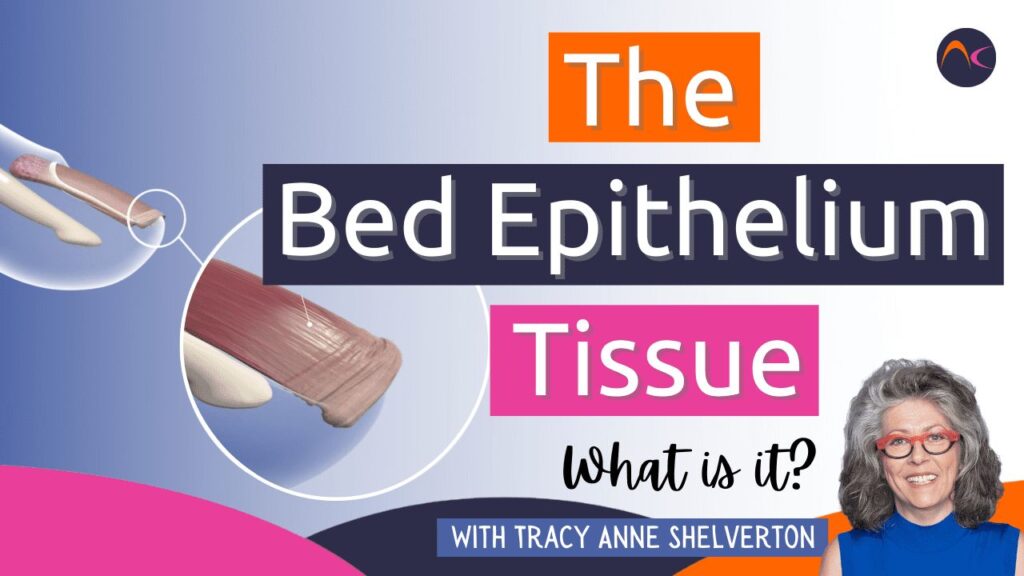
El tejido epitelial del lecho

20 de octubre de 2021 por Tracy Anne Shelverton

177 visitas

¿Le ha resultado útil este artículo?
Error al enviar la valoración

Between the nail plate and the nail bed is some elastic tissue called the bed epithelium – it’s kind of the same non-living tissue as the cuticle, only the cuticle is produced by the eponychium and the bed epithelium by the nail matrix. It’s as if the nail plate is intercalado entre la cutícula y el epitelio del lecho si se quiere.

When that bed epithelium remains elastic the nail plate can always transport along the nail bed. If for whatever reason the bed epithelium dries out, psoriasis, lichen planus, eczema, minor trauma, fungus, whatever – then the nail plate cannot travel along the nail bed and it really just won’t do it.

A good way to think about it is the nail plate is like a glacier – it moves in perpetual motion (nail plate cells are made 24/7 by the nail matrix) This motion only continues so long as there is no opposing friction underneath it – when friction happens it crumbles and breaks down. The bed epithelium makes sure there is no friction.

Doing anything else other than using a good quality oil and lotion, will only create more problems and solve nothing. Recover the natural nail plate first and afterwards you can use any product to enhance it and you will have a client for life!

It makes no difference if the dryness is a new problem or 10 years in the making, as long as the nail matrix still produces nail plate cells and bed epithelium you will recover the nail plate – it may not be perfect, but it will be there – oil and lotion is the key.

¿Le ha resultado útil este artículo?
Error al enviar la valoración

Categorised: Información general, Afecciones de las uñas, Servicios de uñas

Related Articles

Mixing Nail Brands and Lamps

A real-world case of mixing nail brands and lamps Mixing nail brands and lamps is a common temptation for professionals,…

Read More
Descamación de las uñas después del gel

Nails Peeling Off After Gel? Here’s What You Need to Know

If you’ve had gel nails applied and within a week they’ve started to lift, only to leave your natural nails…

Read More
Por qué arden las uñas al limar

Why Nails Burn When Filing: What’s Really Going On?

We get this question a lot from consumers, and honestly, it’s one we wish more people would ask. Why do…

Read More
rehacer o reequilibrar los realces de uñas artificiales

What to Look for When Redoing or Rebalancing Artificial Nail Enhancements

There’s something incredibly satisfying about removing old gel polish or giving artificial nails a good rebalance. It’s like hitting the…

Read More
¿Se debe cortar la cutícula?

Should You Cut the Cuticle? The Actual Science Behind It

If you’ve ever paused with a pair of nippers hovering over your nails, you might’ve wondered: should you cut the…

Read More
Onicomadesis y fiebre aftosa

Onychomadesis & Hand Foot Mouth Disease

What Nail Professionals, Parents & Carers Need to Know Autumn and spring bring more than just cosy jumpers and daffodils,…

Read More

Mejora tus conocimientos sobre uñas

Suscríbase a nuestro boletín
SUSCRÍBETE...

Copyright © NailKnowledge

Conocimientos de uñas

  • MyNailEra
  • Libros electrónicos
  • Quiénes somos
  • Cursos
  • Noticias
  • Blog
  • Boletín
  • Glosario

Políticas

  • Página de privacidad
  • Condiciones generales
  • Política de cookies

Ayuda

  • Póngase en contacto con nosotros
  • Conozca a los expertos
  • Pregunte a los expertos
  • Soporte del sistema
  • Preguntas frecuentes
Spanish
Spanish
English Portuguese Vietnamese