La descripción oficial de un “cosmético” es:
El Artículo 2 del Reglamento de Cosméticos del Reino Unido (UKCR – Anexo 34 del Instrumento Estatutario de Seguridad del Producto y Metrología) y el Reglamento de Cosméticos de la UE (Reglamento (CE) n.º 1223/2009) incorporan la siguiente definición de producto cosmético:
Se entenderá por “producto cosmético” toda sustancia o mezcla destinada a ser puesta en contacto con las partes superficiales del cuerpo humano (epidermis, sistema piloso, uñas, labios y órganos genitales externos) o con los dientes y las mucosas de la cavidad bucal, con el fin, exclusivo o principal, de limpiarlos, perfumarlos, modificar su aspecto, protegerlos, mantenerlos en buen estado o corregir los olores corporales.
(Esto es para el Reino Unido y la UE, pero es una descripción global)
Casi todos los productos que se incluyen en esta descripción están diseñados para su uso y contacto con la piel. Por supuesto, algunos de los cientos de ingredientes resultarán irritantes o causarán alergias en algunas personas. Esto puede aplicarse a cualquier sustancia que entre en contacto con nosotros, sea ingerida o inhalada. Las alergias alimentarias son solo un ejemplo. Es muy desafortunado cuando sucede, pero nadie sabe que sucederá hasta que sucede.
UN GRAN PERO aquí:
Para nosotros en la industria de las uñas, CADA recubrimiento de uñas que usamos (incluso el esmalte de uñas tradicional, aunque este es un ejemplo de bajo nivel) NO está diseñado para tocar la piel, ser ingerido o inhalado.

¡DEBEMOS saber esto y no esperar a ver si ocurre una alergia! ¡Las alergias son evitables! ¡No es una apuesta; es una garantía! Tocar la piel de cualquiera de las muchas maneras, inhalar o ingerir: ¡entonces no es un “si”, es un “cuándo”!
Cada ingrediente en los revestimientos de uñas de cualquier tipo debe ser aprobado para uso cosmético (siguiendo las Regulaciones Locales de Ingredientes Cosméticos). Cada etiqueta de revestimiento de uñas debe llevar la indicación “Evite el contacto con la piel”.
¡Y realmente significa esto! ¡No el pequeño toque que “no importa”! ¡No el pequeño exceso que se quita con una uña o un palito de naranjo! ¡Y, definitivamente, no un recubrimiento mal curado que pueda filtrarse o liberarse durante el limado o la retirada!ENLACE)
Vender muchos recubrimientos “profesionales” en el mercado minorista (incluido en línea) es peligroso. ¡El consumidor no entiende ni la ciencia, ni cómo trabajar de manera limpia y segura! ¿Lo haces tú, como profesional de las uñas? Desde julio en el Reino Unido y la UE, HEMA y di-HEMA han sido prohibidos de la venta minorista de productos por esta misma razón.
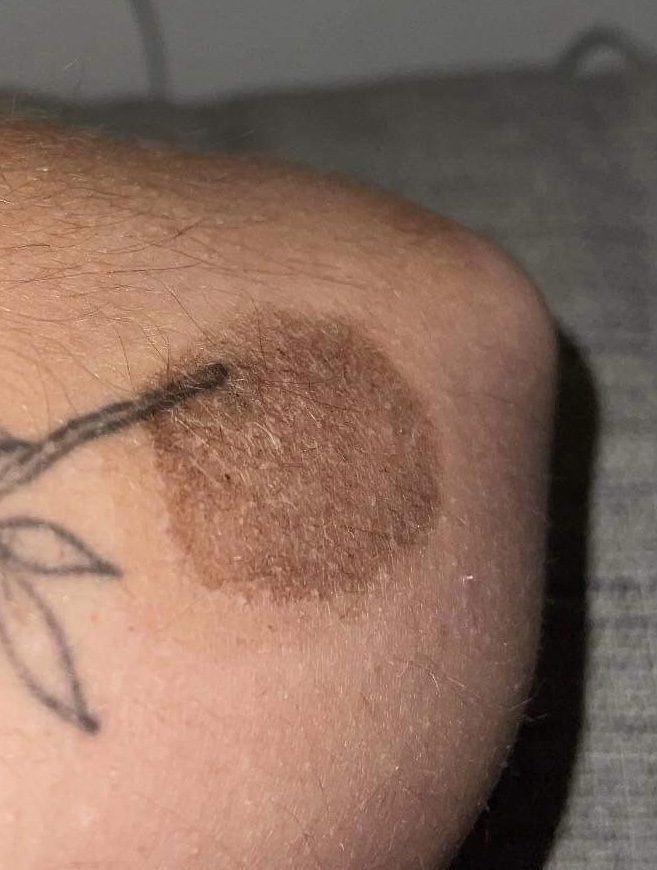
Solo para reforzar esta información, se incluye una foto del brazo de una profesional de uñas. Se derramó algo de ‘base de goma’ sobre el escritorio. Se limpió bien con alcohol (IPA, de hecho). No se notó rastro alguno. Luego se apoyó sobre él, y apareció esta horrible reacción de la noche a la mañana. ¡Y está MUY adolorido!
La marca es irrelevante pero el producto tiene un alto nivel de monómeros, específicamente HEMA, como es el caso.
Estamos viendo cada vez más alergias. No hay suficientes profesionales de uñas que puedan reconocer una posible alergia y están ‘diagnosticando’ todo tipo de información errónea. Una vez que existe una alergia, no hay vuelta atrás. El/los ingrediente/s deben ser identificados y evitados para siempre. ¡Esto puede resultar en el fin de una carrera o que un cliente no pueda usar nada más que esmalte de uñas para siempre!
Comprender la ciencia y creer en ella
Quemadura química por contacto con “base de goma” 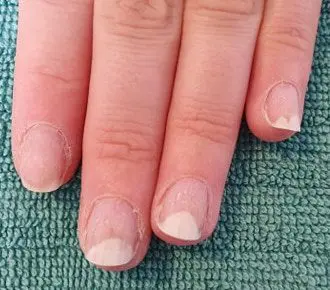
Onicólisis por recubrimiento ungueal 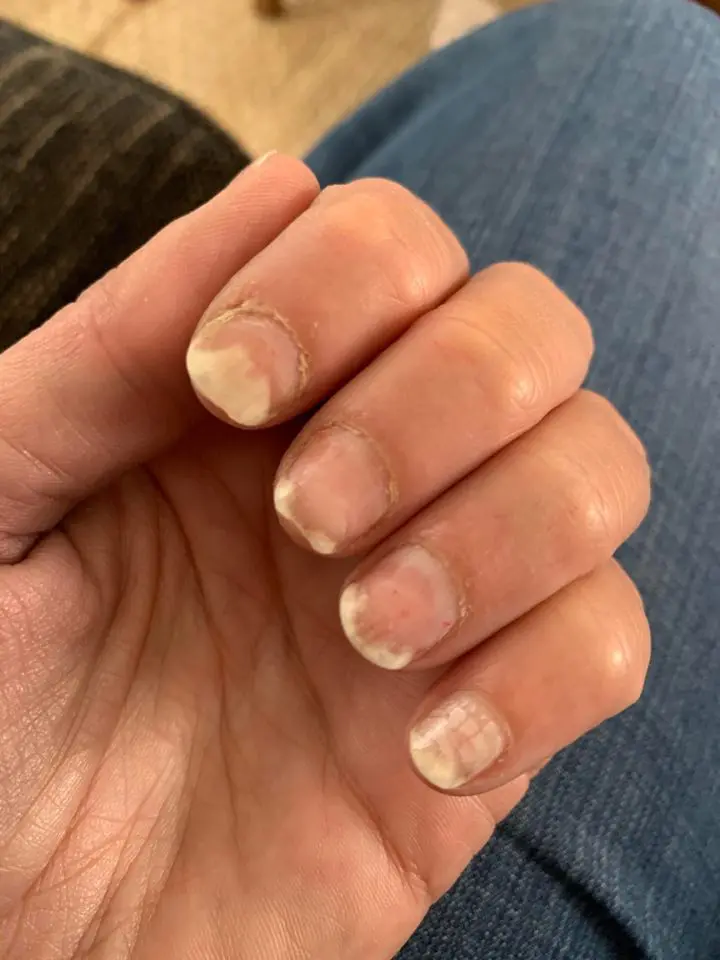
Onicólisis por recubrimiento ungueal 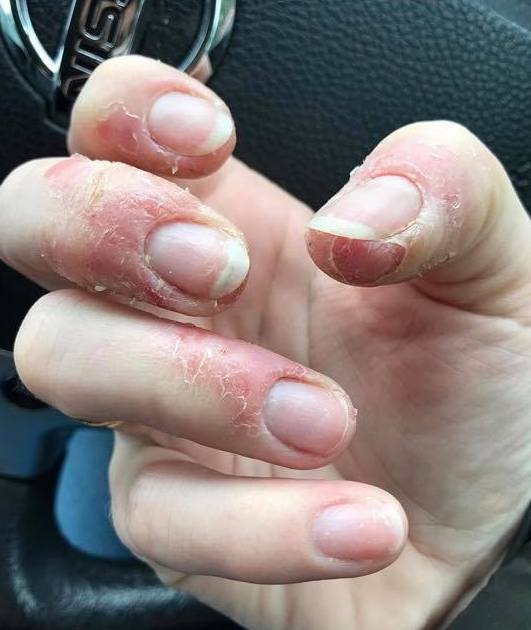
Dermatitis de contacto avanzada 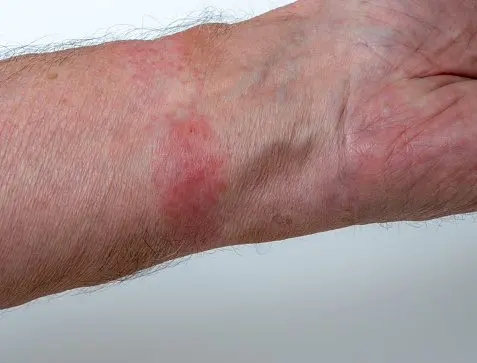
Reacción alérgica