• Saltar a la navegación principal
  • Saltar al contenido principal
  • Saltar al pie de página
Conocimientos de uñas

Conocimientos de uñas

  • Cursos
  • MyNailEra
  • Libros electrónicos gratuitos
  • Base de conocimientos
    • Base de conocimientos
    • Pregunte a los expertos
    • Glosario
  • Noticias
  • Blog
  • Inicio de sesión

Información general

Qué hay que tener en cuenta al rehacer o reajustar las uñas postizas

There’s something incredibly satisfying about removing old gel polish or giving artificial nails a good rebalance. It’s like hitting the refresh button on your client’s hands. But here’s a question we should all ask ourselves: Are we really checking everything we need to when redoing or rebalancing artificial nail enhancements? Because if not, we might be missing warning signs that can turn into serious nail health problems.

When you’ve soaked off that old product or filed back for a rebalance, it’s more than just prepping for a new design. It’s also your window of opportunity, your only real chance to check the client’s natural nails for any signs of trouble. And yes, there’s a lot more to see than just a bit of lifting or growth.

Inspecting the Nail Plate When Redoing Artificial Nail Enhancements

We tend to focus on the surface, rightly so. After all, that’s where we apply product, create shape, and show off our work. But when redoing artificial nail enhancements, we must look closely at the natural nail underneath.

Yellowing on the nail plate? That could be a red flag for onycholysis or inner nail plate damage.
Greenish discolouration? Classic sign of the beginning of a bacterial infection, Pseudomonas aeruginosa is the usual suspect here.
Chalky white patches? That’s potentially white superficial onychomycosis, a type of fungal infection that can easily be mistaken for nothing more than product damage.

Each of these conditions has one thing in common. They are contraindicaciones. That means you should no continue the service without further assessment or referral. But here’s the kicker: they all need to be treated differently, so identifying the right issue matters.

Why You Must Check Under the Free Edge During Nail Rebalancing

Here’s where things get even trickier. While most techs are trained to inspect the surface of the nail plate, far fewer routinely check underneath the free edge.

Now, I get it. It’s easy to skip. Clients are often in a hurry, we’re watching the clock, and if you’re working with a dark gel colour or builder gel, any issues underneath are effectively masked. But skipping this check is like only cleaning your kitchen counters and ignoring the mould in your fridge. Just because you can’t see it doesn’t mean it’s not there.

Let me show you why this matters.

Onycholysis and What It Means for Redoing Artificial Nail Enhancements

A colleague of mine once discovered significant onicólisis when removing her own artificial nails. Now, she knew her stuff, she just hadn’t realised the lateral nail walls were part of what we call the “guardian seals” of the nail unit. Once removed, it revealed widespread nail plate detachment.

What’s shocking is that the onycholysis had eaten up two-thirds of her nail, something you’d never spot from above. The yellow arrows she marked on the photo showed the detachment spreading right into the lateral nail fold. The nail looked completely normal from the top but was hiding a whole world of trouble beneath.

And guess what? That “world of trouble” becomes a five-star resort for bacteria if left untreated.

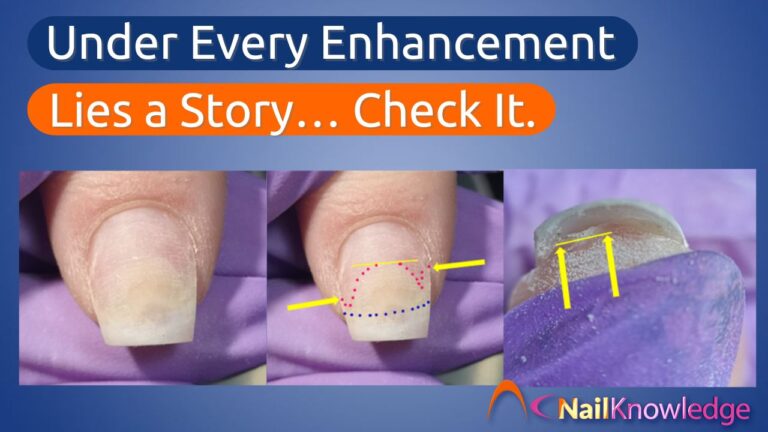
I want to show you something: Onycholysis

This is what one of my colleagues saw when she removed her artificial nail product – I forgive her for the missing lateral side walls at the time she didn’t realize they were one of the 4 guardian seals of the nail unit.

  • La línea amarilla muestra dónde está unida la lámina ungueal al lecho ungueal como debe ser.
  • Las flechas amarillas muestran dónde termina la onicolisis, pero también la cantidad de placa ungueal desprendida en el pliegue ungueal lateral.
  • El rosa señala el extremo proximal de la onicólisis.
  • Los puntos azules donde banda onicodérmica y el hiponiquio debe ser.
Onicólisis
Onicólisis – A detailed Look

Have a look at this picture of the nail unit from under the free edge. The yellow arrows and line show the detachment of the hyponychium and onychodermal band.

Onycholysis behind the free edge.

Now imagine if this colleague, was just doing an infill maybe from a dark blue or black hard gel or builder gel polish, no way she would see just how bad the onycholysis is a menos que mirara detrás del borde libre. La onicólisis consume casi 2/3rd ¡de la uña! Es espacio suficiente para que una familia de bacterias y otros patógenos malignos se tomen unas vacaciones durante 6 meses.

Missing the Signs? Here’s What Can Happen…

Infections don’t wait for your next appointment. If an area of onycholysis is left unchecked, it can create the perfect moist, dark, and protected environment for bacteria like Pseudomonas aeruginosa to move in and wreak havoc.

Infección bacteriana por Pseudomonas Aeruginosa
Pseudomonas Aeruginosa bacterial infection – almost resolved

One salon client here in the Netherlands dealt with such an infection for six months, despite following protocols and seeking proper treatment. That’s how long it can take to correct something that may have started out as a tiny patch of lifting or a crack in the product. And no, removing the nail plate wasn’t an option. Those kinds of extreme measures are for medical professionals, not nail techs.

And it’s not just bacteria. Fungal infections like onicomicosis superficial blanca can also take hold if water gets trapped under damaged enhancements. These often show up as powdery white patches, sometimes brushed off as “just dryness” or over-buffing damage, when in fact, they require completely different care.

Onicomicosis superficial blanca

When to Pause During Rebalancing Artificial Nail Enhancements

We all want to give clients beautiful nails, but beauty can’t come at the cost of health. If you see signs of infection or nail trauma, stop. Explain your concerns professionally, show them what you see (photos help a ton here), and refer them to a GP or podiatrist if needed.

Sometimes, infections or reactions aren’t your fault. Maybe the client whacked their hand, cracked the product, and let water seep in. Maybe they’ve developed an allergy to an ingredient. That’s not on you. But missing it? Ignoring it? That’s where things go wrong.

Education Is Power – Keep Learning

We don’t live in a static industry. Nail technology, medical knowledge, and hygiene protocols evolve all the time. What you learned five years ago might already be outdated. That’s why ongoing education is not a luxury, it’s a necessity.

When redoing or rebalancing artificial nail enhancements, you’re not just applying a pretty surface. You’re making health checks. You’re being a professional. You’re being a guardian of your client’s natural nail health.

So next time you prep for a refill or remove that last layer of gel, take a breath. Look under the free edge. Take your time. Ask yourself: “Am I seeing everything I need to see?”

Because prevention isn’t just better than cure, it’s the difference between flawless nails and six months of painful, stubborn recovery.

Let’s keep eyes open, keep learning, and above all, keep those nail beds happy and healthy.

Publicado en: Uñas de bricolaje que salen mal, Información general

Síntomas de la psoriasis ungueal en los clientes

Cómo identificar los síntomas de la psoriasis ungueal en los clientes con confianza y cuidado

As nail professionals, we often spend more time examining our clients’ nails than they do themselves. Whether you’re prepping for a manicure, applying gel, or giving a hand massage, you’re in a unique position to notice early warning signs of certain conditions, like nail psoriasis. It’s not uncommon for clients to be completely unaware of what’s happening under the polish. Spotting potential nail psoriasis symptoms in clients isn’t about diagnosing but about being observant and informed so you can offer the best advice and ensure their wellbeing.

So how do you recognise the signs of nail psoriasis without alarming your client, and when should you recommend they speak to a healthcare provider? Let’s explore the clues, what they mean, and how to navigate the conversation professionally.

Cómo reconocer las señales visuales de la psoriasis ungueal en el salón de belleza

Nail psoriasis can be tricky to spot because it shares symptoms with other nail conditions. Most commonly, it appears in individuals who already have psoriasis on their skin, but it’s not limited to them. Interestingly, only about 5 percent of people with psoriasis experience symptoms limited to the nail plate. However, those with psoriatic arthritis, especially in fingers and toes, often show signs in their nails as well.

This condition isn’t contagious. It doesn’t come from bacteria, fungi, or any outside source. Instead, it’s rooted in the immune system and often runs in families. That means it’s not a hygiene issue, which is an important distinction to make when explaining it to a client.

You’re not expected to identify medical issues. But spotting changes in the nails helps you offer guidance and shows your professionalism.

Cambios de color y textura de la superficie a tener en cuenta

When scanning your client’s nails during a service, there are a few tell-tale signs that may point to nail psoriasis symptoms in clients. One of the most recognisable is the “salmon patch.” These look like tiny drops of oil or blood trapped under the nail plate and tend to appear pinkish or reddish in tone.

Other discolouration might include patches of green, yellow, or brown. These could be mistaken for fungal infections or bruising, but if seen in combination with other symptoms, they may be signs of psoriasis.

Surface texture is another clue. The nail plate might develop small pits or indentations, like pinpricks scattered across the surface. These pits can be random or neatly aligned, giving the nails an unusual, rough appearance even though they haven’t been filed.

In more advanced cases, the nail may become thicker, appear chalky underneath, or start crumbling at the free edge. This brittleness is a result of weakened nail structure, not neglect.

Separación, sangrado y sensibilidad de las uñas

If you notice the nail lifting from the nail bed, beginning at the free edge and pulling back toward the cuticle, this condition is known as onycholysis. It’s a common issue for those with nail psoriasis and can open the door to secondary infections.

También puede ver hemorragias en astillapequeñas líneas negras en la dirección del crecimiento de la uña. Están causadas por la rotura de capilares en el lecho ungueal y suelen ser inofensivas, pero su presencia junto con otros signos refuerza la necesidad de remitir al paciente a un profesional médico.

Enrojecimiento en la lúnula (the half-moon at the base of the nail) and inflammation around the nail folds (known as paronychia) can also be part of the picture. These symptoms may make the nails feel sore or tender, which the client might casually mention in conversation without realising it’s a sign of something more.

Comunicar sus preocupaciones sin alarmarse

When you’re faced with several of these symptoms at once, it’s wise to gently suggest your client consult a dermatologist or podiatrist. The key here is tone. Avoid sounding alarmed or overly clinical. Instead, speak in calm, neutral language that keeps the focus on their health.

For example, you could say: “I’ve noticed a few changes in your nails that I think are worth showing to a dermatologist. It’s nothing to panic about, but it could be something like nail psoriasis, and they’ll be able to give you a clear answer.”

This approach respects the client, keeps their dignity intact, and shows that you’re looking out for their overall wellbeing, not just their manicure.

Prácticas seguras para la psoriasis ungueal en los salones de belleza

Despite its appearance, nail psoriasis is not caused by an infection, and it cannot be passed from one person to another. That means it’s completely safe to carry out nail services, as long as the client is comfortable and the nail bed is not open or actively inflamed.

In fact, well-applied artificial nail coatings can help protect the nail from further trauma. UV gel manicures, acrylic overlays, and other professional coatings are not harmful to the condition. Just be sure the nail isn’t lifting or damaged to the point of exposing the nail bed, as that could invite irritation or infection.

Consejos para el cuidado diario de las uñas de los pacientes con psoriasis ungueal

Although there is no cure, many clients benefit from practical, everyday care tips to manage nail psoriasis. Encourage them to keep nails short and the free edge smoothly filed. Suggest wearing gloves while doing housework or gardening, especially during colder months. A high-quality skin conditioner can help prevent cracking and dryness, which often aggravate symptoms.

También es importante llevar zapatos cómodos y que ajusten bien, sobre todo los que hacen ejercicio con regularidad. Para los clientes que estén dispuestos a someterse a un tratamiento médico, infórmeles de que existen terapias, desde cremas tópicas hasta inyecciones y tratamientos con luz. Esto puede ofrecer un alivio significativo, aunque los resultados tarden en aparecer.

Cuándo remitir a su cliente

Remitir a un podólogo si su cliente tiene:

  • Dolor, hinchazón, sangrado o sensibilidad alrededor de la uña
  • Uñas que huelen mal o parecen infectadas
  • Síntomas que no mejoran tras el autotratamiento
  • Cambios en varias uñas, especialmente si parecen simétricas
  • Antecedentes personales o familiares de psoriasis o afecciones cutáneas
  • Cualquier cambio inusual o preocupante del que no esté seguro

¿Cree que su cliente tiene una infección por hongos en las uñas? En realidad podría tratarse de psoriasis ungueal. Aprenda a detectar la diferencia, evite los diagnósticos erróneos y proteja la higiene del salón.

Reflexiones finales sobre cómo detectar los síntomas de la psoriasis ungueal en los clientes

As a beauty professional, you’re not there to diagnose enfermedades, but your role can still be powerful. By being informed about nail psoriasis symptoms in clients, you’re better equipped to support them with empathy, professionalism and the right advice.

Clients trust you not just for beautiful nails, but for your expertise. When you notice changes in nail texture, colour, or structure, you have the opportunity to guide them toward the care they might need, without judgment or alarm. That’s a mark of true professionalism.

Fungal Infection or Nail Psoriasis? Here’s How to Tell the Difference

¿Cree que su cliente tiene una infección por hongos en las uñas? En realidad podría ser psoriasis ungueal. Aprenda a detectar la diferencia, evite diagnósticos erróneos y proteja la higiene del salón.

Publicado en: Información general, Afecciones de las uñas, Servicios de uñas

¿Merece la pena el tratamiento de uñas con zumo de limón?

La tendencia del tratamiento de uñas con zumo de limón

We’ve all heard it: when life gives you lemons, use them on your nails. Okay, maybe not quite that phrase, but the idea of a tratamiento de uñas con zumo de limón has floated around beauty blogs and Pinterest boards for years. It’s one of those home remedies that promises brighter, stronger, healthier nails with ingredients from your kitchen. Sounds perfect, right?

But not so fast. While the allure of natural nail care is tempting, there’s a flip side to this citrusy trick that not everyone talks about. So, before you start dunking your fingers in lemon juice, let’s take a deeper dive into what this treatment actually does and whether it’s really worth the squeeze.

¿En qué consiste el tratamiento de uñas con zumo de limón?

Touted as a multi-purpose fix for stained, brittle, or fungal-prone nails, the lemon juice nail treatment is exactly what it sounds like: applying fresh lemon juice to your nails and cuticles, either directly, mixed with olive oil, or as a soak.

The appeal lies in the simplicity. Vitamin C? Check. Natural antiseptic? Yup. A kitchen staple that smells great? Absolutely. And, according to DIY devotees, it’s supposed to:

  • Elimina las manchas amarillas o la decoloración de las uñas
  • Brighten the overall appearance of the nail plate
  • Fortalezca las uñas débiles con vitamina C
  • Fight minor fungal infections thanks to citric acid

It’s easy to see why people give it a try. Plus, compared to pricey nail serums and treatments, it’s incredibly low-cost.

¿Funciona realmente?

Más o menos. El zumo de limón puede ayudar a levantar las manchas superficiales, como las de esmalte de uñas o fumar, gracias a su suave efecto blanqueador. Es como una pasta de dientes blanqueadora, pero para las uñas. Usado con moderación, sobre todo mezclado con aceite de oliva, puede incluso ofrecer un poco de hidratación y brillo.

There’s also something satisfying about rubbing a slice of lemon across your fingertips. It feels clean, zesty, refreshing. And sure, vitamin C is an essential nutrient that contributes to collagen production, which plays a role in nail strength.

But here’s the kicker. Just because vitamin C is in lemon juice doesn’t mean your nails will soak it up and start growing like wildflowers. The actual amount absorbed through the nail plate is likely minimal, and the benefit is more anecdotal than scientifically proven.

Los peligros ocultos del cuidado de uñas con cítricos DIY

This is where things get interesting. While the lemon juice nail treatment might seem harmless, there’s a surprising danger that comes with it, especially if you’re a sun-lover.

Have you ever heard of phytophotodermatitis? It sounds like a spell from Harry Potter, but it’s actually a very real and unpleasant skin reaction. Here’s how it works. Citrus juices like lemon or lime can linger on your skin. If you then go out into the sun, certain compounds in the juice chemically react with UV light, causing redness, streaks, rashes, or even painful blisters.

These reactions can take a day or two to show up, often looking like sunburn, eczema, or even second-degree burns. And get this. They can last for weeks. Not exactly the glowing beauty look you were going for.

Nail professionals and dermatologists warn that even small, raw amounts of lemon juice applied to the skin, especially around the nails and cuticles, can absorb and trigger this effect. So while you’re soaking your nails for beauty, you might be setting yourself up for a seriously uncomfortable experience if you go outdoors too soon after.

¿Vale realmente la pena un remedio natural con limón para las uñas?

It depends on your goal and your sun exposure. If you’re indoors, trying to gently remove manchas en las uñas antes de una nueva capa de esmalte, a one-time lemon juice rub might be fine. Especially if you rinse thoroughly and moisturise afterwards.

But if you’re looking for something to strengthen your nails or treat ongoing issues like hongos o fragilidad, you’re probably better off using treatments specifically designed for that purpose. Ones that don’t risk turning your skin into a rashy science experiment.

And definitely, definitely don’t sit by a sunny window or go outside right after a lemon juice soak. Trust us, those streaky rashes are not worth it.

Alternativas más seguras para aclarar y fortalecer las uñas

Si el tratamiento de uñas con zumo de limón doesn’t quite feel safe anymore, don’t worry. There are safer, more effective ways to give your nails the TLC they deserve:

  • Utiliza un lápiz blanqueador de uñas para dar brillo cosmético
  • Hidratar con aceites para cutículas that contain jojoba or vitamin E
  • Exfoliate gently with a nail buffer to remove surface stains

The best part? These methods won’t leave you nervously avoiding sunlight like a vampire in July.

Nuestro veredicto sobre el uso del zumo de limón para la salud de las uñas

Home remedies can feel comforting. There’s something empowering about using natural, familiar ingredients to care for ourselves. But it’s important to remember that “natural” doesn’t always mean safe or effective.

The lemon juice nail treatment might seem like a harmless beauty hack, but between the risk of phytophotodermatitis and the lack of strong scientific backing, it’s probably better kept as a once-in-a-while experiment, not a go-to nail routine.

A veces, lo mejor es dejar los limones para el té.

Publicado en: Información general, Acabar con los mitos

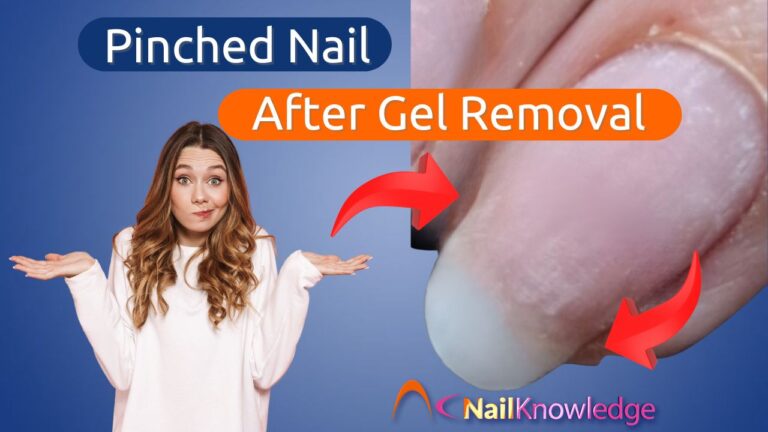
¿Uña pellizcada tras la eliminación del gel?

If you’ve ever looked down at your nails and noticed one of them narrowing oddly at the tip, sometimes even feeling a little tight or uncomfortable, you’re not alone. A question that comes up frequently in salons and online forums is: “What is this strange shape happening to my nail?” More often than not, it’s something called a pinched nail, and it’s especially common after gel removal.

This seemingly small change can feel alarming, particularly if it’s a new development. The good news? It’s usually reversible once you understand the underlying causes — and that’s exactly what we’re unpacking today. Whether it appeared suddenly or was masked by a product like builder gel o BIAB, a pinched nail after gel removal is your nail’s way of telling you it needs a little extra care.

¿Qué es exactamente una uña pinzada?

Una uña pellizcada se refiere a placa para clavos that appears to taper unnaturally at the free edge, creating a tight, sometimes concave shape that hugs the fingertip more than usual. It can look like the nail is being squeezed from the sides, hence the term pinched. Some people describe it as a claw-like or “sucked in” appearance at the tip, while others notice discomfort or even slight pressure under the nail.

It’s not always a cause for panic, but it is a sign that your nails are trying to tell you something.

Por qué a menudo se ve una uña pellizcada después de la eliminación del gel

This might sound familiar: you soak off your gel, buff lightly, and suddenly notice your nail looks… different. Tighter. Narrower at the tip. That’s the pinched nail showing up, and it’s incredibly common right after removing gel polish or gel overlays.

Why? Because gel products, especially those with a rigid structure like builder gels or hard gels, bond closely with the nail.

Eliminarlos implica una mezcla de acetona and physical filing, two things that, when paired, can wreak havoc on the nail’s natural moisture and structure. Acetone shrinks and dehydrates the nail plate, while filing thins it, especially around the edges. This combo weakens the sidewalls, and without that support, the nail can start to collapse inward, mimicking the look of a pinched nail. Even if you’ve been super careful, small bits of overfiling across several appointments can add up. And the thinner the free edge becomes, the more prone it is to curling or “pinching” once the gel is gone and the nail is left unsupported.

This is why many people notice a pinched nail only after gel is removed — not because it appeared suddenly, but because the gel had been masking the shape change all along.

Cómo la contracción del gel y la respuesta del hiponiquio pueden alterar la forma de las uñas

Behind the free edge of the nail plate lies the hyponychium, one of the important guardian seals, what you may not be aware of is a lot of BIAB’s or Builder Gels shrink when they cure, how much they shrink depends on the ingredients, but know that they all do to some extent and if you have filed into the lateral nail folds and weakened the nail plate the structure of the nail is compromised and the nail plate will change shape. The other part of the problem is due to the pressure on the free edge the hyponychium will be irritated and part of its defense when its irritated is to call in the troops and thicken a little, causing more pressure on the underside of the free edge. How do we know this? During the Covid-19 pandemic a lot of our consumers removed their own nail product as this couldn’t be infilled, so 2 things happened:

  1. Llenaron demasiado en un esfuerzo por eliminar el producto
  2. They couldn’t get their nails redone and el hiponiquio tuvo tiempo de recuperarse.

Fig 3a: Hiponiquio ligeramente elevado

Fig 3b: Three months into lockdown – the hyponychium is relaxed the nail plate is not damaged by filing into the lateral nail folds or roughing up the nail plate before reapplying the Gel.

Causas comunes de una uña pellizcada

Now that we’ve tackled the gel connection, let’s look at other factors that can trigger or worsen a pinched nail:

1. Exceso de perfil en las paredes laterales

Possibly the biggest offender. Over time, repeated filing — even gentle — can thin the sidewalls, especially when removing enhancements like Plexigel. Once those side areas lose structure, the nail’s free edge is left vulnerable and can start curling inwards as it grows.

2. Deshidratación por inmersión en acetona

Acetone, while great for product removal, pulls moisture from both the nail plate and surrounding skin. If you’ve ever felt that chalky, tight sensation post-soak, you know the feeling. Prolonged exposure, especially if followed by buffing, can temporarily (or permanently) warp the nail shape.

3. Anatomía natural o traumatismo repetitivo

Algunas personas son naturalmente más propensas a sufrir un pinzamiento de uñas debido a su lecho ungueal shape. But if it’s something you’ve only recently noticed, look at lifestyle habits. Typing, picking, tapping, or even frequent exposure to pressure under the free edge can distort growth over time.

4. Cambios en el hiponiquio

The hyponychium, the sensitive skin under the free edge, can shift or recede if irritated. This may happen due to overfiling, chemical exposure, gel shrinkage during curing or friction. When this skin detaches or becomes inflamed, the nail may grow in tighter, adding to that pinched look.

Cómo cuidar y prevenir una uña pellizcada

If you suspect you’re dealing with a pinched nail, don’t panic. It’s often reversible with a little care and patience.

1. 1. Tómate un descanso

Aléjate de las mejoras y da a tus uñas la oportunidad de recuperarse. Un mes sin geles ni quitaesmaltes permitirá que la lámina ungueal crezca con normalidad y recupere su forma natural.

2. Rehidratar, Rehidratar, Rehidratar

Nails need moisture just like skin. Apply a good quality nail & skin oil  behind the free edge at least 4 times a day. Rinse your hands a few times a day with an Allantoïne & Ureum rinse, this will help recondition the nail and surrounding tissue, and finish with a little of your favorite lotion, if it contains Allantoïne and Ureum that’s an added bonus and your nails and nail area will love you for it.

3. Minimizar nuevos traumas

During this recovery period, Keep nails trimmed short to prevent catching or bending. Be gentle when typing, opening containers, or using your nails as tools (just don’t!).

4. Evite limar las zonas finas

Skip the sidewalls entirely when buffing or shaping for now. Focus only on gentle surface smoothing if needed — and avoid pressure.

5. Seguimiento de patrones

If it’s spreading to other nails or worsening, it could signal an underlying health or nutritional issue. Keep an eye out and consider speaking to a pro if you’re concerned.

Reflexiones finales

A pinched nail might start as a subtle cosmetic change, but it’s often a message from your body or your habits, that something needs adjusting. Whether it’s overfiling, dehydration, trauma, product shrinkage or just the aftermath of gel removal, paying attention early can help you course-correct and avoid long-term damage.

¿El lado positivo?

Las uñas son resistentes. Con un buen plan de recuperación, cuidados y unos pequeños ajustes en tu rutina, la mayoría de las uñas pellizcadas pueden recuperar toda su fuerza y belleza.

Publicado en: Información general, Afecciones de las uñas

Arrugas y problemas de curado en las uñas del pulgar

Cuando se trata de conseguir un acabado impecable de las uñas, los pulgares pueden presentar a menudo retos únicos. Este artículo explora los problemas habituales de arrugas y curado incompleto que muchas encuentran en las uñas de los pulgares, centrándose especialmente en el proceso de aplicación y el papel del equipo de curado de uñas.

El papel de la aplicación desigual en las uñas arrugadas

Una de las principales razones de que se formen arrugas y de que el curado sea incompleto en los pulgares es la aplicación desigual de la capa de base. Los pulgares son más propensos a este problema debido a su superficie más ancha y plana en comparación con otros dedos, lo que puede dar lugar a una capa de producto más gruesa o irregular. Cuando la capa de base se aplica demasiado gruesa, especialmente en los laterales de los pulgares, puede impedir que la luz de polimerización polimerice eficazmente toda la capa. Este endurecimiento incompleto da lugar a un aspecto arrugado y puede afectar a la durabilidad del acabado de las uñas.

Buenas prácticas para la aplicación de la capa base en los pulgares

Para combatir estos problemas, es fundamental adoptar un enfoque específico al aplicar la capa de base a los pulgares. He aquí algunos consejos:

  • Aplicar finamente: Asegúrese de realizar una aplicación fina y uniforme por toda la uña, prestando especial atención a los laterales, donde el producto tiende a acumularse.
  • Solicitud por separado: Considere la posibilidad de aplicar la capa de base por separado en los pulgares, lo que permite centrar más la atención y controlar el grosor.
  • Técnicas de curado: Coloque correctamente los pulgares bajo la luz de polimerización, asegurándose de que todas las partes de la uña queden adecuadamente expuestas.

Las ventajas de una base espejada en el endurecimiento de uñas

La base espejada de una lámpara de polimerización de uñas está diseñada para mejorar la eficacia del proceso de polimerización. Así es como funciona:

  • Superficie reflectante: La base espejada ayuda a reflejar la luz UV o LED en la uña, especialmente en las zonas de difícil acceso, como los laterales y las puntas.
  • Incluso curar: Este reflejo garantiza una exposición más uniforme a la luz de polimerización, reduciendo potencialmente problemas como las arrugas y la polimerización incompleta.

¿Es necesaria una base espejada?

Ajustar tu técnica de aplicación de la capa base debería ser tu primer paso, y una base espejada puede servirte de ayuda adicional. Su eficacia, sin embargo, depende en gran medida del tipo de lámpara de polimerización que utilices y de los problemas específicos a los que te enfrentes con tus tratamientos de uñas. Si sigues teniendo problemas a pesar de haber optimizado tu técnica de aplicación, puede que merezca la pena considerar la incorporación de una base espejada.

Recomendaciones finales para las arrugas en las uñas

Quienes tengan problemas con las arrugas y el endurecimiento incompleto en los pulgares, deben centrarse inicialmente en perfeccionar la aplicación de la capa base. Esto implica aplicar capas finas y uniformes y garantizar una exposición adecuada a la luz de polimerización. Si los problemas persisten, explorar opciones de equipos avanzados, como una lámpara de polimerización con base de espejo, podría ser la solución que necesitas para conseguir acabados de uñas perfectos y duraderos.

Si conoce estos aspectos clave y realiza algunos ajustes estratégicos, podrá mejorar enormemente el aspecto y la durabilidad de las mejoras de sus uñas, especialmente en zonas difíciles como los pulgares.

Publicado en: Información general, Servicios de uñas

Uñas de gel que salen mal

Evite daños y reacciones alérgicas con consejos de expertos

Las mejoras en las uñas pueden ser bonitas, pero ¿qué ocurre cuando tu rutina de uñas causa más daño que bien?

The nail industry is booming, with countless enthusiasts turning to DIY nail kits at home. However, a recent social media post from Amy Brown Meyer highlights the potential risks of improper nail care. Amy shared her concerns about irritation after a home gel manicure, sparking a detailed and eye-opening response from Tracy Anne Shelverton, our nail expert.

Tracy’s response is a masterclass in understanding nail and skin health, emphasizing how improper techniques like overfiling or trimming (too much) skin can compromise the protective skin layers around your nails. This not only leads to irritation and swelling but opens the door to potential allergic reactions and or irritation caused by the chemicals in artificial nail products.

Cómo las uñas de gel DIY pueden dañar tu salud ungueal

Según Tracy, la piel que rodea las uñas forma parte de la precintos guardianes that protect your nails and nail units from pathogens and allergens. However, improper techniques like el perfilado excesivo, el recorte agresivo o el uso incorrecto de las herramientas puede debilitar esta barrera.

Cuando esto sucede:

  • La piel se irrita, lo que provoca enrojecimiento, hinchazón y respuestas inmunitarias.
  • Los alérgenos de los productos en gel no curados pueden penetrar en las capas dañadas de la piel, desencadenando potencialmente reacciones alérgicas permanentes.

Without the protective skin barrier, the compounds in artificial nail products especially those containing acrylates, can easily enter the body, causing both short-term irritation and long-term sensitivity.

Reacciones alérgicas a las uñas de gel: Riesgos y repercusiones a largo plazo

Un dato alarmante es que las reacciones alérgicas a los productos para las uñas pueden tener implicaciones que van más allá de la manicura. Tracy advierte de que los mismos compuestos que se encuentran en todos los productos para uñas artificiales que necesitan endurecerse también se utilizan en adhesivos médicos y cemento dental.

Lo que esto significa para usted:

  • Desarrollar una alergia ahora podría complicar futuros tratamientos médicos, como cirugía ortopédica o trabajos dentales.
  • Las reacciones alérgicas pueden provocar hinchazón, picor, enrojecimiento e incluso sensibilidad crónica a las sustancias químicas relacionadas.

Pasos para proteger las uñas y la piel

Si te gusta arreglarte las uñas en casa, hay formas de mantener la seguridad y proteger la salud de tus uñas:

  • Respeta tu barrera cutánea: Evite limar o recortar en exceso los pliegues de las uñas (la piel que las rodea).
  • Evite el contacto con la piel: Asegúrese de que los productos para uñas artificiales, especialmente los geles no curados, no toquen su piel durante la aplicación.
  • Dar tiempo a la piel para que se cure: Si nota irritación o enrojecimiento, deje de utilizar los productos y permita que al menos tres meses para que tu piel se recupere.
  • Consider Testing for Allergies: If you suspect an allergic reaction, consult a dermatologist for patch testing to identify allergens.
  • Infórmate: Invierte en una formación adecuada para aprender técnicas seguras de aplicación de uñas. Cursos y libros electrónicos como los que ofrece Conocimientos de uñas puede ayudarle a dominar el arte de mejorar las uñas sin poner en peligro su salud.

Una lección para entusiastas y profesionales de las uñas

The story of Amy’s irritated nails is a powerful reminder that beauty should never come at the cost of health. Whether you’re a DIY enthusiast or a professional nail technician, understanding the science behind nails, artificial nail products and skin is crucial for safe and beautiful results.

Preguntas frecuentes sobre las uñas de gel y las reacciones alérgicas

Q: Can gel nails cause allergic reactions?
Sí, las uñas de gel contienen acrilatos, que son alérgenos. Si estos entran en contacto con la piel, sobre todo si la barrera cutánea está comprometida, pueden desencadenar reacciones alérgicas como enrojecimiento, hinchazón o picor.

P: ¿Cómo puedo evitar la irritación de las uñas de gel DIY?
Evite perfilarse demasiado las uñas o recortar la piel. Asegúrese de que los productos de gel sin curar no toquen su piel durante la aplicación.

P: ¿Qué debo hacer si experimento irritación después de una manicura de gel?
Deje de utilizar todos los productos para uñas inmediatamente y permita que la piel se cure. Consulte a un profesional si los síntomas persisten, y considere la posibilidad de realizar pruebas de alergia si es necesario.

¿Quiere saber más?

Libera todo tu potencial con el Paquete completo NailKnowledgeel recurso definitivo para entusiastas y profesionales de las uñas.

With lifetime access to everything NailKnowledge has to offer, you’ll gain expert guidance and tools to achieve salon-quality nails while keeping your hands healthy and beautiful.

What’s Included in the NailKnowledge Complete Bundle?

  • 3 cursos completos
  • 18 lecciones
  • 35 Puntos de conocimiento
  • 6 libros electrónicos líderes del sector
  • El tuyo Perfil del artista/salón para mostrar su experiencia

Whether you’re just starting out or looking to deepen your expertise, this one-time purchase equips you with all the tools, insights, and resources to elevate your nail skills.

Sin cuotas continuas, sólo toda una vida de conocimientos.

Nailknowledge paquete completo

Proteja sus uñas, proteja su salud y conserve el mejor aspecto de sus manos de la forma correcta.

Publicado en: Uñas de bricolaje que salen mal, Información general, Salud y seguridad, Afecciones de las uñas

  • Página 1
  • Página 2
  • Página 3
  • Páginas intermedias omitidas ...
  • Página 30
  • Ir a la página siguiente »

Mejora tus conocimientos sobre uñas

Suscríbase a nuestro boletín
SUSCRÍBETE...

Copyright © NailKnowledge

Conocimientos de uñas

  • MyNailEra
  • Libros electrónicos
  • Quiénes somos
  • Cursos
  • Noticias
  • Blog
  • Boletín
  • Glosario

Políticas

  • Página de privacidad
  • Condiciones generales
  • Política de cookies

Ayuda

  • Póngase en contacto con nosotros
  • Conozca a los expertos
  • Pregunte a los expertos
  • Soporte del sistema
  • Preguntas frecuentes
Spanish
Spanish
English Portuguese Vietnamese