• Saltar a la navegación principal
  • Saltar al contenido principal
  • Saltar al pie de página
Conocimientos de uñas

Conocimientos de uñas

  • Cursos
  • Libros electrónicos
  • Cesta de libros electrónicos
  • Base de conocimientos
    • Base de conocimientos
    • Pregunte a los expertos
    • Glosario
  • Noticias
  • Blog
  • Galería
    • Galería Nail Art
    • Artistas de uñas
    • Únete a la élite
  • Inicio de sesión

Información general

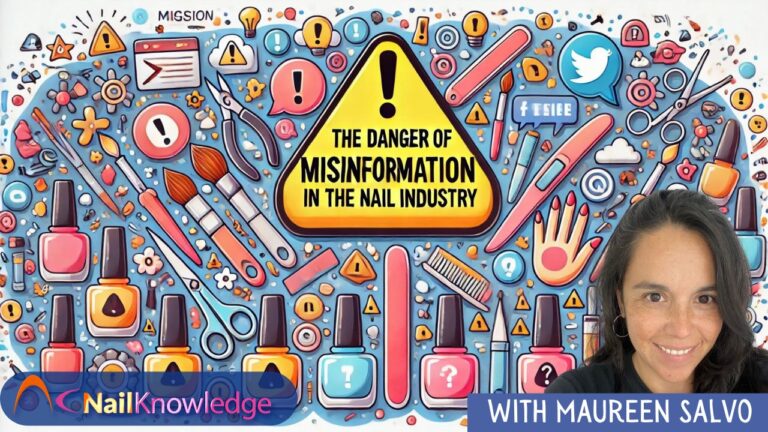
El peligro de la desinformación en el sector de las uñas

In today’s nail industry, misinformation is an increasing concern that affects both professionals and clients alike. Misguided practices not only lead to poor results but can also pose serious health risks. Now, more than ever, nail technicians need to rely on scientific evidence and reliable sources to ensure the safety and effectiveness of their treatments.

Cómo se propaga la desinformación en el sector de las uñas

En muchos países del mundo, incluido Chile, de donde soy, a menudo se transmite información inexacta a través de personas influyentes o formadores que carecen de una base científica sólida. Estos individuos, con grandes seguidores, perpetúan sin saberlo mitos y técnicas erróneas que perjudican en lugar de ayudar. En lugar de seguir investigaciones contrastadas, muchos profesionales se basan en afirmaciones obsoletas o sin fundamento, lo que contribuye a la desinformación generalizada.

Impacto global de los mitos de la industria ungueal

This isn’t an issue isolated to a single region—misinformation in the nail industry has become a global problem. With the internet and social media playing such a dominant role in how information is shared, nail professionals across the world are exposed to misconceptions. Whether it’s improper application techniques, the use of harmful products, or following unverified trends, these practices can compromise the safety of clients.

Consecuencias de seguir una información falsa

The impact of following inaccurate information can be serious. Using unsafe products or techniques can lead to issues like allergic reactions, infections, and long-term damage to the nails or skin. Beyond physical harm, the reputation of the professional and the broader nail industry suffers when clients are subjected to unsafe or ineffective treatments.

La responsabilidad de los profesionales de las uñas

To combat the spread of misinformation, it’s critical that nail professionals commit to continuous education. By seeking out evidence-based information and verifying facts with reliable, scientific sources, professionals can ensure they are offering safe and effective treatments. Consulting accredited educational platforms, industry publications, and attending certified workshops can help improve the standard of care within the industry.

Una industria más informada

La responsabilidad de detener el ciclo de desinformación recae en todos los integrantes del sector de las uñas.

Cuestionando la información, investigando a fondo y compartiendo conocimientos basados en la ciencia, todos podemos contribuir a una comunidad del cuidado de las uñas más segura e informada.

Sólo dando prioridad a los hechos sobre los mitos podremos avanzar hacia un sector más profesional y fiable que anteponga siempre la seguridad del cliente, y eso sólo lo conseguiremos si todos trabajamos juntos.

Publicado en: Información general, Servicios de uñas

Prohibición de TPO: Lo que deben saber los profesionales de las uñas

Es posible que haya oído hablar de la próxima prohibición del TPO en los productos de recubrimiento de uñas. Pero, ¿qué significa esto para los profesionales de las uñas?

Regulatory Update (UK 2026)

This article has been updated to reflect the confirmed UK regulatory timeline for Trimethylbenzoyl Diphenylphosphine Oxide (TPO). Under amendments to the UK Cosmetics Regulation, products containing TPO will no longer be permitted to be newly placed on the Great Britain market from 15 August 2026, with a further deadline of 15 February 2027, after which non-compliant products can no longer be made available for sale. These changes apply to cosmetic nail products supplied in both professional and retail settings.

Riesgos para la salud del TPO y próxima prohibición de los esmaltes de uñas curados con UV

La TPO, abreviatura de trimetilbenzoil difenilfosfina óxido, es un fotoiniciador utilizado habitualmente en los esmaltes de uñas de curado UV. Sin embargo, la Comisión Europea ha clasificado el TPO como un peligro potencial para la salud si está presente en el organismo en cantidades suficientes.

A partir de septiembre de 2025, será ilegal incluir este ingrediente en productos cosméticos para uñas across Europe, with the UK implementing similar restrictions from 15 August 2026, followed by a sell-through period allowing existing stock already supplied to the market to remain available until 15 February 2027. This ban applies to the manufacture and sale of new products, not to the use of existing ones.

In cosmetic regulatory terms, this means products containing TPO cannot be newly supplied or imported after the deadline dates. Nail professionals and retailers are not expected to immediately dispose of existing stock purchased before the restriction takes effect.

Esfuerzos de reformulación y alternativas al TPO en los productos para las uñas

Many reputable brands have already addressed this issue by reformulating their products to exclude TPO. There are several alternative photo initiators that provide similar results, ensuring that the performance of nail products is not compromised.

Uso seguro de TPO en los servicios de uñas hasta que entre en vigor la prohibición

It is important to note that this regulatory change does not represent a ban on gel nail products themselves. TPO is one of several photoinitiators used within UV and LED curing systems, and alternative ingredients are already widely available. The restriction reflects an updated regulatory classification rather than evidence that professionally used nail gel products suddenly pose a new safety risk.

For nail professionals, it’s important to know that you can still safely use products containing TPO until the ban takes effect. The levels of TPO used in nail services are far below those considered harmful.

Garantizar el cumplimiento de la marca y la seguridad del cliente en la transición a productos sin TPO

It’s a good idea to check with your brand about their plans regarding this new legislation. If your brand has not yet moved to TPO-free products, it might be time to reconsider your options.

There’s no need to worry your clients if you need to switch brands. Cosmetic ingredients are regularly reviewed to ensure safety, and your existing gel polishes will continue to be safe to use during the transition period.

Doug Schoon sobre la retirada de TPO: Impacto en la industria y consideraciones de seguridad

Doug Schoon, a respected scientist in the industry and expert at NailKnowledge, explains that removing TPO from nail products won’t necessarily affect their performance, though reformulation will be required. He notes that TPO can cause skin sensitisation or allergic reactions if not used properly, especially if skin contact isn’t avoided. However, when applied correctly by trained professionals, adverse effects are rare.

Schoon points out that most concerns about TPO stem from its use in non-nail-related industries, such as manufacturing printing inks and industrial adhesives. The decision to remove TPO from nail coatings isn’t due to issues with the nail products themselves, but rather as a precautionary measure for consumer safety.

Aconseja que las marcas pueden facilitar esta transición reformulando los productos con fotoiniciadores más seguros, ofreciendo formación sobre las técnicas de aplicación adecuadas para las nuevas fórmulas y etiquetando claramente las opciones sin TPO. Es probable que muchas marcas de uñas ya estén trabajando o hayan lanzado alternativas al TPO con un rendimiento similar. Los profesionales de la manicura deben ponerse en contacto de forma proactiva con sus proveedores de productos para entender estos cambios, sobre todo porque los clientes pueden preguntar sobre la seguridad y los métodos de aplicación de las nuevas fórmulas.

Understanding the TPO Ban and Cosmetic Safety Classification

The restriction follows the classification of TPO as a CMR Category 1B substance under European chemical legislation. Under cosmetic regulations, ingredients receiving this classification are automatically prohibited for precautionary reasons, even where normal cosmetic exposure levels are considered low. This regulatory mechanism is applied across many cosmetic ingredient reviews and does not indicate that compliant nail services performed using approved products are unsafe.

Preparing for the TPO Ban: Guidance for Nail Professionals and Brands

As the transition progresses, nail professionals are encouraged to contact their product manufacturers or distributors to confirm reformulation timelines and future compliance. Many brands have already introduced TPO-free systems, and further updates are expected across the industry ahead of the 2026 and 2027 deadlines. Staying informed and planning ahead will help ensure continued compliance without disruption to salon services.

Publicado en: Información general, Salud y seguridad, Servicios de uñas

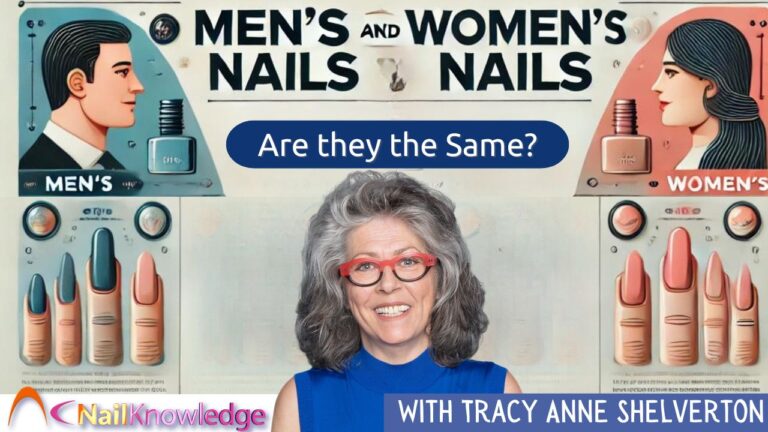
¿Son las uñas de los hombres iguales a las de las mujeres?

Do men’s nails differ from women’s, or are they essentially the same? How do you approach this significant demographic that represents half of the global population? Do you cater to male clients in your nail studio, or do you typically not address this group? Let’s explore what to expect when working with male clients.

Let’s see what you encounter when you have men as clients.

Men’s Natural Nails

At first glance, men’s and women’s nails look the same. But once you look at the details, there are some significant differences.

Razones evolutivas del mayor grosor de las placas ungueales masculinas

En uñas placa ungueal de un hombre, es más gruesa. En los hombres con una placa ungueal sana, el grosor medio es de 0,43 mm, mientras que en las mujeres es de 0,39 mm. La causa de esta diferencia puede encontrarse en la evolución, en la que los hombres solían realizar tareas físicas más pesadas que las mujeres.

En todos los primates, las uñas de los machos son más gruesas que las de las hembras.

  • Placa de clavos más dura

Además de ser más gruesa, la lámina ungueal también es más dura en los hombres.

  • Crecimiento más rápido

Another significant difference is the speed at which the nails grow. Men’s nails grow faster than women’s, except during embarazocuando el crecimiento es más o menos el mismo.

Espesor de la lámina ungueal: Factores clave para hombres y mujeres

Afortunadamente, los hombres también son humanos y, por lo demás, las uñas de hombres y mujeres son idénticas. He aquí algunas reglas básicas:

  • Si tienes una matriz corta, tendrás una placa ungueal fina.
  • El grosor de la lámina ungueal depende de la longitud de la matriz.
  • Cuanto más larga sea la matriz, más gruesa será la lámina ungueal.
  • Any disruption in the matrix will always result in an abnormal nail plate being male or female does not matter – disruption is disruption.

Curas para hombres: Cómo atraer clientes masculinos a su salón

That men can be a good target group for the nail studio is not new. However, getting those men into the nail studio is much harder than expected. Of course, it also depends on where your nail studio is located. In rural areas, it can be challenging to go against established prejudices, whereas in the city, it is becoming less unusual for men to wear nail coatings – at our local DIY store – the guys wear gel polish – Black and Yellow seems to be their favorite color mix and they love it when I say – man your nails look great!

Si quieres tener hombres como clientes en tu salón de manicura, aquí tienes algunas cosas que debes tener en cuenta:

  • A los hombres les gusta la claridad, así que asegúrese de que los precios y las descripciones de los servicios sean claros.
  • Men do not like delays; if the treatment takes half an hour, it cannot become 40 minutes, if you need 40 mins or 75 mins even – book it and charge for it.
  • Los hombres responden de forma diferente a los consejos sobre cuidados que las mujeres. Si le dices a un cliente masculino que cuide su pliegues ungueales cuatro veces al día con aceite de alta calidad, lo harán cuatro veces al día. (esto sólo funciona para los hombres que no dio a luz o no están casados también).
  • Men plan better ahead, so a manicure every three weeks is booked three months in advance. This makes men very suitable for subscription billing, making it easier for you to plan investments in the salon, or budgeting for special training.
  • Don’t forget the growth rate of nails in men is faster, so they may require more frequent appointments for in fills.
  • Men are willing to pay standard rates for treatments. If a manicure has a set price for 30 minutes, a man will pay that amount. If he finds it too expensive, he simply won’t become a client.

Por qué atraer clientes masculinos a tu salón de manicura es un negocio inteligente

¡Los hombres en el salón son divertidos!

Medir el ritmo de crecimiento de las uñas de cualquier clienta antes de un servicio es importante, pero en el caso de las clientas masculinas lo es más, simplemente porque sus uñas crecen a un ritmo más rápido, por lo que querrás que vuelvan al salón a tiempo.

It could be worth popping in to the local barber to talk about working together in some capacity,  it’s always good to hook up with other local businesses.

If I could do it all again, I would definitely invest in getting more men at my manicure table, It just makes good sense.

Publicado en: Empresas, Información general, Servicios de uñas

Placas de uñas grasientas y aplicación correcta del recubrimiento de uñas

Nail professionals often encounter challenges related to the longevity of acrylic and gel polish on clients’ nails. A common belief is that “oily nail plates” are the primary reason for lifting and poor adhesion of these nail coatings. However, there is some confusion surrounding the presence of oil in the nail plate and its impact on nail treatments. In this query, a nail professional seeks a scientific explanation regarding the composition of nail plates and the true causes behind lifting issues. We provide clarity, addressing misconceptions and emphasizing the importance of proper preparation and application techniques to ensure lasting results.

Consulta profesional sobre las placas de uñas grasientas

I keep seeing posts stating, ‘the client has oily nail plates, that’s why acrylic and gel polish doesn’t last.” My understanding is the nail bed doesn’t have oil glands so this isn’t possible. Clients can have creams or oils on their hands if they have not been washed correctly and the main reasons for gels and acrylics lifting is incorrect prep, not using correct ratios, mixing products or not using the correct lamp. Can you give me the correct scientific answer please?

Aceites naturales en las placas de uñas

Yes, you are mostly correct. I do disagree with one thing, it’s a myth that a lack of sebaceous oil glands in the nail bed means the nail plate can’t contain oil. The nail bed and underlying tissues also produce natural oils of differing compositions than the sebaceous glands, but these other tissues don’t make nearly as much oil as the sebaceous glands.  About 3-5% of the weight of a nail plate is due to natural oils.

Hair can contain twice as much.  I do agree with you that if the surface of the nail plate is properly cleaned and prepared, that nail coatings will stick well to even normally “oily nail plates”. Of course, very oily or wet nail plates can be a challenge, but these challenges can be overcome when the proper procedures/techniques are used.

Tratar los problemas de recubrimiento de las uñas

Don’t look for excuses for why the nail coatings don’t stick, instead, examine your own work carefully. Many of these problems are more likely related to improper preparation, improper application, improper cure and/or improper removal.  Examine each of these areas. Sloppy or incorrectly performed procedures may work ok for most clients, but these same procedures are more likely to cause problems with clients that have oily or wet nail plates.

Publicado en: Información general, Acabar con los mitos

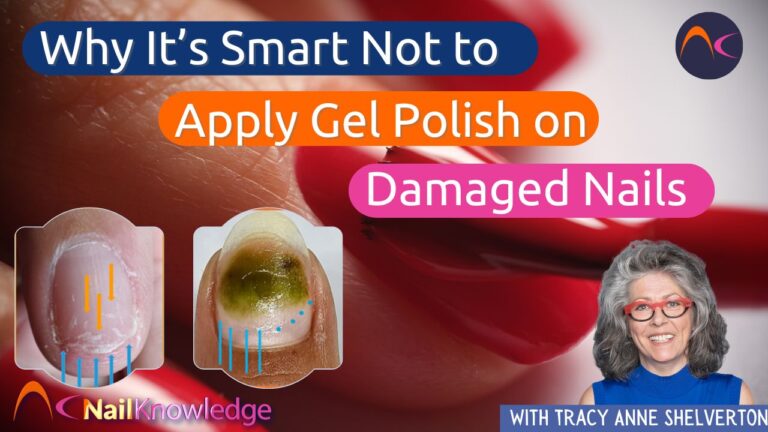
Por qué es mejor no aplicar esmalte de gel en uñas dañadas

Comprender los riesgos de volver a aplicar el recubrimiento de uñas sin permitir una recuperación adecuada

When your nails are damaged, it’s essential to let the nail plate recover before reapplying any nail coating. Failing to do so can lead to complications, making it important to choose the best plan of action for nail health and appearance.

Visualizar el impacto: Antes y después

Antes: Normal nail coating after about 10 days, featuring one layer of a Builder Gel for shine and a bit of stability.

Foto 1: Constructor Gel antes de un accidente

Después: All Builder In A Bottle arrancó la placa de la uña junto con el borde libre de la misma.

Foto 2: Placa ungueal dañada tras un accidente

La importancia de sellar la placa ungueal

If we look at photo 2 and the yellow arrows, we need first to seal the upper layers of the nail plate before applying more Gel Polish, and if we cannot do that a more permanent base coat will need to be applied, if we don’t do this we will create pockets for air, moisture or both under our gel polish

  • Air – causes lifting
Bolsas de aire en la placa ungueal

These pockets can trap various contaminants your nails come into contact with, such as dirt, bacteria, and moisture. If caught early, the product can be removed and replaced to prevent issues. However, if not addressed, trapped moisture can create an ideal breeding ground for opportunistic pathogens like Pseudomonas aeruginosa, leading to potential infections.

La humedad atrapada causa pseudomonas aeruginosa

 ¿Qué podemos hacer para evitar que surjan problemas?

Accidents happen, we can’t prevent those but our clients can help with good maintenance of their nail enhancements. A good quality oil helps prevent a build up of moisture and also helps to keep your nail and nail coating flexible and less prone to breaking or cracking, so a win win for your client but also for your salon, longer lasting gorgeous nails and happier clients.

¿Se puede recuperar la placa ungueal?

Podemos, hay un producto especial en el mercado hoy en día que está disponible en todo el mundo, tratamientos como este volverán a sellar las capas superiores de la placa de la uña de adentro hacia afuera y usted será capaz de volver a aplicar su producto de uñas artificiales sin ningún problema.

Without this product its smart to prep your nail plate with a good nail plate cleanser, and apply a semi-permanent nail product such as acrylic Liquid & Powder – Acryl has more than one advantage over a hard gel or an acrygel, it is designed to remain on a nail plate for longer periods of time and that’s important to know with this kind of nail plate damage, but if necessary, it can also be safely removed by thinning with a nail file and soaking off the last layer for optimal control and no extra damage to the nail plate.

Riesgos de aplicar potenciadores de uñas de corta duración en uñas dañadas

Placing a ‘short life‘ nail enhancement on a damaged nail plate is asking for problems and complications – something we would like to avoid in the nail salon. Doing so can create pocket lifting or a great home for opportunistic pathogens that are hanging around waiting to do their thing, recovery of the nail plate after such an infection takes considerably longer than recovering the original damage of the nail coating being ripped off.

It’s a good idea to inform your salon clients about the pros and cons of nail plate and nail unit maintenance with oils and lotions, its not just a sales pitch, your clients are paying you good money for nail coatings – having spent that money they also have a responsibility to keep them in the best possible condition and your responsibility is to provide a safe lasting service with minimal chance of causing infections.

VisiteDon’tProducto para uñasRemitirse a MD
Manténgase limpio y tome decisiones inteligentesDisfrazarse con productos para uñas artificiales sin un planIBX, Aceite y LociónSi la uña se infecta o cambia de color
Utilizar un producto semipermanente para facilitar la recuperaciónUse hard gel or an acrygel – removal is difficultAcryl -L&P 
Oil 4dd’s Aceite y loción de alta calidad 

Contraindicaciones: Si el cliente ya muestra signos de una posible infección, enrojecimiento, hinchazón o cualquier cambio de color no vuelva a aplicar NINGÚN producto para uñas artificiales. Consulte las directrices de higiene, a un especialista en el cuidado de las manos o póngase en contacto con un médico.

Publicado en: Información general, Lociones, pociones y abrillantadores, Gel UV

Comprender y utilizar correctamente los geles constructores

Many nail professionals misunderstand the true purpose of builder gels, leading to their misuse and a tarnished reputation. Builder gels are not just thicker gels to be layered on for added strength; they have specific applications and techniques that, when used correctly, can enhance nail structure and strength without causing adverse reactions.

Conceptos erróneos sobre la resistencia del gel de construcción

A builder gel is a high-viscosity (thicker) gel, but this does not mean that simply applying a layer will enhance the nail’s strength more than a regular gel.

¡Así es como muchos lo usan y luego se preguntan por qué están obteniendo reacciones de sus clientes que son para toda la vida y pueden significar que ya no pueden usar ningún tipo de gel!

El verdadero propósito de los geles de construcción: Crear estructura y fuerza

A gel constructor is formulated so you can build structures with it. For example, you can create a perfect apex on a flat nail. OR for a uña débil, you can build a ‘backbone’ to create maximum strength. This is a slightly thicker line down the centre of the nail to make the whole length stronger but still look aesthetically pleasing and not thick and ugly.

Un constructor puede hacer esto, ya que mantendrá su forma, a diferencia de un gel más delgado que sólo se ejecutará en las paredes laterales antes de curar. Esta es la forma de utilizar un constructor.

Los peligros de aplicar incorrectamente los geles constructores

Aplicar una capa gruesa pensando que eso creará la resistencia es un error. Tendrá un aspecto feo y grueso y es probable que no se cure correctamente por lo que el monómeros sin reaccionar can leach out or be released during shaping and removal causing an allergy. Game over!

La mejor manera de utilizar un constructor es aplicar primero una capa muy fina, a menudo llamada capa de deslizamiento, algunas marcas recomiendan curarla, mientras que otras recomiendan no curarla. A continuación, en esta capa delgada crear una forma que se necesita por la uña específica y la capa de deslizamiento ayudará a mantener en su lugar hasta el curado. Esta capa debe ser fina para que se cure correctamente. Otra capa estructurada puede ser necesaria y eso está bien.

Una aplicación adecuada evita reacciones adversas

En conclusión, no se limite a coger su constructor y aplicárselo como rutina. Utilícelo como se supone que debe ser utilizado, entonces hará el trabajo para el que está destinado y será mucho menos probable que cause una reacción.

Todas estas reacciones que se perciben como un problema con un comprador son erróneas. Si está utilizando un producto de buena calidad será la mala aplicación la que esté causando el problema masivo.

Publicado en: Información general, Lociones, pociones y abrillantadores

  • « Ir a la página anterior
  • Página 1
  • Página 2
  • Página 3
  • Página 4
  • Página 5
  • Página 6
  • Páginas intermedias omitidas ...
  • Página 30
  • Ir a la página siguiente »

Mejora tus conocimientos sobre uñas

Suscríbase a nuestro boletín
SUSCRÍBETE...

Copyright © NailKnowledge

Conocimientos de uñas

  • Libros electrónicos
  • Quiénes somos
  • Cursos
  • Noticias
  • Blog
  • Boletín
  • Glosario

Políticas

  • Página de privacidad
  • Condiciones generales
  • Política de cookies

Ayuda

  • Póngase en contacto con nosotros
  • Pregunte a los expertos
  • Soporte del sistema
  • Preguntas frecuentes
Spanish
Spanish
English Portuguese Vietnamese