• Saltar a la navegación principal
  • Saltar al contenido principal
  • Saltar al pie de página
Conocimientos de uñas

Conocimientos de uñas

  • Cursos
  • MyNailEra
  • Libros electrónicos gratuitos
  • Base de conocimientos
    • Base de conocimientos
    • Pregunte a los expertos
    • Glosario
  • Noticias
  • Blog
  • Inicio de sesión

Lociones, pociones y abrillantadores

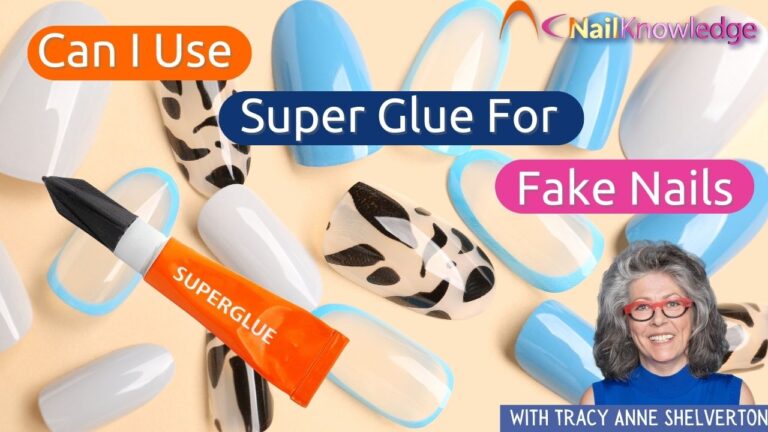
Los peligros de usar pegamento para uñas postizas

Los riesgos de usar pegamento para uñas postizas

In this blog, we explore the risks of using superglue for fake nails, like press-ons and fiberglass extensions, and explain why it’s crucial to steer clear of this practice.

In the pursuit of beautiful fake nails, some may resort to using unconventional methods, such as substituting super glue for proper nail adhesives. However, this practice can pose significant risks to both nail health and your overall well-being.

Efectos del pegamento en las uñas postizas o naturales

Although superglue is effective for specific purposes, it’s not intended for use on either fake nails or natural nails. Unlike nail adhesives formulated for cosmetics, superglue contains harsh chemicals that can result in adverse reactions and lasting damage.

Cuando se aplica a las uñas, el superglue puede:

  • Trigger Allergic Reactions: El superglue puede causar reacciones alérgicas graves, que pueden dar lugar a sensibilizaciones de por vida. Estas reacciones pueden manifestarse como irritación cutánea, hinchazón o incluso problemas respiratorios.
  • Cause Nail Coating Hardening: The rigidity of superglue can harden the nail coating excessively, resulting in damage to the delicate nail bed and surrounding tissues.
  • Inducir quemaduras químicas: La naturaleza reactiva del superglue puede provocar quemaduras químicas al entrar en contacto con la piel, lo que supone un riesgo importante durante la aplicación de la uña y hace casi imposible su retirada.

Los riesgos de sustituir la resina por pegamento en las extensiones de uñas

Cuando se trata de extensiones de uñas, sobre todo las de fibra de vidrio, una adhesión adecuada es crucial para la durabilidad y la seguridad. Aunque algunos pueden considerar el uso de superglue como sustituto de la resina, esto plantea varios riesgos:

  • Reacciones alérgicas: Las personas pueden experimentar reacciones alérgicas graves al superglue, poniendo en peligro no sólo la salud de sus uñas, sino también su bienestar general.
  • Daños en las uñas: Superglue’s adhesive properties can lead to excessive hardening of the nail coating, potentially causing irreversible damage to the nail bed and surrounding tissues.
  • Quemaduras químicas: La aplicación o retirada incorrecta de superglue puede provocar quemaduras químicas, causando dolor, molestias y daños en la piel a largo plazo.

Consejos para recuperar las uñas y prácticas seguras

Para salvaguardar la salud de las uñas y favorecer la recuperación de cualquier daño causado por el superglue u otros adhesivos inadecuados, tenga en cuenta los siguientes consejos:

  • Busque ayuda profesional: If you experience adverse reactions or nail damage, consult a qualified nail technician or dermatologist for proper assessment and treatment.
  • Evite los arreglos caseros: No intentes reparar las uñas con pegamento u otros adhesivos no autorizados. Pueden agravar los problemas existentes y provocar más daños.
  • Elija alternativas seguras: Opte por adhesivos de calidad cosmética específicamente formulados para uñas postizas, que garantizan la seguridad y eficacia durante la aplicación y el uso.
  • Dar prioridad a la salud de las uñas: Practice good nail care habits, such as keeping nails clean and moisturized, avoiding harsh chemicals, and giving nails adequate rest between applications.

To Summarise – Prioritise Nail Health and Safety

In the pursuit of beautiful nails, it’s crucial to prioritise health and safety above all else. Using superglue for fake nails, including press-ons and fiberglass extensions, poses significant risks that outweigh any potential benefits. By understanding the dangers associated with improper nail adhesives and following safe practices, individuals can maintain healthy, beautiful nails for years to come. Remember, when it comes to nail care, safety always comes first.

Publicado en: Información general, Lociones, pociones y abrillantadores

Explorando la brecha de calidad en los esmaltes de uñas

Esmaltes de uñas económicos y de lujo

The quality of nail polish can be assessed based on several characteristics, and it’s not solely determined by the price. Here are some factors to consider when evaluating the quality of nail polish:

1. Pigmentación: Un esmalte de uñas de alta calidad debe tener una pigmentación de color excelente, es decir, que cubra por completo con pocas capas. Los esmaltes más baratos pueden requerir varias capas para conseguir el color deseado.

 2. Longevidad: Quality esmalte de uñas should have good staying power and resist chipping and fading for an extended period. More expensive options often have better staying power.

 3. Aplicación suave: Look for nail polishes that apply smoothly without streaks or bubbles. High-end polishes tend to have better consistency.

 4. Secado rápido: Un buen esmalte de uñas debe secarse con relativa rapidez, reduciendo las posibilidades de que se corra o manche.

 5. Acabado: Los esmaltes de uñas tienen distintos acabados, como mate, brillante o metalizado. La calidad del acabado debe ajustarse a tus preferencias.

 6. Ingredientes: Some people prefer nail polishes that are free from harmful chemicals like formaldehyde, toluene, and dibutyl phthalate. High-quality brands may offer more “3-free” or “5-free” options.

 7. Reputación de marca: Las marcas de esmaltes de uñas establecidas y reputadas suelen invertir en investigación y desarrollo para crear productos de alta calidad. Su reputación puede ser un indicador de calidad.

 8. Precio: While price isn’t the only factor, more expensive nail polishes may contain better ingredients and have superior formulas.

9. Impacto del envasado: La calidad y el diseño del envase pueden influir en el valor percibido del esmalte y en el precio. Un envase de calidad superior puede contribuir a elevar el precio, mientras que un envase más sencillo puede resultar más económico.

10. Formulaciones vegetales: With growing consumer demand for eco-friendly and sustainable products, nail polish brands are increasingly offering plant-based formulations. These formulations often prioritise natural and renewable ingredients, providing an alternative for those seeking environmentally conscious nail care options.

Cómo comprar esmalte de uñas: Equilibrio entre calidad y presupuesto

It’s not always the case that budget-priced polishes are of lower quality, but they may not always meet the same standards as more expensive ones. It can be a bit of trial and error to find a budget-friendly nail polish that performs well for your specific needs. Ultimately, the choice depends on your preferences, budget, and the desired result. Some people find value in investing in higher-end nail polishes for special occasions or long-lasting wear, while others may be perfectly satisfied with budget options for everyday use.

Publicado en: Información general, Lociones, pociones y abrillantadores

Acabar con el mito del polvo para uñas acrílicas: la verdad que debes saber

¿No son todos los polvos acrílicos para uñas una mezcla de metacrilato de etilo y metilo? ¿No son básicamente todos iguales?

No, el polvo acrílico para uñas varía mucho y es un mito que todos sean iguales. ¿Quién habrá creado este mito? No es de extrañar, lo iniciaron quienes venden polvos de uñas de baja calidad. Por supuesto, quieren engañar a los profesionales de las uñas para que utilicen polvos de uñas de calidad inferior y/o incorrectos. No pueden ganar dinero si los técnicos de uñas utilizan el polvo que fue diseñado específicamente para su uso con el monómero de su elección. Así que las engañan haciéndoles creer que un "polvo es un polvo", lo cual es falso.

Composición del polvo de uñas y uso seguro del MMA

Los polvos para uñas son mezclas de polímeros y sus composiciones varían mucho. Por ejemplo, un polvo para uñas puede ser una mezcla de 10% polimetacrilato de etilo, que es la forma polimerizada del metacrilato de etilo, y 90% polimetacrilato de metilo. O podría contener lo contrario, polimetacrilato de etilo 90% y polimetacrilato de metilo 10%, y todas las combinaciones intermedias.

Cuando el metacrilato de metilo o MMA se polimeriza para hacer polvos para uñas artificialesEsto se considera un uso seguro y apropiado para este monómero. Esto NO es lo mismo que utilizar monómero MMA como componente líquido en un sistema. No recomiendo el uso de productos para uñas con monómero MMA porque es probable que provoquen daños en la placa ungueal.  

Liberar el poder de los polvos copolímeros personalizados para uñas

Es importante entender que los polvos para uñas suelen ser "copolímeros" personalizados. Un copolímero es un polímero que contiene dos tipos de monómeros en su estructura y no sólo mezclados. Los copolímeros son completamente diferentes de los que se crean mezclando físicamente dos tipos diferentes de polímeros. Los copolímeros son un polímero hecho de dos monómeros diferentes. Esto significa que los científicos expertos pueden crear cientos de polvos que contengan metacrilato de etilo y metilo, y cada polvo será diferente en cuanto a resistencia, durabilidad y facilidad de uso.

Hay una diferencia aún más importante, como comenté en el Volumen l de mi serie Cara a Cara, es MUY importante entender que los distintos polvos para uñas contienen cantidades variables de peróxido de benzoilo o BPO. La cantidad de BPO utilizada depende de la formulación del componente líquido monómero del sistema. Algunos líquidos monómeros requieren más BPO, mientras que otros necesitan menos. La concentración de BPO está generalmente entre 1-2%, sin embargo hay una diferencia MUY grande entre un polvo del clavo que contiene 1% contra un polvo del clavo que contiene 2% BPO. Un polvo de uñas con 2% BPO contiene el doble de BPO que un polvo con sólo 1%. 

El papel crucial del BPO en los polvos acrílicos para uñas

La cantidad de BPO en el polvo determina lo "completamente" que curará el monómero líquido. Si hay demasiado poco BPO, el producto no se endurecerá lo suficiente. Demasiado BPO, la mejora se curará en exceso. El curado excesivo puede provocar decoloración, fragilidad, agrietamiento, rotura, astillado y pérdida de adherencia o levantamiento.

Los peligros de un esmaltado de uñas poco curado

Los recubrimientos de uñas insuficientemente curados pueden tener una menor resistencia a las manchas o pueden ser excesivamente flexibles y presentar un mayor agrietamiento en las zonas de tensión cercanas al borde libre.

Sin embargo, hay un problema mucho más importante a tener en cuenta: los esmaltes de uñas insuficientemente curados son mucho más propensos a causar reacciones cutáneas adversas a las clientas y a los profesionales de la manicura. El endurecimiento insuficiente deja cantidades excesivas de monómero atrapado en el esmalte. Por lo tanto, el polvo fresco y las limaduras pueden ser ricos en monómero. El contacto prolongado o repetido con polvo y limaduras ricos en monómero puede provocar una sobreexposición cutánea, que es una de las principales causas de alergia a los esmaltes de uñas.

Niveles de BPO adecuados: Imprescindible para un curado adecuado de las uñas decoradas

Si utiliza el polvo incorrecto, es posible que no contenga la cantidad correcta de peróxido de benzoilo. En otras palabras, no utilice un polvo para uñas que contenga 1% de BPO con sistemas diseñados para su uso con un polvo de 1,5% de BPO, y lo contrario es cierto. Incluso una diferencia de medio punto porcentual en BPO puede dar lugar a una mejora del curado y a un mayor riesgo de irritación de la piel o alergias.

Esto es especialmente cierto durante la primera hora después de crear la mejora. Es entonces cuando el revestimiento contiene la mayor concentración de monómero no curado y el potencial de sobreexposición de la piel es máximo.


Publicado en: Líquido y polvo, Lociones, pociones y abrillantadores, Acabar con los mitos

¿Está relacionado el olor del líquido acrílico con la MMA?

El olor a líquido acrílico: disipar el concepto erróneo de la MMA

Have you ever been told that if your acrylic liquid has a strong smell, it must contain MMA (methyl methacrylate)? It’s a common misconception in the nail industry, but let’s debunk this myth and set the record straight.

Comprender el olor de los líquidos acrílicos

First and foremost, it’s essential to know that all artificial nail systems based on monomer liquids have some level of odor. Even those marketed as “odorless” still have a detectable scent. The intensity of the odor can vary between different marcas y productos, but the presence of an odor alone doesn’t indicate the use of MMA.

Why Odor Isn’t a Reliable Indicator

Suponiendo que un líquido acrílico contiene MMA basándose únicamente en su olor es una generalización temeraria. Algunos de los mejores y más eficaces ingredientes monómeros used in artificial nail liquids do have noticeable odors. Therefore, the presence of an odor doesn’t necessarily imply that the product is unsafe or contains MMA.

La importancia de las fichas de datos de seguridad (FDS)

To make an informed judgment about a nail coating product, it’s crucial to refer to its Safety Data Sheet (SDS), also known as MSDS (Material Safety Data Sheet). If a product contains MMA in a concentration greater than 1%, it must be listed on the SDS.

Señales de alarma y precauciones de seguridad

If you find that an SDS for a particular product is not readily available or easily obtainable, it’s a red flag. Nail technicians should exercise caution and prioritize safety. Using nail enhancement products without reviewing the SDS could mean missing essential information regarding proper and safe handling.

La verdad sobre los olores de los líquidos acrílicos y el contenido de MMA

While the smell of acrylic liquid can vary from one brand to another, associating a strong odor solely with MMA is a misconception. Always refer to the SDS for accurate information about a product’s composition. Your safety and the quality of your nail applications should never be compromised. Stay informed, stay safe, and provide the best nail services to your clients.

Publicado en: Información general, Lociones, pociones y abrillantadores, Acabar con los mitos

Nail Prep, ¡una talla NO sirve para todos!

Hay tantas preguntas en la línea de: I do the same nail prep for all but a couple of my clients keep getting chips or lifting.

La respuesta a ese problema está en la pregunta. Es la misma preparación para todos. Esto no funciona porque las uñas y el estilo de vida de cada uno son diferentes.

Esto comienza con una comprensión muy educada de la estado de las uñas y estilo de vida.

Crear bases sólidas para las mejoras y el esmalte de gel UV

Si uñas finas y/o débiles from previous damage, over buffing or naturally thin then that client may not be suitable for enhancements or UV gel polish. You cannot build a strong structure on weak foundations.

The client may need a course of treatment that strengthens the nail plate first. Most brands have a nail-strengthening treatment (this is different from a hardener as this will cause a different problem). Those that have keratin in an oil or one that penetrates the nail plate and strengthens from the inside.

Puede que un base de goma can work as it should be flexible enough to move with the weak nail and not against it. But a rubber base will not suit all clients and trying another brand will involve a new lamp so try using it much thinner or applying two thin layers. If you are using all the same brand it can sometimes work by putting a thin base de goma entre las capas de color para dar más resistencia. Si lo hace, tenga cuidado con el grosor de los bordes del revestimiento, ya que puede parecer desagradablemente grueso.

Muchos problemas de preparación de uñas implican la necesidad de una mayor adherencia

Esto tiene varias causas:

  • algunas uñas tienen cutícula much higher up the nail than expected, even as far as halfway up. Every particle of this must be removed gently for adhesion of any coating. With a cuticle remover tool (with experience) you will be able to feel what is skin and what is nail so start much further up the nail when removing but be careful not to dig into the nail plate and cause a ridge.
  • Every brand should have a cleanser and/or a dehydrator. You may use this on all 10 nails at the same time but sometimes, if the oil is especially oily, the answer is to dehydrate one nail at a time and apply the coating which will be applied to a perfectly dehydrated nail before natural oils and moisture have reached the surface again.

Some brands have additional adhesion enhancers such as a primer. Use this on the lifters but do not be tempted to use a product from another brand as it may not be compatible with the colour and will cause it to lift. Most primers need a minimal application and are allowed to air dry before moving on. Some may need curing. Always follow the instructions.

Las uñas excesivamente grasas plantean un reto. La solución, como ya se ha explicado, es deshidratarlas de una en una.

Some nails are too hard especially when they have no surface damage. This type of nail may need extra buffing with a slightly harder grit (lower grit number) than other nails as they need a bit of help with the adhesion as all adhesives penetrate into the top couple of nail layers for a good grip. If this is needed be careful to buff or file any more than necessary as the nail will eventually become thin and weak and cause a different problem.

Using UV gel polish is a skill that is more similar to applying enhancements than using regular nail polish (which many have lost or not learned the skill of applying as it dries too quickly for them)

Perfeccionar el ápice ungueal para unas uñas más fuertes

Every coating needs an apex for strength to avoid breaking or bending (which happens often to weak nails with a free edge and causes lifting) Always create an apex. This is usually over the onychodermal band but maybe a little nearer the base of the nail for a longer nail. If you are not skilled at creating an apex, when you have applied the second colour coat, turn the clients hand over parallel to the desk top which allows gravity to pull the uncured coating from the sides and it into a natural apex over the centre of the nail.

Cómo guiar a los clientes hacia la longitud y la salud de las uñas

Some clients want the nails to be longer than is practical for their lifestyle. If they are too long they will break often and need to be shorter. If a client breaks  nail and the nail plate is torn from the nail bed this is because the coating is too thick and strong! The coating must break before the nail does.

If a client insists on nails too long for them remind them you are the professional in this relationship and you are advising them for the health of their nails. Even a crack in the nail plate can let pathogens in and cause long-term problems.

Es su deber profesional hacer una evaluación precisa de las uñas de cada cliente y proporcionar el mejor tratamiento de preparación de uñas basado en sus conocimientos y habilidades y no culpar al producto.

Publicado en: Información general, Lociones, pociones y abrillantadores, Química del producto

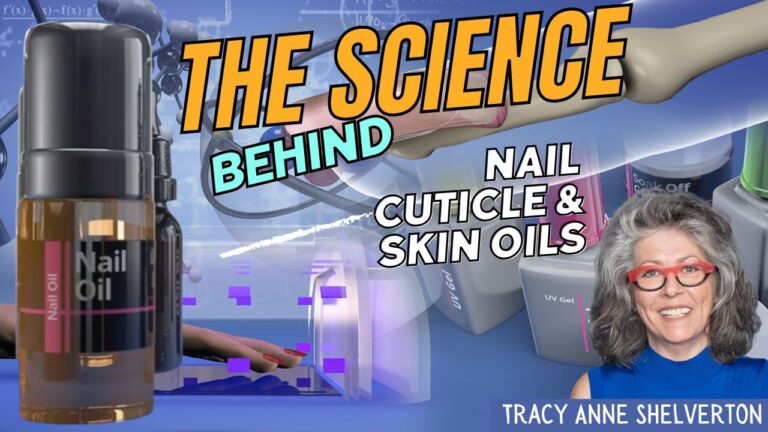
La ciencia detrás del aceite para cutículas de uñas

The science behind nail cuticle oil is as intriguing as it is essential for maintaining healthy, beautiful nails. This seemingly simple product plays a crucial role in nail & hand care routines, and its effectiveness goes beyond its pleasant scent and moisturizing properties. Let’s delve into the fascinating science behind nail & skin aceite.

Aceite e Hidratación de Cutículas y Piel

At its core, nail oil is all about hydration. The skin surrounding your nails, including the nail bed, is much more important than you might think. It acts as a natural barrier, preventing bacteria and other foreign invaders from infiltrating your nails’ matrix, the place where nail growth originates. The 4 Guardian Seals (cuticle (non-living tissue), 2 lateral nail folds and the hiponiquio) are the most, but not the only important skin barrier in and around the nail unit.

Ta Ciencia: Skin and nails require moisture to maintain their health and integrity. Dehydrated skin is more prone to splitting which creates microscopic openings for opportunistic pathogens but also to sunburn and other forms of UV damage. Hydration can help protect your skin from the sun’s harmful rays and possible negative effects of the UV LED lights that we use when curing our artificial nail products.

También es importante reconocer que todos tenemos nuestro propio conjunto de microbiomas únicos y que nos encontramos con microbiomas transitorios en y de otras personas que nos rodean, estos increíbles microbiomas son parte de nuestra protección, nuestra piel y uñas son su entorno vital, y también necesita ser protegido para que puedan protegernos.

Nail & Skin oil typically contains a blend of nourishing oils like jojoba, almond, and avocado but can also contain ingredients such as y-Tocopherol (a natural non synthetic form of vitamin E).  These oils are rich in essential fatty acids that not only penetrate the nail plate & skin but also provide a protective layer sealing in moisture and preventing dehydration that can lead to brittle nails and unsightly hangnails. Avoid nail & skin oils with synthetic preservatives, scents or colouring.

La ciencia es sencilla pero eficaz: Prevenir la pérdida de agua transepidérmica es la clave: uñas y piel hidratadas significan uñas y piel más sanas. Una piel y unas uñas sanas pueden defenderse de los microorganismos invasores.

Estimular la circulación sanguínea

Uno de los aspectos intrigantes de un aceite para uñas y piel es su capacidad para penetrar the nail plate, helping the bed epithelium (also non-living tissue) to remain flexible, ensuring proper transport of the nail plate along the nail bed but also helping to keep our very special nail beds in optimal condition. It’s important to remember that the nail bed has to reabsorb the old skin cells as they cannot sloth off, this makes the nail bed react quickly when all is not as it should be causing nasty problems such as hyperkeratosis which can also be painful.

La ciencia: When you massage nail & skin oil into your nails and skin, you’re not only delivering nourishing ingredients but also stimulating blood circulation. Improved blood flow means more nutrients and oxygen reaching la matriz de la uña, where new nail cells are formed. This enhanced circulation can help nail growth and make your nails appear healthier and more vibrant. It’s like giving your nails a mini spa treatment, all thanks to the science behind the oil.

Protección frente a factores de estrés ambiental

Our nails face numerous challenges in their daily lives, from exposure to harsh chemicals to the wear and tear of everyday activities. Nail & skin oil acts as a protective shield, guarding your nails against these external stressors.

La ciencia: The oils and ingredients in oil form a barrier just below the surface of your skin and penetrates your nails, shielding them from environmental pollutants, water, and chemicals found in cleaning products. Think of it as a protective force field for your nails, helping to prevent the penetration of water, damage and breakage. This protection is an essential aspect of nail care that often goes unnoticed but is crucial for maintaining strong, beautiful nails, but especially nails that are crowned with gorgeous artificial nail products or your favourite nail polish.

Flexibilidad y prevención de roturas

Las uñas deben ser flexibles para soportar las actividades diarias sin quebrarse como una ramita quebradiza. Aceite para cutículas contribuye a la flexibilidad y resistencia de las uñas, reduciendo el riesgo de rotura.

La ciencia: Un aceite de buena calidad puede penetrar en las placas de las uñas, haciéndolas más flexibles y menos propensas a partirse o romperse. Imagínatelo como si estuvieras fortaleciendo las uñas, ayudándolas a doblarse sin romperse.

Mejorar la adherencia del esmalte de uñas

Al igual que un la capa de base es esencial para un esmalte de uñas adecuado adhesion, oil plays a role in ensuring your manicure lasts longer. Your well-hydrated nails will provide a better surface for nail polish application, leading to smoother and more durable results.

La ciencia: When you apply nail polish or your favourite artificial nail product on hydrated nails, it adheres better and spreads evenly. This means fewer streaks and chips in your manicure. Oil’s moisturizing properties create an ideal foundation for your nail polish or artificial nail products, enhancing their longevity. It’s like providing a smooth, moisturized canvas for a masterpiece.

Don’t forget to wash your hands first and to use a good quality nail plate cleanser that removes surface minerals that can affect adhesion but also ingredients that remove surface oils and other fluids so that your product of choice adheres well.

Consejo: After soaking off your artificial nails or removing nail polish with nail polish remover your nails and skin will look dry because acetone or other solvents in the remover have broken down or removed your product, a dose of oil here now will help replenish any lost moisture and or oil in your nails and your skin.

Nutrir la belleza y la fuerza

The science behind nail & skin oil involves a harmonious blend of hydration, protection, stimulation, and strengthening. This unassuming product packs a punch when it comes to nail & skin care, working behind the scenes to keep your nails healthy, flexible, and beautiful. So, the next time you indulge in a relaxing oil massage, remember that you’re not just pampering your nails; you’re embracing the science that keeps them in top-notch condition. Your nails will thank you with strength, resilience, and a stunning appearance that lasts.

Publicado en: Información general, Lociones, pociones y abrillantadores, Química del producto

  • « Ir a la página anterior
  • Página 1
  • Páginas intermedias omitidas ...
  • Página 6
  • Página 7
  • Página 8
  • Página 9
  • Página 10
  • Página 11
  • Ir a la página siguiente »

Mejora tus conocimientos sobre uñas

Suscríbase a nuestro boletín
SUSCRÍBETE...

Copyright © NailKnowledge

Conocimientos de uñas

  • MyNailEra
  • Libros electrónicos
  • Quiénes somos
  • Cursos
  • Noticias
  • Blog
  • Boletín
  • Glosario

Políticas

  • Página de privacidad
  • Condiciones generales
  • Política de cookies

Ayuda

  • Póngase en contacto con nosotros
  • Conozca a los expertos
  • Pregunte a los expertos
  • Soporte del sistema
  • Preguntas frecuentes
Spanish
Spanish
English Portuguese Vietnamese