• Saltar a la navegación principal
  • Saltar al contenido principal
  • Saltar al pie de página
Conocimientos de uñas

Conocimientos de uñas

  • Cursos
  • MyNailEra
  • Libros electrónicos gratuitos
  • Base de conocimientos
    • Base de conocimientos
    • Pregunte a los expertos
    • Glosario
  • Noticias
  • Blog
  • Inicio de sesión

Lociones, pociones y abrillantadores

¿Confundido sobre el papel del pH en la adherencia de las uñas?

Let’s clear things up!
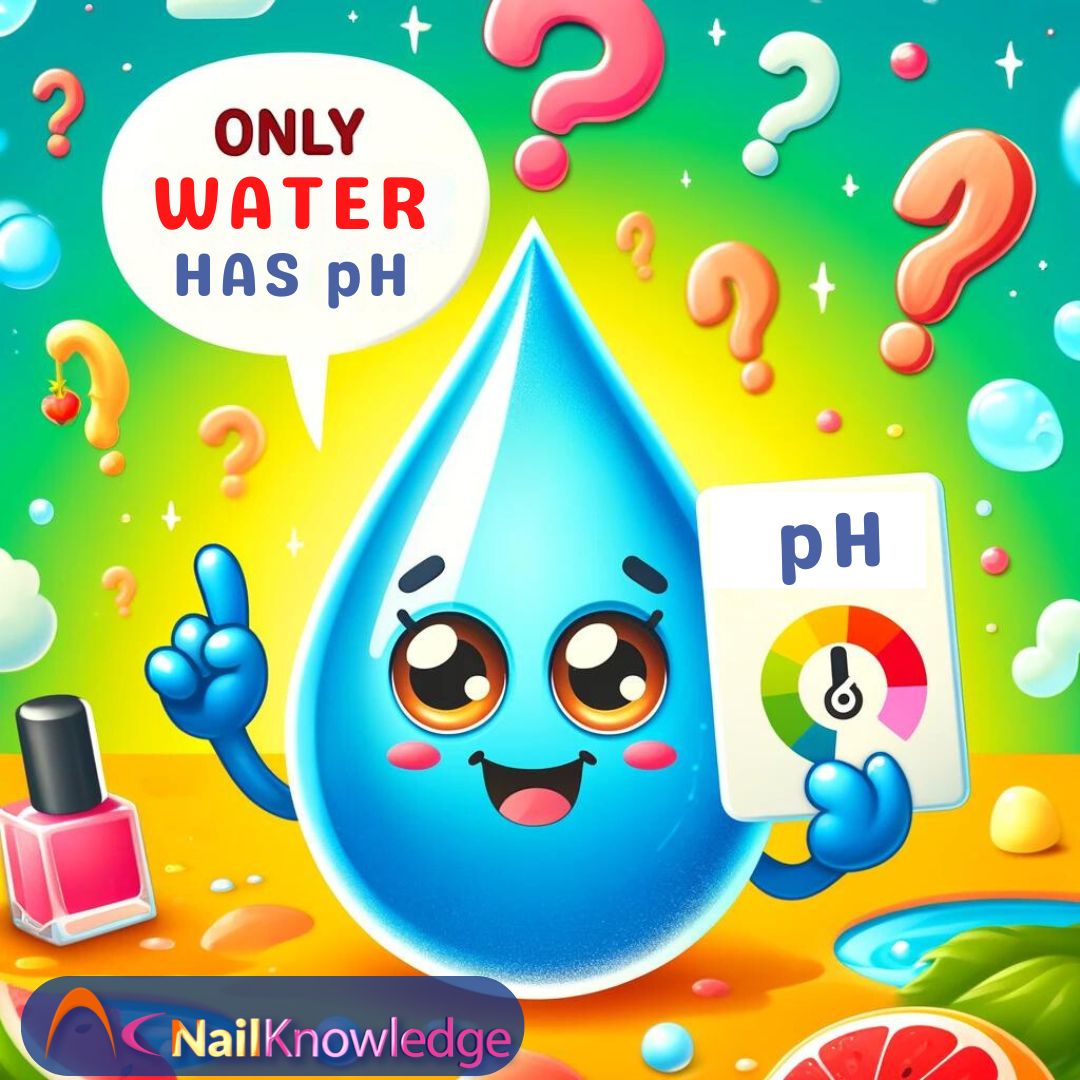
As I stated previously, only water has pH.

Exploración del papel del pH y los rayos UV en los promotores de la adhesión ungueal

When nail plate adhesion promoters are mixed with water, it is their effect on the water’s pH that is measured. When this is done the water can become alkaline, acidic or neutral. HEMA is well known for its adhesion promoting ability produces a neutral pH in water. Other adhesion promoters can make the water alkaline, some acidic. So, clearly pH does not determine if something is an adhesion promoter.

Yes, in some cases pH can play a small role, but so does UV. UV causes polymerization of the gel which certainly promotes adhesion, but UV has no pH. So, obviously, there is much more to adhesion, than pH.

Comprender la química de la adhesión del gel UV a las placas ungueales


La adherencia se debe a los ingredientes del gel UV. Muchos ingredientes son repelidos por la superficie de la lámina ungueal. Sin embargo, algunos son fuertemente atraídos por la superficie de la placa de la uña. ¿Por qué? Estos ingredientes crean enlaces químicos con la superficie de la placa de la uña, que es la razón de su atracción. Los enlaces químicos con la superficie de la placa de la uña es lo que causa la atracción y la adhesión, no el pH.

There are three main types of bonds, which I’ve listed in order of their adhesive strength.

1. Enlaces de hidrógeno son los más débiles, pero muchos de ellos pueden trabajar juntos para crear una cantidad significativa de fuerza de adhesión. Sin embargo, el calor, la humedad y la tensión mecánica pueden alterarlos fácilmente. Estos enlaces cambian constantemente de posición, por lo que no suelen ser muy fuertes, pero siguen teniendo una gran influencia y siempre desempeñan un papel útil.

2. Enlaces iónicos are stronger than hydrogen bonds and form by an attraction between opposite positive and negative charges on the ingredient and the nail plate’s surface. The strength of these can be influenced pH, in this way pH plays a small indirect role. These bonds, like hydrogen bonds can still be reversible.

3. Covalent bonds son, con diferencia, los más fuertes de los tres tipos de enlaces. Los enlaces covalentes son muy estables y resistentes a factores externos, por lo que proporcionan la adhesión más duradera y prolongada. Generalmente se consideran irreversibles, ya que requieren una energía significativa para romperlos.

Factores que influyen en la adherencia de los productos ungueales

Other factors also affect adhesion, such as how well the product can flow into small nooks and crannies, which is a property called “wetting”. This important property is improved by properly cleaning the nail plate. So, you can see many things, including the cleanliness and condition of the nail plate, affect adhesion. A well-designed nail product will often use a combination of these bonds to achieve the best possible adhesion.

Riesgos de las bases de gel ácidas en los productos para uñas

What about the so-called “acidic gel bases?

Algunos de ellos contienen ácido acrílico. Este ingrediente utiliza estos tres tipos de enlaces para mejorar la adherencia, aun así NO recomiendo utilizar productos que contengan este ingrediente. Es un fuerte irritante de la piel y probablemente es responsable de muchas reacciones alérgicas en la industria de las uñas. De hecho, estimo que es más probable que cause problemas en la piel que el HEMA.

Atención Evite el contacto con la piel y nunca lo utilice sobre una uña rota o agrietada.

Publicado en: Información general, Lociones, pociones y abrillantadores, Acabar con los mitos, Química del producto

Lámparas UV/LED para uñas: Comprender las sensibilidades y reacciones de los clientes

UV and LED curing lights have become indispensable tools for achieving long-lasting, glossy manicures. However, some nail technicians encounter clients who report adverse reactions during the curing process, raising concerns about potential allergies to these lights.

El objetivo de este artículo es desmitificar la cuestión, aclarar la naturaleza de estas reacciones y explorar cómo es más probable que estén relacionadas con los productos utilizados y las sensibilidades individuales que con una alergia a la luz en sí. Al comprender las causas subyacentes y aplicar prácticas conscientes, los profesionales de las uñas pueden mejorar la seguridad y la comodidad de las clientas, garantizando una experiencia positiva para quienes disfrutan de las ventajas de la manicura con gel.

Consideraciones clave para las sesiones de endurecimiento de uñas con UV/LED

When clients experience discomfort or adverse reactions during a UV or LED nail curing session, it’s crucial for nail technicians to understand the possible underlying causes. While it’s uncommon for individuals to be directly allergic to UV or LED light, various factors related to the curing process can trigger reactions. Here are four key points to consider that can help professionals address and mitigate these sensitivities effectively.

La fotosensibilidad en el cuidado de las uñas

Fotosensibilidad: Some individuals have conditions that make their skin unusually sensitive to UV light, such as polymorphic light eruption or lupus. These conditions can exacerbate skin reactions to UV exposure, whether it comes from the sun or a UV nail lamp. Recognizing these conditions can help nail technicians provide safer, more accommodating services to clients with these sensitivities.

Repercusiones de las reacciones fototóxicas en los tratamientos de uñas

Reacciones fototóxicas: Ciertos medicamentos y productos tópicos pueden provocar reacciones fototóxicas, en las que la piel se vuelve más sensible a la luz UV. Esta mayor sensibilidad significa que, si bien la luz solar general puede no provocar una reacción, la exposición concentrada de una lámpara de uñas podría desencadenar una respuesta adversa. Comprender estos factores desencadenantes es esencial para gestionar el cuidado del cliente durante los tratamientos de uñas.

Distinción de las reacciones alérgicas en las mejoras de las uñas

Reacciones alérgicas: Misinterpretations can occur when clients react to nail treatments. Often, what is believed to be a reaction to the UV/LED light is actually an allergic response to ingredients in gel polishes or acrylics. These reactions are particularly likely if the nail products are not fully cured, resulting in prolonged skin contact with reactive substances. Educating clients about these potential allergens can help prevent misdiagnosis and ensure appropriate measures are taken.

Reconocer la sensibilidad al calor durante el curado UV/LED

Sensibilidad al calor: Discomfort or a burning sensation during UV/LED curing can often be attributed to the heat emitted by the lamp, especially if gel layers are too thick or the lamp’s intensity is too high. Understanding and adjusting the curing process to accommodate clients who are sensitive to heat can enhance the overall experience and safety of nail treatments.

Mayor seguridad en los tratamientos de uñas con UV/LED

So, while it’s not an allergy to the light per se, there are various factors related to UV/LED exposure during nail treatments that can cause discomfort or reactions. It’s always a good idea to ensure proper application techniques and to use high-quality, hypoallergenic products to minimize these issues and avoid removing essential skin layers with an efile, it takes away the last valuable layer of skin that is ultimately important for your clients wellbeing.

If a client has a known photosensitivity or skin condition, or is undergoing chemotherapy or immunotherapy its not smart to continue and it is best to recommend alternative nail treatments that don’t require UV curing. There are plenty of other options available you just have to be prepared to look and learn new techniques.

La importancia del discernimiento en la selección de productos para las uñas

In a world where artificial nail products appear too beautiful to be problematic, it’s important to recognize when to say no, understand the reasons behind it, and offer alternative options.

Publicado en: Lociones, pociones y abrillantadores, Afecciones de las uñas, Servicios de uñas, Gel UV

Cianoacrilato: Su doble función como pegamento y gel en los productos para uñas

Terminology can often become a point of confusion among professionals and clients alike. A common query we encounter pertains to the use of the term “gel” in relation to products containing cyanoacrylate. A compound traditionally recognized as a type of glue. This issue underscores a broader challenge in the industry: understanding the distinctions and overlaps between different product categories.

Este artículo pretende aclarar estos matices, explorando cómo un ingrediente puede encajar en múltiples definiciones de producto, y por qué un lenguaje preciso es crucial en la industria de la belleza para mejorar la profesionalidad y reducir los malentendidos.

Usos versátiles de los cianoacrilatos en la industria de la belleza

Cyanoacrylates are monomers from the acrylic family that are used for many purposes in the beauty industry. For instance, they are used as tip adhesives for nails, used to adhere rhinestones and other accessories to nails, they’re also used to create fiberglass and silk wraps, and they are regularly used as eyelash adhesives.  They are also sold as “no-light nail gels” and for so-called “dip” systems. 

In all cases, they are considered adhesives, since they stick to the nail plate and more commonly they are called “glue”.  Cyanoacrylates can be thin and watery or thickened to a gel-like consistency.  Some mistake the term “gel” to mean only UV-curing gels. UV curing gels are called “gels” because of their gel-like consistency. In other words, not all gels are UV-curing.  The word “gel” describes the consistency of the product, not its chemistry or composition.

Hair gels for instance are thickened to a high viscosity, which is why they’re called gels. Therefore, it is entirely proper to refer to a thickened cyanoacrylate as a gel.  Nail professionals should understand that not all gels are UV curing gels. That’s why when referring to UV gels, they should not just be called “gels”- which is an overly simplistic name. 

La importancia de una terminología precisa en el cuidado profesional de las uñas

Este es un buen ejemplo de por qué es importante utilizar términos más descriptivos cuando se habla de productos para las uñas, aunque sólo sea para reducir la confusión.

Another example of this are the sophisticated, high tech monomer blends used to create artificial nail products.  These products are among the most scientifically advanced products in the beauty industry, yet nail professionals refer to them as “liquid”. The polymer powders are equally sophisticated and complex, yet they are simply called “powders”.

If nail techs want clients to recognize them as professionals, they would be wise to use more professional terms, such as UV gel, monomers and polymers.

Publicado en: Información general, Lociones, pociones y abrillantadores

Las consumidoras se enfrentan a la realidad de la alergia al esmalte de gel

Cada vez son más los consumidores que reaccionan negativamente a los esmaltes en gel, sobre todo los que utilizan kits caseros adquiridos en tiendas de la calle o en Internet.

They report red and itchy skin on the fingers, face, arms or chest. When they stop using the products the reactions go away. This suggests it is an allergic reaction to the products.

Then they take to social media to ask what to do. The ideal solution is to have a dermatology test to discover which ingredient is so it can be avoided. Or if this isn’t an option, then remove the product and DO NOT use it. many don’t want to hear this reply as they want pretty nails.

Using nail polish is an option but it doesn’t have the benefits of gel polish as it takes a while to dry and doesn’t last as long.

Pero esta es la única respuesta correcta. No hay otra opción.

Why is this so difficult to accept? If a consumer tries new face cream and breaks out in spots the face cream is discarded. If a home hair colour causes a reaction it isn’t used so why not nail gel products? But it seems this is not easily accepted! Is it because ‘it’s just nails’ and not on the skin’?

Well, it doesn’t work like this. Most consumers are not that interested in understanding the whys and wherefore. But must be accepted even if the answer is annoying.

Retira inmediatamente todos los productos y no vuelvas a aplicarlos. Hágase una prueba si es posible y luego acuda a un profesional que pueda buscar productos sin el ingrediente agresor.

No hay otra solución y cuanto más tiempo se sigan utilizando los productos, peores serán los síntomas y pueden afectar a otros problemas de salud a largo plazo.

Publicado en: Lociones, pociones y abrillantadores, Servicios de uñas, Gel UV

Desvelar el misterio de los ácidos en los productos para las uñas

When it comes to nail care, understanding the role of acids in various nail products is crucial for achieving healthy and beautiful nails. In this guide, we’ll explore the world of acids in nail products, debunk common myths, and provide essential safety tips for users.

Descifrando el papel de los ácidos en los productos para las uñas: Separar la realidad de la ficción

There’s a lot of confusion about pH and its effect on the nail plate. Acids are often misunderstood.

Acids play a significant role in nail products, but their presence often raises concerns among consumers. Let’s start by breaking down the basics of acids and their function in nail care.

Tipos de ácidos en los productos para uñas: Orgánicos frente a inorgánicos

Acids can be categorized into two main types: organic and inorganic. Organic acids, containing carbon, not “certified organic”,  are commonly found in nail products and are generally safer for use. On the other hand, inorganic acids, while less common in nail care, require more cautious handling due to their potentially corrosive nature.

For example, vinegar is a harmless weak organic acid, while sulfuric acid is a dangerous strong inorganic acid. Just because something is acid doesn’t mean it is harmful, so don’t let the word scare you. Note: Strong inorganic acids are not used in nail products.

Acabar con los mitos: Desmontando ideas falsas

Some acids and bases (alkaline) are corrosive to human skin and eyes, posing a risk to soft tissues. Bearing this in mind, let’s debunk a common myth about nail primers that contain acids, like methacrylic acid. Many believe that methacrylic acid eats holes in the nail plate to improve adhesion, but this is a misconception. Methacrylic acid is actually a weak organic acid that does not dissolve the nail plate. To demonstrate, I’ve soaked nail clippings in 100% methacrylic acid primers for months without any damage. Unlike strong inorganic acids, which can harm the nail plate, methacrylic acid is safe for such uses in the professional nail industry. This highlights the significant differences among types of acids, showing they are not the same.

La seguridad ante todo: Navegar por el consumo de ácido

While some acids are corrosive to skin and eyes, methacrylic acid is particularly potent. If using primers containing this acid, it’s crucial to avoid contact with skin and eyes. The nail plate, a highly cross-linked structure, resists damage from methacrylic acid. However, skin and eyes are vulnerable and can rapidly suffer damage upon contact. Should any contact with this type of primer occur on the skin, wash it off immediately with soap and water and keep rinsing for at least five minutes to prevent worsening corrosion. Eye contact is more severe; rinse the eye and seek medical attention right away.

Importancia del equipo de protección: Protección frente a posibles peligros

Por seguridad, utilice siempre guantes y gafas de protección cuando utilice imprimaciones de ácido metacrílico. Recuerde, menos es más con las imprimaciones. Aplicar demasiada puede hacer que se filtre en las paredes laterales, causando dolor y posibles quemaduras en la piel. Además, el uso excesivo de imprimación disminuye su eficacia. Para obtener resultados óptimos, aplique sólo una capa fina sobre las placas de uñas limpias y secas.

Creo que es interesante señalar que el pH del ácido metacrílico está entre 1-2 y este tipo de ácido no daña la placa de la uña, por lo que el pH no es un buen indicador de daño de la uña, cuando se trata de productos para las uñas.

Menos es más: Aplicar los ácidos con moderación

Applying nail products containing acids in moderation is key to preventing overexposure and potential skin irritation. By using these products sparingly and following recommended guidelines, users can achieve optimal results without compromising nail health.

Conocimiento para los usuarios

Demystifying acids in nail products is the first step towards empowering users to make informed choices about their nail care routine. By understanding the role of acids, debunking myths, and prioritizing safety, individuals can enjoy healthy and beautiful nails without fear or uncertainty.

Publicado en: Salud y seguridad, Lociones, pociones y abrillantadores, Acabar con los mitos, Química del producto

Cómo los productos para uñas utilizan la ciencia para reducir las alergias y realzar la belleza

Conceptos básicos y fundamentos del cuidado de las uñas

Before diving into the complexities of nail product formulation, it’s crucial to establish a solid understanding of the basic principles that underpin the science behind nail producs.

Monómeros: Los componentes básicos

Imagine you have a box full of colourful beads, each one unique but capable of connecting with others. In the world of chemistry, these beads are akin to what we call monomers, small, simple molecules that serve as the foundational units for more complex structures. Just as you might thread beads onto a string to create a necklace, monomers can link together in a process that transforms them from solitary units into a cohesive, larger entity.

Oligómeros: El efecto en cadena

Now, picture yourself creating a small section of a beaded necklace, with just a handful of beads linked together. This segment isn’t quite a full necklace yet but is more substantial than a single bead. In scientific terms, this is similar to an oligomer: a structure composed of a few monomers bonded in a chain. Oligomers are more significant than individual monomers but not as large or complex as long polymer chains. Because of their size, oligomers are like the middle ground in the molecular world, they’re big enough to be sturdy and functional but not so large that they lose their flexibility or become unwieldy.

Una de las principales ventajas de los oligómeros en los productos para uñas es su menor capacidad de penetración en la piel, lo que reduce significativamente el riesgo de reacciones alérgicas. Esto es crucial para los productos que se aplican cerca de la piel o sobre ella, como los esmaltes y geles de uñas, ya que garantiza que la belleza no vaya en detrimento de la salud.

Polimerización: Del líquido al sólido

To understand how liquid nail products transform into the solid, durable coating we see on nails, let’s consider an everyday example: baking a cake. You start with various liquid and solid ingredients, mix them together, and then bake the mixture. Under the heat, these ingredients undergo chemical changes, combining to form a solid, cohesive whole that’s very different from the starting materials.

This transformation is similar to polymerisation in nail products. When monomers and oligomers in the nail gel are exposed to UV light or another curing method, they undergo a chemical reaction that bonds them together into long, sturdy chains known as polymers. This process changes the nail product from a liquid or semi-liquid state into a solid film that adheres to the nail, providing both beauty and protection. The magic of polymerisation is at the heart of modern nail technology, allowing for the wide array of nail enhancements available today.

El papel de Bis-HEMA y otros oligómeros

Bis-HEMA en primer plano

In the realm of nail care, one oligomer stands out for its beneficial properties: Bis-Hydroxyethyl Methacrylate, or Bis-HEMA. Think of Bis-HEMA as a special link in our beaded necklace analogy, one that not only adds length and beauty but also strength and durability to the overall structure. In nail gels and polishes, Bis-HEMA serves as a backbone, creating a network that is both resilient and flexible.

What sets Bis-HEMA apart is its knack for forming a solid structure that’s less prone to causing allergies. Since Bis-HEMA molecules are larger and more complex than single monomers, they’re less likely to seep into the skin. This means that while you enjoy your beautifully manicured nails, the risk of experiencing an allergic reaction is minimised, making products containing Bis-HEMA a preferred choice for those with sensitive skin.

Oligómeros diversos, beneficios diversos

While Bis-HEMA plays a starring role in the world of nail enhancements, it’s far from the only oligomer on stage. Various other oligomers contribute their unique properties to nail products, ensuring there’s something for every need and preference:

  • Urethane Acrylates: These oligomers are like the heavy lifters in nail formulations, providing exceptional strength and durability to the nail coating. They ensure your manicure can withstand the rigors of daily life, from typing on a keyboard to opening jars.
  • Acrilatos epoxídicos: Considera los acrilatos epoxídicos como protectores. Forman un escudo sobre las uñas que resiste a los productos químicos y al desgaste, de forma parecida a un abrigo impermeable que te mantiene seco bajo un aguacero.
  • Acrilatos de poliéster: Imagine los acrilatos de poliéster como los flexores, que ofrecen flexibilidad y adherencia. Se aseguran de que el recubrimiento de tus uñas se mueva con tu uñas naturalesreduciendo las posibilidades de que se astillen o descascarillen.

Each type of oligomer brings something unique to the table, allowing nail product formulators to mix and match properties like a chef combining ingredients for a perfect dish. This versatility means that whether you’re looking for durability, flexibility, or hypoallergenic properties, there’s likely a nail product formulated with the right mix of oligomers to meet your needs.

By understanding the role of Bis-HEMA and other oligomers, we can appreciate the science that makes our favourite nail products both beautiful and beneficial. It’s a reminder that behind every glossy finish and vibrant colour lies a carefully crafted blend of chemistry and innovation.

Fabricar productos hipoalergénicos: La ciencia de la seguridad

Delving into the science behind nail products, it’s clear that the quest for hypoallergenic formulations is more than skin-deep. The strategic use of oligomers, such as Bis-HEMA, plays a pivotal role in this endeavour. Just as a thicker coat provides better protection against the cold, longer oligomer chains in nail products offer better defence against allergens penetrating the skin. This is because these larger molecules have a harder time slipping through the skin’s protective barrier. Even so, its important to take care. If the skin layers are not intact or you get the product on the skin and you or your client have a known allergy to HEMA – Bis-HEMA even though its in oligomer form and not as a singular monomer, it can still cause a diverse reaction.

Imagine applying a layer of paint on a finely woven canvas, the finer the weave, the less likely it is for the paint to seep through. Similarly, when nail products are formulated with a higher ratio of oligomers to monomers, the resulting ‘paint’ in this case, the nail product, is less likely to cause adverse reactions because its ‘particles’ are too large to infiltrate the skin’s ‘weave.’

Innovación en el cuidado de las uñas

The beauty industry’s commitment to innovation shines brightly in the realm of nail care, where the health of the wearer is as important as the aesthetic appeal. Scientists and product developers work tirelessly, akin to artists and engineers, to concoct formulations that marry beauty with well-being. They experiment with the balances of monomers and oligomers, constantly seeking the optimal mix that ensures durability and visual appeal without compromising safety.

This dedication to innovation isn’t just about avoiding negative reactions; it’s about enhancing the user experience. It ensures that everyone, even those with the most sensitive skin, can enjoy the art of nail beautification without fear. This democratisation of beauty, where products are inclusive and considerate of diverse needs, underscores the industry’s broader commitment to safety and accessibility.

Implicaciones para profesionales y consumidores

For professionals in the nail industry as well as discerning consumers, understanding the composition and formulation of nail products is essential. The presence of labels such as “hypoallergenic” signifies more than just a marketing strategy; they denote a product’s commitment to reducing the risk of allergic reactions through careful formulation. Esta información es crucial para los profesionales que desean ofrecer la experiencia más segura y satisfactoria a sus clientes y para los consumidores que buscan productos que armonicen belleza y salud.

The development journey of a nail product, from the meticulous research in chemical laboratories to its application in salons, underscores the beauty industry’s dedication to marrying aesthetics with safety. For professionals, this knowledge equips you with the expertise to make informed recommendations, ensuring client satisfaction and well-being. Consumers, on the other hand, gain the confidence to select products that not only enhance their beauty but also safeguard their health.

Behind each vibrant shade and glossy finish of nail products lies a rich tapestry of scientific research, technological advancement, and conscientious formulation. This complex backdrop highlights the industry’s commitment to delivering products that not only meet aesthetic desires but also uphold the highest standards of health and safety.

What This Means for You – Choosing the Right Products

Navigating the vast sea of nail products can feel overwhelming, especially when you’re trying to make health-conscious choices. Armed with knowledge about monomers, oligomers, and their roles in hypoallergenic formulations, you’re now equipped to make informed decisions that align with your beauty and wellness goals. Here’s how you can apply this knowledge when selecting nail products:

  • Busque etiquetas hipoalergénicas: Products labeled “hypoallergenic” should be formulated to minimise the risk of allergic reactions. Aunque no es una garantíaEstas etiquetas deberían indicar un esfuerzo concienzudo del fabricante por atender a los usuarios sensibles.
  • Infórmese sobre el contenido de oligómeros: Don’t hesitate to ask brands or professionals about the oligomer content in their products. A higher concentration of oligomers, like Bis-HEMA, generally suggests a lower potential for skin irritation.
  • Compruebe la lista de ingredientes: Familiarise yourself with the names of common oligomers (e.g., Bis-HEMA or urethane acrylates). Spotting these ingredients can give you clues about the product’s formulation and its hypoallergenic potential.

La importancia de estar informado

Knowledge is your most valuable tool in the pursuit of beauty and health. Understanding the science behind nail products empowers you to make choices that not only enhance your appearance but also protect your well-being. It’s a powerful reminder that beauty should never come at the expense of health.

  • Edúcate: Continue learning about the ingredients and technologies used in beauty products. The more you know, the better equipped you’ll be to navigate the ever-evolving landscape of cosmetic innovation.
  • Consulte a profesionales: En caso de duda, pida consejo a los profesionales. Los técnicos de uñas y los dermatólogos pueden ofrecerte valiosos consejos adaptados a tus necesidades y preocupaciones específicas.
  • Dar prioridad a la seguridad: Always remember that the most beautiful manicure is one that respects and preserves the health of your nails and skin. Let safety be your guiding principle as you explore the world of nail art and design. Removing the skin around the natural nail with scissors or an efile or roughing up the nail plate (removing its chemical resistant layer) before applying gel products is tantamount to taking the roof tiles off of your house before a storm – not a smart thing to do. Be aware of this and you will experience fewer problems in the salon.

Conclusión:

As we’ve journeyed through the intricate world of nail product formulation, it’s become clear that the beauty industry’s commitment to combining aesthetics with safety has led to remarkable innovations. From the science of monomers and oligomers to the art of creating hypoallergenic products, every step in the process is a testament to the industry’s dedication to delivering beauty solutions that are as safe as they are stunning.

However, it’s crucial to remember that even the most carefully formulated products must be used responsibly. Nail products are designed for use on the nail plate itself and should avoid contact with the skin as much as possible. This precaution minimises the risk of skin irritation and allergic reactions, ensuring that the pursuit of beauty remains a joyous and safe experience for everyone.

En tu próxima visita al salón o a la tienda de belleza, recuerda que cada frasco representa una mezcla de ciencia, innovación y cuidado. Elige con confianza, sabiendo que el poder de combinar belleza y bienestar está al alcance de tu mano.

Publicado en: Información general, Lociones, pociones y abrillantadores, Servicios de uñas, Gel UV

  • « Ir a la página anterior
  • Página 1
  • Páginas intermedias omitidas ...
  • Página 4
  • Página 5
  • Página 6
  • Página 7
  • Página 8
  • Páginas intermedias omitidas ...
  • Página 11
  • Ir a la página siguiente »

Mejora tus conocimientos sobre uñas

Suscríbase a nuestro boletín
SUSCRÍBETE...

Copyright © NailKnowledge

Conocimientos de uñas

  • MyNailEra
  • Libros electrónicos
  • Quiénes somos
  • Cursos
  • Noticias
  • Blog
  • Boletín
  • Glosario

Políticas

  • Página de privacidad
  • Condiciones generales
  • Política de cookies

Ayuda

  • Póngase en contacto con nosotros
  • Conozca a los expertos
  • Pregunte a los expertos
  • Soporte del sistema
  • Preguntas frecuentes
Spanish
Spanish
English Portuguese Vietnamese