¿Cómo funcionan juntos los deshidratadores y los potenciadores de uñas?
Los realces de uñas deben adherirse a la superficie superior de la placa ungueal. El exceso de humedad y aceites en la superficie puede bloquear la adhesión al impedir que las moléculas del recubrimiento de uñas se unan física y/o químicamente con las moléculas que componen la superficie de la placa ungueal. De manera similar, la mantequilla evita que los huevos se peguen a la sartén; aquí es donde ocurre la adhesión, entre dos superficies. La adhesión ocurre cuando moléculas de superficies muy diferentes se encuentran y sus moléculas se unen en gran número.
“Deshidratar” significa eliminar agua de la superficie de la placa de la uña. Eliminar la humedad es exactamente lo mismo, solo que dicho de otra manera. Esto se debe a que la humedad es agua y el agua es humedad. Los deshidratadores de uñas son disolventes que pueden disolver pequeñas cantidades de humedad. Hacen que la humedad se evapore solo de la superficie más externa de la placa de la uña. Los deshidratadores de uñas deshidratarán temporalmente la superficie superior. En poco tiempo, la humedad comenzará a migrar de regreso a la superficie superior de la uña, lo que revertirá el proceso de deshidratación. Esto continuará hasta que la superficie se rehidrate a niveles normales. La rehidratación puede tardar hasta 30 minutos o más, dependiendo del contenido de humedad de la uña y de la Humedad Relativa (HR) de la habitación.
El clavo no permanecerá en estado deshidratado por mucho tiempo, por lo que los recubrimientos para uñas deben aplicarse poco después de completar el paso de deshidratación. Después de aplicar el deshidratador de uñas, NO toca la uña físicamente con los dedos, ya que esto repondrá la humedad y los aceites en la superficie de la placa y causará recontaminación. Si la humedad toca la placa ungueal, esto revertirá inmediatamente cualquier deshidratación superficial.


No soples en la uña para acelerar el secado, esto solo contamina la placa de la uña con la humedad de tu aliento. Finalmente, es mejor usar deshidratadores de uñas en uñas limpias y NUNCA rellenar la misma botella con producto fresco. ¿Por qué? Los deshidratadores de uñas también eliminarán los aceites de la superficie. Esa no es su función, ya que la deshidratación es la eliminación de la “humedad”. Aun así, si la placa de la uña no se limpia previamente correctamente para eliminar los aceites de la superficie, los aceites residuales pueden bloquear la adhesión.
Lavarse las manos con un cepillo de uñas de cerdas suaves, limpio y desinfectado, es una excelente manera de asegurar que estos aceites superficiales se hayan eliminado para que pueda desarrollarse una correcta adhesión. Si estos aceites superficiales no se eliminan correctamente antes de usar un deshidratador de uñas aplicable con brocha, serán recogidos y disueltos por el deshidratador de uñas, junto con la humedad. Cuando la brocha se sumerge de nuevo en el frasco, estos aceites se transfieren al frasco u otro recipiente. Con el tiempo, la concentración de aceite en las uñas dentro del recipiente puede aumentar. Después de un tiempo, la concentración de aceite dentro del recipiente puede volverse tan alta que cada pasada de la brocha del deshidratador de uñas re-deposita MÁS aceite en la placa de la uña de lo que se elimina. Cuando esto ocurre, la adhesión a la placa de la uña puede verse comprometida y puede producirse levantamiento.
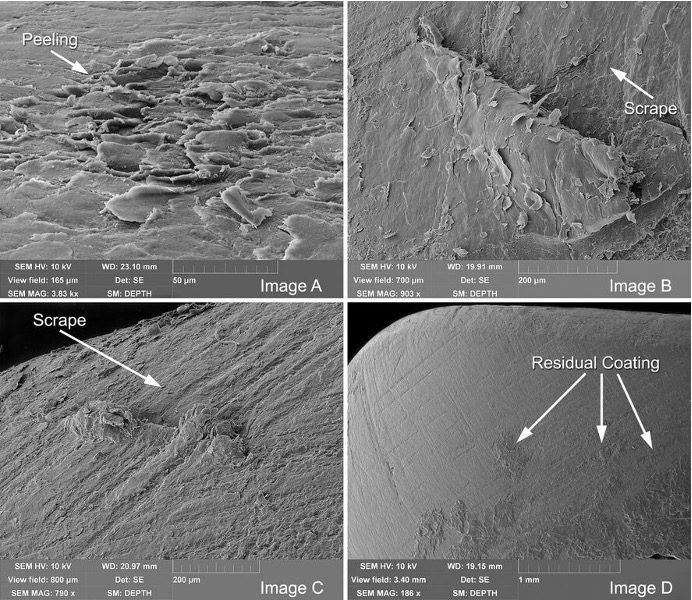
Es un mito que la deshidratación de las uñas cause manchas blancas permanentes en la superficie de la uña. La deshidratación de la lámina ungueal solo ocurre en la superficie superior y es solo temporal. La deshidratación de la superficie de la uña NO causa daño permanente. El daño permanente se atribuye más correctamente al traumatismo físico causado por raspar, hacer palanca o desprender recubrimientos de uñas de la lámina ungueal, como se muestra en las imágenes A-D.