Un MITO muy extendido: Los esmaltes son malos para la uña natural
Esto NO es correcto.
Los revestimientos de uñas no dañan la placa ungueal y cualquier daño en la uña suele ser el resultado de una aplicación y/o eliminación inadecuada. Si la placa ungueal debajo del esmalte es mucho más delgada que el área de crecimiento de la uña nueva, esto indica claramente un limado excesivo con una lima manual o eléctrica. El limado excesivamente agresivo causa la mayor parte del daño a la placa ungueal que se observa en los salones. Esto no solo sucede en salones de descuento, sino incluso en salones de alta gama y es indicativo de un profesional de uñas mal capacitado.


Los recubrimientos de uñas aumentan el contenido de humedad
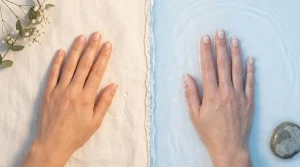
Si, al retirar el esmalte, las placas ungueales no se ven más finas pero se notan excesivamente flexibles, esto NO significa que las uñas estén “más débiles”. Se trata, más bien, de un efecto temporal provocado por un aumento del contenido de humedad de la placa ungueal. Los esmaltes de uñas aumentan el contenido de humedad de la uña entre un 10 y un 15 % y este efecto puede durar hasta 12-24 horas tras la retirada del esmalte; tras este tiempo, el contenido de humedad vuelve a la normalidad, al igual que el nivel normal de rigidez de la uña.
Retirada inadecuada – cosas a tener en cuenta
Cuando la superficie de la uña está cubierta de parches blancos de aspecto seco, esto se debe generalmente a una eliminación inadecuada, por ejemplo, al raspar o pelar recubrimientos de uñas de la placa ungueal. Sumergir la uña natural incluso por unos minutos en acetona o agua ablandará temporalmente la superficie, haciéndola temporalmente más susceptible al daño causado por implementos de madera o metal que hagan palanca, empujen o fuercen los recubrimientos de uñas residuales restantes de la placa ungueal. En su lugar, una buena regla a seguir es: “Tenga el máximo cuidado durante 60 minutos después de sumergir las uñas naturales en cualquier líquido durante más de 60 segundos”.”
Otros daños, por ejemplo, la onicólisis, también suelen ser causados por técnicas de limado o retirada inadecuadas
Ocurren infecciones, pero son relativamente poco comunes y se pueden evitar fácilmente practicando una limpieza y desinfección adecuadas. Los hechos son que, cuando los embellecimientos o recubrimientos artificiales se aplican, se mantienen y se retiran con cuidado y de manera adecuada por un profesional de uñas capacitado, hábil y con conocimientos, ¡no causarán daños en las uñas! La gran mayoría de las placas ungueales dañadas son causadas por un uso inadecuado, limado o raspado excesivo de la placa ungueal para eliminar productos o por maltrato de las uñas por parte del cliente, por ejemplo, al arrancarse o levantarse los recubrimientos de uñas.